rare 1858 volume
|

Rare 1858 volume returned to Australian library after 150 Years

A home renovation in Australia recently uncovered a piece of literary history that had been missing for a century and a half. A homeowner in the coastal community of Kiama, located south of Sydney in New South Wales, was tearing down wall structures. Amidst, he stumbled upon a sealed fireplace. Inside an old wooden tea crate behind the brickwork was an antique book that belonged to the town’s local library.

The volume, titled Antiquities of Athens, was published in London in 1858. Staff at the Kiama Library realized that the book had been missing since 1870s. Library officials described the return as completely unprecedented. While they occasionally receive books that are a few decades late during estate cleanouts, they had never seen a volume missing for over a century.

The book itself is a notable historical work. It was originally authored by British architects James Stuart and Nicholas Revett to document classical Greek architecture. Book No. 506. A part of Kiama Library’s inaugural catalog which comprised roughly 1,000 items when the library first opened its doors in 1872.

Despite enduring around 150 years encased inside a chimney cavity, the physical volume appeared in a surprising condition. Mild water exposure near the margins and natural weathering consistent with a century of neglect. However, the pages and original library stamps remained clearly legible.

How the book ended up sealed behind a fireplace wall remains open to speculation. During the 19th and early 20th centuries, homeowners used unwanted household items as insulation or filler material when bricking over chimney flues. When Kiama Library manager Michelle Hudson examined the interior cover of the returned tome, she discovered the original set of lending regulations printed inside. Among those provisions was a penalty clause dictating an overdue fee of three British pence per week.

Doing the math to adjust that Victorian-era fine for inflation over 150 years results in an eye-watering figure: roughly  $28,000 Australian dollars (approximately $19,500 USD). Luckily for the current homeowner who handed it over, the library has no intention of collecting. In fact, even if staff wanted to hold someone accountable, identifying the original borrower is impossible. The library’s paper borrow ledgers from the 1870s were lost or discarded long ago. It left a complete mystery as to who last checked out the book.

The volume provides a fascinating glimpse into Victorian-era social norms and public library regulations. A borrower was forbidden from checking out another book until any previously borrowed item was returned and all associated fines were cleared. Hudson playfully speculated that this rule might explain why the original patron never brought the book back. Once the fine started accumulating, returning it became too costly. Households could borrow up to three books at a time, but only if at least six members of the family were verified as capable of reading. The regulations specifically prohibited lending books to individuals who arrived at the library in a state of intoxication.

Modern library policies focus on patron code of conduct rather than testing family literacy rates. However, these antique guidelines serve as a memorable reminder of how public institutions functioned in colonial Australia.

Antiquities of Athens will not be re-entering general circulation returning home after a century and a half in exile. Library staff plan to place the volume on permanent display within their local history archive. It is aimed to preserve it as both a physical artifact of Victorian publishing and a symbol of local history.

As Hudson quipped, the library is thrilled to have its 506th catalog entry back on the shelves. Also, they have no intention of risking another 150-year wait to see it again.


Similar Posts

  • Pakistan’s Next Strategic Advantage: From Labour Mobility to Global Talent

    By Tahseen Ullah  For decades, labour migration in Pakistan has largely been viewed as a response to unemployment and poverty. While this perspective has served its purpose, it no longer reflects the realities of today’s global economy. In the twenty-first century, labour mobility has become far more than an economic necessity—it is a strategic investment in human capital, national competitiveness and economic diplomacy. Countries that can produce skilled, certified and globally competitive workers will hold a distinct advantage in an increasingly interconnected labour market. As ageing populations, declining fertility rates and persistent labour shortages reshape developed economies, demand for skilled workers is rising across Europe, East Asia and other advanced markets. Pakistan, with one of the world’s youngest populations, is well positioned to seize this opportunity. The real challenge is not whether Pakistan has enough young people willing to work abroad, but whether it can equip them with internationally recognised skills, qualifications, language proficiency and professional competencies that meet evolving global labour market demands. Pakistan’s labour migration journey began with the establishment of the Bureau of Emigration and Overseas Employment in 1971, following the Gulf oil boom. Since then, more than 15 million Pakistanis have migrated through regular channels, contributing significantly to infrastructure, healthcare, construction, transport and service sectors worldwide while improving the livelihoods of millions of families back home. Today, overseas employment remains one of Pakistan’s most important economic assets. According to BEOE, 862,625 Pakistanis migrated for employment in 2023, followed by 725,672 in 2024 and 762,499 in 2025, with early trends indicating sustained international demand in 2026. Meanwhile, the Pakistan Migration Report 2025 and the State Bank of Pakistan estimate workers’ remittances at approximately US$38.3 billion in FY2024–25, representing nearly 9.34 percent of GDP. These remittances strengthen foreign exchange reserves, reduce poverty and support macroeconomic stability. Yet labour migration has rarely been treated as a strategic pillar of Pakistan’s long-term economic planning. The global labour market is undergoing profound change. According to the World Economic Forum’s Future of Jobs Report 2025, demographic shifts, technological advances and the green transition will create millions of new employment opportunities over the coming decade. Healthcare professionals, engineers, IT specialists, skilled technicians, renewable energy workers, construction professionals and caregivers are expected to remain in particularly high demand. Pakistan possesses a valuable demographic dividend, with nearly two-thirds of its population under the age of 30. However, this advantage will only translate into economic gains through sustained investment in education, Technical and Vocational Education and Training (TVET), international certification, digital skills and language training. The challenge is clear. The Pakistan Migration Report 2025 shows that nearly two-thirds of Pakistani migrant workers remain low-skilled or unskilled. While their contribution is invaluable, low-skilled employment often results in lower wages, limited career progression and greater vulnerability to labour market shocks. In contrast, highly skilled migrants generally access better jobs, stronger labour protections and significantly higher earnings. Pakistan must therefore move beyond a traditional labour export model towards a human capital export strategy. Success should no longer be measured simply by the number of workers leaving the country, but by the quality, productivity and global competitiveness of its workforce. Achieving this transformation requires comprehensive reforms. TVET institutions must align training with international occupational standards and labour market needs. Language education in German, Japanese, Korean and Italian, alongside digital literacy, workplace ethics and intercultural communication, should become integral components of workforce development. Market diversification is equally important. While Gulf Cooperation Council countries will remain Pakistan’s primary labour destinations, excessive dependence on one region exposes the country to geopolitical uncertainty and labour market fluctuations. Pakistan should actively expand regular labour mobility partnerships with Europe, Japan, South Korea, Australia and Canada, where structural labour shortages continue to grow. Government-to-government labour mobility agreements should become a strategic priority. Such partnerships can enhance transparency, reduce recruitment costs, improve worker protection and strengthen employer confidence in Pakistani talent. Simultaneously, Pakistan should pursue mutual recognition of qualifications and internationally accepted skills certification to facilitate smoother labour market integration. Institutional coordination will also be essential. The Ministry of Overseas Pakistanis and Human Resource Development, together with the NAVTTC, provincial TEVTAs, Overseas Employment Promoters, the Ministry of Foreign Affairs and Pakistan’s overseas missions, should implement an integrated national labour mobility framework supported by labour market intelligence, digital recruitment platforms and evidence-based policymaking. Pakistan can draw valuable lessons from the Philippines, whose migration governance combines ethical recruitment, mandatory pre-departure orientation, comprehensive worker welfare and strong overseas support systems. Adapting these practices would strengthen Pakistan’s reputation as a reliable source of skilled and protected migrant workers. At the same time, addressing irregular migration must remain a national priority. Preventing dangerous migration routes requires expanding legal migration opportunities, strengthening career counselling, improving public awareness, dismantling human smuggling networks and ensuring aspiring migrants have access to reliable information and affordable recruitment services. Labour migration should no longer be viewed solely as a means of reducing unemployment or increasing remittances. It should be recognised as a cornerstone of Pakistan’s economic diplomacy, human capital development and long-term growth strategy. The countries that will lead the future of global labour mobility will not necessarily be those with the largest populations, but those that invest in producing highly skilled, internationally certified and globally competitive talent. Pakistan has already demonstrated its ability to contribute to the global workforce. The next step is to move beyond exporting labour to exporting talent. By investing in skills, strengthening institutions, diversifying labour markets and promoting ethical, well-governed migration, Pakistan can transform its demographic dividend into one of its greatest strategic advantages. The world is searching for talent. Pakistan has the youth. What it now needs is the vision to turn that potential into global human capital leadership. Tahseen Ullah is a development and migration sector practitioner specializing in labour mobility, migration governance, education and child protection. He can be reached at tahseenanthro@gmail.com

  • Scientists discover mysterious black hole star in deep space

    Scientists claim to have discovered a fascinating cosmic mystery. According to them, it is a “black hole star” about the size of our solar system and glowing with extremely bright red light. An international team of researchers made the discovery using images captured by NASA’s James Webb Space Telescope (JWST) which revealed the mysterious red glow. The black hole star is located in the constellation Cetus, billions of light-years away from Earth. Scientists believe it may have formed around 660 million years after the Big Bang. It appears similar to a massive star but is estimated to release 100 billion times more energy than an ordinary star. Such enormous energy output has previously been associated with black holes rather than stars. Scientist Rohan Naidu of the Massachusetts Institute of Technology (MIT) who was part of the research team said that they had discovered an entirely new type of cosmic phenomenon. He explained that the object is shining with an amount of energy normally associated with black holes while at the same time displaying characteristics typically linked to stars. First observed by James Webb Space Telescope Scientists have been using the James Webb Space Telescope to study distant galaxies in the universe. Their interest in this phenomenon increased after the discovery of the galaxy Maisie’s Galaxy (CEERS 1) and other early-universe objects. In a study published in the journal Nature, researchers named the red-light phenomenon MAM-BH1. They said its completely red appearance and disappearance at specific wavelengths are so dramatic that it cannot easily be compared with other known cosmic objects. Computer simulations suggested that rather than being an extremely massive star, the object is actually a black hole that shines like a star. If the scientists’ interpretation is confirmed, it could indicate that many of the mysterious red dots observed across the universe may also be black hole stars. Rohan Naidu believes that these types of black hole stars could play an important role in the evolution of galaxies.

  • | | |

    European colonization brought smallpox to the Americas

    Historians have believed that the collapse of Indigenous populations across the Americas was triggered largely by smallpox. The historical manuscripts and missionary chronicles provided detailed eyewitness reports of these devastating outbreaks. Molecular proof links colonial-era American epidemics directly to Old World viral strains remained elusive. Now, a study published in the journal Science provides the definitive genetic confirmation researchers have sought for generations. It’s led by geneticists at Trinity College Dublin in collaboration with biological anthropologists at the Universidad de Chile. Researchers have successfully extracted and sequenced the oldest known smallpox viral genomes ever recovered in the Americas. The ancient viral DNA was retrieved from the naturally mummified remains of two individuals buried in northern Chile during the early Spanish colonial era. The viral samples were recovered from bone fragments belonging to an adult woman (aged 30 to 35) and a young man (aged 18 to 20) buried near Camarones Cove. A coastal site in northern Chile that once marked the southern reaches of the Inca Empire. The individuals had been naturally preserved by the hyper-arid climate. They’re wrapped in camelid wool blankets and interred in traditional cloth bundles. Scientists initially analyzed DNA from 13 individuals excavated at the site. They were searching for ancient bacterial infections such as tuberculosis. Instead, they discovered preserved traces of the variola virus. Guess what? It’s the deadly pathogen responsible for smallpox. Radiocarbon analysis alongside molecular clock estimates revealed that both individuals died between 1492 and 1631 CE. The violent era of Spanish conquest led by conquistadors like Francisco Pizarro. Because the two viral genomes recovered from the mummies were virtually identical, geneticists concluded that both individuals likely succumbed to the same localized outbreak or were infected by the same circulating viral strain.  Evolutionary Trajectory of a Global Killer When researchers mapped the newly recovered genetic sequences onto a global evolutionary tree of smallpox, the results were unequivocal. The Chilean viral strain positioned directly between medieval European strains. The strains included those previously recovered from Viking-era human remains and later 17th- to 19th-century strains circulating in Europe. This placement provides molecular evidence that the virus was introduced to Indigenous American communities from the Old World. The study yielded surprising insights into how pathogens evolve when introduced to vulnerable host populations. The variola virus originally evolved from a animal-host (zoonotic) pathogen. It was undergoing extensive genetic alteration up through the 16th century as it adapted to human hosts. Surprisingly, the virus’s rate of genetic change slowed dramatically during the peak colonial expansion of the 17th and 18th centuries. Researchers hypothesize that Indigenous populations lacked any pre-existing immunity. So, the virus had reached an evolutionary optimum. It could spread effortlessly without needing further genetic adaptation. The virus’s evolution accelerated once again in the late 18th and 19th centuries. It was after the introduction of Edward Jenner’s smallpox vaccine in 1796. Therefore, the evolutionary pressure forced the pathogen to adapt once more. Why This Discovery Matters Today Smallpox stands as one of the deadliest infectious diseases in human history. It has claimed hundreds of millions of lives over millennia before its official eradication in 1980 through global vaccination efforts. In the Americas, the disease inflicted physical casualties. The virus also shattered social structures and morale. The rapid disfigurement and death led communities to feel overwhelmed by forces they could neither treat nor comprehend. This discovery demonstrates the immense power of ancient DNA research. Tracing how pathogen evolution interacts with human migration, population immunity, and public health interventions provides critical context for understanding modern infectious disease threats today.  

  • Better Facilities in Turbat’s Hospitals

    Hani Rasheed  Turbat urgently needs better healthcare facilities. Although some improvements have been made, many patients still face shortages of medicines, medical equipment, and specialist doctors. Poor families often have to travel to other cities for treatment which is costly and difficult. Access to quality healthcare is a basic right and should be available to everyone. The authorities should ensure that hospitals are fully equipped, essential medicines are available, and qualified doctors and staff are appointed. Better healthcare services will reduce the suffering of patients and improve the well-being of the people of Turbat.

  • The Population Debate: Curse or Opportunity?

    By Dr Naveeda Katper Different countries have different characteristics regarding population, geography, and natural resources that shape their economic growth. Economists use various indicators to measure development, and population is one of the most debated among them. A large population is often viewed as a hurdle to economic growth. However, every issue deserves to be examined from different angles. The question, “Is a large population a curse or a blessing?” cannot be answered with a simple yes or no. We need to move beyond the idea of population as a burden and understand the concept of the demographic dividend. What appears to be a curse can become a blessing when viewed through the right perspective and supported by the right policies. Research by the RAND Corporation and the World Bank has shown that countries with a growing working-age population can experience faster economic growth when supported by sound education, health, and employment policies. Whether a large population becomes an economic asset depends on governance and public policy. A growing population is not necessarily a curse because every additional mind brings new ideas, different perspectives, and fresh solutions to existing problems. One mind can accomplish one task, two minds can accomplish two, and millions of minds can achieve far more. That is the value of teamwork and collective human potential. Every individual possesses different skills, abilities, and talents that can contribute to national development. What many consider a burden may actually become a country’s greatest strength if those human resources are properly developed. This is the essence of the demographic dividend—the economic advantage that emerges when the working-age population becomes larger than the dependent population. Development economists describe this period as a “window of opportunity” rather than a guaranteed outcome. Highly populated countries can utilize their youthful population to strengthen their economies. After India, China, the United States, and Indonesia, Pakistan is the fifth most populous country in the world. This should be seen as an opportunity rather than a challenge because more than 65 percent of Pakistan’s population consists of young people. That gives the country a significant advantage. A demographic dividend can only be realized when the working-age population is educated, healthy, skilled, and productively employed. When more people are working and contributing to the economy, household savings increase, investment grows, government spending on dependents declines, and both economic output and per capita income improve. The World Bank has repeatedly emphasized that human capital—education, health, and skills—is one of the strongest drivers of long-term productivity and national income. The real challenge is identifying the policies required to achieve this dividend. A country can benefit only if it creates sufficient employment opportunities, provides quality education and skill development, ensures access to healthcare, encourages women to participate in the workforce, and maintains stable economic and public policies. When these conditions exist, the country enjoys faster economic growth, greater productivity, increased investment and savings, improved living standards, and stronger entrepreneurship and innovation. Economic growth becomes inevitable when people are hardworking, equipped with multiple skills from an early age, and capable of adapting to changing economic demands. Skilled and self-reliant citizens become the driving force of national development. Evidence from South Korea, Singapore, and Ireland shows that investment in education and skills transformed youthful populations into globally competitive economies. However, a demographic dividend can quickly become a demographic burden if employment opportunities and skills do not keep pace with population growth. The consequences may include rising unemployment, poverty, social unrest, and migration. Economists and demographers consistently argue that a demographic dividend is not automatic; it is an opportunity that must be earned through effective governance and strong institutions. Without adequate planning and investment, a large youth population can become a liability instead of an asset. The International Labour Organization has warned that persistent youth unemployment can reduce economic productivity and increase social instability. A dynamic economy capable of creating millions of formal-sector jobs each year is essential for absorbing a growing workforce. Human capital development should remain at the center of national policy. Strong educational systems, Technical and Vocational Education and Training (TVET), science, technology, engineering and mathematics (STEM), digital literacy, coding, digital finance, and technology-based curricula should be introduced from the early years of education. Equal opportunities for girls and women in education and employment are equally important. Pakistan also needs job creation, labour market reforms, export-led manufacturing, labour flexibility, investment in high-value industries such as technology, electronics, and specialized services, support for youth entrepreneurship and microfinance, and stronger healthcare infrastructure. UNESCO has consistently highlighted that technical and vocational education equips young people with practical skills that improve employability and economic resilience. Pakistan possesses one of the largest youth populations in the region, but this advantage can only be realized through greater investment in education, skills, and employment. In conclusion, population control alone is not a long-term solution to economic growth. Developing people’s abilities, expanding opportunities, and investing in human capital are far more effective. The experiences of countries such as Italy and Japan also demonstrate that declining populations and ageing societies create their own economic challenges. The real question is not how many people a country has, but how well it prepares its people to contribute to national development. Research across both developed and developing countries consistently concludes that people become an economic asset when governments invest in their education, health, productivity, and opportunities rather than viewing population solely as a number. The writer holds a PhD from Malaysia and writes on economic development, public policy, and demographic issues. She can be reached at naveedakatper11@gmail.com

  • The royal bloodlines that forged a Balkan powerhouse

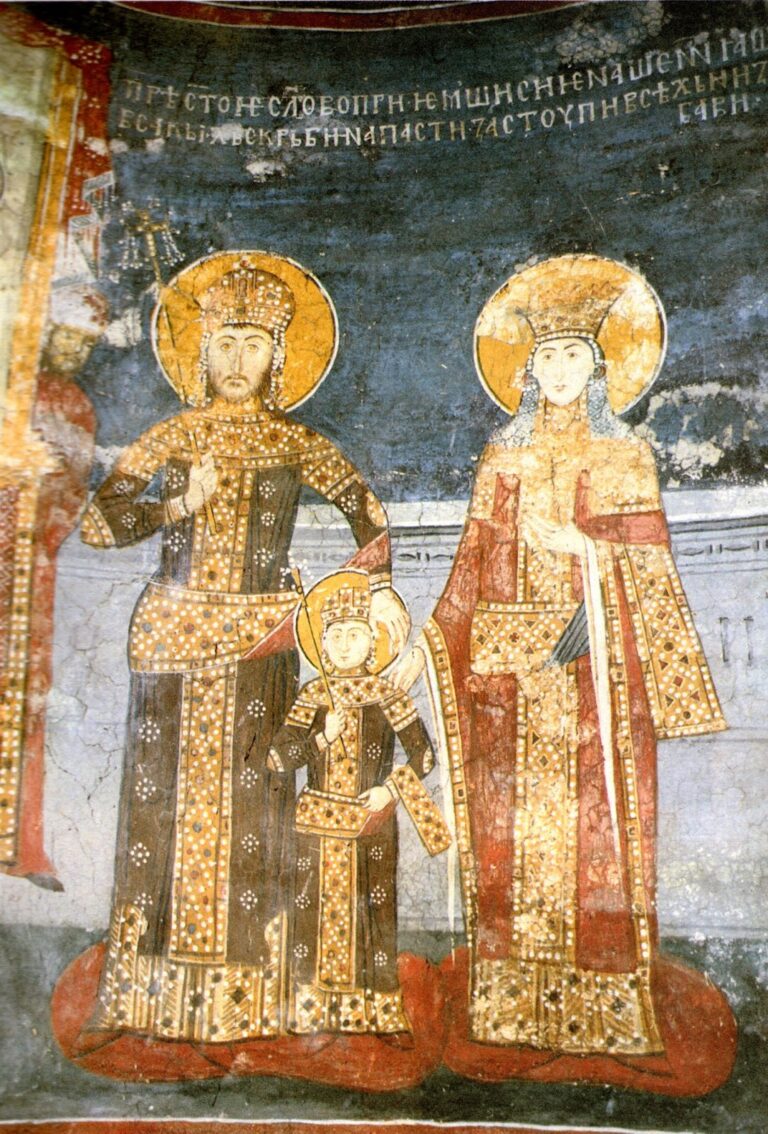
    In the heart of the 14th century, a monumental fresco was rendered upon the walls of the Lesnovo Monastery in modern-day North Macedonia. It captured a defining moment in Balkan history. Emperor Stefan Uroš IV Dušan alongside his wife, Empress Helena of Bulgaria, and their young heir, Stefan Uroš V. This wall painting serves as a enduring testament far more than a decorative piece of sacred art. A masterfully orchestrated political union that reshaped the geopolitical landscape of medieval Europe. At the center of this historical narrative is a strategic marriage forged in 1332. The newly crowned Serbian King Stefan Dušan entered into a pivotal treaty with Tsar Ivan Alexander of Bulgaria. He seems desperate to employ peace after years of regional conflict. The cornerstone of this agreement was the marriage of Dušan to Ivan Alexander’s sister, Princess Helena (Elena). This union was far more than a ceremonial gesture. Helena proved to be an immensely influential empress consort whose royal Bulgarian lineage carried significant political weight. Her marriage to Dušan directly altered his formal imperial standing, allowing him to claim authority not only over the Serbs and Greeks, but over the Bulgarians as well. The couple later gave birth to Stefan Uroš V, an heir who embodied the consolidated royal houses of the region. Yet, the Bulgarian connections within the Serbian royal court ran much deeper than Dušan’s marriage alone. Dušan himself was bound to Bulgaria by blood through his mother, Queen Theodora Smilets. As the daughter of Tsar Smilets, who ruled the Second Bulgarian Empire from 1292 to 1298 AD, Theodora brought rich dynastic heritage into the Nemanjić house. Thus, when Dušan rose to power and eventually established the grand Serbian Empire, he did so as a monarch who was inherently a product of both Serbian and Bulgarian elite lineages. The fresco preserved in Lesnovo illuminates this intertwined destiny. Depicting the imperial family dressed in rich, jewel-encrusted Byzantine-style robes, it reflects an era when diplomatic ties, shared heritage, and strategic royal marriages could unite rival realms under a single, dominant imperial banner. Today, these historical records and vibrant monastery paintings remind us that the borders of the medieval Balkans were constantly reshaped not just on the battlefield, but through the formidable power of dynastic unity.  

Leave a Reply

Your email address will not be published. Required fields are marked *