drill free treatment

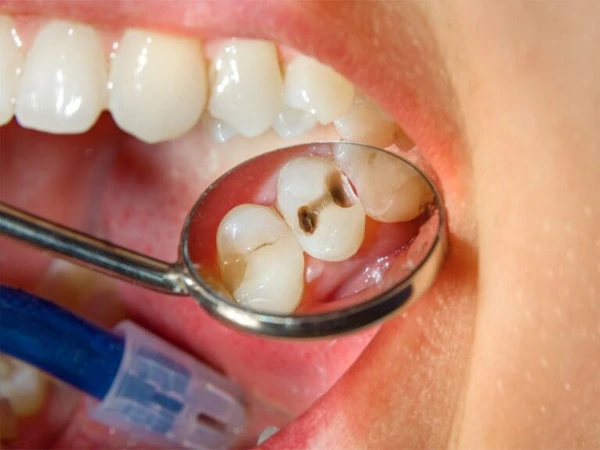
Drill free treatment for children’s tooth decay

A major study in the United States has found that silver diamine fluoride (SDF) is a safe low cost and effective way to treat tooth decay in young children.

The treatment could help thousands of children avoid painful dental drilling and general anesthesia.

The study found that a 38% silver diamine fluoride solution can be applied to the affected tooth in just a few seconds.  The liquid helps stop tooth decay from getting worse without the need for injections drilling or surgery.

The Phase 3 clinical trial was led by the University of Michigan and included 830 children under the age of six.

Researchers from universities in New York and Iowa also took part in the study. The findings were published in the medical journal JAMA Pediatrics.

Researchers discovered that applying SDF every six months successfully stopped tooth decay in more than half of the affected baby teeth.

Unlike traditional dental treatment this method does not require removing part of the tooth or placing a filling.

Instead the liquid is simply painted onto the decayed area.

Professor Margarita Fontana from the University of Michigan School of Dentistry who led the research said the treatment was found to be safe and effective even for children as young as one year old.

Experts believe that if SDF receives full approval as a standard treatment for tooth decay it could make dental care easier less expensive and far less stressful for young children and their families.

Similar Posts

  • MIT robot can fly and swim

    Researchers at the Massachusetts Institute of Technology (MIT) have created a unique robot that can both fly through the air and swim underwater just like diving birds. The lightweight robot costs around $300 and was designed by MIT’s AeroAquatic Robotics team.  Scientists believe it could one day help monitor oceans study marine life and support environmental protection. The robot was inspired by diving birds which use the same wings to fly in the air and move through water.  While scientists have studied these birds for years building a robot that can perform both tasks efficiently has been a major challenge. To solve this the MIT team carefully studied how diving birds move and used those findings to design the new machine. The robot called the Flapping Aerial Aquatic Vehicle weighs only 250 grams.  It runs on a battery powered motor and has nylon wings and a tail coated with water resistant nanoparticles to protect them from moisture. According to the researchers the robot is programmed to flap its wings at a specific frequency allowing it to move smoothly in both air and water without changing its basic movement. It can fly at speeds of up to 13.4 miles per hour and swim at about 2.2 miles per hour. On a single battery charge it is designed to fly as far as 6 kilometers or swim up to 2 kilometers. The robot was tested for about one year first in a water tank in Massachusetts and later in Lake Geneva Switzerland where researchers evaluated its performance in real world conditions.

  • | |

    Documentary film on the struggle for Joint Elector…

    By Yassar Talib Aiman Zameer Lahore: The Centre for Social Justice (CSJ) held a screening of its documentary film, A Separation Refused, highlighting the Movement for the Restoration of the Joint Electorate in Pakistan, at a local hotel in Lahore. The 20-minute documentary film, by the award-winning the producer and director, CSJ and Dawood Akhtar Murad, traces the culmination of the world unique Separate Electorate system in Pakistan’s history and the movement for the restoration of the Joint Electorate in Pakistan especially during the 1990s to 2001. The film chronicles the efforts of civil society organizations, political leaders, faith communities, and human rights advocates who campaigned for equal citizenship and inclusive democratic participation for religious minorities. Using historical accounts and personal testimonies, the film illustrates how sustained advocacy contributed to democratic reforms and continues to inspire efforts towards equality, pluralism, social cohesion, and the protection of constitutional rights. Featuring over a dozen interviews, it brings together insights from Hina Jilani, Cardinal Joseph Coutts, Dr. Charles Amjad Ali, Dr. Yaqoob Bangash, and other prominent voices offering diverse perspectives youth, clergy and a parliamentarian. The even also premiered a song Hum Juda Nahein (We Are Not Separate) that expressed the The screenings were followed by an interactive panel discussion explored the progress made towards equal citizenship and the continuing challenges to the democratic participation of religious minorities in Pakistan. The panelists, Wajahat Masood a public intellectual and Peter Jacob, answered the questions while the academic Faaria Khan moderated the discussion. While addressing the participants, Wajahat Masood, said that democracy is based on the principle of equal citizenship and that the categorization of citizens into majorities and minorities reflects a constitutional anomaly. Referring to the Separate Electorate system, he noted that institutionalizing such divisions weakened democratic systems and undermined the principle of equal political participation. In response to a question on the rationale behind the documentary, Peter Jacob, Executive Director CSJ, said that the importance of the movement warranted a careful reading of the history. He noted that the film was developed to preserve authentic accounts of the struggle for the restoration of the Joint Electorate and to address competing interpretations of history and misunderstandings. He also emphasized the need for constitutional reforms to strengthen equal citizenship. He called for a review of Articles 41 and 91 of the Constitution, to remove precondition of religious affiliation for the offices of the President and Prime Minister. Moreover, implementation of Article 22(1) of the constitution of Pakistan that guarantees unbiased education. In the open discussion, participants emphasized that the message of documentary film highlighting constitutional rights, democratic inclusion, should be screened more widely through universities, arts councils, mainstream media, and other public platforms to encourage informed dialogue and greater public awareness. They further stressed that equal citizenship is not solely the concern of religious minorities but a shared national responsibility, and called for greater participation and support from the majority community in future advocacy and dialogue. At the end the participants reaffirmed a shared commitment to advancing constitutional rights, equal citizenship, participatory democracy, and peaceful coexistence through collective action.

  • Plants reach Space as scientists study growth in orbit

    Green plants have now made their way to the International Space Station. NASA astronaut Jessica Meir who is commanding Expedition 75 aboard the International Space Station has shared pictures of the plants on social media platform X. Jessica Meir said that the Expedition 75 crew has welcomed some new members and they are none other than Russian plants. She explained that the plants include Red Russian kale and wasabi mustard. The crew members are taking care of the plants during their free time. The astronaut explained that the purpose of the experiment is to understand how plants grow in the open cabin environment of the International Space Station compared with their natural environment. The research also aims to examine how storing seeds in orbit affects their viability or ability to successfully grow. Jessica Meir added that having plants aboard the spacecraft feels like a form of “nature therapy.”

  • Hidden mistake challenge

    Do you enjoy solving brain teasers and visual puzzles? If yes this simple challenge is for you. The only rule is to find the answer within 5 to 10 seconds. The good news is that you do not need math skills or logical thinking to solve this puzzle. It is simply a test of how carefully you observe details. Take a close look at the picture and try to find the hidden mistake before time runs out. Many people cannot spot the error right away. In fact once they finally notice it they often wonder how they missed something so obvious. Most people immediately focus on the numbers in the image expecting to find a mistake there. Because of this they overlook the real error. If you could not find it within 10 seconds don’t worry. The mistake is not in the numbers. The hidden error is actually in the text beside them. The word “mistake” is spelled incorrectly. This happens because the brain naturally pays attention to the numbers first and assumes the text is correct. Only after checking the numbers does it begin to notice the writing. This simple puzzle shows how our brains can miss obvious details when our attention is focused somewhere else.

  • Danger signs your air conditioner needs repair

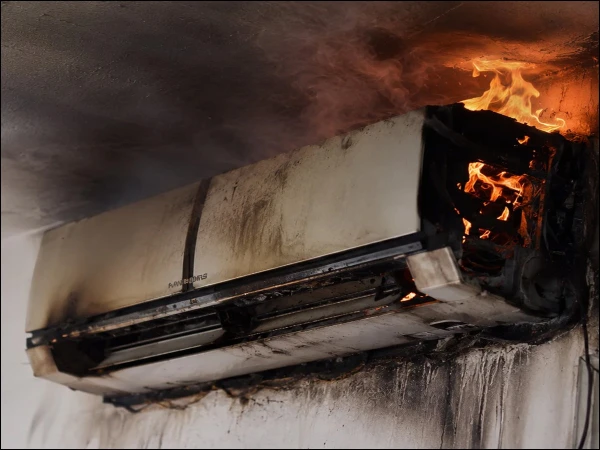
    As temperatures rise many people buy old or low cost air conditioners to save money. However experts warn that aging AC units can become dangerous if problems are ignored.  Small faults may turn into serious issues including electrical short circuits fires or costly damage. According to experts older air conditioners often develop worn out wiring damaged electrical parts faulty motors and overheating. These problems may seem minor at first but can become dangerous if they are not repaired in time. One of the biggest warning signs is a burning smell or the odor of melted plastic when the AC is switched on.  Experts say this could mean the internal wiring motor or insulation has been damaged increasing the risk of fire. If this happens turn off the unit immediately and have it checked by a qualified technician. Unusual sounds such as rattling grinding or loud noises are also signs that something is wrong. These noises may be caused by a loose part a damaged fan or a compressor problem.  Ignoring them could lead to a complete system failure. If the air conditioner becomes unusually hot while running it may indicate an electrical fault inside the unit.  Overheating can increase the risk of a short circuit or fire making immediate inspection and repair important. Experts also advise not to ignore weak cooling. Reduced cooling may be caused by low refrigerant a faulty compressor or a clogged air filter.  These issues usually mean the AC needs servicing or repairs. Another serious warning sign is seeing sparks near the voltage stabilizer or electrical wires. This may indicate loose connections or damaged wiring, which can quickly become a fire hazard if not fixed. Experts recommend turning off the air conditioner immediately if you notice any of these warning signs and contacting a qualified technician for a full inspection.  Timely repairs can help prevent bigger damage and keep your home and family safe. They also advise that if an air conditioner keeps breaking down and needs frequent repairs replacing it with a newer safer and more energy efficient model may be a smarter and more cost effective choice.

  • Treatment of stress

    Meer Baloch Through the columns of your respected newspaper, I would like to draw attention to the growing problem of stress. Nowadays, many people suffer from stress because of studies, work, financial problems, and family issues. If stress is ignored, it can affect both mental and physical health. People can reduce stress by getting enough sleep, exercising regularly, eating healthy food, and spending time with family and friends. Meditation, prayer, and talking to a trusted person or a counselor can also help. Those who suffer from severe stress should seek professional medical treatment. I request the concerned authorities and health organizations to organize awareness programs so that people can learn how to manage stress and live healthier lives.

Leave a Reply

Your email address will not be published. Required fields are marked *