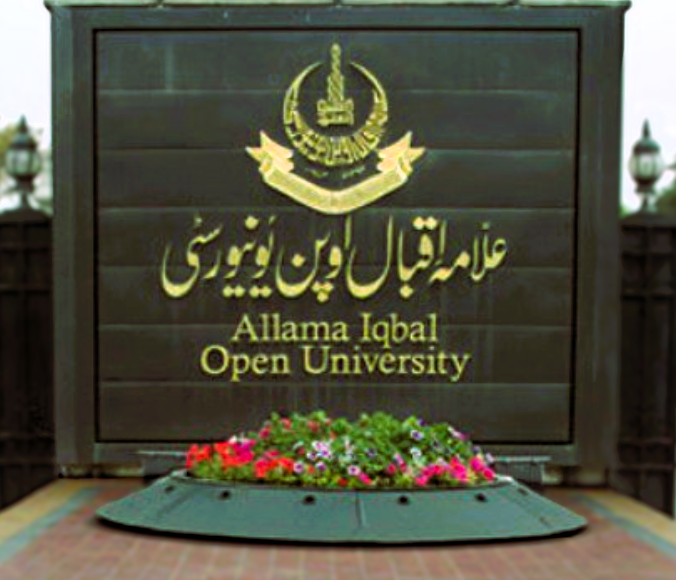
aiou recruitment process
| |

AIOU recruitment process declared non transparent …

Islamabad: A controversy has emerged over the recruitment process of Allama Iqbal Open University (AIOU) after the Wafaqi Mohtasib declared that the selection process for senior academic positions lacked transparency and directed the university to cancel appointments and repeat the process.

The decision came after a complaint filed by a female complainant, who challenged her exclusion from the shortlist for Professor and Associate Professor positions despite claiming she met the required eligibility criteria.

The Wafaqi Mohtasib, after reviewing documents and hearing both sides, concluded that maladministration was established and stated that serious questions were raised about the transparency of the selection process.

The Ombudsman referred the matter to the Vice Chancellor of AIOU with directions to cancel the appointments and conduct the recruitment process again according to proper procedures.

The controversy relates to faculty recruitment advertisements issued by AIOU for Professor and Associate Professor positions.

According to the findings, AIOU advertised several academic positions on 15 September 2024, and received a large number of applications. Officials informed that 388 applications were received for 25 advertised Professor and Associate Professor positions.

The university introduced an Internal Assessment Framework to shortlist candidates before sending applications for further evaluation.

According to AIOU, the decision was taken because evaluating hundreds of academic files through experts would create major financial and administrative difficulties. Officials estimated that external evaluation of dossiers could cost around Rs26 million.

Under the new system, eligible candidates were assessed through multiple stages including vision statement, leadership assessment, psychological assessment, teaching demonstration and screening interview.

The assessment was conducted out of 50 marks, and 24 candidates were recommended for further selection stages. However, the female complainant was not recommended for any position.

The female complainant challenged the process, arguing that the university changed recruitment procedures after the hiring process had already started.

She claimed that according to the original recruitment rules, eligible candidates were required to appear before the Selection Board and that the introduction of an Internal Assessment as an elimination stage had no legal basis.

She also argued that she was not properly informed about all stages of the assessment process.

The complainant stated that she was informed about teaching demonstration and leadership assessment but was not informed about psychological assessment and screening interview.

The complaint also raised concerns over fair hearing rights, claiming that she was excluded from the final process without written reasons or an opportunity to explain her position.

Another serious issue raised was the timing of the Selection Board meeting. The complainant claimed that the Selection Board meeting took place on 10 April 2026, a public holiday, and that the approval process and appointment letters were completed unusually quickly on the same day. She questioned whether the process was properly transparent.

She argued that recruitment rules and selection criteria should not be changed after the recruitment process has started.

The Ombudsman examined the matter and found that the selection process did not appear transparent.

The findings stated that several questions raised by the complainant required attention and that the recruitment process showed signs of maladministration.

AIOU officials had defended the process, saying the Internal Assessment Framework was approved by the university’s Executive Council and applied to the advertised positions.

They said the system was designed to identify the most competitive candidates while reducing time and financial burden.

The case now requires AIOU to report compliance with the Ombudsman’s decision within the given period.

The controversy has raised broader questions about transparency, fairness and recruitment procedures in public sector universities, where senior academic appointments directly affect the quality of education.

Similar Posts

  • |

    Poland unveils Europe’s tallest Virgin Mary statue in tiny village

    A towering new statue of the Virgin Mary has been unveiled in a small Polish village, instantly becoming the tallest statue anywhere in Europe. Standing at 55.6 metres, the monument now dominates the local skyline. The devotional sculpture was consecrated by a local bishop during a ceremony held on Saturday in the rural village of Konotopie. The unveiling comes at a notable moment, as the Catholic Church’s broader influence over public life in Poland continues to decline. Despite its scale, the statue sits in a remote location, far from any of Poland’s major population centres. Its placement was reportedly requested specifically by a wealthy local couple who funded the project. During the ceremony, two helicopters were seen circling above the towering figure, which stands with arms open and a large crown atop its head. The dramatic aerial display added to the significance of the occasion. While Poland remains a predominantly Catholic country, many younger Poles living in urban areas have grown increasingly distant from the church and its traditions. The statue’s unveiling arrives against that broader backdrop of shifting religious engagement. Among those attending Saturday’s ceremony was Lech Walesa, the former Polish president who played a central role in the collapse of communism in the country. Now 82, Walesa reflected on his own life journey in comments to the Associated Press, describing his story as one that started and ended with the Virgin Mary. Local authorities are hoping the massive structure will serve a dual purpose going forward, functioning as both a significant pilgrimage site and a tourist attraction. To support that goal, the statue includes a viewing platform built directly into its base, offering visitors a chance to take in sweeping views of the surrounding countryside. The unveiling adds Poland to the small list of countries hosting record-breaking religious monuments, and local officials appear hopeful the structure will draw visitors from well beyond the immediate region in the years ahead.

  • |

    Japan marks 81 years since Nagasaki bombing amid nuclear debate

    Japan commemorated the 81st anniversary of the atomic bombing of Nagasaki on August 9, 2026. The ceremony was held as the country faces renewed debate over its nuclear policy and security strategy. Thousands gathered at Nagasaki Peace Park to remember the victims of the 1945 attack. Participants observed a moment of silence at 11:02am. It marked the exact time when the United States dropped the atomic bomb on the city. The bombing killed an estimated 74,000 people. The attack came three days after the atomic bombing of Hiroshima, where about 140,000 people were estimated to have died. Japan surrendered on August 15, 1945. The surrender brought World War II to an end and marked a major turning point in Japan’s history. The anniversary has also become a focus of debate over Japan’s long-standing pacifist and non-nuclear policies. Prime Minister Sanae Takaichi attended the Nagasaki ceremony. She has opened discussion on Japan’s postwar non-nuclear principles at a time of growing security concerns in East Asia. The debate has intensified as China expands its military capabilities in the region. Questions have also emerged over the long-term reliability of the US security commitment to Japan. Takaichi has maintained that Japan should pursue a realistic and practical approach toward achieving a world without nuclear weapons. However, her position on all three of Japan’s non-nuclear principles remains unclear. Japan’s three principles have traditionally called for the country not to possess, produce or permit the introduction of nuclear weapons into its territory. Takaichi supports the principles against possessing and developing nuclear weapons. She has not given the same clear commitment regarding the third principle. Her position has sparked concern among pacifists and atomic bomb survivors. Critics fear that any change in Japan’s nuclear stance could weaken the country’s postwar commitment to nuclear disarmament. Nagasaki Mayor Shiro Suzuki strongly defended the city’s anti-nuclear position during the ceremony. Suzuki described nuclear weapons as an absolute evil. He rejected the argument that nuclear weapons could be considered a necessary evil for national security. He also urged the central government to uphold Japan’s war-renouncing Constitution. He called on Tokyo to maintain its non-nuclear principles and participate in the upcoming review conference of the Treaty on the Prohibition of Nuclear Weapons. The mayor’s remarks came as Japan considers changes to its defence policy. The government is seeking stronger military capabilities in response to growing regional security threats. The anniversary also highlighted concerns about atomic bomb survivors who have not been officially recognised as hibakusha. Some people exposed to radiation during the Nagasaki bombing remain outside the government’s official recognition criteria. Their exclusion is linked to their location at the time of the attack and the areas officially designated as part of the blast zone. Shigemitsu Tanaka, head of the Nagasaki Atomic Bomb Survivors Council, raised the issue directly with Takaichi. Tanaka urged the government to provide support to both officially recognised survivors and those who remain unrecognised. He said the survivors are aging and that time is running out for them. Takaichi responded that the government already provides medical expense subsidies to unrecognised survivors on a level comparable to assistance given to officially recognised hibakusha. She said the government would continue implementing such support. The Nagasaki anniversary therefore carried both historical and political significance this year. Survivors and peace advocates continue to call for stronger commitments to nuclear disarmament. At the same time, Japan’s government is balancing its pacifist traditions with growing concerns over regional military threats.

  • Teen’s Family Mourns as Australian Suspect Faces Court Over Pattaya Killing

    PATTAYA, Thailand — The grieving family of a 17-year-old Thai girl whose body was discovered inside a suitcase in Pattaya has expressed profound devastation following the arrest of an Australian national in connection with her tragic death. The suspect was apprehended at Bangkok’s Suvarnabhumi Airport as he attempted to flee the country, bringing a swift […]

  • | |

    Norwegian foreign minister to visit Pakistan after…

    Norwegian Foreign Minister Espen Barth Eide will arrive in Pakistan on August 13 for a two-day official visit aimed at strengthening bilateral relations and expanding cooperation between Islamabad and Oslo. The visit will continue through August 14 and will be Eide’s first trip to Pakistan by a Norwegian foreign minister in a decade. Eide is visiting Pakistan at the invitation of Deputy Prime Minister and Foreign Minister Ishaq Dar. During his stay, the Norwegian minister will hold delegation-level talks with Dar. The discussions are expected to cover a wide range of bilateral and international issues. According to Pakistan’s Foreign Office, the two sides will examine opportunities to increase cooperation in trade and investment, climate change, renewable energy, education and people-to-people contacts. Regional and global developments are also expected to feature prominently in the talks. The visit comes as Pakistan and Norway have maintained diplomatic engagement through senior-level contacts in recent months. Dar and Eide held telephone discussions in March and April, while Norwegian State Secretary Andreas Motzfeldt Kravik visited Islamabad in May. Officials expect the latest visit to provide an opportunity to build on these contacts and identify new areas of cooperation that could benefit both countries. Pakistan and Norway have maintained cordial relations for decades, with cooperation extending across economic, development and diplomatic fields.

  • | |

    Italy and Denmark rally 22 EU states behind push f…

    Italy and Denmark have secured the backing of 22 European Union member states for a joint push toward stronger border security, following a chaotic migrant surge into the Spanish enclave of Ceuta that left at least 19 people dead. Thousands of migrants attempted to reach Ceuta, located on Africa’s northern coast, on Thursday, with many swimming around breakwaters using inflatable devices while others scaled the high border fence separating Morocco from the Spanish territory. Official estimates put the total number of migrants who crossed into Ceuta from Morocco at around 60,000. The scale of the crossing prompted alarm among European leaders, with Italian Prime Minister Giorgia Meloni moving quickly to temporarily suspend Italy’s open border Schengen arrangement with Spain for one month, closing direct air and sea travel from Spain without passport checks. By Saturday, Italy had escalated its response further, joining Denmark in leading a coordinated diplomatic push. The two countries spearheaded a joint letter, signed by 22 EU member states, calling for urgent and coordinated European action on border security, deportations and human trafficking. Meloni wrote on social media that the scenes emerging from Ceuta underscored the urgency of a unified European response to illegal immigration. She said the letter, organized together with Denmark, calls for joint efforts to reinforce external borders, combat irregular immigration, target human traffickers, improve the effectiveness of deportations and remove any incentives that encourage further illegal crossings. She added that protecting the European Union’s external borders is not the concern of a single nation but a shared responsibility across the bloc. Spanish Prime Minister Pedro Sanchez pushed back against the growing pressure, accusing several EU countries of a selfish, polarizing and unlawful response to the crisis. In a letter sent to Brussels, Sanchez said some European states have chosen to target Spain and push for its temporary removal from the Schengen area, driven by what he described as prejudice, misinformation, ignorance or political motives. EU officials were scheduled to hold an emergency meeting Saturday afternoon to determine next steps in addressing the unfolding migration crisis in Ceuta. The dispute highlights a long running fault line within the European Union over migration policy, as border states facing the brunt of new arrivals often clash with governments pushing for stricter continent wide controls, a tension that has resurfaced repeatedly during major migration episodes over the past decade.

  • | | |

    Syria sentences former President Bashar al-Assad to death

    A Syrian court has sentenced former President Bashar al-Assad to death over allegations of premeditated and deliberate killings. The sentence was issued in absentia. Assad was not present in court when the ruling was announced. The court also sentenced Atef Najib, a former security official who served during Assad’s rule, to death. According to the court, the charges against Assad relate to allegations of killings that were deliberately planned and carried out. The ruling marks a major development in the legal proceedings against the former Syrian president. Assad was removed from power before the court issued the sentence. The court proceeded with the case in his absence. It reached its decision based on the charges brought against him. Atef Najib was also named in the proceedings. He served as a security official during the Assad era and was handed the same punishment. The court described the alleged crimes as involving premeditation and deliberate killing. These allegations formed the basis of the death sentences. The development comes amid continued legal and political efforts concerning officials associated with the former Syrian government. The ruling against Assad could become an important part of the legal record surrounding his years in power. The former president has faced allegations related to serious abuses during the conflict in Syria. The latest court decision focuses specifically on charges of premeditated and deliberate murder. The sentence was announced without Assad appearing before the court. The court also issued its decision against Najib in connection with the same proceedings. Further legal developments could determine how the sentences are handled and whether additional proceedings follow. According to the reported ruling, the former Syrian leader was convicted on charges described as war crimes and crimes against humanity. The decision marks a significant development in legal proceedings against senior figures from Assad’s former government. Assad ruled Syria for nearly 24 years after succeeding his father, Hafez al-Assad, in 2000. His government faced years of armed opposition after protests erupted across the country in 2011. The conflict developed into a prolonged civil war involving Syrian government forces, opposition groups and several foreign powers. The war caused widespread destruction and a major humanitarian crisis. Millions of Syrians were forced to leave their homes, while large numbers sought refuge in neighbouring countries and beyond. Assad remained in power throughout most of the conflict. His government was accused by international organisations and rights groups of carrying out serious abuses against civilians. The former government repeatedly rejected many of the allegations. Assad’s rule eventually came to an end in December 2024. Opposition-led forces advanced towards Damascus, forcing him to leave the country with members of his family. He subsequently travelled to Moscow, where Russia provided him with protection. The latest verdict is the first death sentence against Assad under Syria’s transitional authorities. The new authorities have begun legal proceedings against officials and figures associated with the former government. Some defendants have appeared before the courts in person, while proceedings against others have been conducted in absentia. The case against Assad is therefore being closely watched as part of broader efforts to address alleged crimes committed during the conflict. The death sentence also represents a dramatic reversal for a leader who remained at the centre of Syrian politics for decades.

Leave a Reply

Your email address will not be published. Required fields are marked *