azma bukhari slams
| |

Azma Bukhari slams PPP over Kashmir election defea…

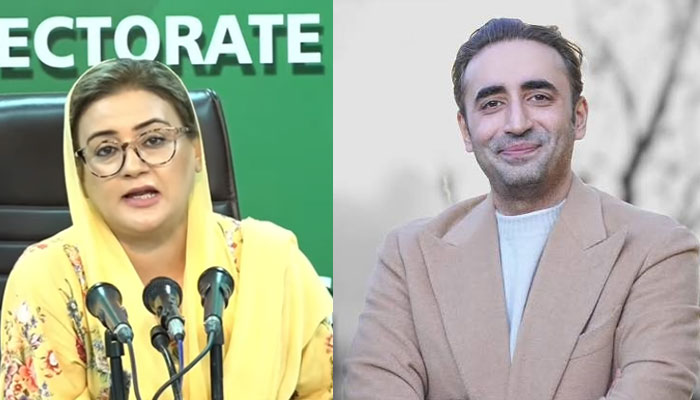
Punjab Information Minister Azma Bukhari has criticised Pakistan Peoples Party (PPP) Chairman Bilawal Bhutto-Zardari, saying voters in Azad Jammu and Kashmir (AJK) had backed development and modernisation and that political parties should respect the public mandate.

Speaking at a press conference in Lahore, Bukhari said the people of the Mirpur Division had made their choice through the ballot and supported the Pakistan Muslim League-Nawaz (PML-N). She urged rival parties to accept the election results with an open heart, saying respect for the people’s decision was an essential part of democratic politics.

Bukhari claimed that the election outcome had increased frustration within an unnamed political party. Referring to Bilawal’s recent remarks, she accused him of trying to mock the PML-N leadership while avoiding a discussion of his party’s performance in Sindh.

She challenged the PPP chairman to present the achievements of his party’s 18-year rule in Sindh, particularly in Karachi. She questioned why the city still lacked an effective public transport system and why municipal authorities struggled to manage waste collection.

Comparing the performance of the Punjab and Sindh governments, Bukhari highlighted several initiatives launched under Punjab Chief Minister Maryam Nawaz, including public transport projects, the provision of laptops and scholarships to students, air ambulance services, improved drainage equipment and development schemes across the province.

She also pointed to projects in southern Punjab, including public transport initiatives and the Recep Tayyip Erdogan Hospital, arguing that the region had received greater attention under the PML-N government.

Bukhari further criticised the PPP’s record on education, saying students in Sindh continued to raise concerns over access to educational opportunities, while the Punjab government had expanded scholarship and laptop programmes for young people.

She also defended the Punjab government’s response to heavy rainfall, saying authorities had equipped the Water and Sanitation Agency (WASA) with modern machinery to deal with urban flooding and drainage challenges.

Bukhari invited Bilawal to visit Punjab and see its development projects firsthand, saying he should compare the performance of the two provinces before criticising Punjab’s infrastructure.

Turning to the AJK election results, she said the people had clearly expressed their preference through their votes and urged all political parties to accept the outcome rather than question the public’s choice.

Similar Posts

  • | |

    Balochistan to bring 1.8 million out-of-school chi…

    The Balochistan government has approved the implementation of a large-scale non-formal education programme aimed at bringing 1.8 million out-of-school children back into the education system. The decision was made during a meeting chaired by the provincial chief secretary, where officials reviewed plans to expand access to education for children who have been unable to attend formal schools due to various social and economic challenges. Under the initiative, children who have missed out on formal education will be provided with alternative learning opportunities through a structured non-formal education system. The programme is designed to help them continue their studies and improve literacy across the province. Officials said the project will be implemented over the next five years. For the current fiscal year, the provincial government has allocated Rs8 billion to launch and support the initiative. The chief secretary said the programme will operate under the supervision of the Social Welfare Department, which will oversee its implementation and ensure educational services reach children in underserved communities. Special priority will be given to children between the ages of 9 and 16, a group considered most vulnerable to dropping out of school or never enrolling in formal education. The initiative is expected to expand educational access, reduce the number of out-of-school children, and improve learning opportunities for thousands of young people across Balochistan.

  • | |

    Ariana Grande explains decision to step back from …

    Ariana Grande has finally addressed her decision to step back from public life, reassuring fans that the move is about finding balance and protecting her well-being rather than reacting to recent criticism. During an emotional speech at her Eternal Sunshine Tour stop in Chicago, the singer explained that her upcoming break had been planned long before recent public discussions about her appearance. Grande said the decision was not a response to online negativity but part of a personal commitment to creating a healthier and more balanced future.  The Grammy-winning artist told fans that the tour has been one of the most healing experiences of her career. Speaking from the stage, she thanked concertgoers for their unwavering support and said their love has carried her through challenging moments. Grande emphasized that stepping away from the spotlight is an empowering choice that allows her to prioritize herself after years of nonstop work.  Grande has spent the past several years balancing multiple high-profile projects, including new music, a worldwide tour and her acting career. Earlier this year, she admitted in an interview with Vogue Japan that taking a break would probably be healthy because she has rarely slowed down since becoming a global star as a teenager. She said her goal for the next chapter of her life is to find more balance than she had during the previous 15 years.  Her representatives recently confirmed that she will step back from public-facing appearances after the Eternal Sunshine Tour concludes in September. They explained that Grande wants to finish the tour on a positive note before taking a well-earned break from constant public visibility. The statement also confirmed that she has withdrawn from the planned West End production of Sunday in the Park with George, with producers expressing their full support for her decision.  Despite the temporary pause, Grande has made it clear that she is not saying goodbye to music or acting. She has previously described music as her “lifeline” and has repeatedly said she hopes to continue exploring both creative passions in the future.  For now, Ariana Grande is choosing rest over relentless schedules. Her latest message highlights the growing importance of setting boundaries, proving that even one of the world’s biggest pop stars recognizes the value of protecting personal well-being while looking ahead to the next chapter of her career.

  • |

    JICA delegation visits Literacy Centres in Lahore

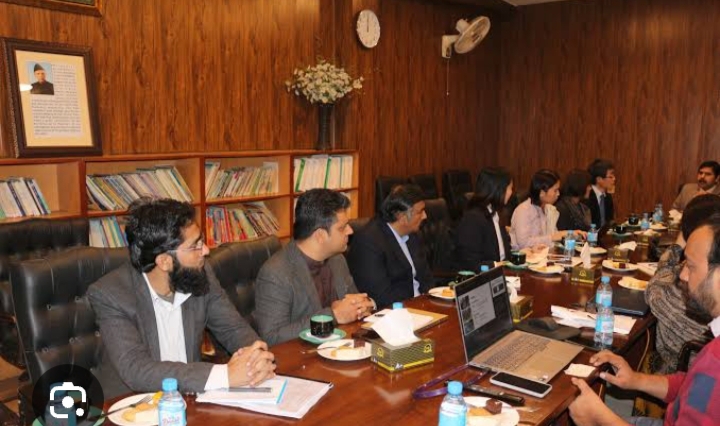
    LAHORE: A high-level delegation from the Japan International Cooperation Agency (JICA) visited Middle-Tech Literacy Centres in Lahore following an invitation from Literacy and Non-Formal Education Secretary Syed Haider Iqbal. The delegation included JICA President Dr. Akihiro Tanaka, Ambassador of Japan to Pakistan Shuichi Akamatsu, and JICA Pakistan Chief Representative Yusuke Shinozaki. During the visit, the officials toured literacy centres in Fatah Garh and Tajpura, reviewed the facilities available to students, and observed the teaching and learning activities. The delegation also interacted with students and distributed gifts among them. JICA representatives further handed over Package E textbooks to students who had completed Package D, enabling them to continue their education and move on to the next stage of their learning journey. During the visit, Secretary Literacy Syed Haider Iqbal briefed the Japanese delegation on the department’s ongoing initiatives for non-formal education. He highlighted projects being implemented with JICA’s support, along with other programmes aimed at improving access to education for children and young people who remain outside the formal schooling system. The secretary also outlined the department’s future plans and targets for expanding literacy, strengthening non-formal education and promoting skills development across Punjab. The JICA delegation appreciated the efforts of the Literacy and Non-Formal Education Department to improve literacy rates and provide educational opportunities to underserved communities across the province. The officials also acknowledged the department’s efforts to equip learners with skills that can contribute to their personal development and future economic opportunities. The meeting also focused on strengthening cooperation between the Literacy Department and JICA to expand educational opportunities for out-of-school children. Both sides discussed ways to enhance their partnership and explore further areas of collaboration to bring more children into the education system. The visit underscored the importance of international cooperation in addressing educational challenges and expanding access to learning opportunities, particularly for children who have been unable to attend mainstream schools.

  • |

    AI manipulation claimed in PARC hiring; 105 candidates still waiting

    Islamabad: The Senate Standing Committee on National Food Security erupted in controversy today as concerns over recruitment at the Pakistan Agricultural Research Council (PARC) were aired with unprecedented intensity. Senators claimed that the federal research body may have violated constitutional equity, leaving candidates from Sindh and Balochistan sidelined while Punjab and Khyber Pakhtunkhwa dominated appointments. At the heart of the storm are 230 vacant posts at PARC. Although the posts were advertised nationwide and tested through the third party Candidates Testing Services (CTS), only 125 candidates have received appointment letters, leaving 105 hopefuls in limbo. Senator Poonjo Bheel voiced sharp criticism, accusing PARC of sidelining smaller provinces, potentially breaching Article 38(g) of the Constitution. “Appointments have disproportionately favored Punjab and KP,” he warned, “while Sindh and Balochistan candidates are deprived of their due share.” PARC representatives defended their process, noting that a few Sindh candidates were appointed purely on merit and promising interviews for remaining Sindh and Balochistan candidates in the coming week. Yet, the Committee remained unconvinced. Senators stressed that results should be announced simultaneously across all provinces, warning that staggered releases could create perceptions of bias. The session took an even more sensational turn when officials revealed allegations of a coordinated propaganda campaign against PARC. Officials claimed that artificial intelligence (AI) may have been used to manipulate recruitment results, prompting the Committee to recommend immediate show cause notices for any employees involved in such activities. The Chairman directed PARC to submit a detailed list of the appointing authorities responsible for each recruitment decision and a comprehensive record of the 105 pending candidates’ interviews. The Committee demanded transparency and accountability to prevent further distrust in the nation’s premier agricultural research body. The Committee’s stern message made it clear: “Merit alone cannot justify provincial inequity, and any manipulation digital or human will not be tolerated.” The meeting was attended by Senators Rahat Jamali, Shahadat Awan, and Poonjo Bheel, with the agenda moved by Senator Shahadat Awan deferred due to the absence of the Federal Minister and Secretary.

  • Punjab Police’s Gujranwala division faces media communication gaps

    GUJRANWALA: Punjab Police’s Gujranwala division has a public relations setup in place, but journalists covering the region say the system is failing at the most basic task providing timely and accessible official information. Journalists covering police affairs across Gujranwala division say contacting the concerned PRO for the police version of an incident has become a frustrating exercise, with calls and messages frequently going unanswered. The problem becomes more serious when reporters are working on developing stories involving arrests, FIRs, police encounters, alleged misconduct or other sensitive matters where the police version is essential before publication. According to journalists, the issue is not simply about the availability of press releases. The police communication mechanism largely revolves around a WhatsApp group where official information is circulated, but there is little effective two-way communication when journalists need clarification or an immediate response. “Information is posted in the group, but when a journalist needs to ask a question or verify an incident, getting a response is often difficult,” said a journalist covering police affairs in the division. Another journalist said the communication gap had become particularly noticeable during breaking incidents, when reporters need the official version within minutes rather than hours. The frequent changes of PRO officials have further complicated the situation, journalists say. According to them, PROs are changed so frequently that journalists are often left uncertain about whom to approach for official comments. “By the time a working relationship develops with one PRO, another officer is assigned the responsibility,” a journalist said. The situation raises questions about the effectiveness of the PRO system itself. A police public relations officer is not merely responsible for forwarding press releases; the position also serves as a communication bridge between the police department and the media. When that bridge fails to function, journalists can be left with incomplete information while the police department risks losing an opportunity to present its official position. The problem is particularly important in a region where police operations regularly generate public interest. Arrests, encounters, recoveries, FIRs and allegations against police personnel all require timely verification and an official response. Journalists say the regional police command should establish a stable and clearly accessible media contact mechanism instead of relying primarily on a WhatsApp group for communication. The Punjab Police authorities and senior officers of Gujranwala division should also review the frequent changes in PRO assignments and assess whether the existing arrangement is delivering the level of media coordination expected from a major regional police formation. Without timely communication, the PRO system risks becoming a one-way information desk rather than the professional media liaison mechanism it is supposed to be.

  • | |

    PM Shehbaz orders probe into PIMS CTA failure

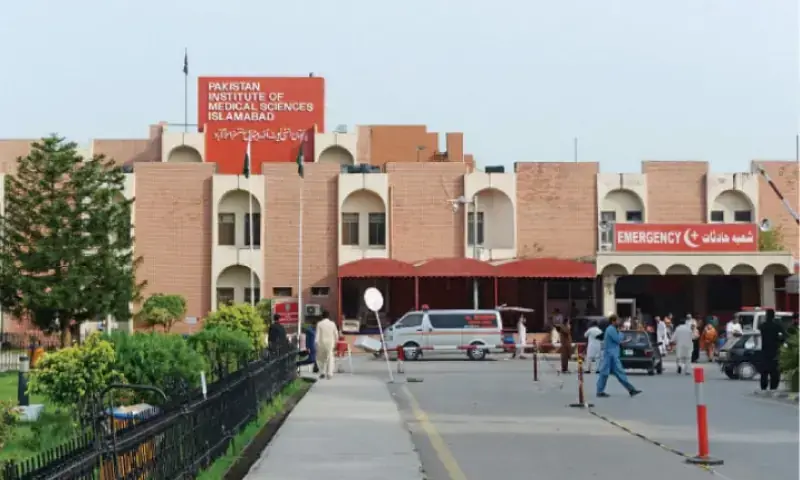
    Prime Minister Shehbaz Sharif has taken notice of the failure to conduct a CT angiography (CTA) test at the Pakistan Institute of Medical Sciences (PIMS) after PTI founder Imran Khan was taken to the hospital for a medical examination. The prime minister has formed an inquiry committee to investigate why the recommended cardiac test could not be performed and determine whether the required facilities were available at the hospital. The committee will be headed by the secretary of the Establishment Division and will include senior officials and medical experts from the National Health Services ministry, Armed Forces Institute of Cardiology (AFIC) and PIMS. The inquiry will examine whether PIMS had the technical capacity to conduct CTA scans since 2022. It will also determine whether the necessary equipment, software and trained staff were available when the test was recommended. The committee will review hospital records to establish how many CTA procedures have been conducted at PIMS since 2022 and whether patients requiring the test were routinely referred to private medical facilities. The investigation will also examine coordination between the cardiology and radiology departments and determine whether administrative shortcomings contributed to the failure to conduct the test. According to hospital officials, Imran Khan was brought to PIMS in the early hours of Friday for a medical check-up. His CTA was recommended, but the test was not carried out and he was subsequently taken back to Adiala Jail. The issue has raised questions about the availability and use of diagnostic facilities at the public-sector hospital. Officials said a CTA machine in the cardiac centre had remained out of service for years, while another machine in the radiology department was reportedly operational. The inquiry will specifically determine whether hospital staff were aware of the functioning radiology facility and why the patient was not referred there for the required examination. The committee will also investigate whether poor coordination, mismanagement or a misunderstanding between departments caused the failure and whether any officials should be held responsible. It has further been tasked with examining referrals to private hospitals, including whether any particular private facility was repeatedly preferred and whether such referrals resulted in the diversion of patients and revenue from the public hospital. Prime Minister Shehbaz has directed the committee to conduct a comprehensive review of all relevant records and facts and submit its findings. Further action will be taken on the basis of the inquiry report and in accordance with the law.

Leave a Reply

Your email address will not be published. Required fields are marked *