orchard classroom remembering

The Orchard Classroom: Remembering Dr Pervez Butt

Dr Pervez Butt died on the 26th of July, 2026, at the age of 84, and with him Pakistan lost one of the last living architects of its nuclear age. The obituaries will rightly recount the long arc of his public service: joining the Pakistan Atomic Energy Commission in 1963, cutting his teeth on the design of KANUPP-I, Pakistan’s first commercial nuclear power plant, spending years at GE Canada absorbing the discipline of reactor engineering, and eventually rising to chair the PAEC from 2001 to 2006 — a tenure during which he oversaw the expansion of Chashma and laid groundwork that would carry Pakistan’s nuclear power programme well into this century. He would go on to serve as Federal Secretary for Science and Technology, as an adviser at the Planning Commission, and, until his final days, as a quiet counsel to the National Command Authority. Nishan-i-Imtiaz, Hilal-i-Imtiaz, Sitara-i-Imtiaz — the honours are a matter of record.  
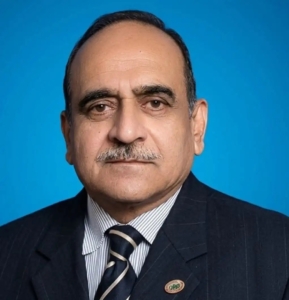
 

But I did not know him first as a chairman or a decorated public servant. I knew him as a teacher who happened to hold the keys to some of the country’s most consequential engineering decisions, and who chose, for reasons I am still grateful for, to hand a few of those keys to me.

I want to remember him the way I actually experienced him — not through the official biography, but through three long afternoons at his house in F-11 Sector, Islamabad, where he taught me something the textbooks never quite manage: how the price of nuclear electricity in Pakistan is actually determined.

Anyone who has sat through a lecture on tariff determination knows how dry the subject can be made to sound — EPC cost, fuel cost, capacity purchase price, energy purchase price, indexation, decommissioning liability. Dr. Butt made none of it dry. He made it a ritual.

Each session began the same way, and the way it began told you everything about the man. There was no walking straight into the numbers. First came tea — always a full spread of dry fruits, delicate sandwiches, fresh fruit, chana chaat, and cappuccino. It was in his drawing room that I had my first Cortado, and my first Mocha, both poured by a man who clearly took as much pride in introducing a good cup of coffee as he did in explaining a heat-rate calculation. Only once the plates were cleared did the real class begin.

He held nothing back. The sessions ran from ten in the morning until nearly four in the afternoon — six hours at a stretch, with no formal lunch break at all. Instead, somewhere past midday, a trolley would appear, loaded with Lahori chanay and naan, and he would keep teaching straight through it, tariff formulas in one breath and the economics of fuel fabrication cost in the next, a piece of naan in hand the whole time. I have sat in university seminars with more structure and far less learned.

What I remember most, though, is the break. Every two hours, without fail, he would stop — not because he was tired, but because he knew I smoked, and he had built an orchard directly across the road from his house for exactly this purpose. We would walk over together, and his waiter would already be there ahead of us, a fresh cappuccino on the table, an ashtray set out with wet tissue paper folded neatly beside it — a small, deliberate touch that told you this man planned for his guests down to the last detail. And it was in that orchard, not at his desk, that the real teaching happened. He would ask me, plainly, to repeat back what I had just understood. Not to test me — to correct me, gently, if I had drifted, and to make sure the idea had actually landed before we walked back inside for the next round.

I was, I suspect, an unlikely student for him to invest that kind of care in. I have never been a person drawn to nuclear energy for its own sake — the physics of it, the fission and the neutrons and the reactor cores, left me largely unmoved. What pulled me toward him was the economics: how a country decides what a unit of nuclear electricity should cost, how the capital recovery on a plant like K-2 or C-3 gets built into a tariff, how fuel cost and EPC cost and decommissioning liability all get stitched together into a number that regulators can defend and the public can pay. That was the language I wanted to learn, and he taught it to me the way he taught everything — thoroughly, patiently, and without ever once looking at the clock.

Looking back, I think that was the most VIP treatment anyone taught by him could have asked for — not a title, not a certificate, but three full days of a man who had chaired the PAEC choosing to spend his mornings, his working lunches, and his smoking breaks making sure a subject I hadn’t cared about a week earlier had become one I could speak on with confidence.

Pakistan will remember Dr. Pervez Butt for KANUPP and Chashma, for the plants he helped design and the institutions he helped build — the Pakistan Welding Institute, the nondestructive testing facility at Taxila, decades spent quietly ensuring that a technically demanding and politically sensitive programme kept working. Those achievements belong to the history books, and they are considerable.

I will remember the orchard. I will remember a Cortado poured by a man who insisted the tea come before the tariff, and a lecture that never stopped even for lunch. That was his real gift — not just what he knew, but how completely he was willing to give his time to make sure someone else knew it too.

Rest well, sir. The lesson stayed.
Similar Posts

  • The Reality of the Struggle, Two States, One Playb…

    In both Pakistan and India, what citizens are resisting is no longer standard party politics, it is the structural weaponization of the state. In India, political movements that emerged from populist or anti-corruption roots, like the Cockroach Party,  Aam Aadmi Party, along with regional dissenters, activists, and journalists, have faced arbitrary arrests, custodial pressures, and continuous raids by central agencies. In Pakistan, the state’s military-civilian establishment has used mass roundups, military trials for civilians, social media blackouts, and political bans to strip away electoral mandates and crush dissent. The torture, surveillance, and intimidation targeted at ordinary organizers and political workers across both borders mirror each other. The state’s goal in both contexts is identical, to make the cost of resistance so high that the public submits out of sheer exhaustion. Is It Time to Change? The short answer is, It is long overdue, but swapping rulers will change nothing. For decades, the public in both nations has been trapped in a cyclical trap. In Pakistan, people rally behind one party to remove the military-backed regime, only for the new government to use the exact same military apparatus to crush the next opposition. In India, hyper nationalism and state control have been normalized to the point where institutional checks, courts, enforcement agencies, and investigative bodies have lost their neutrality. If “change” simply means voting in a different political party while leaving the underlying security state and unchecked executive powers intact, the fascism simply changes its coat. True change requires dismantling the tools of authoritarianism, not just replacing the hands holding them. To actually break this cycle of state suppression in South Asia, three fundamental shifts must take place from the ground . As long as investigative agencies, financial crime bureaus, and intelligence services answer directly to political  bosses, they will be used as weapons of torture and political elimination. The primary demand of any genuine popular movement must be strict, legally enforced operational independence for courts, election commissions, and law enforcement.Parties, whether AAP, Cockroach Party, PTI, Congress, or regional blocs, are vehicles, not saviors. Authoritarian regimes thrive on divide-and-rule tactics, convincing one group to applaud when their political rival is jailed. The public must build non-partisan civil fronts where an attack on any citizen’s fundamental right, journalist’s freedom, or political worker’s safety is met with collective public outrage, regardless of party allegiance.Fascist narratives in South Asia rely heavily on manufactured enemies, hyper nationalist rhetoric, and national security panics to justify state overreach. Resistance movements break this spell when they relentlessly ground the conversation in tangible economic survival,inflation, labor rights, land grabs, and local self-governance. When the public realizes that state coercion is being used to mask economic failure, the moral authority of the regime collapses. The resilience of the people in both countries is undeniable, they continue to take to the streets despite jail, violence, and state power. But for that resilience to yield real liberation, the focus must shift from merely fighting for individual leaders to systematically dismantling the legal and institutional machinery that makes fascism possible in the first place.

  • |

    Does your native language control how you think?

    With over 7,000 distinct human languages spoken across the globe today, humanity communicates through fascinating sentence structures. A compelling debate has captivated thinkers for decades. Does the language you grow up speaking dictate the limits of what your mind can comprehend? This captivating idea lies at the heart of the Sapir-Whorf hypothesis. A theory that continues to provoke vibrant discussions across linguistics, philosophy, and cognitive science. The Power of Vocabulary and Perception The hypothesis was formulated in the early 20th century by linguists Edward Sapir and Benjamin Lee Whorf. It’s often referred to as linguistic relativity or linguistic determinism. They propose that the structure of a native language fundamentally shapes its speakers’ worldview and cognitive capacity. If a concept or object lacks a dedicated word in a person’s language, that person cannot truly perceive, categorize or conceptualize it. Consider how different cultures classify colors. Some languages possess dozens of specific terms for distinct shades. Whereas,  others operate with only a couple of basic terms distinguishing between light and dark tones. According to strong linguistic determinism, a speaker whose native tongue lacks a dedicated word for green would struggle to perceive a green leaf as distinct from yellow. Similarly, emotional vocabularies vary widely across cultures. German famously uses the word Schadenfreude to describe taking pleasure in someone else’s misfortune. According to Sapir-Whorf theory, an English speaker whose language lacks an exact single-word equivalent would supposedly find it difficult to recognize or isolate that specific emotional state within themselves. Why the Concept Fascinates Us? It is easy to see why the Sapir-Whorf hypothesis captured public imagination. The notion that our mother tongue acts as a unique way through which we view reality is deeply romantic. Philosophically, the theory suggests that the world contains thousands of distinct cognitive universes. If language entirely dictated thought, cross-cultural understanding would face profound barriers. It is so as the speakers of different languages would operate inside fundamentally incompatible mental frameworks. In semantic studies, labeling objects and experiences allows humans to organize chaotic sensory input efficiently. Giving a name to a precise group such as distinguishing toddlers, teenagers and senior citizens helps us categorize society into recognizable stages. The hypothesis demonstrated that naming things provides cognitive shortcuts. Such a naming method makes specific distinctions far easier to reference and discuss in daily life. Why Modern Science Rejects Strong Determinism Despite its initial popularity, modern linguistics and cognitive scientists reject strong linguistic determinism. The fundamental flaw in the hypothesis rests on a misunderstanding of the relationship between mind and speech. Language does not produce thought. Rather, human thought drives the creation and evolution of language. When people encounter new experiences, foods or technologies, they do not remain silent simply because they lack pre-existing terminology. Instead, humans spontaneously create new phrases. They adapt existing terms or borrow words from other cultures to describe what they have experienced. An English speaker can easily understand and feel pleasure at a rival’s failure without ever having heard the German word Schadenfreude. While English uses blue for both dark and light shades. Whereas Italian maintains separate primary words (blu and azzurro). English speakers are fully capable of seeing the difference between a midday sky and the deep ocean. Human cognition precedes language. Speech serves as a flexible tool designed to communicate human experiences, not a rigid cage that imprisons cognitive ability. The Lasting Value of Sapir-Whorf   The Sapir-Whorf hypothesis retains great value even if its most radical claim has been disproven. It paved the way for weak linguistic relativity. The claim further explores how language subtly influences cognition, memory and visual attention without imposing hard limits on intellect. Ultimately, Sapir and Whorf inspired generations of researchers to explore the mysterious connection between human culture, language and the mind.

  • Pakistan’s Governance Crisis

    Since its inception, Pakistan has been confronted with a multitude of complex and interwoven challenges that have persistently constrained its political stability, economic progress, institutional development, and social transformation. While the nature and intensity of these challenges have evolved over time, their cumulative impact has continued to impede the country’s pursuit of sustainable development and national prosperity. Among these enduring national challenges, the governance crisis has emerged as one of the most pressing concerns, posing serious implications for sustainable development, institutional resilience, socioeconomic progress, and the country’s long-term stability. A number of instances can be quoted to highlight the dismal situation of governance in Pakistan. The very first among these is the lack of citizens’ interest in participation. Citizens are not sufficiently aware of their participatory rights; therefore, they do not keep an eye on public officials and don’t raise their voices when their legal rights are violated by the elite class of the state. Moreover, in terms of transparency, Pakistan is far behind the required standards. According to the 2025 Corruption Perception Index published by Transparency International, Pakistan scored 28 out of 100 and ranked 136th out of 182 countries, indicating a high perceived level of public sector corruption. Furthermore, it is our bad luck that the situation of the rule of law has always been in trouble since 1947. Unfortunately, the rule of law has been confined to the conventional concept of law enforcement, internal security, and crime control, while, at the same time, it overlooks the basic elements, including transparency, accountability before the law, and the equal, just, and clear application of the law. Although, the state has numerous accountability committees and agencies to hold corrupt individuals accountable and curb corrupt practices in society. But still, the state is struggling to implement accountability in its true sense. Ignoring the major causes that have led to the deplorable situation of governance in Pakistan would be totally unjust. These include a number of factors that have directly or indirectly facilitated its existence. In this context, political instability is the biggest cause of bad governance in Pakistan. For most of the time, a myopic approach is adopted by political parties to establish their own governments. They remain engaged in the struggle for power while toppling governments by hook or by crook. Likewise, the relevant institutions do not respond immediately to the emergence of new challenges, leading to dearth of responsiveness in institution’s working.   In addition to it, the lack of strategic vision of the political leadership is also a factor which hits the structure of governance in Pakistan. Quite understandably, Political leaders have failed to foresee Pakistan’s emerging challenges and to cope with the persistent challenges that the state has been confronting for a long time. Keeping in view the crunch of governance, whom should be blamed and held accountable? It is the need of the hour that well-crafted and result-oriented policies regarding governance be formulated and effectively implemented to address the issue in its true spirit. Social media should play its crucial role in spreading awareness. Democracy should be strengthened. Posting, transfer, and promotion of bureaucrats should be done on merit. Last but not the least, the right to information should be guaranteed to citizens as provided under Article 19A of the Constitution of the Islamic Republic of Pakistan. These bold steps can place Pakistan in the list of countries having good governance.

  • Who Is Responsible for the Truth?

    One question stayed with me long after I attended a workshop under the project titled ‘Digital Trust and Free Expression in the Era of AI’, organized by the Department of Media and Development Communication, University of the Punjab with the support of the U.S. Mission to Pakistan in partnership with the Pakistan-U.S. Alumni Network, was, ‘How will we preserve digital trust and free expression in the age of AI’? As AI becomes an integral part of digital journalism, the question is no longer whether it should be used, and more importantly who should be held responsible when things go wrong. Artificial Intelligence has definitely proven to be a powerful tool for journalists. It can summarize long reports, translate content into multiple languages, follow breaking news, analyze vast quantities of data and even write complete news reports in seconds. All of these capabilities have revolutionized newsroom processes and enabled journalists to process information more efficiently than ever before. But efficiency is not the only measure of ethical journalism. Journalism isn’t about being fast, it’s about informing the public accurately, fairly and responsibly. One of the most valuable lessons I learned from the workshop was that AI does not understand information; it predicts the most likely response based on patterns in the data it has learned from. This distinction is important because when reliable information is unavailable at the time, AI generates responses that seem convincing but inaccurate, but are wrong, which is often referred to as AI hallucination. What’s most concerning is that the AI generated mistakes can appear convincing enough for people to accept them as true. This poses an ethical question: Who should be held responsible if AI-generated news contains misleading information? The burden can’t be placed entirely on the algorithm. AI has no moral judgement or legal accountability. It cannot distinguish between public interest and public harm and is not aware of the social consequences of publishing inaccurate information. This means that the responsibility rests with those who decide to employ these technologies: journalists, editors, newsroom leaders, and media organizations. While AI can help create content, it cannot replace responsibility. This is where ethics become more important than technological advancements. Checking information should not take a back seat to the ‘Publish first’ mentality. With all of the digital platforms that exist today, misinformation can spread from continent to continent within minutes and corrections often fail to reach the same audience. Each unverified headline altered photo or AI-generated mistake can damage the public’s trust, both in a specific news organization and in journalism.   The discussions also reinforced the importance of Media and Information Literacy (MIL). Verification is not only the responsibility of journalists, but also something that is necessary for every digital citizen. Learning how to use reverse image search, source verification techniques, and critical evaluation of online information is no longer an option, it’s essential for protecting ourselves from deception. As AI-generated content becomes increasingly sophisticated, it is essential to verify information before accepting it as true. AI will continue to evolve and so will digital journalism. The challenge is not innovation itself but using it responsibly. Trust is not something algorithms can build, it is something that can be gained only through transparency, accountability and a steadfast dedication to truth. While adopting new technologies to do journalism, let’s not forget that the tools should enhance journalism’s values, not shape journalism. AI may help write the news, but only humans can uphold the ethics behind it. The views, thoughts, and opinions expressed in this blog are solely those of the author and do not necessarily reflect the official policy or position of the U.S. Mission to Pakistan or USEFP.

  • Shehbaz Sharif: A proven troubleshooter steering P…

    Every political leader is eventually defined not by promises but by performance under pressure. Pakistan has faced repeated political, economic and administrative challenges over the decades, and each crisis has demanded leadership with experience, patience and the ability to find solutions. In my view, Prime Minister Muhammad Shehbaz Sharif has established himself as a leader who understands governance, negotiation and crisis management. His journey from grassroots politics to becoming Chief Minister of Punjab and later Prime Minister of Pakistan has given him decades of experience in dealing with the practical realities of administration and public service. His reputation as a hands-on administrator comes from his approach to governance. During his tenure as Chief Minister of Punjab, he focused on reforms in education, healthcare, infrastructure and public service delivery. His fast-paced working style earned him the title “Shehbaz Speed”, reflecting his emphasis on implementation and results. I first met Shehbaz Sharif in 2005 at his flat in Avenfield House, London. Over the past twenty-one years, I have had the opportunity to observe his political journey closely. While journalism requires independence and critical analysis, personal observation also provides a unique perspective. Throughout this period, his commitment to Pakistan and his passion for public service have remained evident. During his years as Chief Minister of Punjab, I witnessed his determination to create opportunities for young Pakistanis, particularly through education reforms. Initiatives such as the Punjab Education Endowment Fund, Danish Schools, merit-based scholarships, laptop schemes for students and stipends for high achievers aimed to expand access to quality education. The policy of sending high-performing students abroad, including to the United Kingdom and other European countries, was designed to broaden their vision and expose them to international standards. These initiatives reflected a belief that education is the foundation for long-term national development. His reforms in healthcare and infrastructure also became a significant part of his governance record. Supporters believe that his focus on improving public services in Punjab provided a model of administrative delivery that he later brought to the national level. As Prime Minister, Shehbaz Sharif has faced one of the most challenging periods in Pakistan’s recent history. His supporters credit his government with helping stabilise the economy, restoring international engagement and steering Pakistan away from the risk of a deeper financial crisis. Although major economic challenges remain, they argue that difficult decisions have helped create a more stable foundation. One of the notable features of the current political landscape has been cooperation between state institutions. Supporters view the working relationship between Prime Minister Shehbaz Sharif and Field Marshal Syed Asim Munir as an example of institutional coordination aimed at achieving national stability and economic progress. Pakistan has also sought a more active role on the international stage. Supporters point to its diplomatic engagement, including efforts to promote dialogue during periods of international tension, as evidence that Pakistan continues to play an important role in regional and global affairs. In my view, Prime Minister Shehbaz Sharif has repeatedly demonstrated the ability to steer Pakistan through difficult circumstances. Based on my observations over more than two decades, I believe he has faced major challenges before and has the experience and determination to overcome them again. His strength lies in his understanding of governance, his ability to negotiate with different stakeholders and his focus on delivery. Whether dealing with political partners, institutions or international partners, his supporters believe his experience gives him an advantage in managing complex situations. However, Pakistan’s journey towards prosperity requires continued reforms. Economic pressures, inflation, unemployment and governance challenges remain serious concerns. The next phase must focus on ensuring that national progress translates into improvements in the daily lives of ordinary citizens. In my opinion, Pakistan also needs stronger administrative decentralisation. Whether through new provinces or more empowered administrative units, decision-making should be brought closer to the people. More effective local governance can improve accountability, strengthen public services and accelerate development across the country. Pakistan now needs consistency, stability and a collective commitment from all stakeholders. Political differences are part of democracy, but national progress requires institutions to work together and focus on the common goal of prosperity. Prime Minister Shehbaz Sharif has built his political career around crisis management and public administration. His greatest challenge now is to convert stability into sustainable growth and lasting development. History will ultimately judge every leader by the impact they leave behind. For Shehbaz Sharif, the opportunity remains to transform difficult times into a period of economic recovery, institutional strength and a stronger Pakistan for future generations.

  • Pakistan’s Development Partners

    Like other developing countries around the globe, Pakistan also seeks to optimize a higher and impact-oriented investment rate in order to achieve higher and sustainable economic growth. In this regard, Pakistan’s development partners provide knowledge advisory and financial assistance to support implementation of economic reforms that will spur sustainable economic growth. The priority of the incumbent federal government headed by Prime Minister Muhammad Shehbaz Sharif is to undertake development partners’ engagements around two key objectives: (i) achieve sustainable social and economic growth as envisioned in its development plans to reduce poverty and inequality, and to create equitable access to social services and create employment opportunities for the youth, and (ii) address the external and fiscal imbalances for enhanced macroeconomic stability. The disbursement of Foreign Economic Assistance (FEA) remained low during the financial year 2025-26, as against budgeted figures of Rs 5777654.488 million, foreign assistance received was Rs 5024516.997 million. For the new financial year 2026-27, Pakistan was most likely to receive Rs 6779624.460 million (US $ 23.38 billion) from its development partners. Breakup-wise, Pakistan will be borrowing US $ 400.422 million (Rs 116122.423 million) from bilateral resources, US $ 4866.223 million (Rs 1411204.727 million) from multilateral resources, (US $ 235.000 million) from foreign commercial banks, US $ 12000.00 million (Rs 3480000.000 million) through bilateral deposit, US $ 1122.370 million (Rs 325487.300 million) through Naya Pakistan Certificate, and US $ 530.000 million (Rs 153700.000 million) from International Monetary Fund (IMF). Foreign assistance secured by Pakistan from its development partners also include, as usual, foreign aid for autonomous bodies such as WAPDA (Power), National Transmission and Dispatch Company (NTDC), National Highway Authority (NHA), and Power Division. Higher Education Commission (HEC) and SUPARCO were among the autonomous bodies who also received foreign assistance during the financial year 2025-26, but both of these were not among the foreign assistance beneficiaries somehow for the just commenced fiscal year 2026-27. Figures have been avoided for want of space, please. External resources, as per information available from the official sources, are derived from a combination of financing instruments, including project loans and grants, programme loans and other loans. Project loans and grants are received from specialised International Financial Institutions and friendly countries with specific purposes; project loans and grants for Public Sector Development Programme (PSDP) are received for various projects being executed by Federal Government, Provincial Governments and various Autonomous Bodies such as WAPDA, PEPCO, NHA, etc.; there are certain projects which are kept out of PSDP and executed by Federal and Provincial Governments and Autonomous Bodies by receiving project loans and grants; programme loans are provided for budgetary support and are linked/tied with achievement of specific targets and goals; and other loans comprise of loans from Islamic Development Bank, Sovereign Bonds, Sukuk Bonds, etc. raised from non-traditional sources. Bilateral sources included China, Denmark, France, Germany, Italy, Japan, Korea, Kuwait, Oman, Saudi Arabia, and the USA. Multilateral sources included Asian Development Bank (ADB), Asian Infrastructure Investment Bank (AIIB), EIB, International Bank for Reconstruction & Development (IBRD), International Development Association (IDA), International Fund for Agricultural Development (IFAD), IsDB, PEC Fund and the United Nations, and the International Monetary Fund (IMF). There was no Saudi Arabia Time Deposit and no SAFE China Deposit commitments for the financial year 2026-27. World Bank, Asian Development Bank (ADB), Asian Infrastructure Investment Bank (AIIB) and IsDB were the major multilateral development partners who have conducted important diagnostic studies as well as formulated well-aligned medium-term country partnership strategies. Developments in Pakistan’s economy were also being closely monitored and rated by important rating agencies like Fitch, Moody’s and S & P which help Pakistan in accessing capital markets. Support from development partners and international financial institutions is critical to implementing the federal government’s agenda for sustained and balanced development for the people. The aim and objective of seeking foreign or external financial assistance can be stated as “promoting economic and social development in the developing countries.” It can also be defined as “Administered transfer of resources from a donor country or international financial agency to the developing countries with a view to encourage economic growth.” Foreign aid can be in the form of money, goods or technical assistance and can also be between two (bilateral) or many (multilateral) countries/institutions. Foreign aid is also looked for to meet both the economy’s balance of payments gap and investment gap. That is why project and technical assistance alone are not sufficient.

Leave a Reply

Your email address will not be published. Required fields are marked *