orders expansion strategic
| | |

PM orders expansion of strategic oil reserves

ISLAMABAD: Prime Minister Shehbaz Sharif has directed authorities to expand Pakistan’s strategic petroleum reserves while approving key amendments to the Pakistan Oil Refining Policy 2023, a move aimed at strengthening the country’s energy security, attracting investment and modernising the refining sector.

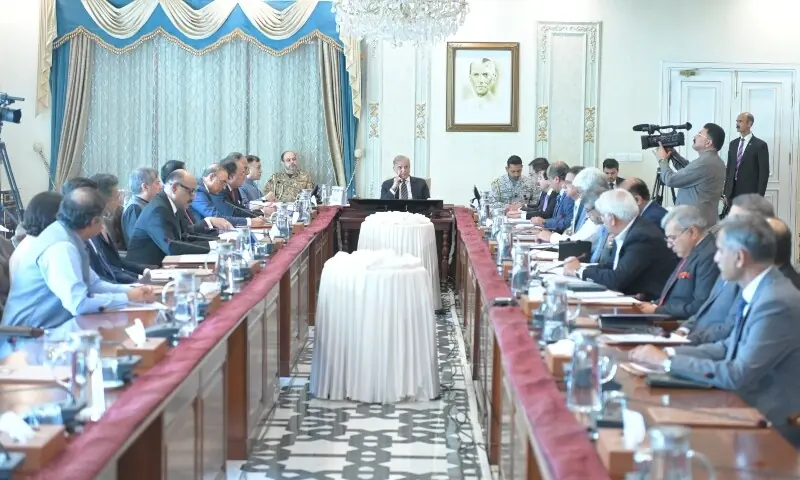
Chairing a meeting of the Cabinet Committee on Energy (CCoE), the prime minister was briefed on the progress of refinery upgradation projects, ongoing energy sector reforms and the implementation of the revised refining policy. He described the modernisation of Pakistan’s oil refineries as a national priority, saying it would improve energy security, reduce reliance on imported fuels and support the production of cleaner, environmentally friendly petroleum products.

The approved amendments focus on upgrading existing refineries to increase production capacity while enabling the manufacture of Euro-V standard petrol and diesel. The changes are also intended to reduce the production of furnace oil and other lower-quality petroleum products, helping Pakistan meet international environmental commitments and curb air pollution.

To encourage foreign investment, Prime Minister Shehbaz instructed officials to organise investment roadshows in Qatar, Saudi Arabia and other Gulf countries to promote opportunities in Pakistan’s refining sector. He stressed that the revised policy must be implemented without delay and warned that negligence in executing the reforms would not be tolerated.

The premier also directed relevant ministries and institutions to maintain close coordination with stakeholders to accelerate the reform process. In addition, he called for improvements in the performance of the Oil and Gas Regulatory Authority (OGRA) to promote greater transparency, competition and investor confidence in the energy market.

Pakistan has been seeking to strengthen its fuel security after recent regional tensions exposed the country’s vulnerability to supply disruptions. The absence of strategic petroleum reserves became a major concern during the conflict that affected oil shipments through the Strait of Hormuz, prompting renewed urgency for energy sector reforms.

The refining policy has faced repeated delays since its formulation. Although finalised in 2023 and approved the following year after years of consultations, implementation stalled when incentives were withdrawn in the federal budget, causing refinery upgrade agreements to be put on hold. Discussions resumed after the government addressed financial concerns raised by refinery operators and pledged measures to revive nearly $6 billion in planned investments.

Industry stakeholders have continued to seek policy stability and tax-related assurances, arguing that unresolved issues, including sales tax on imported equipment and refinery inputs, have created financial challenges that threaten the viability of modernisation projects. The government has indicated that further measures will be introduced to facilitate investment and ensure the successful implementation of the refinery upgrade programme.
Similar Posts

  • |

    Ram Kapoor opens up on hidden depression during ‘Bade Achhe Lagte Hain’

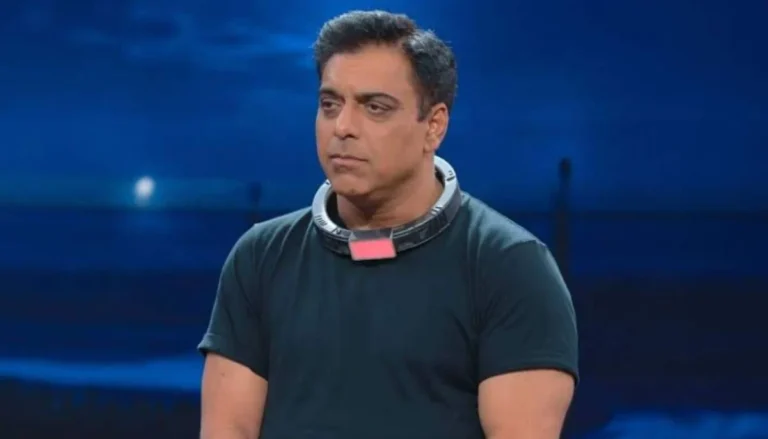
    Ram Kapoor has made another candid revelation on the latest episode of Lock Upp 2. The 52-year-old actor opened up about a painful chapter from his past that he had kept hidden for years. Kapoor reflected on the time he spent working on Bade Achhe Lagte Hain. During that period, he struggled with obesity and continuous weight gain, which eventually led to serious health complications. He revealed that this phase also overlapped with the most difficult emotional period of his life. According to Kapoor, this was a secret he had never shared publicly, not even with his wife, Gautami Kapoor. He said, “I have kept one secret from the world; even my wife doesn’t know. During the show, I went through the absolute worst depression of my life.” He then described just how severe his health situation had become at the time. Doctors reportedly told him he could die within six months if nothing changed. Kapoor recalled being on insulin three times daily, with his blood sugar levels swinging between dangerously high numbers. Despite this, he kept working roughly 14 hours a day without pause. He admitted he avoided confronting the issue seriously, largely because of the immense love and financial success he was receiving during that time. He explained that walking away from all of it felt nearly impossible, even as it took a toll on both his body and mind. He also acknowledged that the pressure changed his personality, admitting he became a much harder person to be around during those years. Kapoor further shared that even his wife and child only learned the full truth about this struggle after watching the latest episode of Lock Upp 2 themselves. This revelation adds another deeply personal layer to Kapoor’s run on the show, where he has continued opening up about experiences he had never spoken about publicly before. By choosing to share this now, years after the fact, Kapoor seems intent on giving fans a more honest picture. His story sheds light on the hidden costs that can come with sustained fame, long working hours, and public pressure, even when everything on the surface appears successful.

  • | | | |

    Top National Thailand Stories From the Past Week: Bangkok Pub Fire Death Toll Reaches 34, and More

    Here is a look at the top NATIONAL Thailand stories, chosen by our Pattaya News/TPN National team, from last week, Monday, July 13th to Sunday, July 19th. They are not in any particular level of importance but are listed in the order of date of publication. A massive fire ripped through a well-known beer pub […]

  • |

    Afghan fathers struggle as girls remain barred from secondary schools

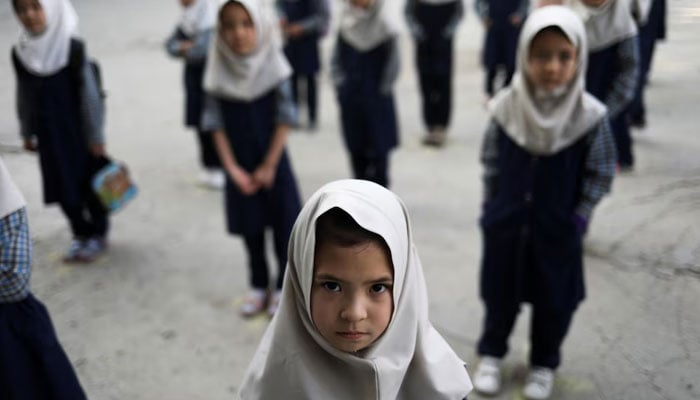
    KABUL: Afghan fathers are facing growing distress as their daughters remain unable to continue their education beyond primary school under restrictions imposed by the Taliban authorities. Families across Afghanistan say the education ban is creating deep emotional and financial pressure. Some fathers are openly questioning the policy, despite their religious beliefs and support for other government measures. The Taliban administration has defended the restrictions as temporary and based on its interpretation of religious principles. However, many Afghan men say they cannot understand why girls should be prevented from receiving secondary education. A United Nations survey conducted last year found that about nine out of 10 Afghan men considered it important for girls to attend secondary school. Nearly two-thirds also viewed supporting a daughter’s education as a religiously commendable act. Girls were barred from secondary schools after the Taliban returned to power in 2021. Women were later also prohibited from attending universities. The restrictions have affected a large number of young Afghan women and girls. For many families, the approaching end of primary education has become a source of fear. Fathers worry that their daughters will lose their chance to pursue higher education and build professional careers. One father, identified as Ahmad, said he had never imagined that his daughters could be forced to stop studying. His wife is a mathematics teacher who is also unable to continue teaching secondary-level students. Ahmad said his eldest daughter is approaching the end of primary school. The family has considered private and underground educational options, but the cost is difficult to manage. Another father, a doctor identified as Mohammad, said he had always wanted his daughters to attend leading universities. He believes women are essential to Afghanistan’s development and should have opportunities beyond household responsibilities. His daughters are approaching the age when they will be forced to leave formal schooling. The family has considered sending them abroad, including to Pakistan, but changing regional circumstances have made that option difficult. Some families have turned to private schools that secretly provide general education alongside religious studies. These institutions often charge high fees and may not provide recognised graduation certificates. Parents also fear that authorities could take action against schools operating outside official restrictions. This leaves families caught between protecting their children and trying to continue their education. Another father from Kandahar said his young daughter has a strong interest in astronomy. She asks questions about the solar system, gravity and science. The girl reportedly asked her father how she could continue learning if she could not study beyond the sixth grade. Her question has become a painful reminder of the limited opportunities available to girls. Some families have moved to Kabul in search of better educational opportunities. Others are relying on online courses, home schooling and secret classes. The restrictions are also affecting children emotionally. Parents say many girls feel frustrated, isolated and uncertain about their future. One father said his teenage daughter often stays at home and becomes deeply upset when she thinks about her education. He said he sometimes leaves the room because he cannot control his emotions and ends up crying privately. Another family has created a home-schooling routine using old secondary-school textbooks. The parents try to maintain a school-like schedule so their daughters can continue learning. However, the parents say home education cannot fully replace a formal school environment. They worry about the lack of recognised qualifications, social interaction and access to trained teachers. Some girls have also begun attending secret classes. Their families remain concerned about possible consequences if the authorities discover them. The prolonged restrictions have created uncertainty for an entire generation of Afghan girls. Parents fear that years without formal education will limit their daughters’ future opportunities

  • |

    Saba Hameed’s double role as mom and wife sparks confusion

    Saba Hameed continues to prove her versatility as an actor, appearing in more projects than most of her peers. Her latest casting choices, though, have left fans and colleagues puzzled. In ARY Digital’s Bas Tera Saath Ho, now 28 episodes deep, Saba portrays the wife of the male lead’s uncle, played by Faran Tahir. Around the same time, she plays the mother of the female lead’s father in Dar-e-Nijaat, another ARY production, again opposite Tahir. She is essentially his wife in one show and his mother in another, with both airing simultaneously. Content creator K Khan raised the issue in an Instagram reel on Monday. He questioned how the makers of Dar-e-Nijaat decided she suited the role of Tahir’s mother, given that she plays his spouse elsewhere on the same channel. Actor Zhalay Sarhadi weighed in through the comments, arguing that only women seem to age in Pakistani show business, while men remain perpetually youthful on screen. She said the industry keeps reinforcing this outdated mindset, even as attitudes shift elsewhere in the world. Sarhadi called for better, more realistic roles written for female actors, and joked she might soon end up playing Humayun Saeed’s mother if the trend continues. Atiqa Odho voiced similar frustration on her show Kya Drama Hai, posted to YouTube on Tuesday. She praised the overall cast but admitted she could not understand the casting logic behind Hameed’s role. She added that Hameed’s look in the part felt unconvincing, since she does not resemble a grandmother. Not everyone agreed. TV host Juggun Kazim defended the casting, calling it proof of Hameed’s exceptional range as a performer. She said Hameed has a rare gift for making audiences forget she is acting and fully believe each character. This is not the first time ageism has stirred debate in Pakistani television. Atiqa herself was previously targeted over remarks about her appearance. Critics often point out that male actors in their 40s still land lead roles as young men, such as Fahad Mustafa in Kabhi Main Kabhi Tum, frequently paired with much younger actresses. Women of similar age, meanwhile, are routinely pushed into roles as mothers or older relatives, underscoring a persistent double standard in casting across the industry.

  • | |

    Cynthia Erivo pays sweet tribute to Ariana Grande …

    Cynthia Erivo and Ariana Grande have once again reminded fans why their friendship remains one of the most beloved bonds to come out of Wicked. The longtime co-stars reunited onstage in London, creating an emotional moment that quickly became one of the highlights of Grande’s Eternal Sunshine Tour.  On August 16, Erivo surprised fans at London’s O2 Arena when she joined Grande during the second night of the singer’s London shows. The pair performed “For Good,” the emotional Wicked song that has become closely associated with their characters, Elphaba and Glinda. They also treated the audience to the “Get Happy/Happy Days Are Here Again” medley.  The reunion was especially meaningful because it marked their first live performance together since the 2025 television special Wicked: One Wonderful Night. Their return to the stage together brought back memories of their years working on the two Wicked movies and the friendship they developed away from the spotlight.  Erivo has previously spoken warmly about singing with Grande, describing her as one of the few people she genuinely loves performing alongside. She explained that she does not often want to sing with other people, but Grande is different because their voices and energy naturally complement one another.  That affection was clear during their London reunion. The two stars embraced onstage, while Grande was also seen kissing Erivo’s hand, adding another tender moment to the performance. Their chemistry once again reminded audiences of the special connection they built while bringing Elphaba and Glinda to life.  Their friendship has faced plenty of public speculation over the years. However, Erivo has repeatedly made it clear that their bond is genuine. In a 2026 interview, she discussed how people struggled to understand the closeness between two women and emphasized that deep, platonic female friendships are real.  The London reunion therefore felt like more than just another surprise concert appearance. It was a celebration of music, friendship and the lasting impact of Wicked. For fans who have followed Erivo and Grande since the beginning of their journey as Elphaba and Glinda, seeing them share the stage again was a particularly touching reminder that their connection continues long after the cameras stop rolling.

  • | |

    PTI rejects AJK polls, demands fresh elections

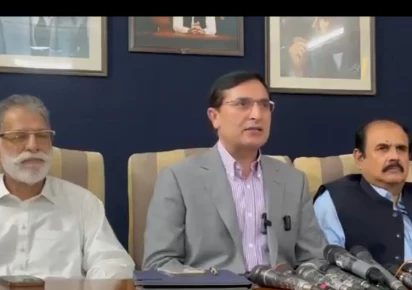
    Pakistan Tehreek-e-Insaf (PTI) has rejected the first phase of the Azad Jammu and Kashmir (AJK) elections. The party has described the July 27 polls as unacceptable and demanded a judicial inquiry into the violence reported in the region. PTI leaders also called for the cancellation of the remaining two phases of the elections. They demanded fresh elections across AJK in a single phase under an independent and impartial election commission. Speaking at a press conference on Wednesday, PTI Chairman Barrister Gohar Ali Khan appeared alongside former AJK prime minister Sardar Qayyum Niazi. The leaders strongly criticised the violence reported in Rawalakot, Mirpur and other areas. Multiple reports of deaths and injuries have emerged since Monday. Videos showing unrest have also circulated on social media, although the reported casualties could not be independently verified. Both security agencies and the Joint Awami Action Committee (JAAC) have reported casualties during clashes. Niazi said Kashmiris were facing what he described as unprecedented oppression. He said the situation was particularly concerning because Kashmiris had historically supported the cause of accession to Pakistan. He claimed protesters had attempted to resolve their grievances through negotiations. According to him, the situation deteriorated after their demands were not addressed. Niazi maintained that the protesters were peaceful. He questioned the use of force against them and urged authorities to avoid further escalation. He also criticised the decision to conduct the AJK elections in three phases. Niazi argued that the region has a relatively small population and questioned why the elections could not have been held on a single day. He said the ongoing violence was damaging Pakistan’s position on the Kashmir issue. According to him, AJK is considered an important base for the wider Kashmir cause. Niazi warned that the unrest could send a negative message internationally. He said Pakistan had previously highlighted alleged human rights violations in Indian-administered Kashmir at international forums. He argued that developments in AJK could make it difficult for Pakistan to effectively present its position on Kashmir before the international community. The former AJK prime minister also rejected the portrayal of protesters as terrorists. He said the same people had previously been engaging with authorities through negotiations. Niazi called for dialogue and urged the government to avoid further use of force. He proposed the establishment of a national government in AJK until conditions returned to normal. He said free and transparent elections should then be held across the region, with PTI participating in the process. Gohar also strongly criticised the July 27 elections. He alleged that the polls had failed to reflect the will of the people. The PTI chairman said using force to silence protesters could not resolve political and public grievances. He argued that listening to citizens was a fundamental part of democracy. Gohar criticised both the Pakistan Peoples Party (PPP) and the Pakistan Muslim League-Nawaz (PML-N) for turning the election dispute into a political contest. He said political parties should focus on the violence and reported casualties rather than exchanging allegations over electoral gains and losses. The PTI leader also pointed to the low voter turnout. He claimed that the limited participation represented public dissatisfaction with the existing political system. Gohar said the Kashmir issue was extremely sensitive and should not be used for political interests. He urged all stakeholders to act responsibly and resolve the crisis through dialogue. PTI has now formally demanded a judicial investigation into the reported violence. The party also wants the remaining election phases, scheduled for August 2 and August 10, cancelled. The party has further called for the resignation of the AJK government and the formation of a national government to manage the situation. PTI wants fresh elections to be held across AJK in a single phase. It has called for the process to be conducted under the supervision of an independent and impartial election commission. The party says dialogue should be prioritised to address public grievances and restore normalcy before a fresh electoral process begins.

Leave a Reply

Your email address will not be published. Required fields are marked *