orders expansion strategic
| | |

PM orders expansion of strategic oil reserves

ISLAMABAD: Prime Minister Shehbaz Sharif has directed authorities to expand Pakistan’s strategic petroleum reserves while approving key amendments to the Pakistan Oil Refining Policy 2023, a move aimed at strengthening the country’s energy security, attracting investment and modernising the refining sector.

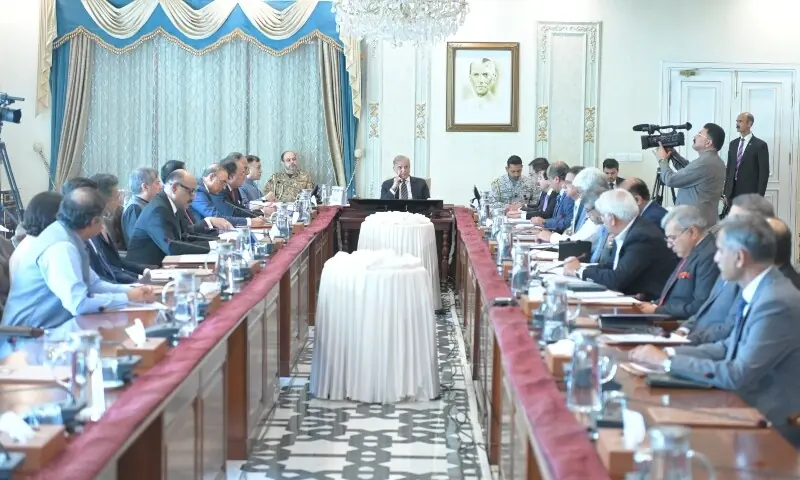
Chairing a meeting of the Cabinet Committee on Energy (CCoE), the prime minister was briefed on the progress of refinery upgradation projects, ongoing energy sector reforms and the implementation of the revised refining policy. He described the modernisation of Pakistan’s oil refineries as a national priority, saying it would improve energy security, reduce reliance on imported fuels and support the production of cleaner, environmentally friendly petroleum products.

The approved amendments focus on upgrading existing refineries to increase production capacity while enabling the manufacture of Euro-V standard petrol and diesel. The changes are also intended to reduce the production of furnace oil and other lower-quality petroleum products, helping Pakistan meet international environmental commitments and curb air pollution.

To encourage foreign investment, Prime Minister Shehbaz instructed officials to organise investment roadshows in Qatar, Saudi Arabia and other Gulf countries to promote opportunities in Pakistan’s refining sector. He stressed that the revised policy must be implemented without delay and warned that negligence in executing the reforms would not be tolerated.

The premier also directed relevant ministries and institutions to maintain close coordination with stakeholders to accelerate the reform process. In addition, he called for improvements in the performance of the Oil and Gas Regulatory Authority (OGRA) to promote greater transparency, competition and investor confidence in the energy market.

Pakistan has been seeking to strengthen its fuel security after recent regional tensions exposed the country’s vulnerability to supply disruptions. The absence of strategic petroleum reserves became a major concern during the conflict that affected oil shipments through the Strait of Hormuz, prompting renewed urgency for energy sector reforms.

The refining policy has faced repeated delays since its formulation. Although finalised in 2023 and approved the following year after years of consultations, implementation stalled when incentives were withdrawn in the federal budget, causing refinery upgrade agreements to be put on hold. Discussions resumed after the government addressed financial concerns raised by refinery operators and pledged measures to revive nearly $6 billion in planned investments.

Industry stakeholders have continued to seek policy stability and tax-related assurances, arguing that unresolved issues, including sales tax on imported equipment and refinery inputs, have created financial challenges that threaten the viability of modernisation projects. The government has indicated that further measures will be introduced to facilitate investment and ensure the successful implementation of the refinery upgrade programme.

Similar Posts

  • | |

    Margot Robbie’s Barbie sequel hits roadblock

    The highly anticipated Barbie sequel has hit a major roadblock, leaving fans uncertain about the future of the blockbuster franchise. Negotiations between Warner Bros. and the key creative team behind the 2023 hit have reportedly stalled over compensation. Margot Robbie, Ryan Gosling, director Greta Gerwig and co-writer Noah Baumbach are all involved in discussions about returning for a potential sequel. However, the sides have not yet reached an agreement. (Variety⁠) The issue reportedly centers on salary demands and backend compensation. Robbie and Gosling are seeking larger financial packages for their returns, while Gerwig and Baumbach are also negotiating their deals. Reports indicate that the creative team wants stronger upfront pay along with a greater share of the film’s potential profits. The negotiations are particularly significant because the original Barbie became a massive worldwide success. Released in 2023, the Greta Gerwig-directed film earned more than $1.4 billion globally and became Warner Bros.’ highest-grossing movie. Its success also turned Robbie and Gosling’s versions of Barbie and Ken into major pop-culture figures. (EW.com⁠) Despite the enormous success of the first film, Warner Bros. reportedly underestimated how valuable the project and its talent would become. The studio has made several offers to bring the original creative team back, but an agreement has yet to be reached. (Page Six⁠) The situation could become more complicated as a deadline approaches. Reports say Warner Bros. needs to secure agreements by December 2026 to retain the rights connected to a potential sequel. If the negotiations fail, the rights could return to Mattel, potentially opening the door for the property to be developed with a different studio and creative team. (The Guardian⁠) There is still hope for fans. Gerwig and Baumbach reportedly have an idea for a follow-up story, but they are keeping details private while contract discussions continue. Gerwig has also previously indicated that she would only return if there were a meaningful creative reason to revisit the world of Barbie. For Robbie, the situation is especially notable because she was not only the film’s star but also a producer on the original movie. Her involvement helped bring Gerwig’s ambitious version of Barbie to the big screen. For now, Barbie 2 remains uncertain rather than officially cancelled. Until Warner Bros. and the creative team settle their financial and contractual differences, fans may have to wait before knowing whether Barbie and Ken will return to the big screen

  • |

    Banks, SBP and PSX to remain closed for three days

    Banks and other financial institutions across Pakistan will observe a three-day closure from August 14 to August 16 in connection with Independence Day and the regular weekend holidays. According to a circular issued by the State Bank of Pakistan (SBP), the central bank, commercial banks, financial institutions and the Pakistan Stock Exchange (PSX) will remain closed on Friday, August 14, which has been declared a public holiday on account of Independence Day. The closure will be followed by the regular weekend holidays on Saturday and Sunday, August 15 and 16, respectively. As a result, banking and stock market activities will remain suspended for three consecutive days. The holiday schedule is expected to affect routine banking operations, including branch-based customer services and other in-person transactions. Customers who need to visit bank branches or carry out services that require physical processing have been advised to plan their transactions accordingly. However, the closure will not affect digital banking facilities. The SBP said automated teller machines (ATMs), internet banking and other online banking services will continue to operate during the holidays. Customers will therefore be able to access cash through ATMs and use digital channels for eligible transactions throughout the three-day break. Regular banking and financial market operations are expected to resume on Monday, August 17, when banks, financial institutions and the stock market reopen after the Independence Day holiday and weekend.

  • |

    Türkiye, Saudi Arabia and Pakistan to establish new defence cooperation mechanisms

    ANKARA: Türkiye, Saudi Arabia and Pakistan are set to establish new political and military coordination mechanisms following the signing of a landmark joint defence agreement, as the three countries move to strengthen strategic cooperation amid growing security concerns in the region. Türkiye’s Defence Ministry said on Thursday that the framework agreed by the three countries would bring senior political and military leadership into a structured mechanism aimed at enhancing coordination on defence and security matters. The three nations signed the Makkah Joint Defence Agreement on August 7, marking a significant development in their security relations. The agreement comes at a time of heightened tensions across the Middle East, with the escalation of regional hostilities raising security concerns among Gulf states and other countries in the region. Under the agreement, an armed attack against any one of the three countries would be treated as an attack against all members. The provision establishes a collective-defence commitment similar in principle to the collective security arrangement contained in Article 5 of the North Atlantic Treaty Organisation (NATO). High-level political and military coordination According to the Turkish Defence Ministry, the new mechanisms will involve the defence ministers, foreign ministers and military chiefs of Türkiye, Saudi Arabia and Pakistan. The arrangement is expected to provide the three countries with a regular platform for consultations on regional security developments, defence policy and potential threats. It could also facilitate closer coordination between their armed forces and government institutions. The agreement reflects the growing strategic importance of cooperation between the three Muslim-majority countries, particularly as regional security challenges continue to evolve. Joint military exercises planned The Turkish ministry also said the three countries were planning joint military exercises under the new defence framework. Such exercises could provide opportunities for their armed forces to improve interoperability, exchange operational experience and strengthen their ability to coordinate during potential security crises. Defence cooperation is also expected to extend beyond military exercises. The Turkish side said the agreement could pave the way for greater collaboration in the defence industry, including joint production, technology sharing and other forms of industrial cooperation. The expanded defence-industry partnership could allow the three countries to explore opportunities for developing and producing defence equipment together while sharing technical expertise and capabilities. Agreement follows rising regional tensions The pact was signed against the backdrop of heightened tensions in the Middle East, which have raised concerns over the security of Gulf countries and critical energy infrastructure. The escalation has also highlighted the importance of collective security arrangements and closer coordination among regional powers. For Pakistan, the agreement represents another step towards strengthening defence and strategic ties with Türkiye and Saudi Arabia. Islamabad has traditionally maintained close military and diplomatic relations with both countries. The agreement is therefore expected to broaden cooperation from traditional bilateral defence relations towards a more structured trilateral framework involving political consultations, military coordination and defence-industrial collaboration. Pakistan’s Deputy Prime Minister and Foreign Minister Ishaq Dar has also clarified the scope and intent of the Makkah agreement, stressing the nature of the arrangement and its broader security objectives. The three countries are now expected to work out the details of the new mechanisms, including the structure of ministerial consultations, military coordination and proposed joint exercises.

  • | |

    Lahore High Court sets aside lower courts

      The Lahore High Court has overturned the decisions of two lower courts that had directed the National Database and Registration Authority (NADRA) to issue Computerized National Identity Cards (CNICs) to two individuals despite questions regarding their citizenship. The ruling reinforces that disputes involving suspected citizenship fall within the jurisdiction of NADRA’s verification mechanism rather than civil courts. Justice Mohsin Akhtar Kayani issued a detailed written judgment after allowing NADRA’s appeals against the decisions of the lower courts. In the judgment, the court clarified that civil courts do not have the legal authority to decide cases involving disputed or questionable citizenship. Instead, such matters must be addressed through the procedures established under the relevant laws governing nationality verification. According to the written decision, individuals whose identity cards have been blocked or whose citizenship status has been questioned must approach the NADRA Verification Board within 30 days. The High Court further directed the Verification Board to examine each case and issue a decision in accordance with the law within 60 days of receiving the application. The judgment explains that NADRA had challenged the rulings issued by the Senior Civil Judge in Sialkot and the Sessions Judge, who had ordered the authority to issue national identity cards to two citizens despite concerns regarding the authenticity of their Pakistani citizenship. The High Court concluded that these lower courts exceeded their legal jurisdiction by issuing such directives. Justice Kayani emphasized in the written ruling that obtaining a national identity card is a fundamental right of every eligible Pakistani citizen. However, the court also stressed that this right must be exercised in accordance with the law and only after citizenship has been properly verified through the legally prescribed process.   The respondents maintained before the court that they were Pakistani citizens by birth and therefore entitled to receive national identity cards. They argued that NADRA had incorrectly classified them as foreign nationals and subsequently blocked their CNICs, depriving them of an essential legal document required for everyday civic and economic activities. NADRA, on the other hand, presented documentary evidence supporting its decision to classify the individuals as non-citizens pending verification. According to the High Court’s judgment, the authority’s documentary evidence was found to be reliable and credible. The court observed that the respondents failed to produce sufficient evidence to establish their claim of Pakistani citizenship. The judgment further states that the lower courts overlooked significant documentary evidence and failed to apply the relevant legal principles before directing NADRA to issue the identity cards. As a result, the High Court held that these legal errors warranted judicial intervention. Justice Kayani noted that the High Court has the constitutional authority to correct legal mistakes committed by subordinate courts. Exercising this authority, the court declared both lower court decisions null and void, thereby allowing NADRA’s appeals. The ruling establishes an important legal precedent regarding the resolution of citizenship disputes in Pakistan. It clarifies that while access to a national identity card is a fundamental right, questions relating to citizenship must first be determined through NADRA’s statutory verification process rather than through civil litigation. The decision also seeks to ensure consistency in handling citizenship-related cases by directing affected individuals to the NADRA Verification Board and requiring the board to decide such matters within a specified timeframe. This approach aims to balance the protection of citizens’ rights with the need to maintain the integrity and accuracy of Pakistan’s national identity registration system.

  • | |

    FBR collects record Rs44bn income tax from salarie…

    ISLAMABAD: The Federal Board of Revenue (FBR) collected Rs44 billion in income tax from the salaried class during July, the first month of the current financial year. The collection was higher than the amount collected from salaried individuals during the same month in the previous two years. FBR had collected Rs42 billion from the salaried class in July 2025 and Rs30 billion in July 2024. According to sources, the higher collection from salaried individuals came despite an overall decline in income tax collection in some sectors. The figures indicate that the salaried class continued to contribute a significant share of income tax revenue at the beginning of the new financial year. Sources said property buying and selling transactions increased during July this year. However, tax collection from property transactions remained lower compared with the corresponding period last year. The development comes after the government introduced changes to income tax rates for several salaried income brackets in the federal budget for the current financial year. The government reduced tax rates on annual incomes above Rs2.2 million as part of its budget measures. Under the revised tax structure, the income tax rate for individuals earning between Rs2.2 million and Rs3.2 million annually was reduced from 23 per cent to 20 per cent. Similarly, the tax rate for the annual income bracket of Rs3.2 million to Rs4.1 million was reduced from 30 per cent to 25 per cent. For individuals earning between Rs4.1 million and Rs5.6 million annually, the income tax rate was reduced from 35 per cent to 29 per cent. The tax rate for people earning between Rs5.6 million and Rs7 million annually was also reduced from 35 per cent to 32 per cent. Despite these reductions in tax rates, FBR’s collection from salaried individuals increased in July compared with the previous two years. The figures show that the tax contribution from the salaried class remained strong despite changes in the tax slabs.

  • | |

    Princess Isabella begins military service, decline…

    COPENHAGEN: Denmark’s Princess Isabella has begun her mandatory military service, becoming the first member of the Danish royal family to complete the country’s full compulsory military training under its updated national service program. The 19-year-old princess, the eldest daughter of King Frederik X and Queen Mary, reported for duty on August 3 after completing her education. She is expected to serve for 11 months as part of Denmark’s expanded military service requirements. In a gesture that has drawn public attention, Princess Isabella has declined to receive the salary and daily allowances provided to military recruits. According to the Danish royal household, she will instead rely on financial support from her parents to cover her personal expenses during training. Her older brother, Crown Prince Christian, previously completed military training, but Isabella is the first royal to undertake the extended compulsory service introduced under Denmark’s revised defense policy. Denmark expanded mandatory military service to include women in 2024 and increased the duration of service from four months to 11 months. The changes were introduced in response to Europe’s evolving security environment, the ongoing war in Ukraine, and growing strategic concerns in the Arctic region. This week, around 1,600 young recruits began their military service across the country, while Denmark is also preparing to deploy personnel to Greenland for the first time as part of its strengthened defense strategy.

Leave a Reply

Your email address will not be published. Required fields are marked *