fundamental right prohibition

Fundamental Right No. 11: Prohibition of Slavery, …

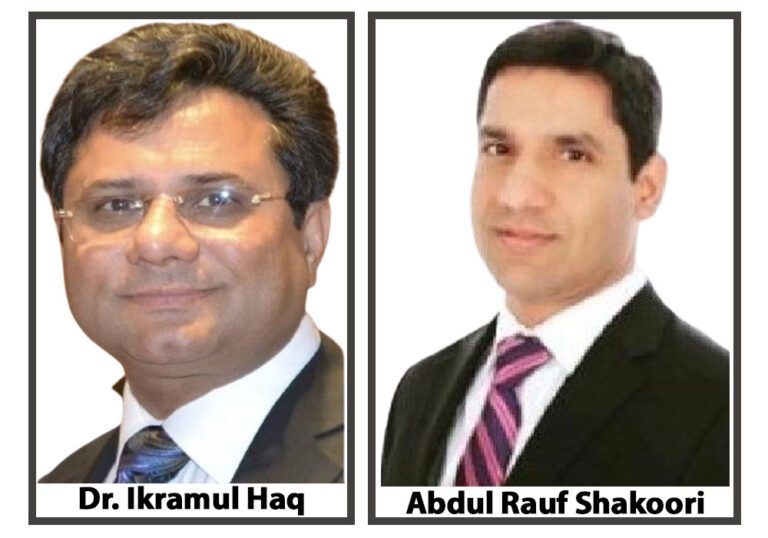
By Muhammad Imran, Staff Member, SAHSOL-LUMS and Sadia Hammad, Advocate & Internship Coordinator at AGHS, Lahore and Muhammad Abdullah, Law Student, SAHSOL-LUMS

Introduction: Article 11 of the Constitution of the Islamic Republic of Pakistan, 1973, enshrines one of the most fundamental guarantees of human dignity by unequivocally prohibiting slavery, forced labour, human trafficking, and the exploitation of children. It declares that slavery is non-existent and forever prohibited within Pakistan while simultaneously outlawing all forms of forced labour and trafficking in human beings. The constitutional prohibition reflects not merely a legal norm but a profound moral and civilizational commitment to safeguarding human freedom, dignity, and equality. It embodies the universal principle that no individual may be treated as the property of another or compelled to labour against his or her free will.

In contemporary constitutional democracies and under international human rights law, slavery has been universally condemned as one of the gravest violations of human rights. Accordingly, the Constitution places Article 11 within the Chapter on Fundamental Rights, thereby elevating freedom from slavery and forced labour to the status of an inviolable constitutional guarantee.

Islamic Foundations of Article 11: The constitutional prohibition is deeply rooted in Islamic jurisprudence. Islam fundamentally transformed the institution of slavery by encouraging emancipation, prohibiting oppression and exploitation, and affirming the equality of all human beings before Allah. The Holy Qur’an and the Sunnah of the Prophet Muhammad (peace be upon him) consistently emphasize justice, compassion, and the liberation of human beings from servitude. Since Article 227 of the Constitution mandates that no law shall be enacted which is repugnant to the injunctions of Islam, Article 11 represents not merely a constitutional guarantee but also the constitutional manifestation of Islamic principles concerning liberty, equality, and human dignity.

Scope and Constitutional Character of Article 11: Article 11 prohibits slavery, forced labour, and trafficking in human beings. Although the Constitution does not expressly define “forced labour,” it generally includes work extracted against a person’s free will through coercion, intimidation, abuse of authority, economic compulsion, or without adequate remuneration. Judicial developments have also recognized that persistent non-payment or unreasonable delay in wages may, in appropriate circumstances, amount to forced labour because it creates conditions of economic dependency.

Clause (1) employs categorical constitutional language by declaring slavery to be non-existent and prohibiting all forms of forced labour and trafficking. The emphatic wording demonstrates the framers’ intention to leave no room for legislative or executive action that legitimizes involuntary servitude. Consequently, Article 11 possesses a near-absolute constitutional character.

Constitutional Obligations of the State: Article 11 imposes both negative and positive obligations upon the State. Negatively, the State itself is prohibited from authorizing, encouraging, or tolerating slavery and forced labour. Positively, it must protect individuals from exploitation by private employers, industrial enterprises, landlords, traffickers, and other non-state actors. This dual obligation requires the enactment of effective legislation, robust enforcement mechanisms, and meaningful judicial remedies to eradicate all forms of involuntary labour and human exploitation.

Judicial Interpretation: The Supreme Court of Pakistan significantly expanded the scope of Article 11 in Darshan Masih v. The State (PLD 1990 SC 513). Acting upon a telegram received from bonded labourers employed at brick kilns, the Court exercised its constitutional jurisdiction to investigate widespread bonded labour practices. Recognizing bonded labour as a direct violation of Articles 9, 11, and 14 of the Constitution, the Court adopted a purposive approach by issuing comprehensive directions for the eradication of bonded labour and the protection of vulnerable workers. The judgment remains a landmark example of public interest litigation and constitutional activism in Pakistan.

Comparative Constitutional Perspective: Comparative constitutional jurisprudence reveals a similar constitutional commitment in the United States. The Thirteenth Amendment abolished slavery and involuntary servitude following the American Civil War. Section 1 prohibits slavery and involuntary servitude, except as punishment following lawful conviction, while Section 2 empowers Congress to enforce the Amendment through appropriate legislation. This constitutional framework enabled the enactment of extensive federal laws against slavery, peonage, human trafficking, and forced labour.

Honorable Justice Fazal Karim (late), in his Access to Justice in Pakistan: A Sine Qua Non for district judiciary practice,  and Opus Magnum Judicial Review of Public Action, has quoted legal scholar Moyle, who aptly describes slavery as “a condition of absolute rightlessness,” emphasizing that slavery deprives an individual of legal personality and fundamental rights. This understanding stands in sharp contrast to the notorious decision in Dred Scott v. Sandford (1857), where the United States Supreme Court denied citizenship to persons of African descent. The ratification of the Thirteenth Amendment in 1865 decisively repudiated that reasoning and firmly established the constitutional principle of human liberty.

Provincial Legislation after the Eighteenth Amendment: Following the Eighteenth Amendment, labour became a provincial subject predominantly, enabling the provinces to enact legislation implementing Article 11. Punjab enacted the Punjab Restriction on Employment of Children Act, 2016, together with other labour welfare statutes. Sindh enacted the Sindh Bonded Labour System (Abolition) Act and comprehensive child labour legislation. Khyber Pakhtunkhwa introduced the Khyber Pakhtunkhwa Prohibition of Employment of Children Act, 2015, while Balochistan enacted legislation regulating and prohibiting child employment in hazardous occupations alongside other labour laws.

Notwithstanding provincial legislative competence, bonded labour continues to be principally governed by the Bonded Labour System (Abolition) Act, 1992, a federal statute enacted before the Eighteenth Amendment. Following constitutional devolution, responsibility for its implementation largely rests with the provincial governments, which are obligated to establish Vigilance Committees, enforce labour laws, prosecute offenders, rescue bonded labourers, and ensure their rehabilitation.

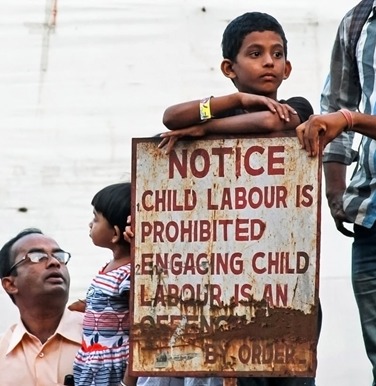
Protection of Children: Article 11 also provides special constitutional protection for children by prohibiting the employment of children below fourteen years of age in factories, mines, and other hazardous occupations. When read together with Article 25A, which guarantees free and compulsory education for children between the ages of five and sixteen years, the Constitution clearly envisages education rather than labour as the primary occupation of every child. Effective implementation of Article 25A would substantially reduce child labour and promote children’s physical, intellectual, and social development.

Constitutional Exception: Article 11 recognizes a limited exception permitting compulsory labour as part of a lawful sentence imposed upon a convicted person. A similar exception exists under the Thirteenth Amendment to the United States Constitution. However, this exception does not authorize degrading or inhuman treatment; there may be other statutory legislation to prohibit cruelty. Even convicted prisoners remain entitled to the protection of Articles 9, 10A, and 14 of the Constitution. Accordingly, prison labour must always respect human dignity and constitutional safeguards. In Article 11, the labour or punishment that is inflicted to the Military perssonnel is also excluded from the operation of Article 11.

Constitutional Nexus: Article 11 cannot be interpreted in isolation. It forms part of an integrated constitutional framework comprising Articles 3, 4, 9, 10A, 11, 14, and 25A. Article 3 seeks to eliminate exploitation in all its manifestations; Article 4 guarantees the right to be treated in accordance with law; Article 9 protects life and liberty; Article 10A guarantees due process and a fair trial; Article 11 abolishes slavery and forced labour; Article 14 safeguards human dignity; and Article 25A guarantees free and compulsory education. Collectively, these provisions establish a coherent constitutional framework dedicated to liberty, equality, social justice, and the protection of human dignity.

Conclusion: Article 11 represents one of the Constitution’s strongest commitments to human dignity and social justice. Its language is categorical, making slavery and forced labour virtually non-derogable constitutional prohibitions. Nevertheless, constitutional recognition alone cannot eradicate exploitation. The continued existence of bonded labour, child labour, and human trafficking demonstrates that the principal challenge lies not in constitutional design but in effective implementation. The State must therefore discharge its positive constitutional obligation by enforcing labour laws, strengthening institutional oversight, prosecuting offenders, and rehabilitating victims. Ultimately, the true effectiveness of Article 11 will be measured not by the breadth of its constitutional language but by its practical ability to eliminate all contemporary forms of human exploitation. Though Pakistan is taking steps to improve its human rights scoreboard but there is need to accerlate it. It will help us to maintain the GSP Plus state – that is necessary to our export, apart from moral alleviation.

Similar Posts

  • From steel to semiconductors and back

    It is widely believed that the more things change, the more they remain the same. For nations to stand on their own feet, the basics have to be covered; it is the lesson of history which must never be ignored. Steel has always been considered the basic building block of advancement. Pakistan started off well in producing its metals. In the decade of the sixties, the Kalabagh Iron deposit was upgraded by the German Krupp Wrenn process to be later converted into steel. Germans are known for thoroughness; they produced VW cars with the local metal. The powerful import lobby prevailed and the Pilot Plant was shut down. Precious time was lost. Finally, in the decade of the seventies the Soviet Union came to our help. The Pakistan Steel Mills project was started outside Karachi at Port Qasim. In the decade of the eighties Pakistan started producing its own steel based on imported ore and coal. The plan was to gradually replace the imported raw materials with the indigenous. At its peak the mill produced about 3 MTPY ( Million Tons per year ) against a national demand of 5 MTPY. Instead of increasing capacity, the plant was shut down in the year 2015. Coming from a family of technologists, I opted for Metallurgical Engineering. I wanted to join Pakistan Steel Mills ( PSM ) which was recruiting students for education and training in USSR. But instead, I landed in the USA where I completed my masters study from the College of Mines University of Arizona ( U of A ). Arizona was considered the world Copper Capital with several mines around. In the decade of the seventies an organization was established at the federal level called Resource Development Corporation ( RDC ) with its head office in Karachi while PUNJMIN ( Punjab Mineral Company ) covered Punjab where Kalabagh and Chiniot Iron deposits were located. It was RDC that launched the first Copper-Gold project at Saindak through its subsidiary SML ( Saindak Metals Limited ) in the year 1992. I was closely associated with this project as the bench studies were conducted in Tucson by a consulting firm by the name of MSME ( Mountain States Mineral Enterprise ). Till my master’s level, mining remained my focus. After graduating in 1981 when I returned in 1983 to start my doctoral program in Arizona, mining had been replaced by high-tech Silicon based Semiconductors. Research was focused on electronic materials. Silicon was produced from Silica Sand on which Integrated Circuits ( ICs ) were built. Metals like Aluminum, Titanium, Gold and Copper were being used. Then came the Solar Cells which Pakistan had produced in the decade of the seventies but missed opportunity due to lack of commercial linkages. While the Semiconductors and Solar batteries are in great demand, the material needs have increased manifold. Mining is back with a bang. Without basic raw materials, the technological advancements are not possible. I have gone full circle in my own career, and so have the technological advancements. From Steel to Copper, then Silicon based Semiconductors followed by mining and gasification of Coal. As a nation, we have missed several opportunities. Catch-up is possible through Leap-Frogging which is widely used by late entrants. China and India have adopted this approach effectively. The crusade should start with a Minerals Development roadmap. PMDC ( Pakistan Mineral Development Corporation ) and PUNJMIN can take the lead. Most of our mineral deposits remain un-tapped which can be developed to meet our needs. Self-sufficiency in Steel and Copper is achievable. Even lithium is available to produce batteries. Minerals are the basic building blocks of the nation which have been ignored. High grade Silica Sand is available in the north to produce Solar Cells and Semiconductors. India has made major investments in the high-tech Semiconductor sector. In the recently held Mining Conference in Karachi, it was agreed to expand the operations at Thar to meet our energy and fertilizer needs after gasification of the Black Gold. Basics have to be covered; advancement cannot be achieved through imports and borrowing. The party should finally come to an end for nation building to start.

  • Saudi Arabia Is Our Red Line?

    If someone were to say today that neither Iran nor the United States actually wants war, the immediate question would be: “Then why is this conflict happening?” The answer depends on whom you ask. Each side presents its own narrative, blaming the other for provoking the crisis and insisting that it is merely responding to aggression. From the Iranian perspective, the United States is portrayed as a global bully with a long history of military interventions. Iranian supporters argue that Washington has once again resorted to force, launching a sudden attack on February 28 that allegedly eliminated Iran’s top political and military leadership. They contend that the reported killing of Supreme Leader Ayatollah Ali Khamenei, along with members of his family, is an act that cannot simply be forgotten or forgiven. In their view, they now possess the moral right to seek revenge. If their highest leader was targeted, they argue, then retaliatory action against U.S. President Donald Trump, Israeli Prime Minister Benjamin Netanyahu, and those associated with them is justified. For many in this camp, revenge has become a national rallying cry. The American position is fundamentally different. Washington argues that Iran’s religious establishment under the doctrine of Wilayat al-Faqih has destabilized the Middle East for more than four decades. According to this view, Tehran has built, funded, and armed militant proxy groups not only around Israel but also across neighboring Gulf and Arab states. U.S. officials point to Syria, where former President Bashar al-Assad—despite belonging to a minority sect—was accused of carrying out decades of repression and mass violence against the Sunni majority, allegedly with Iran’s political and military backing. Similar accusations are made regarding Iraq, where Iranian influence is said to have fueled years of instability. In Lebanon, critics argue that Hezbollah, widely regarded as Iran’s most powerful proxy, has effectively established a state within a state, operating beyond the authority of the Lebanese government. They claim the group has not only maintained continuous hostility toward Israel but has also contributed to Lebanon’s internal political and economic paralysis. According to this narrative, tensions have escalated to the point where Lebanon’s elected government has explored understandings with Israel aimed at confronting these armed groups. American officials further argue that Iran’s regional influence has created deep anxiety among Israel as well as neighboring Gulf Arab governments, who fear that Iran’s Islamic Revolutionary Guard Corps (IRGC) or its affiliated groups could threaten their security at any time. They also maintain that the military action taken on February 28 was rooted in the events of October 7, when Hamas—described by Washington as an Iranian-backed organization—launched an unprecedented attack inside Israel that killed approximately 1,200 civilians and resulted in around 250 hostages, including women and children. Despite these deep divisions, the United States and Iran, with the mediation of Pakistan and Qatar, reportedly signed a Memorandum of Understanding aimed at reducing tensions. One of its key provisions allegedly guaranteed that the Strait of Hormuz would remain open, allowing international shipping to pass freely without Iran imposing fees, restrictions, or obstacles. However, according to the American account, tensions flared again when missiles were reportedly fired at Saudi and Qatari vessels passing through waters near Oman. Critics questioned the justification for such an action, arguing that instead of acknowledging responsibility or seeking de-escalation, elements within Iran’s Islamic Revolutionary Guard Corps insisted that the Strait of Hormuz should remain closed to commercial shipping. They further allege that the IRGC instructed Yemen’s Houthi movement to block the Bab el-Mandeb Strait in order to disrupt Saudi oil exports to Europe. If the Strait of Hormuz has already strained Asian energy markets, they argue, closing Bab el-Mandeb could create similar disruptions for Europe. Such developments would pose serious economic and strategic challenges for the Kingdom of Saudi Arabia. Adding to these concerns, Yemen’s Houthis—who are widely viewed by Western governments as being aligned with Iran—have reportedly threatened to strike Saudi oil infrastructure. It is within this context that Pakistan has chosen to clarify its position. Beyond the longstanding religious, diplomatic, and strategic relationship between Islamabad and Riyadh, Pakistan has repeatedly maintained that any attack on Saudi Arabia would be regarded as a direct threat to Pakistan itself. Against this backdrop, Pakistan’s leadership reportedly conveyed a clear message to Tehran: “An attack on Saudi Arabia will be treated as an attack on Pakistan. That is our red line.” In line with this policy, Pakistan has reportedly deployed fighter aircraft and thousands of military personnel to Saudi Arabia, with forces positioned near the Yemeni border. Alongside air and ground deployments, Pakistani naval units are also said to be prepared to cooperate with Saudi and U.S. forces in securing maritime routes and responding to Houthi activities if required. Given these escalating tensions, Iran’s Islamic Revolutionary Guard Corps is urged by its critics to recognize the gravity of the situation and avoid actions that could bring Pakistan and Iran into direct confrontation. They argue that disrupting both the Strait of Hormuz and the Bab el-Mandeb would not only inflict severe damage on the global economy but would also deepen international opposition toward Iran—an outcome they believe Tehran can ill afford. According to this perspective, divisions are already becoming visible within Iran itself. Some observers argue that the country’s elected political leadership is increasingly uneasy with policies that risk further isolation and conflict. They see growing differences between Iran’s political and military establishments, even though these tensions remain largely behind the scenes. The funeral of Iran’s Supreme Leader reportedly drew millions of mourners, reflecting widespread public sympathy. Yet critics argue that this did not necessarily indicate universal support for perpetual confrontation or calls for vengeance. Reports also suggested that hardline supporters directed slogans accusing President Masoud Pezeshkian of betrayal, while Foreign Minister Seyed Abbas Araghchi allegedly faced verbal hostility and even physical attacks during the proceedings. Those who criticize Iran’s hardline factions argue that such behavior deserves condemnation rather than praise. In their view, the greatest burden of continued escalation will ultimately

  • PM Shehbaz Sharif and Field Marshal Syed Asim Muni…

    Pakistan’s growing diplomatic influence has entered a new phase as Prime Minister Muhammad Shehbaz Sharif and Field Marshal Syed Asim Munir lead the country’s strategic engagement with the world, strengthening alliances and projecting Pakistan as an important voice in regional peace and security. The signing of the Makkah Joint Defence Agreement between Pakistan, Saudi Arabia and Türkiye represents a major milestone in Pakistan’s foreign and security policy. The agreement brings together three influential nations through a framework of collective defence, enhanced military cooperation and a shared commitment to regional stability. In recent months, Pakistan’s defence capabilities and strategic importance have received increased international attention. The role of the Pakistan Army in national security and regional stability has been a central factor in shaping Pakistan’s strategic partnerships, while Field Marshal Syed Asim Munir’s engagement with international counterparts has highlighted the importance of defence diplomacy in promoting peace and cooperation. The global perception of Pakistan’s strategic role has evolved as Islamabad has continued to demonstrate its capacity to engage with major powers and regional stakeholders. Under Field Marshal Asim Munir’s leadership, Pakistan’s military diplomacy has focused on strengthening partnerships, supporting stability and advancing dialogue as a pathway to resolving regional challenges. Prime Minister Muhammad Shehbaz Sharif has complemented these efforts through active diplomatic outreach, engaging world leaders and strengthening Pakistan’s relationships with key allies. Whenever Pakistan’s leadership has engaged internationally, these visits have increasingly focused on expanding cooperation, improving economic ties and promoting peace initiatives. Pakistan’s diplomatic role in encouraging dialogue during tensions involving the United States and Iran also attracted international attention. US President Donald Trump acknowledged Pakistan’s leadership efforts in supporting peace and dialogue, reflecting the country’s potential role as a constructive bridge between nations. Pakistan continues to maintain strong strategic relations with major international partners, including China, while also enjoying deep historical and security ties with Saudi Arabia, Türkiye and other Middle Eastern countries. Iran has repeatedly highlighted the importance of its relationship with Pakistan and recognised the value of regional cooperation. The Makkah Declaration further strengthens this strategic momentum. The agreement reflects the shared commitment of Saudi Arabia, Türkiye and Pakistan to collective security and regional stability. It establishes that any armed attack against one of the three states will be regarded as an attack against all, while enhancing defence cooperation, military coordination and strategic collaboration. Built on historic relations, Islamic solidarity and common interests, the declaration aims to strengthen collective deterrence and contribute towards peace, security and prosperity. The emerging partnership between Pakistan’s political and defence leadership is being viewed by supporters as a coordinated national effort to protect Pakistan’s interests and expand its international role. Prime Minister Shehbaz Sharif’s diplomatic engagement and Field Marshal Syed Asim Munir’s strategic approach have together shaped a more proactive foreign policy outlook. The Makkah summit could become a defining moment in Pakistan’s international journey—strengthening its alliances, enhancing its strategic relevance and reinforcing its message that Pakistan seeks peace through cooperation, dialogue and responsible global engagement.

  • Change we must

    In a world driven by technology, only change is permanent. Change we must, but how? Transition from one system to another is perhaps the biggest challenge that we have not been able to cope with. Half-baked solutions with underage players cannot deliver. Reminds me of Einstein’s famous quote: “We cannot solve our problems with the same thinking we used when we created them.” Steve Jobs, one of the greatest technologists of the 21st century, went even further by saying: “Either lead or get out of the way.” A few years back I was doing some research on universities and their impact on setting the course of nations. Syed Ahmed Khan’s Aligarh Muslim University stood out. It produced the Change Managers who not only led the freedom movement but also had the capacity to sustain it. The Islamic Republic of Pakistan (IRP) desperately needs such individuals who can understand and then manage the needful. In the year 1875 he founded the MAO College (Mohammadian Anglo Oriental College) which later grew into a university in the year 1920. He passed away in 1898 but the institution grew. Later on, Allama Iqbal led the movement, and finally it was Muhammad Ali Jinnah who succeeded in carving a new homeland in August 1947 for the Muslims of the Indian Subcontinent. Unfortunately, he did not live long enough to lay the foundations of the new state, but he did leave clear guidelines for the inherited establishment to follow (Armed Forces, Bureaucracy). After taking over in October 1999, Pervez Musharraf created a think tank called the National Reconstruction Bureau (NRB). Headed by Lt. Gen. Tanvir Naqvi, it was located in the Chief Executive (CE) secretariat. The task was to design and execute political and administrative reforms in the country. I was invited to give my input. Naqvi Sb was very confident about delivering meaningful change. His main focus was on devolution of power. As a student of management, I asked him a simple question: “Who will implement his plan?” Bureaucracy, of course, was his quick reply. He did not have an answer to my second concern: “Why will they implement a plan which reduces their power?” He then decided to get rid of me by saying if I wanted to discuss implementation details, I should go to the third floor to the CE’s office. Finally, he stepped down and was replaced by a young novice who lacked the experience and clout to deliver meaningful change. Then there was another initiative called the National Commission for Human Development (NCHD), led by a pediatrician from a small town in Oregon. The worthy Dr assured the CE that he would manage funds from abroad while the local expenses were to be provided by the Government of Pakistan (GOP). Various centers were established across the country and staff recruited. While GOP provided the internal resources, the external help never came despite fundraising efforts abroad. The CE was convinced that the two sectors were well covered, but they were not. Finally, NCHD became a liability and was shut down and the staff laid off. During my term as Chairman, Pakistan Science Foundation (PSF), I lobbied for technocrats to head technical ministries, which was not well received by the powers that be. Commercialization and application of research is the biggest challenge faced by the R&D sector of the country. When I was denied an extension after the completion of my term, I paid a farewell visit to the Secretary MOST (Ministry of Science and Technology). It was a friendly meeting; the Secretary appreciated my work but complained that I did not follow his guidelines. While leaving, he pointed at the board where the names of his predecessors were written. I still remember his words: “Only our names make it here.” He did not like my spontaneous response: “Time will tell,” and it did. My lobbying prevailed; a retired Chairman of PAEC (Pakistan Atomic Energy Commission) replaced him. Though he had no commercial background, I decided to guide and support him. He recommended major investments in creating public sector entities like HMC III, run by PAEC, for meeting their equipment needs. At best, only pilot plants were viable for transfer of technology from laboratory to industry. He was unable to get the funds. As such, his term ended with no major breakthrough, and business as usual continued. Pakistan has a federal structure of governance. Federating units are diverse with differing needs. I am in favor of devolution, but the task on hand is not simple. The forces of status quo are too entrenched. Change Managers are needed at all levels. Complexities have to be understood and managed. There has to be consensus on the road map. Islamabad has an archive of failed plans. The same mistakes should not be repeated again. The first challenge is to find qualified individuals with solid re-engineering experience to lead the crusade. Einstein and Jobs were two brilliant brains of their times; we must value their outlook to move forward and avoid chaos and confusion. Oversimplification of the task at hand must be avoided.

  • After Makkah: towards an Islamic NATO—or a new r…

    “Nato is a giant military alliance where there are 32 countries. We have started here as three countries and we have to take very humble but concrete steps”—Makkah defence pact technically same as Nato’s Article 5: Turkish minister, The News, August 9, 2026 The above words of Turkish Foreign Minister Hakan Fidan deserve careful attention. Speaking after the Makkah Joint Defence Agreement between Türkiye, Pakistan and Saudi Arabia, he went considerably further than the diplomatic language normally accompanying defence cooperation. He described the arrangement as technically the same as NATO’s Article 5 principle of collective defence. More importantly, Fidan disclosed something about its intended institutional evolution. A ministerial committee resembling NATO’s structure is to be created, a permanent secretariat will be established in Saudi Arabia, and President Recep Tayyip Erdoğan does not envisage an organisation permanently confined to its three founding members. Egypt is already being mentioned as a possible entrant. The question we raised immediately after Makkah has therefore acquired greater urgency: are we witnessing the embryonic formation of an Islamic NATO? The answer requires more caution than either celebration or alarm. The Makkah agreement is unquestionably important. Saudi Arabia combines enormous financial and energy resources with a pivotal position in the Arab and Islamic worlds. Türkiye possesses NATO’s second-largest military, an increasingly sophisticated defence-industrial base and strategic access linking Europe, the Black Sea, the Mediterranean and the Middle East. Pakistan is a nuclear-armed state located at the intersection of South Asia, China, Central Asia, Iran and the Arabian Sea. Taken together, the three constitute an unusual coalition of middle powers. Their convergence is also occurring at a moment when the regional order constructed around American predominance is under extraordinary strain. The latest Middle Eastern war has again demonstrated that overwhelming military capability can destroy infrastructure and degrade adversaries without necessarily producing political order. Michael Fuchs recently argued in Foreign Affairs that the United States should finally relinquish its attempt to dominate the Middle East militarily. The proposition is important, but it raises a larger question. If American primacy recedes, what replaces it? International relations offers no reason to assume that withdrawal by a dominant external power automatically produces regional peace. It can produce strategic autonomy. It can equally produce competitive balancing, arms races and struggles among regional powers seeking to fill the resulting space. Makkah Defence Agreement represents both an opportunity and a danger. The opportunity is the emergence of indigenous collective security. For much of the modern history of the Middle East, regional states have depended upon external powers for protection while simultaneously fearing abandonment by those same protectors. Britain once performed this role in the Gulf. The United States subsequently constructed a much larger military architecture based upon bases, arms supplies, bilateral guarantees and partnerships. Dependence created security, but never complete strategic autonomy. Saudi Arabia’s search for alternatives must be understood against this background. Türkiye has followed another path: remaining inside NATO while steadily expanding its capacity for independent action. Pakistan maintains a strategic partnership with China without severing its relationships with Washington, Riyadh or Ankara. These are not states simply changing camps. They are practising what contemporary scholarship increasingly describes as hybrid or non-exclusive alignment: cultivating overlapping relationships rather than accepting the rigid binaries of Cold War alliance politics. This makes Fidan’s second assertion as important as his comparison with Article 5. He insists that Makkah is not directed against Iran or any other country. That principle must survive implementation. An alliance requires deterrence; it does not necessarily require a permanent enemy. If the emerging arrangement becomes an anti-Iran coalition, it will institutionalise one of the Muslim world’s most dangerous fault lines. Iran is not a temporary presence in the Gulf. It is a major civilisation and regional power whose geography cannot be altered by sanctions, regime change strategies or military pressure. Pakistan has particular reason to understand this. Iran is its neighbour. Internal sectarian peace, Balochistan, border security, Afghanistan and regional connectivity all make a permanently hostile Pakistan-Iran relationship strategically irrational. Nor should Makkah become simply the Muslim military response to Israel. The Palestinian question cannot be removed from regional security, as proponents of the Abraham Accords sometimes appeared to assume. Normalisation and economic integration cannot indefinitely substitute for a political settlement guaranteeing Palestinian rights and viable statehood. At the same time, transforming the region into two permanent military camps would hardly produce the peace Palestinians themselves require. The better possibility is, thus, not an Islamic NATO in the literal sense. NATO emerged from the particular conditions of post-war Europe and bipolar confrontation with the Soviet Union. The Muslim world is geographically dispersed, politically heterogeneous and internally divided. Its states have very different relations with Washington, Beijing, Moscow, Tehran and Tel Aviv. Türkiye itself demonstrates the difficulty of imposing a binary model: it would simultaneously belong to NATO and to the emerging Makkah Accord. That apparent contradiction may actually tell us something important about the international order now taking shape. The twenty-first century may be characterised less by fixed blocs than by overlapping arrangements through which middle powers seek room for manoeuvre between larger powers. This is also where geoeconomics becomes indispensable. Saudi finance and energy, Türkiye’s manufacturing and defence technology and Pakistan’s geography, human resources and access towards China, Central Asia and the Arabian Sea could create something considerably more important than another military organisation. Egypt’s eventual participation would add the Suez Canal, the Arab world’s largest population and another major military power. A security structure built around such capabilities could eventually support trade, energy corridors, defence production, technological cooperation, food security and infrastructure connectivity. Without this economic foundation, an Islamic NATO would remain largely an exercise in military coordination. China will watch these developments closely. Beijing requires Gulf energy, values Iran, has deep interests in Pakistan and maintains substantial economic relations across the Middle East. It is unlikely to wish to inherit America’s expensive role as regional military hegemon. A regional arrangement capable of providing stability without forcing states into an

  • Between Threats and Truces: The Narrative War Behi…

    By Eng Saqlain Abid Last weekend, U.S. President Donald Trump declared on Truth Social that the United States and Israel were fully prepared to strike Iran’s critical power infrastructure, warning that military pressure would continue until Tehran surrendered completely. Around the same time, Iranian Foreign Minister Abbas Araghchi reportedly conveyed messages through Pakistan’s Chief of Army Staff, Field Marshal Asim Munir, and Turkish Foreign Minister Hakan Fidan, emphasizing that any major attack on Iran would be met with a determined response against GCC partners and strategic regional assets if no diplomatic option remained. Yet within hours, the rhetoric shifted dramatically. Trump announced that although American and Israeli forces were fully prepared, he had decided to postpone military action following appeals from Gulf states and international mediators, citing “humanity” and the possibility of reaching an agreement. Reports suggested that negotiations revolved around two major conditions: keeping the Strait of Hormuz open to global shipping and ensuring that Iran would not pursue nuclear weapons. At first glance, the story appears simple—a crisis narrowly avoided through diplomacy. In reality, however, it represents a sophisticated narrative war in which every actor seeks to project strength while avoiding the devastating costs of a prolonged regional conflict. For Washington, the challenge is not merely military capability but strategic credibility. The United States undoubtedly possesses overwhelming conventional military superiority over Iran. However, superiority does not automatically translate into political success. Internal assessments by CENTCOM and the Pentagon have reportedly warned that any large-scale conflict could extend well beyond expectations, potentially lasting until 2027. Such a scenario would coincide with America’s domestic political calendar, including congressional elections, while risking declining public support for another costly Middle Eastern war. The lessons of Afghanistan continue to shape American strategic thinking. Airpower alone may inflict significant damage, but permanently degrading Iran’s military capabilities without ground operations remains an uncertain objective. Any decision requiring “boots on the ground” would carry enormous political and economic consequences. Consequently, Washington’s repeated threats increasingly resemble a strategy of coercive diplomacy rather than an immediate roadmap to invasion. A superpower is expected to demonstrate resolve, but maintaining global leadership also requires restraint when the costs outweigh the benefits. Iran, on the other hand, continues to rely on its long-established doctrine of strategic resistance. Despite mounting military pressure and repeated warnings, Tehran has sought to demonstrate that it retains the ability to impose costs across multiple theatres. The Strait of Hormuz remains one of the world’s most strategically significant maritime chokepoints, and any disruption immediately reverberates through global energy markets. Meanwhile, continued instability around the Bab el-Mandeb Strait, largely influenced by Iran-aligned Houthi forces, further complicates regional trade and shipping.   These maritime flashpoints have created understandable concerns among Gulf states. Countries investing billions of dollars in economic diversification projects—including Saudi Arabia’s Vision 2030 and NEOM—depend heavily upon uninterrupted trade routes and stable energy markets. For Gulf capitals, preventing a regional escalation has become not merely a security priority but an economic necessity. Israel’s strategic calculations are equally complex. Since the beginning of the confrontation, Israeli policymakers have consistently sought firm American backing while remaining conscious of the domestic burden imposed by prolonged conflict. Extended military campaigns strain national resources, disrupt civilian life, and test public resilience. Consequently, Israel also has incentives to support diplomatic arrangements if they preserve security objectives without expanding into an open-ended regional war. Ultimately, today’s confrontation extends beyond missiles and military deployments. It is a contest of narratives, deterrence, and political signalling. Every side seeks to appear uncompromising while simultaneously avoiding a conflict whose consequences none can fully control. The prospect of a prolonged regional war is becoming increasingly difficult for any major stakeholder to sustain. Iran continues to deepen its strategic relationships with China and Russia, while the United States prefers negotiated constraints over another indefinite military campaign. Pakistan and Turkey have emerged as important channels of communication, but expecting either country to shoulder the diplomatic burden of resolving one of the world’s most dangerous geopolitical crises would be unrealistic. History repeatedly demonstrates that wars are easier to begin than to conclude. In the current Middle Eastern crisis, the loudest battlefield may not be defined by bombs or missiles but by competing narratives, diplomatic manoeuvres, and carefully calculated restraint. Whether this fragile pause evolves into a lasting settlement or merely delays another round of confrontation will determine not only the future of Iran but also the stability of the wider region and the global order.

Leave a Reply

Your email address will not be published. Required fields are marked *