youth extremism fight

Youth, Extremism, and the Fight for Tomorrow

Across the world, a quiet but powerful realization has taken hold among policymakers, educators, and security experts alike: the battle against extremism and terrorism cannot be won through force alone. It must be won in classrooms, community centers, sports fields, and digital spaces where young people spend their formative years. Youth, who make up more than half the population in many developing nations including Pakistan, represent both the greatest vulnerability and the greatest opportunity in this struggle. When disenfranchised, unemployed, and disillusioned, young people become easy targets for radical recruiters who promise purpose, belonging, and revenge for perceived injustices. But when engaged, educated, and empowered, that same demographic becomes the most formidable wall against violent ideologies. The logic is simple yet often ignored by policymakers fixated on military and law enforcement solutions. Extremist organizations have long understood that idle, aggrieved youth are their most fertile recruiting ground. Poverty, lack of education, unemployment, and a sense of alienation from mainstream society create psychological vacuums that radical narratives rush to fill. Counterterrorism strategies that ignore this reality and rely solely on kinetic operations may eliminate individual militants but do nothing to stop the conveyor belt producing new recruits. A zero-tolerance approach to extremism must therefore be twofold: uncompromising against violence itself, while simultaneously investing heavily in prevention through youth engagement. Several nations offer instructive models. Indonesia, home to the world’s largest Muslim population, faced a serious extremist threat in the early 2000s following the Bali bombings. Rather than relying exclusively on security crackdowns, the government partnered with religious scholars and civil society organizations to run De radicalization programs specifically targeting young former militants and at-risk youth. These programs combined vocational training, religious counter-messaging, and psychological support, helping thousands reintegrate into society while simultaneously building a broader national narrative of moderate, tolerant Islam that appealed to younger generations disillusioned with violent rhetoric. Denmark’s Aarhus Model, developed to address the flow of young citizens joining the Islamic State in Syria, similarly emphasized rehabilitation over pure punishment for youth who had not committed serious crimes. Mentorship programs paired returning young people with community figures, psychologists, and former extremists who had themselves walked away from radical ideologies. The approach recognized that shame and exclusion often push vulnerable youth further toward extremist communities that offer unconditional acceptance, whereas structured reintegration paired with firm legal consequences for actual violence creates pathways back to mainstream society. The United Kingdom’s Prevent strategy, despite facing criticism over profiling concerns, demonstrated the value of embedding counter-extremism awareness within schools and universities, training teachers to recognize early warning signs of radicalization and intervene before ideological commitment hardens. Meanwhile, Nigeria’s response to Boko Haram insurgency increasingly incorporated youth-focused economic empowerment programs in the northeast, recognizing that widespread poverty and lack of opportunity in the region had been ruthlessly exploited by militant recruiters promising financial incentives to jobless young men. For Pakistan, which has paid an enormous price in blood and treasure fighting terrorism over the past two decades, these international examples carry urgent lessons. The country’s youth bulge, with a median age below 23, is simultaneously its greatest asset and its greatest vulnerability. Regions historically affected by militancy, including parts of Khyber Pakhtunkhwa and Balochistan, continue to suffer from inadequate educational infrastructure, high unemployment, and limited access to vocational training, conditions that extremist networks have historically exploited with alarming success. A national strategy that couples uncompromising military and intelligence operations against active terrorist networks with sustained, well-funded investment in youth education, sports programs, technical training, and civic engagement could fundamentally alter the recruitment landscape over a generation. Digital literacy must also become a central pillar of this strategy. Extremist recruitment has migrated substantially online, where algorithms on social media platforms can inadvertently funnel vulnerable young users toward increasingly radical content. Countries that have invested in digital counter-narrative campaigns, training young social media influencers and content creators to actively challenge extremist messaging with authentic, relatable content, have seen measurable success in disrupting online radicalization pipelines. Pakistan’s own vibrant youth culture, increasingly connected through smartphones even in remote areas, could be harnessed similarly if government and civil society organizations invest in training a new generation of digital counter-extremism voices. Ultimately, the fight against terrorism cannot be sustained through security operations alone, however necessary those remain against active threats. Zero tolerance for violence must be matched with zero tolerance for the conditions that breed it: poverty, ignorance, and hopelessness among the young. The examples of Indonesia, Denmark, the United Kingdom, and Nigeria demonstrate that no single formula guarantees success, but all share a common thread, treating youth not as suspects to be monitored but as partners to be invested in. For a nation like Pakistan standing at a demographic crossroads, the choice is stark and urgent: empower this generation of young people as guardians of peace, or risk watching extremist networks continue to recruit from among society’s most overlooked and underserved.


Similar Posts

  • Mining vs Refining: Real secret behind China&#8217…

    For more than a decade, the global debate over critical minerals has focused almost entirely on mining and extraction. Western policymakers, multinational mining companies and international financial institutions have invested billions of dollars in securing mineral reserves across Africa and Latin America. From cobalt mines in the Democratic Republic of Congo to the Lithium Triangle of South America, the prevailing belief has been simple: control the mines and secure the future of the green energy transition. However, this overwhelming focus on extraction overlooks a fundamental reality of modern industrial power. In today’s world, strategic independence is not achieved simply by digging raw minerals out of the ground. True industrial strength lies in refining those raw materials into high-purity, battery-grade and industrial-grade minerals through advanced chemical processing. It is at this critical processing stage, often referred to as the “processing bottleneck,” that China has established an extraordinary and nearly unmatched global dominance. The Mining Illusion and China’s Refining Monopoly Understanding why Western efforts to reduce dependence on China continue to struggle requires recognising the crucial difference between mining and refining. Raw lithium extracted from Australian hard-rock mines or South American brine deposits cannot be used directly in electric vehicle batteries. It must first undergo complex chemical processing to produce lithium hydroxide or lithium carbonate with a purity of 99.9 percent. The same applies to rare earth elements, cobalt, nickel and graphite. Without refining, raw minerals have little value for advanced technology or defence industries. This is where China’s true strength becomes evident. While the country’s share of global mining production is relatively limited, it dominates global refining capacity. China currently refines about 35 percent of the world’s nickel, between 50 and 70 percent of global lithium and cobalt, and nearly 90 percent of all rare earth elements. It also controls virtually 100 percent of the global market for spherical graphite, a key material used in battery anodes. This creates a major strategic challenge for Western economies. Even if companies in the United States, Europe or Australia develop new mines, much of the extracted material still has to be shipped to China for chemical processing. As a result, many attempts to bypass China ultimately continue to strengthen its refining ecosystem. The Structural Foundation of China’s Success China’s refining dominance is neither accidental nor simply the result of low labour costs. It reflects more than three decades of consistent industrial planning and state-backed investment. During the 1990s and early 2000s, many Western economies shifted heavy industries overseas to reduce costs and meet stricter environmental regulations. At the same time, China recognised that chemical refining would become the foundation of future technological leadership. Through successive five-year development plans, Beijing invested heavily in large-scale refining facilities, specialised metallurgical universities and low-cost energy infrastructure. Decades of research enabled Chinese engineers to master technologies capable of refining even low-grade ores efficiently and at relatively low cost. China also accepted the significant environmental costs associated with refining. Processing rare earth minerals produces toxic waste, radioactive by-products and hazardous chemicals. While strict environmental regulations and public opposition have made large-scale refining projects difficult in North America and Europe, China accepted these environmental challenges as part of its long-term national strategy. Why the West Cannot Easily Replicate China’s Model Concern over potential Chinese export restrictions has encouraged the United States and its allies to invest in domestic refining infrastructure. However, matching China’s industrial ecosystem remains an enormous challenge. Several major obstacles stand in the way First, time. Building a modern refining facility in Europe or North America typically takes seven to twelve years because of environmental approvals and legal procedures. In China, similar projects can often be completed in less than two years. Second, cost. Chinese refineries benefit from economies of scale, low electricity prices and extensive government support. Western facilities face much higher labour, environmental and operational expenses. Without strong financial guarantees, private investors remain reluctant to finance projects that could later become uncompetitive if China lowers prices. Third, skilled manpower. Decades of industrial outsourcing have reduced the number of mining metallurgists and chemical engineers in many Western countries. Meanwhile, China continues to produce thousands of specialised engineers every year, maintaining a steady pipeline of technical expertise. Strategic and Geopolitical Consequences China’s refining advantage extends far beyond electric vehicles and consumer electronics. It has become a critical factor in global defence and national security. Modern military equipment—including guided missiles, radar systems, nuclear submarines and fifth-generation fighter aircraft such as the F-35—depends heavily on refined rare earth magnets and processed critical metals. In the event of a military crisis involving Taiwan or the South China Sea, China would not necessarily need to block access to global mines. Instead, it could simply restrict exports of refined minerals. Such a move could disrupt Western defence manufacturing within months, even if friendly nations continued producing raw mineral resources. The global competition over critical minerals, therefore, is no longer centred solely on who owns the mines. It increasingly depends on who controls the refining process—the stage where China has built its strongest and most strategically important advantage.

  • Jalalpur Canal and Sindh’s Water Rights

    The Indus river, long considered the jugular vein of the people of Sindh, is under assault. The construction of the Jalalpur irrigation canal — and its trial commencement — has gone ahead despite Sindh’s stiff opposition last year, voiced through a peaceful protest movement that carried the province’s strong resentment and anger to the federation. Sindh’s political forces have raised serious concerns and reservations over Punjab’s decision to commence trial operations of the Jalalpur canal, even as the constitutional dispute over new canal projects and Sindh’s water rights remains unresolved. Sindh is already grappling with acute water shortages, the destruction of the Indus Delta, and the collapse of its agricultural economy. To proceed with new upstream canal projects under these conditions is unacceptable to the people of Sindh and amounts to an assault on the rights of the lower riparian province. There is no denying that agriculture is the livelihood of the majority of Sindh’s people, and that this agriculture depends entirely on river water — the Indus being its only source. The crops, fruits, vegetables, and sweet drinking water that sustain Sindh all owe their existence to this one river. Without the Indus, there would have been neither Sindh nor its thousands-year-old civilization. The Sindh government must record its protest before the federal government and urge it to immediately convene a meeting of the Council of Common Interests, taking every constitutional measure available to halt the project. Sadly, we have learnt nothing from our past mistakes and blunders. Why do we remain wedded to narrow-mindedness and shortsighted thinking bound to destroy our very existence? Will this policy bring us success and standing in the comity of nations? Why are our so-called champions of democracy and constitutional supremacy more inclined toward injustice than fair treatment? Will this serve the cause of our unity? The constitution obliges the federal government to convene a meeting of the Council of Common Interests at least once every three months. Yet the federation seems more preoccupied with resolving international conflicts than with addressing the issues confronting the country and defusing tensions between its federating units — even though the latter bear more directly on national stability. Our government strongly condemns India’s aggressive weaponisation of water under Modi. Yet it shows no equal readiness to ensure the judicious and fair distribution of water among its own federating units, as mandated by the Indus River System Authority (IRSA). The construction of the Jalalpur canal in Punjab, in flagrant breach of the decisions taken at last year’s CCI meeting — decisions reached only after massive protests and a strong outcry across Sindh — amounts to diverting Sindh’s water to irrigate the barren lands of its “big brother,” at Sindh’s expense. Unless decisions reached by consensus are implemented in letter and spirit, for the good of the country as a whole, the differences between the federation and the provinces will only widen rather than ease. The Indus, the very source of survival for the people of Sindh, should never be pushed to the wall. Depriving Sindh of its legitimate right to the river, again and again, risks shattering the very foundations of the state. No government has the authority to compromise Azhar Azad crisis and further erode confidence in the federation.

  • Riyadh’s Strategic Triangle: Security, Stabi…

    The visit of Pakistan’s Prime Minister and Chief of Defence Staff to the Kingdom of Saudi Arabia on 6–7 August 2026 was officially presented as a meeting with Crown Prince Mohammed bin Salman (MBS), accompanied by the performance of religious rituals in Islam’s holy cities. Yet, diplomacy is often conducted between the lines rather than in official communiqués. French newspapers, Indian news agencies, and Israeli media all reported that Pakistan, Türkiye, and Saudi Arabia were working toward a defence agreement expected to be signed on Friday. While no official confirmation has emerged, the reports have generated an important strategic debate. If such an agreement is indeed under discussion, what is its real agenda? Would it amount to a military alliance, and if so, against whom would it operate? More fundamentally, why would Pakistan and Türkiye, both facing considerable economic pressures, seek to enter such an arrangement? Or are we witnessing the gradual birth of a new regional security architecture in the vacuum created by the declining American military footprint in the Middle East, with Pakistan assuming an anchoring role?   The first narrative comes from Pakistan. Political analyst Parveen Sawamy argues that Pakistan is gradually emerging as the principal anchor of a broader Muslim strategic framework. According to this view, Islamabad has evolved from being merely a facilitator of dialogue to becoming a mediator and now potentially a guarantor of regional security. Among the members of the OIC, Pakistan enjoys a unique diplomatic position. It maintains working relations with almost every important regional actor, consistently supports the Palestinian cause, and remains outside the circle of states that have normalized relations with Israel. This balanced diplomacy provides Islamabad with credibility across the Muslim world.   Pakistan also possesses one of the most experienced armed forces in the Islamic world, capable of contributing to Gulf security should regional circumstances demand it. At the same time, Washington may not necessarily oppose such a role, particularly given the perception that General Asim Munir enjoys constructive relations with the Trump administration. Pakistan’s geographic proximity to Iran further strengthens its credentials, allowing it to maintain channels of communication with Tehran while preserving strategic partnerships with Gulf monarchies. If Islamabad succeeds in converting this diplomatic leverage into economic opportunity, a defence understanding with Riyadh and Ankara could mark the beginning of a new Muslim security framework based on deterrence, mediation, and regional peace rather than confrontation.   The second narrative revolves around Türkiye. President Recep Tayyip Erdoğan, despite facing domestic economic challenges, brings decades of NATO experience, an advanced defence industry, and diplomatic flexibility. Türkiye remains a NATO member, maintains dialogue with the United States, preserves working relations with Israel, and simultaneously engages actively with Asian and Muslim nations. Such strategic diversity enables Ankara to serve as a bridge between competing geopolitical camps.   From Türkiye’s perspective, participation in a trilateral framework would capitalize on its military technology and defence manufacturing capabilities while expanding economic cooperation with Pakistan and Saudi Arabia. Ankara also offers valuable diplomatic experience and could serve as a neutral venue for negotiations during future regional crises. If such cooperation enjoys quiet support from Washington, Türkiye would strengthen both its strategic autonomy and its influence across the Muslim world.   The third and perhaps most decisive narrative belongs to Saudi Arabia. Crown Prince Mohammed bin Salman (MBS) seeks durable security guarantees to preserve investor confidence in Vision 2030 and mega-projects such as NEOM. Economic transformation cannot succeed without regional stability. Recent conflicts have exposed the vulnerability of Gulf infrastructure to missile and drone attacks, prompting Riyadh to reassess its long-term security strategy. MBS increasingly recognizes that American military bases alone cannot guarantee the Kingdom’s security in an era of rapidly changing regional dynamics.   Pakistan and Türkiye therefore emerge as relatively affordable yet credible strategic partners. Saudi energy sustains both economies, while Islamabad and Ankara can provide military expertise, training, and strategic reassurance. More importantly, MBS appears less interested in confronting Iran through perpetual military rivalry than in managing competition through diplomacy backed by credible deterrence. If this approach succeeds, it could reduce regional tensions while safeguarding Saudi Arabia’s ambitious economic transformation.   Whether the reported defence agreement materializes or remains diplomatic speculation, the convergence of Pakistan, Türkiye, and Saudi Arabia reflects an important geopolitical trend. All three states require economic stability, strategic autonomy, and a more reliable regional security framework. Their interests intersect around the need to protect trade, investment, energy infrastructure, and political stability. If this strategic triangle evolves into a formal partnership, its true success will not be measured by the strength of its military capabilities but by its ability to prevent conflict, encourage dialogue, and foster prosperity. In a region long defined by rivalry, the most enduring alliance may ultimately be the one built not for war, but for peace.

  • Rebuilding Hope Through Resilient Schools in Sindh

    The devastating floods of 2022 severely affected the education system of Sindh, damaging thousands of schools either fully or partially. In order to tackle such climate crises and floods, the Government of Sindh, in collaboration with international donors and partners such as the Asian Development Bank, Japan International Cooperation Agency (JICA), UNICEF, and others, has designed a comprehensive and well-planned strategy to reconstruct and repair the flood-affected schools across the province in order to provide conducive learning environment and quality education to the children whose education suffered due to the catastrophic floods. According to the data of the Sindh Education Department, during the floods of 2022, around 19,821 schools were affected, impacting very badly the infrastructure and education system of the province. The media, citing official sources, reported that major reconstruction projects were initiated with significant financial allocations. Under these initiatives, thousands of schools were selected for rehabilitation and reconstruction, and work is continuing in different districts of Sindh. Around 1.4 million students are expected to benefit from the restoration of educational facilities and the reopening of repaired schools. Under the Provincial Annual Development Programme (ADP), 2405 schools were included for repair and rehabilitation. Similarly, maintenance and repair schemes were also launched to restore basic facilities in schools. Under these schemes, classrooms, compound walls, washrooms, drinking water facilities, and other essential requirements were fulfilled to ensure the resumption of education. For flood affected schools, the Sindh School Education Investment Programme for Flood-Affected Areas (SSEIP-FA) was launched with the support of the Asian Development Bank. The project is considered one of the major initiatives for the restoration of education in the province. Under this programme, 1,607 schools are being rehabilitated across the targeted districts of Sindh. The initiative aimed at rebuilding climate-resilient infrastructure, including classrooms, and the provision of quality education to the children. The plan is expected to end by 2027. Apart from this, the Government of Japan and the Japan International Cooperation Agency (JICA) have also been major partners in the drive of repair and reconstruction of flood-hit schools, making the infrastructure climate-resilient and stronger enough to face and combat floods and other disasters. JICA, in this context, believes that this initiative is part of the United Nations Sustainable Development Goals (SDGs), including Goal 4 (Quality Education), Goal 5 (Gender Equality), and Goal 13 (Climate Action). The programme includes the reconstruction of educational facilities, additional classrooms, and the provision of water, sanitation, and hygiene (WASH) facilities, apart from the repair and reconstruction of flood-affected schools. JICA has also supported the upgrading of 20 primary girls’ schools into elementary schools in rural areas of Sindh. Under this project, the Government of Japan provided grant assistance of 1,686 million Japanese Yen. The project aims to promote girls’ education and improve access to education facilities in remote areas of the province.The Embassy of Japan in Pakistan says that the programme ultimately aims to specially promote girls’ education and support students in remote areas of Sindh. It is commonly observed that the Government of Sindh, with the support of international donor agencies such as UNICEF, the Asian Development Bank, JICA, and the European Union, has repaired, reconstructed, and upgraded thousands of schools in the province. It is a fact that the climate crisis has badly impacted the infrastructure and education system of the province. Amidst these challenges, the efforts of the Government of Sindh, particularly the determined initiatives led by the Minister Education Department have begun to bring rays of hope and meaningful change.The rehabilitation of flood-affected schools is a major challenge, keeping in mind the huge number of damaged schools and financial constraints. A closer analysis indicates that some schools, particularly in remote areas of the province, are still awaiting reconstruction and repair, but one can’t deny the fact that, despite certain challenges and financial constraints, the Education Department of Sindh, in collaboration with the mentioned international partners, has been striving to rebuild infrastructure, provide a conducive learning environment to children, and especially focusing on promoting girls’ education in the province. The Education Department is well aware of the issues and challenges and believes that, the support of parents, civil society, and teachers, is of vital significance to improve the quality of education and provide a conducive learning environment to the children of the province. The rebuilding of the schools in Sindh following the floods of 2022 is not only about concrete-made walls and ceilings, but, in fact, it is the rebuilding of hope for a sustainable future and hope to combat the climate crisis.

  • The Great Tragedy of Partition—VIII Mountbatten,…

    The legality of a constitutional settlement cannot compensate for the absence of time, preparation and protection required to implement it The collapse of the Cabinet Mission Plan did more than extinguish the last comprehensive attempt to preserve a united India. It transformed a constitutional dispute into an administrative and humanitarian emergency. Indian National Congress proceeded with the Constituent Assembly, the Muslim League withdrew its acceptance of the Plan, and political distrust increasingly gave way to confrontation. Communal violence spread across different parts of India, demonstrating that the approaching transfer of power could no longer be treated simply as an exercise in constitutional drafting. By the beginning of 1947, Britain had reached a decisive conclusion. Its rule in India could not continue indefinitely, while no constitution acceptable to all the principal political parties had emerged. On February 20, 1947, Prime Minister Clement Attlee announced that British authority would be transferred to Indian hands no later than June 1948. The statement also acknowledged that, in the absence of an agreed constitution, Britain would have to determine whether power should pass to a central authority, provincial governments or some other arrangement. The possibility of more than one successor authority had now entered official policy. Lord Louis Mountbatten arrived as the last Viceroy in March 1947 with a mandate to supervise this transfer. He inherited a political order already close to collapse. The Cabinet Mission framework had ceased to command common confidence, the interim government was paralysed by rivalry between Congress and the Muslim League, and communal violence had exposed the fragility of provincial administration. Mountbatten’s task was not to negotiate within a stable constitutional environment. It was to construct a settlement while the institutions through which it had to be implemented were rapidly disintegrating. The central question was whether the deadline of June 1948 provided sufficient time to undertake an orderly transfer or whether delay would deepen violence and political uncertainty. Mountbatten chose acceleration. On June 3, 1947, the British Government announced a plan under which British India could be divided and power transferred to two successor governments. Punjab and Bengal would decide whether they should themselves be partitioned; separate constituent assemblies could emerge; and referendums would determine the future of the North-West Frontier Province and the Sylhet district of Assam. The date for transfer was brought forward from June 1948 to August 1947. The acceleration was defended as a response to deteriorating conditions. British authority was weakening, communal violence was spreading and the principal political parties had accepted that Partition had become unavoidable. Mountbatten and his supporters believed that a definite and immediate date would end uncertainty and compel the parties to assume responsibility. The opposing view deserves equal attention. A constitutional transformation of such magnitude required the division of provinces, armed forces, civil services, financial assets, railways, irrigation systems, records and administrative institutions. It required the establishment of two governments and the settlement of territorial boundaries affecting millions of people. Compressing this process into a few weeks inevitably reduced the time available for administrative preparation, security arrangements and the protection of vulnerable communities. The question is therefore not simply whether British withdrawal had become inevitable. It plainly had. The more difficult question is whether the decision to advance the transfer by approximately ten months converted political urgency into administrative recklessness. The Indian Independence Act received Royal Assent on July 18, 1947. It provided that two independent Dominions—India and Pakistan—would be established from August 15, 1947. It partitioned Punjab and Bengal, empowered the respective constituent assemblies to legislate for the new Dominions and terminated British responsibility for governing India. Parliamentary sovereignty, exercised from London for generations, legislated itself out of the subcontinent in an extraordinarily compressed period. The legal instrument was concise. Partition was not. An Act of Parliament could establish two Dominions, confer legislative authority and terminate imperial jurisdiction. It could not divide villages, canals, railway lines, police forces, military units, families and centuries of shared social existence with comparable simplicity. Constitutional law could provide a date for independence, but it could not by itself produce the administrative capacity necessary to manage the consequences of territorial division. The most visible illustration of this haste was the work of the Punjab and Bengal Boundary Commissions. Sir Cyril Radcliffe was appointed to chair both bodies and was required to determine the boundaries separating Muslim-majority and non-Muslim-majority areas. The task involved densely populated territories in which religious communities, agricultural systems, transport networks and commercial centres were deeply interwoven. He was given only a matter of weeks to complete it. Punjab and Bengal could not be divided by applying census figures mechanically. District-level majorities concealed substantial minorities, while economic and geographic considerations frequently pointed in directions different from religious demography. Rivers, irrigation headworks, railways and markets crossed the proposed boundaries. Sikhs were particularly vulnerable in Punjab because their population, landholdings and sacred places were distributed across areas claimed by both successor states. The commissions were expected to resolve these questions while political authority was itself being divided. Their members were nominated from opposing political sides and were unable to agree on many decisive matters. The ultimate responsibility therefore rested with Radcliffe, who was required to draw boundaries under extraordinary pressure and with limited opportunity for local investigation. More troubling was the timing of publication. The boundary awards were made public on August 17, 1947, after independence ceremonies had already taken place. Large populations in Punjab and Bengal consequently entered independence without knowing with certainty on which side of the new international frontier they would fall. The delay may have been intended to prevent the boundary controversy from overshadowing the independence celebrations or provoking immediate disorder. Its effect was to deepen uncertainty at the precise moment when administrative clarity was most urgently required. Officials responsible for security, local government and transportation had little time to prepare for the territorial consequences. Ordinary people were left to respond to rumour, fear and rapidly changing political realities. No law expressly ordered a complete exchange of populations between India

  • From Hormuz to Hiroshima: Is the Iran War Approach…

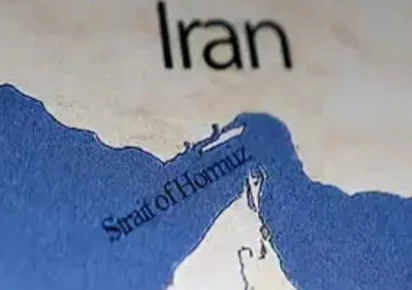
    By Saqlain Abid Tarrar The 60-day U.S.-Iran understanding expired on August 17 without the breakthrough Washington and Tehran had hoped—or claimed—to seek. The agreement has effectively stalled, the Strait of Hormuz remains at the centre of the confrontation, and both sides continue to blame the other for the diplomatic failure. Iran has now warned that it could shift towards a more offensive posture if diplomacy does not progress. This leaves a disturbing question on the table: is the nuclear option becoming the next neutralisation node in the Iran war? The question gained momentum after former Congresswoman Marjorie Taylor Greene claimed that the use of nuclear weapons had been discussed in Trump administration strategy meetings. Such a claim should be treated cautiously because there is no independent evidence that President Donald Trump has ordered or formally approved a nuclear strike. Nevertheless, the allegation itself demonstrates how far the strategic debate has moved. The White House has maintained that nuclear use is not a proposal on the table. Yet Trump’s own rhetoric has made the situation increasingly difficult to ignore. He has declared that the United States has “total control” of Hormuz and described the idea of making the strategically vital waterway U.S. territory as attractive. The Strait of Hormuz is not merely another battlefield. Around one-fifth of the world’s oil and gas supplies normally pass through this narrow maritime chokepoint. Any prolonged closure therefore creates consequences far beyond Iran and the United States: higher energy prices, disrupted shipping, inflationary pressure and another shock to an already fragile global economy. So, what are the chances of the United States actually using nuclear weapons? At present, they remain extremely low—but low is not the same as impossible. History demonstrates how quickly supposedly unthinkable options can become military realities. The United States became the first country to use nuclear weapons in warfare when it dropped atomic bombs on Hiroshima and Nagasaki in August 1945. However, it would be historically inaccurate to argue that those attacks were simply conducted to test plutonium and uranium against the Soviet Union. The motives remain debated, including compelling Japanese surrender and influencing the emerging post-war balance with Moscow. The lesson, nevertheless, is unmistakable: once a state believes that an extraordinary weapon can achieve an extraordinary political objective, the threshold can become dangerously negotiable. That is why today’s situation deserves scrutiny. The Trump administration needs an exit from a war that has become increasingly difficult to convert into a decisive political settlement. The USS Abraham Lincoln has also endured an exceptionally long deployment, reportedly more than 240 days at sea, adding another layer of military and political pressure. But nuclear weapons would not provide a rational solution to that problem. Iran’s nuclear capability is certainly a serious concern. The IAEA reported that Iran had accumulated about 440.9 kilograms of uranium enriched to 60 percent before the 2025 attacks disrupted international verification. That material could theoretically produce significant quantities of weapons-grade material if further enriched, but possession of 60-percent enriched uranium does not mean Iran already possesses nuclear weapons. Iran, meanwhile, has suffered severe economic and infrastructural damage, yet its resistance has not disappeared. Tehran continues to signal that it will not simply surrender under pressure. The danger is therefore that military escalation creates the very nuclear insecurity Washington says it wants to prevent. Russia and China could condemn any nuclear use and mobilise diplomatic opposition. The United Nations could debate emergency resolutions. European governments could strongly object. But none of these actors could physically intercept an American warhead once Washington had made the decision. That makes the most important restraint internal: the political and strategic judgment of the American leadership itself. And there is an even larger regional consequence. If Iran were struck with nuclear weapons, Gulf states could reach a frightening conclusion: conventional alliances may no longer provide sufficient security. Saudi Arabia, the UAE, Türkiye and others could reconsider their long-term strategic options. Nuclear hedging and proliferation could become increasingly attractive. That would transform the Middle East permanently. The irony would be profound. An American nuclear strike intended to prevent Iran from becoming a nuclear power could encourage an entire region to seek nuclear deterrence. Hormuz may eventually be reopened through negotiations, military pressure or a new regional security arrangement. But once the nuclear taboo is broken, restoring it would be far more difficult. The nuclear option should therefore remain the last option—not because it is weak, but because its consequences are stronger than any victory it could deliver. Power can neutralise an opponent. But when power is unleashed without restraint, it can ultimately neutralise the international order itself.

Leave a Reply

Your email address will not be published. Required fields are marked *