evolution modern literary
|

The evolution of the modern literary hero

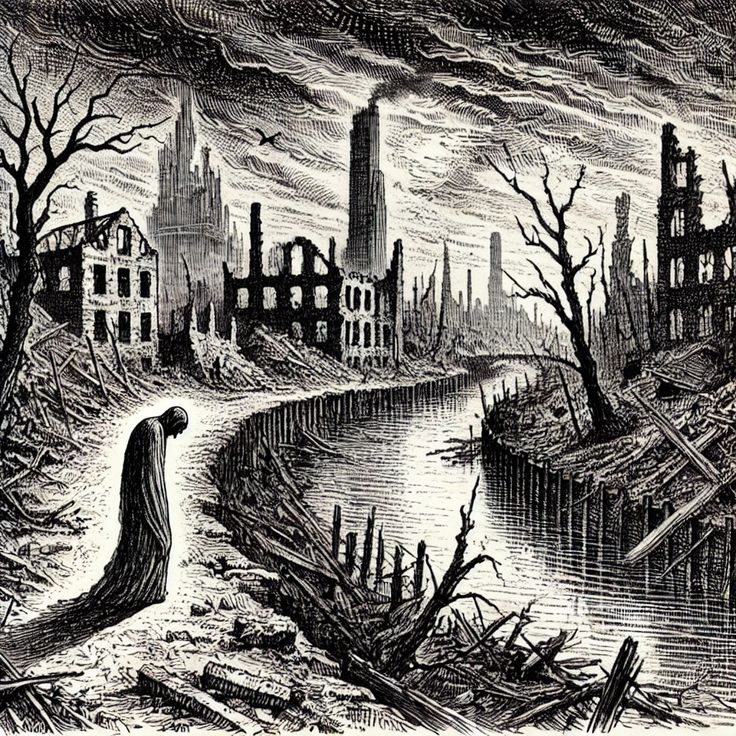
For millennia, the literary hero was defined by extraordinary grandiosity. From Gilgamesh navigating epic wildernesses to Achilles demanding battlefield glory, ancient narrative traditions favored figures of superhuman strength, divine lineage, and absolute moral certainty. These classic archetypes reflected societies that sought order in chaos through idealized figures who conquered external monsters and conquered impossible odds. Yet, as civilization evolved, so too did our definition of heroism. The story of global literature is, in many ways, the gradual dismantling of the perfect hero in favor of someone far more recognizable: ourselves.

The shift began in earnest during the European Renaissance and accelerated through the rise of the novel in the eighteenth and nineteenth centuries. Readers began turning away from mythic kings and gods, seeking stories that reflected the complex realities of ordinary life. Authors like Cervantes with Don Quixote poked affectionate fun at chivalric romance, replacing invincible knights with well-meaning, delusional dreamers. By the nineteenth and early twentieth centuries, writers like George Eliot, Fyodor Dostoevsky, and James Joyce completely reshaped the landscape. Heroism moved inward. The primary battleground was no longer a blood-soaked field of armor. It’s transformed into the unseen terrain of human conscience, social expectation, and psychological angst.

In modern and contemporary literature, the classical hero has largely given way to the complex protagonist or antihero. Today’s readers are naturally suspicious of flawless saviors. We recognize that perfection in storytelling is flat, predictable, and fundamentally false. Instead, modern narrative arcs celebrate figures characterized by vulnerability, moral ambiguity, and deep personal flaws. Characters like Jay Gatsby, Arthur Pendelton, or Holden Caulfield resonate not because they always make noble choices, but because their struggles with identity, grief, and societal pressure mirror our own daily conflicts.

Moreover, modern literature has democratized who gets to be a hero. Where ancient myths strictly reserved heroism for powerful men of noble birth, contemporary fiction centers voices that were historically marginalized or silenced. Today’s protagonists reflect diverse racial, economic, gender, and neurodivergent experiences. Heroism in the modern era is rarely about wielding a magical sword to slay a dragon; it is about surviving systemic pressure, demonstrating radical empathy, reclaiming identity, or simply deciding to get out of bed and keep going in an unpredictable world.

This historical transformation underscores a profound truth about human nature. We no longer look to literature for godlike ideals to worship from afar. Instead, we look into the literary mirror to see our own fractures, uncertainties, and quiet triumphs validated on the page. The modern literary hero reminds us that courage does not require perfection. Rather, it requires the willingness to remain human despite everything.


Similar Posts

  • | |

    Shakespeare’s sorcery and silicon valley

    For over four centuries, William Shakespeare’s plays have served for understanding human nature, politics, psychology, and empire. Yet, as scholars Xin Chen Chai and Xin Ying Lim argue, his work offers surprising insights into a decidedly modern phenomenon. The hidden human and physical infrastructure driving artificial intelligence. When millions of users enter prompts into generative AI chatbots every day, the experience feels weightless, instantaneous and virtual. However, behind every generated sentence lies a physical network of high-powered data centers. These facilities consume massive volumes of electricity and millions of gallons of water to cool servers. This illusion of effortless command reflects the dynamic in Shakespeare’s The Tempest. In the play, the exiled duke Prospero rules a remote island through sorcery. He forces the spirit Ariel and the native inhabitant Caliban into servitude. Prospero’s magical feats appear grand and detached from the labor and coercion required to maintain his power. Modern AI systems operate on a similar logic. The seamless magic of AI algorithms obscures the extractive resource demands and physical labor that sustain them. Prospero’s dominance depended on usurping Caliban’s land and subjugating its inhabitants. Similarly, the expansion of tech infrastructure often targets marginalized or rural territories. The reasons are land and natural resources that can be acquired with minimal resistance. A real-world example unfolded within the Mvskoke Nation in Oklahoma. A proposed legislative bill, NCA 25-077, sought to establish the Mvskoke Technology and Innovation Park. The bill was put on the table to bring major data centers to tribal lands. However, Indigenous citizens, including Jordan Harmon and Mackenzie Roberts, showed strong opposition. They highlighted the facilities’ ravenous water and energy consumption. They raised concerns regarding digital surveillance.  Framing the development as a continuation of historical colonial exploitation. Due to community pressure and concerns, the tribal council ultimately rejected the proposal. Postcolonial scholars have long viewed The Tempest as a critique of colonial dynamics. They have  drawn direct parallels between Prospero’s rule and imperial subjugation. In the play, Prospero surrenders his magical powers only after securing his own political goals. It demonstrates that rulers rarely give up power purely out of goodwill.   The successful resistance within the Mvskoke Nation highlights an essential difference between literature and real-life action. Unlike Shakespeare’s characters, real communities are actively demanding accountability from corporate giants. Their resistance demonstrates that the unchecked expansion of data centers is not an inevitable trajectory. By pushing back against resource-extractive technology models, Indigenous and local communities are forcing a necessary public conversation about who truly benefits from artificial intelligence and who pays the hidden costs.

  • Poor road conditions in Ginna

    Meer Baloch The poor condition of roads in Ginna, Kech, has become a serious problem for residents. Large potholes damaged road surfaces and the lack of proper maintenance make daily travel difficult and unsafe.   Students, patients, workers and elderly people suffer the most while motorists risk accidents and costly vehicle damage every day. During the rainy season these roads become even more hazardous, disrupting transportation and delaying emergency services. Good roads are essential for public safety and economic development, yet the people of Ginna continue to face neglect. I urge the concerned authorities to repair the damaged roads without further delay and ensure regular maintenance. The residents of Ginna deserve safe and reliable infrastructure.

  • Poor condition of roads in Dasht

    I want to draw the attention of the concerned authorities to the poor condition of roads in Dasht. Many roads are broken and full of potholes. During the rainy season, they become muddy and difficult to use. The damaged roads cause traffic problems and accidents. Students, patients, farmers, and other people face great difficulties while travelling. Sometimes vehicles are also damaged because of the bad roads. I request the concerned authorities to take immediate action and repair the roads in Dasht. Good roads are necessary for the safety and development of the area. I hope that the authorities will pay attention to this serious problem.

  • |

    Tradition, impersonality and mythic structure in “The Waste Land”

    Eliot’s masterpiece The Waste Land is published in 1922 just three years after “Tradition and the Individual Talent“. The poem serves as the ultimate practical demonstration of his theoretical ideas. Rather than describing tradition abstractly, Eliot uses allusion, polyphony, structural juxtaposing, and mythic framing to explain how a modern poem can absorb European history to process post-WWI disillusionment. Eliot argued that a poet must possess a historical sense. It is an awareness of the past’s presence alongside the contemporary moment. In The Waste Land, centuries of literary tradition exist on a single plane. In Section I (The Burial of the Dead), the speaker encounters acquaintance in modern London named Stetson and asks:    That corpse you planted last year in your garden, Has it begun to sprout?  In the very next line, Eliot links this modern London scene directly to the Punic Wars between Rome and Carthage. You who were with me in the ships at Mylae!   Modern industrial London and ancient Rome are collapsed into the same spiritual wasteland. The historical sense allows Eliot to treat human trauma across millennia as simultaneous rather than sequential. In his Impersonal Theory, Eliot argued that the poet’s mind acts as a catalytic medium. It’s  fusing disparate feelings and literary artifacts into a new substance without injecting personal bias. Throughout the 433 lines of The Waste Land, Eliot incorporates over 35 distinct literary references, 6 foreign languages, and references to sacred texts across Eastern and Western traditions. Eliot quotes Edmund Spenser’s Renaissance poem Prothalamion: Sweet Thames, run softly, till I end my song. He juxtaposes Spenser’s idyllic, nymph-filled river with the industrial Thames of 1920s London, scattered with silk handkerchiefs, cardboard boxes, cigarette ends. As commuters cross London Bridge, Eliot echoes Dante’s Inferno (Canto III): I had not thought death had undone so many. The modern office workers are literally mapped onto the souls trapped in Hell’s vestibule. He isn’t relying on a traditional narrative arc or a subjective personal narrative. Eliot uses what he famously called the Mythic Method (a technique he also praised in James Joyce’s Ulysses)..Eliot grounds the entire poem in two scholarly texts on mythology and ritual. From Ritual to Romance (the Grail Legend and the sterile Fisher King). The Golden Bough (ancient fertility cults, dying-and-rising gods). The underlying archetype, a sterile land awaiting a spiritual rain to restore fertility, unifies the fragmented scenes of modern decay (mechanized sex, empty conversations, spiritual apathy). Therefore, the individual talent grounds chaos in timeless mythic order. In order to achieve the extinction of personality, Eliot abandons a central I persona. Instead, he speaks through a chorus of shifting voices. A Marie in Munich, a hyacinth girl, a cockney woman in a pub, and Saint Augustine. In his famous explanatory notes to line 218, Eliot exposes he unifying center of the poem:  Tiresias, although a mere spectator and not indeed a ‘character’, is yet the most important personage in the poem, uniting all the rest… What Tiresias sees, in fact, is the substance of the poem. Tiresias: the blind, bisexual prophet of Greek myth (from Sophocles and Ovid). It has lived as both man and woman and seen the depths of classical tragedy. Eliot submerges his own biographical ego into an ancient, collective consciousness by adopting Tiresias as the central perspective Eliot’s concept of tradition is not narrowly provincial. His concept relates to the broader heritage of human thought. In the final section “What the Thunder Said”, the modern mind seeks a cure for its spiritual dryness not in the West, but in the Upanishads. The thunder speaks the Sanskrit syllables: Datta (give), Dayadhvam (sympathize) and Damyata (control). The poem concludes with the solemn formal chant: Shantih shantih shantih The Peace which passeth understanding. The final line: “These fragments I have shored against my ruins” summarizes Eliot’s entire philosophy of tradition. Modern civilization may be in ruins, but the individual poet reconstructs meaning by gathering and rearranging the enduring fragments of global tradition.  

  • Omega-3 linked to better lungs

    A new medical study suggests that omega-3 fatty acids may do more than protect the heart and brain. Researchers say these healthy fats could also help keep the lungs working well for a longer time by slowing the natural decline in lung function. Omega-3 fatty acids are found in foods such as oily fish, fish oil supplements walnuts, flaxseeds chia seeds vegetable oils and fortified foods. They are already known for their anti inflammatory effects and may help lower the risk of heart disease stroke and some types of cancer. Now scientists believe they may also play an important role in supporting lung health. The study was published in the American Journal of Respiratory and Critical Care Medicine. The research was led by Dr. Patricia A. Cassano from Cornell University in New York. She explained that while many studies have looked at how diet affects heart disease and cancer much less research has focused on how nutrition influences lung health. To explore this researchers carried out two separate studies. The first study followed 15,063 adults in the United States with an average age of 56. Most participants were healthy and had no diagnosed lung disease when the study began. They were monitored for between seven and 20 years. Researchers found that people with higher levels of omega-3 fatty acids in their blood experienced a slower decline in lung function over time. In the second study scientists analyzed genetic data from more than 500,000 people in Europe. They examined genetic markers linked to omega-3 levels in the blood and found the same pattern. Higher omega-3 levels were associated with better lung function and healthier lungs. Although the findings are encouraging experts say omega-3 supplements should not be seen as a cure or a replacement for medical treatment. A balanced diet regular exercise avoiding smoking and following medical advice remain the best ways to protect lung health.

Leave a Reply

Your email address will not be published. Required fields are marked *