monsoon may increase

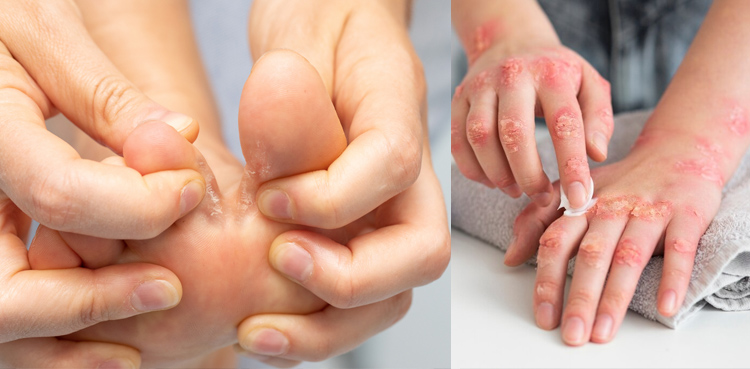
Monsoon may increase fungal infections

During the monsoon season the number of people developing fungal infections between their toes often increases.

Health experts say this is mainly because of extra humidity and sweat which create the perfect environment for fungus to grow.

Contrary to popular belief rainwater itself does not cause fungal infections. The real problem is when the skin stays wet for a long time.

Moist skin allows fungus to grow more easily.

According to dermatologist people with diabetes obesity weak immune systems or excessive sweating are at a higher risk.

In these individuals fungal infections may take longer to heal and are more likely to return.

Fungal infections usually affect warm damp areas of the body including the armpits groin waist neck under the breasts between the fingers and toes feet and scalp.

Common symptoms include itching, redness burning flaky skin and red rashes.

Experts say wearing wet clothes staying in sweaty clothing for long periods using damp shoes or socks or wearing tight fitting clothes during the rainy season can greatly increase the risk of infection.

Keeping the skin clean and dry is one of the best ways to prevent it. The scalp can also be affected during the monsoon. High humidity may keep the scalp damp for longer allowing fungus and bacteria to grow.

This can lead to dandruff itching an oily scalp and in some cases hair loss.

Doctors also warn against leaving hair wet after getting caught in the rain. It is best to rinse your hair with clean water and dry it completely to reduce the risk of scalp infections.

Avoid self treatment

health experts advise against buying anti itch or antifungal creams without consulting a doctor.  Some creams contain steroids that may temporarily reduce itching but can allow the fungal infection to spread further making it harder to treat later.

Stopping treatment as soon as symptoms improve is another common mistake.  Doctors recommend completing the full course of medicine as prescribed to prevent the infection from coming back.

Tips to prevent fungal infections

•Keep your skin and scalp clean and dry.

•Change sweaty clothes as soon as possible.

•Avoid wearing wet shoes or socks for long periods.

•Wear loose cotton clothing.

Eat a balanced diet to support a healthy immune system. Do not use skin or hair creams without medical advice.

Experts say early diagnosis proper treatment and good hygiene can help prevent fungal infections and reduce the chances of them returning.

Similar Posts

  • |

    Why August 12 total solar eclipse is so special?

    The last total solar eclipse occurred two years ago and once again millions of people will have the opportunity to witness this rare celestial event. This year’s eclipse is particularly special because some observers will see the total solar eclipse at sunset making it an exceptionally rare and breathtaking sight. According to NASA, the total solar eclipse will occur on August 12 but only a limited number of countries will experience totality. People in Greenland, Iceland, northern Spain and a small part of Portugal will be able to witness the total eclipse. In Spain, the eclipse will coincide with sunset creating a spectacular view that is expected to captivate skywatchers. A partial solar eclipse will also be visible across many other parts of Europe and Africa including most European countries and several regions of North Africa. Russia will enjoy another rare phenomenon as a partial eclipse will be visible at both sunrise and sunset. On the remote Taymyr Peninsula, the partial eclipse will begin at sunrise while in another part of the country it will be seen at sunset. Solar eclipses occurring at sunset are extremely rare which is one of the reasons why this year’s event is considered so unique. According to Pakistan Standard Time (PST), the partial solar eclipse will begin at 10:34 PM, the total eclipse will start at 12:12 AM and the event will conclude at 2:58 AM.

  • The Unspoken Pain: A Lexicon of Shame – Infertility in Pashtun Society

    By Dr.Sajjad Ali A suffering pervades the walled villages of Khyber Pakhtunkhwa, and the privacy of the homes in the city, in a language of suffering all distinct. The language of infertility is not the one used in medical textbooks but it is the one that speaks to life and death in Pashtun society. Being a childless woman is being defined by a lexicon of failure here, a failure that runs against the very ethos of Pashtunwali, where a person’s nasl (lineage) and naam (name) is everything. The condition is identical, but the language employed to use it as a weapon against women and men are very different, very vicious. It is a public indictment to her; a silent, emasculating damnation to him. The Woman’s Cross: The Public Indictment The worthiness of a Pashtun woman is arbitrarily squeezed into her reproductive capability. When she drops the one perceived duty, she is not infertile, she is cursed, useless and dangerous. The attack starts with an endless list of names and peghoor (tease). She is a banjh (barren), the most common and heart-breaking epithet. She is a shana (dry, unfruitful tree that bears no fruit). She is khaanch (empty), a hollow vessel with no substance. The elders of the family complain, “Mata plar na laree, khaanch de” (She hasn’t borne him a son, she is empty). Her body is compared to the barren land of Sheera zameena (salty, infertile land) which nothing can grow, or shara (fallow land). The childless woman or the one whose children have died is generally known as a kheeri, which translates as woman of ill omen, bearer of misfortune. She is slightly banned from being present at weddings or cradles (gharay). When a child is sick after the visit, people begin muttering, “Da kheeri da las na ye bimar sho” (After the touch of the kheeri the child fell sick). This spiritual banishment is so devastating! If her husband returns to marriage, or if the family goes bankrupt, she is considered a shamat (a bad omen, a curse to the family) and a manhoos (inauspicious, unlucky). The psychological take-home message is no less horrifying: she is not only failing to give birth; she is an active, evil agent of birthlessness and death and decay. She’s a curse for their existence. The peghoor is available in a dramatic fashion. A mother-in-law would see a hen with chicks and will loudly cry out, “Da charkha ham bachy kawal, khu da adamzad mung na shwe.” (Even this hen hatched chicks, but this human gave us nothing). Neighbours grumble, ‘Khudai da qahar da, cha ta kho pukha na we (She is God’s wrath, she hasn’t ripened for anybody—to mean that she has not become a mother). A cruel comic scene that is often acted out: The guest exclaims the house is a paradise, and the mother-in-law replies, “Kor kho jannat de, khu khaanch de, khoonda raghlay na de” [The house is a paradise, but it is empty, no fragrance has come into it]—singing about the fragrance of a child which reminds her of something she failed to do with her daughter-in-law. This puts her in an economic hostage position. She is a servile slave to make up for her “defect” because of the ever-present unspoken danger of a balka (co-wife). All the money is spent on her own “cure,” which includes dangerous dai (traditional birth attendant) concoctions, expensive visits to taweez-keeping (piir sahib) and futile taweez (amulet) usage. She will wear a tawiz laced with prayers for fertility and she will be made to drink water that has been washed with a dranzay (a special supplication)—her husband’s diagnosis will not even be suspected. This quest devours the family’s resources, everything aimed at the woman who is in a desperate struggle to remain not the family’s shamat. The Man’s Secret: The Silent Emasculation The man feels that the lack of producing babies is not something he has failed to do biologically, but something he has failed to do as a man. He can’t be brought into pity, because if he is, he’s acknowledging that he lost nang (honour). The words he has to say, the words he is not allowed to say, the words he can’t say at all: his torment is a poison that is surrounded by a wall of aggressive denial, but is intended to un-man him. If he is unable to generate a zo-ye (a son), then he is no longer a sar-ye (a man, a leader). His name is a na-mard, the worst of all names, that of a non-man. He is a susra—an utterly impotent, weakling man, a term of maximum contempt. A khassya (castrated bull, eunuch), who has no power and virility. He is a namardanz (an impotent creature). A popular bit of vicious poetry is: “Dwa kalah ye we-weted, khu goly ye na kholay shwe” (“He tried twice, but not a bud was able to blossom for him”, a poetic and mean way of saying that he was unable to start life. His true trial is in the hujra (man’s assembly). The taunt is never a literal arrow, but an arrow of some sort. A story will be told: “Da kala de, cha tofang walwela, khu dasy nese wa, che laande khassia we” (“There’s a man who wields a big rifle, and makes a lot of noise, but inside, he’s a eunuch”). They all laugh, the childless man is forced to laugh loudest, and the white-hot shame is his. The tale is best told in a popular social media comic strip that shows a doctor showing a semen analysis report to a furiously upset husband with a nervous wife looking on: Panel 1: A doctor shows a semen analysis report to a furious-looking husband, with his wife sitting nervously. The Doctor says, “The report reads: azoospermia.The Doctor says, “The report reads azoospermia. Panel 2: A huge, broken speech bubble bursts out of the husband’s mouth: “Tor! Tor! Sta da peghalay!” (“Lies! “It’s your slander!”)

  • How to get six pack Abs naturally

    Getting six-pack abs is a popular goal for many fitness lovers. However doing hard workouts alone is not enough.  A healthy diet regular physical activity proper sleep and a balanced lifestyle are also important. Reduce belly fat One of the most important steps to getting visible abs is reducing extra body fat. Your abdominal muscles may already be strong but they can remain hidden under a layer of fat. Eating a healthy diet and maintaining a balanced calorie intake can help reduce overall body fat over time. Eat more protein Protein helps the body build and repair muscles. Include protein rich foods such as eggs chicken fish beans and lentils in your diet.  A balanced diet with enough protein can support muscle growth and strength. If your goal is to lose body fat you may need to consume fewer calories than your body uses.  However extreme dieting or skipping meals is not a healthy way to lose weight. Limit unhealthy foods Try to reduce foods and drinks that are high in added sugar unhealthy fats and calories. This includes soft drinks fast food sweets and deep fried foods. Choosing fresh and nutritious foods can make it easier to manage your weight. Drink enough water Staying hydrated is also important during your fitness journey.  Drink water regularly throughout the day. The amount you need can vary depending on your age activity level weather and overall health so there is no fixed amount that everyone must drink. Exercises for stronger Abs Some useful exercises for strengthening the abdominal and core muscles include. •Planks •Crunches •Leg raises •Bicycle crunches Planks can help strengthen the core while crunches work the abdominal muscles.  Leg raises and bicycle crunches can also improve core strength. However doing only abdominal exercises cannot remove fat from the stomach area alone.  To reduce overall body fat combine strength training other physical activities and  a healthy diet. Stay consistent You do not need to spend every day at the gym to work toward six pack abs.  A workout routine that you can follow consistently for a long time is more important than exercising extremely hard for a short period. Good sleep enough rest healthy food and regular exercise all work together to help you become fitter and stronger. Most importantly focus on steady progress rather than expecting quick results.

  • When global recognition becomes a local burden

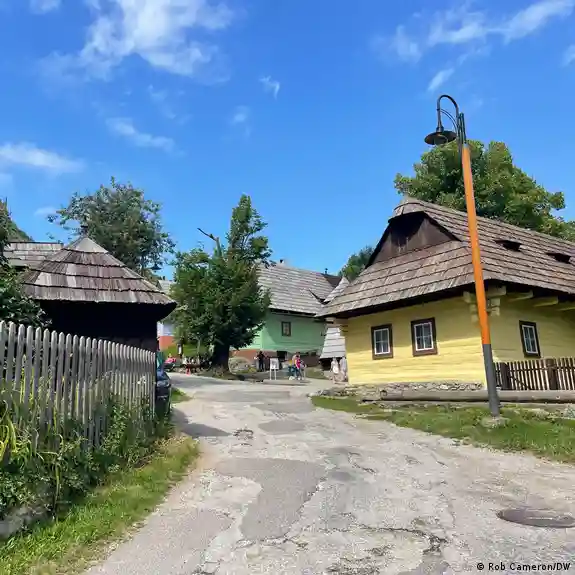
    In the Carpathian Mountains of central Slovakia lies Vlkolínec, a preserved settlement. This village is renowned for its pastel-painted timber cottages and traditional 19th-century folk architecture. It was inscribed as a UNESCO World Heritage site in 1993. Vlkolínec was celebrated not merely as a set of historical buildings, but as a living community. A rare surviving traditional rural life in Central Europe. However, three decades after receiving this prestigious designation, the small mountain is struggling with an existential dilemma. What was meant to be a cultural preservation has transformed into a challenge for the few villagers who still call Vlkolínec home. Now, frustration among permanent residents has reached a boiling point. There are calls to have the village removed from the UNESCO list altogether. When UNESCO designated Vlkolínec as a World Heritage site, one of the criteria was that it remained an inhabited settlement. At the time of inscription, the village was home to around 200 residents. Today, that permanent population has declined to just 14 to 17 people spread across four core families. In contrast to this dwindling resident count, Vlkolínec receives approximately 100,000 tourists every year. For the remaining inhabitants, the ratio of over 7,000 visitors per resident has basically altered the daily life. Locals report feeling as though they live inside a tourist zoo. The boundaries between public spaces and private homes are routinely ignored. Despite signs requesting privacy, visitors frequently wander into private yards, peer through kitchen windows, and treat active properties as open-access museum displays. The loss of privacy is compounded by anti-social tourist behavior. This conduct has been leaving locals feeling alienated in their own hometown. Overtourism is only one side of the coin. Residents also voice deep frustration over the rigid conservation framework that accompanies World Heritage status. Under national protection laws and strict UNESCO guidelines, historic homes face tight restrictions on modern modifications and physical alterations. Elderly villagers point out that these preservation rules have made customary rural activities increasingly difficult. Small-scale farming, livestock keeping, and land cultivation have gradually vanished. Surrounding agricultural terraces have become overgrown. Traditional meadow mowing has largely ceased as older generations pass away and younger generations move away. Furthermore, many of the village’s timber cottages have been bought up by outside buyers to serve as weekend holiday retreats. This phenomenon has increased the loss of a permanent, cohesive community. Some residents argue that revoking UNESCO status would reduce tourist pressure and ease regulatory burdens. However, municipal officials and heritage experts contend that delisting is neither practical nor the right solution. Local administrators in the nearby town of Ružomberok emphasize that UNESCO status brings significant heritage recognition and funding opportunities. Rather than abandoning the title, officials advocate for smarter tourism management. From a procedural standpoint, voluntary delisting at the request of a local community is virtually unprecedented in UNESCO’s history. The organization typically removes properties only when they lose their outstanding universal value due to severe destruction or irreversible development. The debate unfolding in Vlkolínec highlights a broader issue facing protected historic sites around the globe. How to balance global recognition and economic benefits with the rights and wellbeing of local inhabitants! Small historic communities across Europe and beyond battle with overcrowding and demographic decline. Vlkolínec serves as a reminder that preserving physical architecture alone is not enough. Without protecting the living social fabric of a community, world heritage sites risk turning into empty shells of their former selves.  

  • Dark spots? Expert tips for clear skin

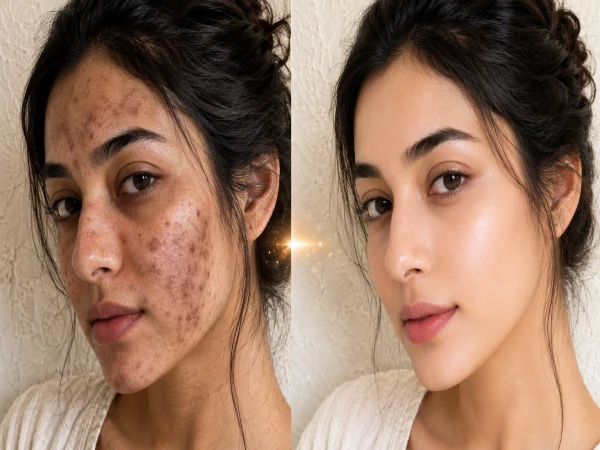
    Clear healthy skin is something many women want but sun exposure acne marks hormonal changes skin irritation and poor skincare can all lead to dark spots on the face. Many people try quick home remedies or low quality creams to remove these marks but these products can sometimes make the skin more sensitive instead of improving it. Experts say it is important to understand the cause of dark spots rather than just trying to hide them. •What causes dark spots? Dark spots can appear after acne heals from skin injuries or irritation hormonal changes or too much sun exposure.  In some cases using skincare products that irritate the skin can also lead to discoloration. •Simple habits for healthier skin A daily skincare routine can help keep your skin clear.  Wash your face every day to remove dirt sweat and makeup especially before going to bed. Using sunscreen every day is also important. Dermatologists say sunlight can make existing dark spots darker and increase the risk of new ones forming. •Be careful with home remedies Natural ingredients such as rose water honey and yogurt are commonly used in home beauty treatments but they may not suit every skin type. Avoid applying lemon juice or other acidic ingredients directly to your face as they can cause irritation redness and make dark spots worse. •When to see a dermatologist If your dark spots keep getting worse return frequently or do not improve despite proper skincare it is best to consult a dermatologist.  Finding the real cause of the problem is the first step toward choosing the right treatment.

  • Why insects increase during monsoon

    Monsoon rain makes the weather pleasant but it can also lead to an increase in insects and other bugs. In Pakistan poor drainage standing water and damp surroundings can attract different types of insects to homes after rainfall. After rain small black flying insects are often seen around lights and bulbs.  Some insects can also cause itching redness or irritation if they bite. Certain insects may also carry germs and increase the risk of disease. However a few simple steps can help reduce their presence around your home. Use insect repellent when going outside during the rainy season applying a suitable insect repellent can help protect the skin from mosquitoes and other biting insects. This is especially useful after rainfall when insect activity increases. Try camphor carefully Camphor is sometimes used as a home method to keep insects away because of its strong smell.  If you use it keep it in a safe place and away from children and pets. Use insect spray safely Spraying an appropriate insect killer inside the home after rain may help reduce the number of insects. Always follow the instructions on the product label and keep children and pets away from the area while using the spray. Keep your home dry and clean Keeping the home and its surroundings clean is one of the most important ways to control insects.  Clean plant pots and remove water that collects in trays buckets containers or other places. Standing water can become a breeding place for mosquitoes and other insects. Keep food covered Always keep food and drinks covered especially during the monsoon season. Installing screens or nets on doors and windows can also help stop insects from entering the house. Manage garbage properly Keep garbage in a covered dustbin and place it away from living areas whenever possible. Empty the bin regularly and keep the area around it clean. Simple prevention can help Keeping your home clean removing standing water covering food and taking basic precautions can greatly reduce insects during the monsoon. A little care and regular cleaning can help keep your home more comfortable and hygienic during the rainy season.

Leave a Reply

Your email address will not be published. Required fields are marked *