get six pack

How to get six pack Abs naturally

Getting six-pack abs is a popular goal for many fitness lovers. However doing hard workouts alone is not enough.  A healthy diet regular physical activity proper sleep and a balanced lifestyle are also important.

Reduce belly fat

One of the most important steps to getting visible abs is reducing extra body fat. Your abdominal muscles may already be strong but they can remain hidden under a layer of fat. Eating a healthy diet and maintaining a balanced calorie intake can help reduce overall body fat over time.

Eat more protein

Protein helps the body build and repair muscles. Include protein rich foods such as eggs chicken fish beans and lentils in your diet.  A balanced diet with enough protein can support muscle growth and strength.

If your goal is to lose body fat you may need to consume fewer calories than your body uses.  However extreme dieting or skipping meals is not a healthy way to lose weight.

Limit unhealthy foods

Try to reduce foods and drinks that are high in added sugar unhealthy fats and calories. This includes soft drinks fast food sweets and deep fried foods. Choosing fresh and nutritious foods can make it easier to manage your weight.

Drink enough water

Staying hydrated is also important during your fitness journey.  Drink water regularly throughout the day. The amount you need can vary depending on your age activity level weather and overall health so there is no fixed amount that everyone must drink.

Exercises for stronger Abs

Some useful exercises for strengthening the abdominal and core muscles include.

•Planks

•Crunches

•Leg raises

•Bicycle crunches

Planks can help strengthen the core while crunches work the abdominal muscles.  Leg raises and bicycle crunches can also improve core strength.

However doing only abdominal exercises cannot remove fat from the stomach area alone.  To reduce overall body fat combine strength training other physical activities and  a healthy diet.

Stay consistent

You do not need to spend every day at the gym to work toward six pack abs.  A workout routine that you can follow consistently for a long time is more important than exercising extremely hard for a short period.

Good sleep enough rest healthy food and regular exercise all work together to help you become fitter and stronger.

Most importantly focus on steady progress rather than expecting quick results.

Similar Posts

  • The tragic fate of Aurangzeb’s rebellious daughter

    In the residential quarters of Nawan Kot in Lahore stands a crumbling Mughal monument. To a casual bystander, it appears as little more than a neglected relic surrounded by modern brick houses and the distant roar of traffic from Multan Road. Yet, local legend fiercely protects this spot as the resting place of Princess Zeb-un-Nissa, the eldest daughter of the orthodox Mughal Emperor Aurangzeb. Historians, however, tell a very different story. Official records indicate that Zeb-un-Nissa died in Delhi at the Salimgarh Fort after two decades of imprisonment and was buried outside the Kashmiri Gate at the Tees Hazari gardens. Her original tomb was later dismantled during the British era to make way for a railway line. So how did a city hundreds of miles away come to claim this defiant, romantic princess as its own? The answer lies not in verified architectural blueprints, but in the psychological and political pulse of 17th-century Lahore. Zeb-un-Nissa was an anomaly in the puritanical Mughal court of her father. She was highly educated, exceptionally wealthy, a scholar of theology, and a devout patron of the arts. Under the secret pen name Makhfi (The Hidden One), she wrote expressive, Sufi-inspired poetry that directly challenged the orthodox ethos. Her political inclinations further alienated her from her father. Zeb-un-Nissa had strong affinities for her uncle, Prince Dara Shikoh: Aurangzeb’s primary rival for the throne. It was originally betrothed to his son, Prince Suleiman Shikoh. After Aurangzeb executed both Dara and Suleiman during the violent war of succession, Zeb-un-Nissa reportedly vowed never to marry. Later in life, her secret correspondence supporting her rebellious younger brother, Prince Muhammad Akbar, ultimately led to her downfall and life imprisonment. Lahore’s local folklore transformed her political tragedy into a narrative of star-crossed love. Popular stories in the city recount a passionate, poetic romance between Zeb-un-Nissa and Akil Khan Razi, the Governor of Lahore. According to local legend, after Emperor Aurangzeb forbade their union, the heartbroken princess renounced her royal luxury and retreated to a self-imposed prison in her private estate near Chauburji. In this garden sanctuary, she allegedly ran a massive public kitchen (langar) to feed dervishes, beggars, and travelers, using poetic riddles on slips of paper to communicate with the needy and eventually, to secretly reconnect with her disgraced lover. When Aurangzeb discovered their continued meetings, legends claim he ordered Akil Khan’s brutal execution and permanently confined his daughter within the garden walls. While these romantic tales lack strict historical evidence, they reflect a deeper cultural reality. Lahore had been the favorite city of Dara Shikoh, who poured immense imperial funds into its cultural and architectural enrichment. When Aurangzeb seized power, executed Dara, and shifted the imperial capital away from the city, Lahore was left politically marginalized and financially neglected. In an age where open political dissent against an absolute monarch was impossible, the citizens of Lahore used rumors, myths, and urban legends as their primary medium of protest. Zeb-un-Nissa: a brilliant woman who shared Dara Shikoh’s inclination toward Sufism, loved the city of Lahore. She publicly defied her father’s authority became the ultimate symbol of the city’s lost artistic spirit. By adopting her memory, attributing the Chauburji gardens to her patronage, and declaring the tomb in Nawan Kot as her final resting place, Lahore claimed the rebellious princess as its own. In doing so, the city permanently etched her spirit of resistance into its own historical identity.  

  • Unbearable heat in Turbat

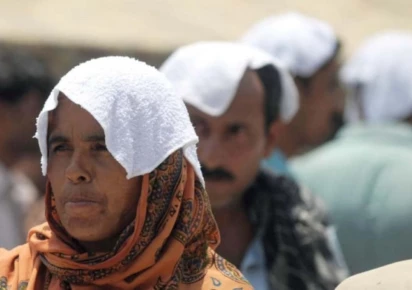
    Hani Rasheed Through the columns of your esteemed newspaper, I wish to highlight the unbearable heat in Turbat. Every summer, temperatures rise to dangerous levels, making life extremely difficult for residents. Students, labourers, elderly people, and patients suffer the most. Long hours of load shedding and water shortages make the situation even more unbearable. The authorities should take urgent measures to ensure an uninterrupted electricity supply, improve water availability, and plant more trees to reduce the effects of extreme heat. Public awareness about staying safe during heatwaves should also be promoted. The people of Turbat deserve timely action before this severe weather causes more health problems. I hope the concerned authorities will address this issue without delay

  • |

    Favoritism at Civil Hospital Turbat

    Patients visiting Civil Hospital Turbat deserve equal treatment, but many complain that this is not always the case. Poor patients often wait for hours to see a doctor, while the relatives or acquaintances of doctors are allowed to enter directly without waiting their turn. Such favoritism is unfair and causes great hardship to those who have no influence or connections. A public hospital should serve every patient equally, regardless of their social status or personal relationships. The hospital administration should ensure that all patients are examined according to a fair queue system and take action against any practice that gives unjust preference to certain individuals. Equal treatment is a basic right. Fairness and accountability are essential to restore public trust in Civil Hospital Turbat.

  • |

    Walking through time: A personal journey inside Na…

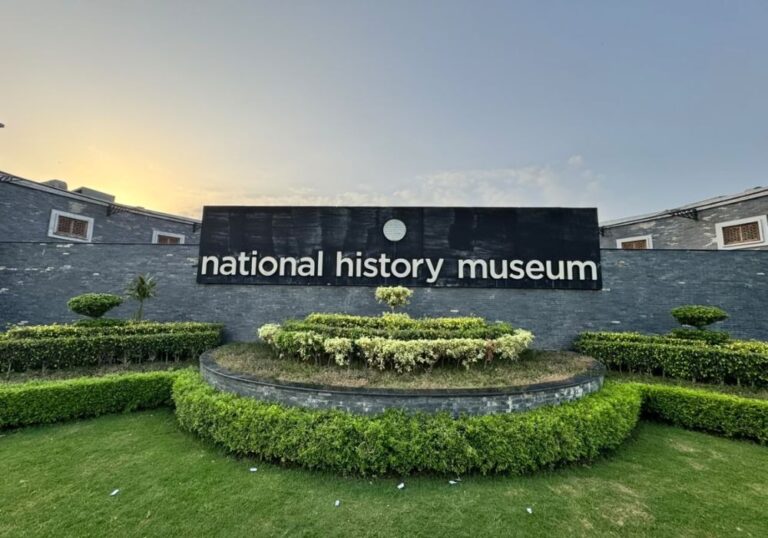
    The rain had just stopped when I reached Lahore’s National History Museum. The roads were quieter than usual, the air felt fresh and, for the first time in weeks, I wasn’t in a hurry. I had postponed this visit for years, ever since a brief stop during my internship at the Lahore Museum left me wishing for more time. This Sunday, I finally had it. I have also realised something over the past few weeks. Waiting for friends before exploring new places often means never going at all. So I decided to spend the afternoon on my own, following nothing except curiosity. As I entered the museum, Floor Supervisor Tabish welcomed me and arranged a guided tour with Muhammad Shamsher, a PhD scholar in History who also serves as one of NHM’s guides. His explanations never sounded like a lecture. Instead, he connected historical events with the people behind them, making every gallery feel like part of one continuing story. Growing up, I believed museums were places where objects sat behind glass while visitors quietly read information panels. That idea came from childhood visits to museums in Islamabad, Taxila and Harappa, and later from my internship at Lahore Museum. The National History Museum challenged that idea completely. Through digital displays, sound, projection and interactive exhibits, history became something to experience rather than simply observe. Every gallery encouraged visitors to slow down and become part of the story unfolding around them. One exhibit that caught my attention focused on the making of Minar-e-Pakistan. Like many Pakistanis, I had always admired the monument without knowing much about the person who designed it. The museum introduced architect Nasreddin Murat-Khan and displayed photographs that offered a glimpse into the creative process behind one of Pakistan’s most recognisable landmarks. It reminded me how often we celebrate monuments while forgetting the people who imagined them. The journey then moved towards Partition, where history became deeply personal. The restored railway carriage, once part of the North Western Railway, stood quietly inside the gallery. Visitors could step inside and experience a virtual reality presentation recreating the migration of 1947. I had watched countless documentaries and films about Partition, but sitting inside that carriage created an entirely different feeling. The sounds, voices and uncertainty surrounding the experience made history feel much closer than any textbook ever could. The museum then shifted from the birth of Pakistan to the challenge of building a new country. One gallery recreated the early government offices established after independence. I found myself studying old files, furniture and official records, imagining the enormous responsibility carried by those tasked with running a newly created nation. Nearby, early Pakistani passports were displayed inside glass cases. Different in design from today’s passports, they represented the same hope of a country beginning to define its identity. Another section I found especially engaging was Camera from the Past. Visitors could stand before a vintage-style camera and have their photograph taken, creating a small connection between the present and the past. The gallery also highlighted photographer Aziz Ahmed Azmi, whose images documented Pakistan’s early years. Looking at his work, I realised that photographs often become history long after the moment they capture has passed. Perhaps the gallery where I spent the most time was Popular Culture. Having studied Mass Communication with a specialisation in Theatre, Film and Television and continuing to work in journalism, I naturally found myself drawn towards the colourful Lollywood posters and displays celebrating Pakistan’s cinematic heritage. Reading about Azra, the country’s first colour film, and Zinda Laash, Pakistan’s first horror film, reminded me how rich our film history is, even if many younger audiences know little about it today. Before leaving, I also explored Husn-e-Hunar, an exhibition celebrating Pakistan’s traditional craftsmanship. Alongside literature, music and cultural displays, it served as a reminder that a nation’s identity is shaped not only by political events but also by its artists, craftsmen and storytellers. When I stepped back outside, I realised I had spent far longer inside the museum than I had planned. I didn’t leave with pages of notes or dozens of photographs. Instead, I left with a greater appreciation for how history can be presented when museums invite visitors to participate rather than simply observe. The National History Museum doesn’t just preserve Pakistan’s past. It encourages visitors to pause, ask questions and discover the stories that continue to shape the country today.

  • | | |

    Omar Musa secures 2026 Miles Franklin Award with Fierceland

    Omar Musa has been named the winner of the prestigious 2026 Miles Franklin Literary Award for his novel, Fierceland. Recognized as Australia’s most celebrated literary prize, the award honors novels of the highest literary merit that explore Australian life in all its phases. Musa’s victory highlights a powerful shift in the country’s literary landscape, celebrating a work that fearlessly confronts historical legacies while weaving together rich cultural folklore. Deconstructing Colonial Narrative Frameworks At the core of Fierceland lies an ambitious, multi-layered critique of Joseph Conrad’s classic 1899 novella, Heart of Darkness. Where Conrad’s seminal text depicted the non-Western world through a lens of exoticism, peril, and foreign mystery, Musa flips the narrative on its head. He reclaims the riverlands and lush rainforest environments not as places of terrifying obscurity, but as vibrant ecosystems steeped in history, memory, and indigenous knowledge. The True “Darkness” Musa confronted the colonial storytelling. In fact, he challenges readers to examine how Western literature has historically framed non-Western landscapes and their people. Fierceland presents the journey inward as a descent into moral decay. This journey is an essential process of unlearning, confrontation and reclamation. The novel demonstrates that the darkness lies within the unchecked impulses of imperial exploitation. It also compels the reader to not surrender to the historical erasure. The Role of Spectral Presence and Cultural Folklore Ghosts and supernatural forces drift consistently throughout the narrative of Fierceland. These forces serve as both literal story elements and profound allegorical symbols. Rather than functioning purely as horror tropes, these spectral figures act as guardians of history and physical manifestations of unhealed wounds. Musa attributes this atmospheric depth to his upbringing and heritage. He reflects on the influence of his family and heritage. Musa noted that ghost stories are deeply woven into the fabric of Malaysian culture. Growing up, he listened to his father recount haunting tales from his homeland. He developed an early appreciation for oral traditions where the living and spiritual realms continually intersect. In Fierceland, these inherited myths explore themes of displacement, grief, and ancestral connection.  These myths gave a voice to forgotten histories that refuse to remain buried. A Multidisciplinary Voice in Modern Storytelling Musa’s background is of an acclaimed spoken-word poet, hip-hop artist, and woodcut printmaker. His own roots shine brightly throughout the pages of Fierceland. The prose is defined by a rhythmic, visceral cadence that reflects his poetic mastery. His ability to blend social commentary with lyricism creates a sensory reading experience.   Winning the 2026 Miles Franklin Literary Award positions Musa as one of the most compelling voices. The judging panel has recognized the evolving nature of Australian literature. Fierceland stands as a testament to the power of reclaiming narrative agency. The novel proves that when old myths are critically dissected, extraordinary stories can emerge.

  • Beautiful childhood is lost

    Childhood has changed dramatically over the years, and many of its simple joys seem to be disappearing. In the past, children spent their evenings playing outdoors with cousins and neighbourhood friends flying kites, playing with marbles rolling tyres through the streets and enjoying games that created lasting memories.   I still remember how the evening sky in our city used to be filled with colourful kites bringing excitement and happiness to children of all ages. Today however these traditions are becoming rare. Instead of outdoor activities many young children spend hours using mobile phones and tablets often because they are given these devices to keep them occupied.   Excessive screen time at an early age can affect eyesight delay language development reduce social interaction, and limit opportunities to develop important physical and communication skills.   While technology certainly has its benefits, it should not replace the experiences that help children learn build friendships and enjoy a healthy childhood. Parents should encourage outdoor play family interaction and traditional games so that children can grow up with happy memories and balanced development rather than spending most of their childhood in front of screens

Leave a Reply

Your email address will not be published. Required fields are marked *