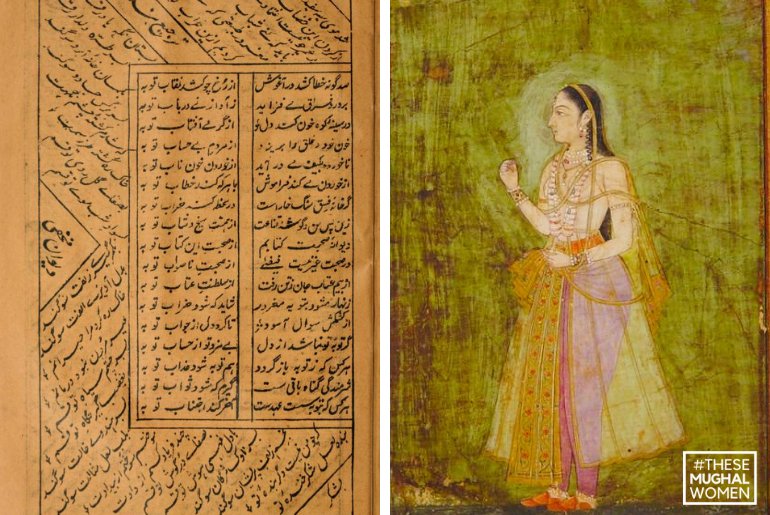
tragic fate aurangzebs

The tragic fate of Aurangzeb’s rebellious daughter

In the residential quarters of Nawan Kot in Lahore stands a crumbling Mughal monument. To a casual bystander, it appears as little more than a neglected relic surrounded by modern brick houses and the distant roar of traffic from Multan Road. Yet, local legend fiercely protects this spot as the resting place of Princess Zeb-un-Nissa, the eldest daughter of the orthodox Mughal Emperor Aurangzeb. Historians, however, tell a very different story. Official records indicate that Zeb-un-Nissa died in Delhi at the Salimgarh Fort after two decades of imprisonment and was buried outside the Kashmiri Gate at the Tees Hazari gardens. Her original tomb was later dismantled during the British era to make way for a railway line. So how did a city hundreds of miles away come to claim this defiant, romantic princess as its own? The answer lies not in verified architectural blueprints, but in the psychological and political pulse of 17th-century Lahore.

Zeb-un-Nissa was an anomaly in the puritanical Mughal court of her father. She was highly educated, exceptionally wealthy, a scholar of theology, and a devout patron of the arts. Under the secret pen name Makhfi (The Hidden One), she wrote expressive, Sufi-inspired poetry that directly challenged the orthodox ethos.

Her political inclinations further alienated her from her father. Zeb-un-Nissa had strong affinities for her uncle, Prince Dara Shikoh: Aurangzeb’s primary rival for the throne. It was originally betrothed to his son, Prince Suleiman Shikoh. After Aurangzeb executed both Dara and Suleiman during the violent war of succession, Zeb-un-Nissa reportedly vowed never to marry. Later in life, her secret correspondence supporting her rebellious younger brother, Prince Muhammad Akbar, ultimately led to her downfall and life imprisonment.

Lahore’s local folklore transformed her political tragedy into a narrative of star-crossed love. Popular stories in the city recount a passionate, poetic romance between Zeb-un-Nissa and Akil Khan Razi, the Governor of Lahore. According to local legend, after Emperor Aurangzeb forbade their union, the heartbroken princess renounced her royal luxury and retreated to a self-imposed prison in her private estate near Chauburji.

In this garden sanctuary, she allegedly ran a massive public kitchen (langar) to feed dervishes, beggars, and travelers, using poetic riddles on slips of paper to communicate with the needy and eventually, to secretly reconnect with her disgraced lover. When Aurangzeb discovered their continued meetings, legends claim he ordered Akil Khan’s brutal execution and permanently confined his daughter within the garden walls. While these romantic tales lack strict historical evidence, they reflect a deeper cultural reality. Lahore had been the favorite city of Dara Shikoh, who poured immense imperial funds into its cultural and architectural enrichment. When Aurangzeb seized power, executed Dara, and shifted the imperial capital away from the city, Lahore was left politically marginalized and financially neglected.

In an age where open political dissent against an absolute monarch was impossible, the citizens of Lahore used rumors, myths, and urban legends as their primary medium of protest. Zeb-un-Nissa: a brilliant woman who shared Dara Shikoh’s inclination toward Sufism, loved the city of Lahore. She publicly defied her father’s authority became the ultimate symbol of the city’s lost artistic spirit. By adopting her memory, attributing the Chauburji gardens to her patronage, and declaring the tomb in Nawan Kot as her final resting place, Lahore claimed the rebellious princess as its own. In doing so, the city permanently etched her spirit of resistance into its own historical identity.

 

Similar Posts

  • Human civilisation has always been scared of forgetting

    By Syed Tahir Rashdi A time ago before the first computer, the first library or even the first book people thought memory was the most important thing for knowledge. Whole societies relied on it. People remembered laws and stories by heart. Passed them down to their children. To remember something was not just to recall facts it was to keep your identity, culture and history alive. A time ago in ancient Greece people started to worry about memory. In a book called “Phaedrus” Socrates tells a story about a god named Theuth. Theuth invented writing. Thought it would make people wiser and help them remember more.. The king of Egypt, Thamus did not agree. He said that writing would actually make peoples memories weaker. People would start to rely on written words of trying to remember things themselves. They would think they know something just because they can read it. They would not really understand it. Course that is not what happened. Writing did not hurt society it changed it. Books became a way to store knowledge and share ideas with people all over the world. Socrates was worried about something that is still important today. The question now is not whether we remember things because of books. It is whether we remember anything all. Today we have information stored somewhere than ever before. Our phones remember our conversations. Computers store our photos forever. We can find answers to questions in seconds. Machines can summarise books. Help us find information fast. Never before has much information existed outside of our own minds. This is a change in how people relate to knowledge. A man named Marshall McLuhan said that every new technology is like an extension of our abilities. The wheel is like an extension of our feet. The telescope is like an extension of our eyes. By that logic our phones are like an extension of our memories. They help us remember things. The problem is obvious. As we get better at storing information outside of our minds we get worse at remembering things ourselves. We do not remember phone numbers because our phones do. We do not remember birthdays because our computers do. We do not remember how to get places because our phones tell us. We are not trying to remember things much as we used to. We are just looking them up. That small change might be one of the most important things that has happened to our minds in the past century. It is easy to see why we like to store information outside of our minds. Who would want to go to using paper maps or big books to find answers? Digital technology has made it easy for everyone to get information. We can find things out in seconds that used to take days. The question is not whether this is useful. It is whether it is changing our minds in some way. Some psychologists did a study in 2011. Found out something interesting. They found out that when people know they can find information easily they do not try to remember it much. They just remember where to find it. This is a deal. Our minds are changing from storing information to finding it. We are getting better at finding the path. Not the destination. This is not a habit it is how we think. Remembering things is not about storing facts it is about using them to make decisions to imagine things and to be creative. When we remember things we can connect them in ways and have new ideas. When we store information outside of our minds that changes. A man named Nicholas Carr said that digital technology is not just changing how we get information it is changing how we think. The internet is great at giving us answers. It is not so good at helping us really understand things. If we get used to getting answers we might not be as good at thinking deeply about things. This does not mean that technology is making us less smart. It means that our intelligence is changing. The problem is not that we do not know things. It is that we are too dependent on technology to remember them for us. A student might think that they can just look up answers and not really learn anything. A professional might rely much on reminders that they do not even try to remember things. Machines are getting better at remembering things for us. That might mean we do not have to try as hard. Slowly remembering things is becoming more like looking them up. Knowledge is becoming about getting access to information. Thinking is becoming more about getting things done. Technology has definitely helped us store information than ever before. The question is whether it is also making us less likely to try to remember things ourselves. Memory is not just about storing information. It is about how we experience life. A computer can store every document ever written. A machine can look up every photo ever taken.. They cannot turn experience into wisdom. Our memories are not just storage they are how we interpret things. We forget some things we remember others. We use them to understand ourselves. A writer named Jorge Luis Borges wrote a story about a man who could remember everything.. This gift was actually a curse. The man could not forget anything so he could not think about things in a way. He was trapped by his memory. Borges was saying that forgetting is not a thing it is actually necessary for thought. This is not about how we think as individuals. It is about how we learn and how we understand ourselves as a society. Education used to be about more than learning facts. It was about learning how to think. If we just store information outside of our minds education might just become about looking things up. The same thing applies to our society.

  • Low magnesium? Don’t ignore these warning signs

    Health experts say magnesium is an essential mineral that helps keep the bones muscles nerves and heart healthy. A lack of magnesium can lead to several physical and mental health problems, so it is important to recognize the early warning signs. According to experts low magnesium levels may affect the nervous system causing anxiety nervousness irritability and mood changes. If these symptoms continue for a long time magnesium deficiency could be one possible reason. Magnesium deficiency can also affect emotions making some people more sensitive to stress or more likely to overreact to small problems. Experts recommend eating beans nuts leafy green vegetables fish and whole grains to help maintain healthy magnesium levels. Feeling tired weak or low on energy even after getting enough sleep may also be a sign of low magnesium.  Doctors suggest getting a blood test to check vitamin and mineral levels if these symptoms continue. Health experts also say that frequent nausea and vomiting can sometimes be linked to magnesium deficiency and should not be ignored. Low magnesium may also cause muscle weakness leg pain cramps muscle tightness or spasms as the mineral is important for normal muscle function.  While magnesium rich foods can help experts advise speaking to a doctor before taking any magnesium supplements.

  • How Lahore’s historic Neela Gumbad is emerging from decades of clutter

    For generations of Lahoris, the name Neela Gumbad (Blue Dome) referred to a bustling commercial center. The kind of place you visited to purchase a bicycle, repair a motor tire, or navigate a maze of auto parts shops.  Behind Anarkali Bazaar, the name itself felt almost metaphoric, as the physical blue dome was impossible to see from the main street. The location was swallowed whole by decades of unregulated commercial expansion, illegal encroachments, dangling electrical wires, and storefronts. One of Lahore’s most significant 17th-century heritage landmarks had been completely erased from the public eye. Now, a major initiative led by Chief Minister Maryam Nawaz under the government’s heritage restoration project is finally breathing new life into the centuries-old monument. The history of Neela Gumbad records back to 1673 during the reign of Mughal Emperor Aurangzeb. The complex was constructed as the final resting place and shrine for the venerated Sufi saint Sheikh Abdul Razzaq (often referred to as Abdur Razzaq Makki).  The tomb earned its famous moniker from Central Asian-style blue glazed tiles that adorned its central dome. However, as Lahore expanded into a modern metropolis throughout the 20th century, the historic shrine fell victim to severe urbanisation. The area around the tomb transformed into the infamous Neela Gumbad Cycle Market. Bulky, multi-story cycle shops, workshops, and illegal extensions were constructed directly against the shrine’s perimeter walls. Over time, the once-spacious courtyard and surrounding greenery vanished. Therefore, reducing the ancient monument to a claustrophobic nook completely hidden by concrete, rusted signboards and traffic congestion. Visitors to the area could spend hours in the market without realizing that a 350-year-old Mughal-era tomb stood there behind the shops. The ongoing restoration effort is radically altering the landscape of the area. To restore the monument’s historical dignity, the provincial government initiated a massive clearance operation. Recognizing the economic impact on local merchants, millions of rupees in compensation checks were distributed to dozens of affected shopkeepers and property owners surrounding the shrine prior to the clearance. Heavy machinery was then brought in to demolish the encroaching structures, exposing the weathered brickwork and original arches of the Neela Gumbad complex for the first time in nearly half a century. The project goes beyond simply tearing down illegal shops. It represents a comprehensive attempt at placemaking. It reclaims public spaces for citizens while preserving historical identity. The vision for the site includes a multi-level subterranean parking facility designed to permanently solve the chronic traffic congestion along Mall Road and Anarkali. The space surrounding the shrine is being converted into an open-air public piazza with pedestrian walkways, seating, green spaces, and night lighting. This plan will allow sightings of the blue dome from the main road once again. To preserve the historic commercial identity without compromising the architecture, bicycle vendors are being provided organized spaces within new facilities nearby. Specialized conservationists are working to restore the crumbling brickwork, repair structural damage, and revive the signature blue tiles of the shrine’s dome. As heavy excavators continue clearing debris around the site, the historic silhouette of Neela Gumbad is once again visible. This ongoing revival project serves as a case for how South Asian megacities can reclaim their historic souls.  

  • Favoritism in Schools

    Hani Rasheed Through the pages of your esteemed newspaper, I wish to draw attention to the growing problem of favoritism in schools. Education is meant to provide equal opportunities to every student, but favoritism is destroying the spirit of fairness and merit. In many schools, some students receive special attention and better opportunities because of their personal connections or background. Meanwhile, hardworking and deserving students are often ignored. This creates disappointment among students and damages their confidence. Favoritism also teaches young people a dangerous lesson: that success depends on connections rather than hard work and talent. If this issue is not addressed, it will negatively affect the future of our education system. The authorities must take strict action against favoritism and ensure equal treatment for every student. Teachers and school administrations should promote merit, justice and fairness. I hope your newspaper will highlight this important issue and urge the authorities to take immediate steps to end favoritism in schools

  • HEC new weighted policy: putting weight on research credibility

    By Ali Abbas Pakistan’s Higher Education Commission (HEC) new weighted research policy has surely raised an eyebrow among a few academics nationwide. Before further dissecting the policy and its implications, it is pertinent to understand the role of HEC as a regulatory authority, which can help clear the air to a greater extent. As stated, “Regulatory”, it is important to accept that the Higher Education Commission of Pakistan is there to implement quality checks irrespective of the decision being popular or unpopular. So, with this lens, it is easy to understand why HEC is weighing this bold step of assigning weights to authorship and what must have been the shortcomings in the previous policy, despite the earlier policy’s apparent benefits. The new policy values first authors and corresponding authors more, acknowledging a reward for the initiators and potential stakeholders in the event that there are more than 3 authors. While HEC is not stopping co-authorship, it aims to credit researchers who have genuine contributions and are adding value as a lead or major contributor. It is entirely up to contributors to choose the number of other co-authors and their desired contribution and commitment in the research article. In fact, this should rather be seen as a measure of transparency that researchers who are expecting to get fewer marks for co-authorship will be doing less work in contrast to the first author. That can actually act as a yardstick for them to allocate their time to multiple projects to get their respective share/ count. However, not to undermine the researchers whose genuine intent surrounds a higher number of publications in less time with real contribution, it is a welcoming sign for authors who stay away from relationship-based and aided research. So, HEC, being a quality custodian of education and research practices for HEIs, has come up with a stance to curb research mills, fraudulent research, and fake authorship, where publications in friends’ journals and contributions following quid pro quo are compensated. And one never knows when these researchers who have worked as co-authors or fall last in the author list make it to the classes; their share of knowledge and impact may be a concern at times as well. The problem is even bigger, as not only papers with 20+ authors can be found, but researchers are co-authoring in different fields that may be beyond cross-domain collaboration. This is where HEC might have to respond and find this weighted policy as damage control.  Well, this research’s credibility is not Pakistan’s dilemma only, but something that is a world issue in a higher education setting. And when HEC addresses these concerns, it might act as a benchmark for other nations’ education systems, especially for the education and accreditation councils of similar demographics. Whether one favors or opposes it, HEC has devised something that raises major concerns, and that is to curb the need to distinguish between real and fake contributors. Now comes the point of demotivating international contributions from this weighted system, as raised by the affected prospective contributors. Well, though not every policy can avoid its collateral, the overall gain may be exploited as well. It is to be remembered that international collaborators are not to be linked with those weights; they can continue to collaborate at any number in the author list as they used to be, i.e., first or second or third, etc. In this case, the logic for local authors will remain the same as stated above about their respective contributions and rewards. The time and effort can then help in identifying multiple avenues as well. Again, there are always two sides to a coin, and in the current dynamics, where co-authorship has appeared to be a business deal, the side with the assigned weights policy bears more weight. Also, on the other hand, the offset can be made by allocating funds and instructing HEIs to devote funding to Gold open access, thus accelerating the pace of the first-author research. All in all, the new policy hints at increasing competitiveness and research credibility while leaving it to the test of time to see if it turns out to be a value addition for researchers by choice or by chance. About the author: Ali Abbas, PhD, works at Beaconhouse National University. He can be reached at aabbas724@gmail.com

  • | |

    Author Ursula Hegi leaves a legacy of memory and truth

    The literary world has lost one of its most perceptive voices on historical memory and collective silence. Author Ursula Hegi, whose work rigorously examined the human dimensions of life during and after World War II in Germany, died on July 27 at her home in Sag Harbor, New York. She was 80 years old. Hegi’s Journey as a Writer Hegi’s journey as a writer was deeply intertwined with her personal background. Born Ursula Koch in Düsseldorf, Germany, in 1946, she spent her early years amidst the rubble of a nation struggling to rebuild. Growing up in the immediate aftermath of the war, she experienced a culture dominated by a pervasive, uncomfortable silence. Despite visible physical destruction all around, adults rarely spoke openly about the Holocaust or Germany’s culpability in Nazi atrocities. That suffocating atmosphere of secrecy left an indelible impression on Hegi. At age 18, she left Germany for the United States. She later became a naturalized U.S. citizen. Unpacking the Burgdorf Cycle Hegi’s move across the Atlantic gave her the critical distance needed to confront the uncomfortable realities of her heritage. She began exploring these themes through fiction, creating the imaginary German town of Burgdorf. This setting served as the backdrop for four of her novels, most notably her 1994 masterpiece, Stones from the River. In Stones from the River, Hegi tells the story of Trudi Montag, a woman with dwarfism who serves as the town’s librarian. Trudi lives on the periphery of her community. She becomes a silent observer of human nature. People often dismiss or confide in her, allowing her to gather the town’s deepest secrets and witness how ordinary citizens slowly succumbed to, ignored, or quietly resisted the rise of National Socialism. The novel received widespread critical acclaim and was nominated for the PEN/Faulkner Award. It achieved massive commercial success when Oprah Winfrey selected it for her book club in 1997. It has catapulted Hegi to national prominence and cementing the novel as a staple of modern historical fiction. Confronting the Unspoken What set Hegi’s work apart was her refusal to reduce complex historical atrocities to simple caricatures. Rather than focusing solely on major political figures or battlefields, she turned her lens toward the everyday townspeople. The neighbors who looked the other way, the shopkeepers who compromised their moral standards, and the silent witnesses whose compliance enabled widespread horror. Through her character-driven narratives, Hegi demonstrated how shame and denial could poison future generations if left unaddressed. Her non-fiction work, Tearing the Silence, extended these themes by gathering interviews from German-born individuals of her generation to explore how their parents’ war choices shaped their own adult identities. A Lasting Influence Her career as an author of over a dozen books including short story collections, children’s literature, and standalone novels. Hegi spent decades teaching and mentoring aspiring writers, notably serving on the creative writing faculty at Stony Brook Southampton. Ursula Hegi’s legacy lies in her unwavering belief that storytelling can bridge the gap between guilt and healing. By confronting uncomfortable truths with empathy, clarity, and grace, her literature ensures that the painful lessons of the 20th century will not be forgotten.

Leave a Reply

Your email address will not be published. Required fields are marked *