

nawaz sharifs political

Nawaz Sharif’s political revival has begun — a…

In my view, Nawaz Sharif’s political revival is no longer just a possibility; it is clearly taking shape. His decision to return to the political frontline and personally lead the Pakistan Muslim League (N)’s campaign in Azad Jammu and Kashmir shows a leader who understands timing, patience and political strategy.

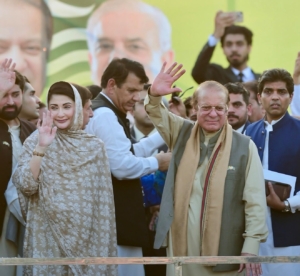
The massive rallies in Muzaffarabad and Mirpur were not just election gatherings; they carried a much bigger political message. They demonstrated, in my opinion, that Nawaz Sharif still has the ability to attract large crowds and energise his supporters. For many party workers and voters who had been missing his direct presence, his return to the campaign stage created renewed confidence and enthusiasm.
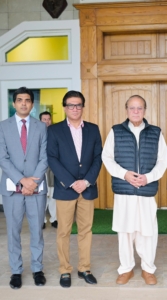
At the same time, these rallies sent a strong message to his political opponents and to those analysts who had predicted that Nawaz Sharif had retired from active politics. His presence on the ground has challenged that narrative and shown that he remains a central figure in Pakistan’s political landscape.
During my last two meetings with Nawaz Sharif — one in the Galyat hills near Murree and another at Jati Umra, Raiwind — I observed a leader who appeared to be carefully planning his political revival. My impression was that he was not looking for a short-term political comeback but working on a long-term strategy.

I have seen this before — not once, but twice.

The first time was in 2006, when Nawaz Sharif came to London after leaving Saudi Arabia following his years in exile. I observed how he patiently rebuilt his political network, reconnected with party workers and gradually prepared the ground for his return to Pakistan’s political arena.

The second time was before the 2024 general elections. During the more than three years he spent in London, I saw a similar approach — careful planning, political consultations and a gradual strategy to return at the right moment.

In my opinion, the current phase follows the same pattern. Nawaz Sharif has relied on a team approach. At the centre, Prime Minister Shehbaz Sharif has focused on managing difficult economic, diplomatic and political challenges. His supporters believe his administration has helped improve Pakistan’s international engagement and presented the country as an important voice on global issues.

On the other hand, Maryam Nawaz Sharif has emerged as a key part of this political strategy. As Chief Minister of Punjab, she has focused on development projects, infrastructure, public service delivery and administrative reforms. In my view, her performance has helped create the perception of a new generation of leadership within the PML-N.

Punjab has, in my assessment, become an important example of the party’s governance message — that provinces can deliver through development, better infrastructure, improved administration and stronger public services.

Nawaz Sharif’s political strength is also linked to his record as Prime Minister. His supporters highlight his focus on infrastructure development, including motorways, energy projects and large-scale national schemes. They argue that during his governments Pakistan moved towards economic stability, with greater emphasis on investment, connectivity and development.

While political opinions about his governments differ, there is no doubt that Nawaz Sharif remains one of Pakistan’s most experienced political figures. With decades of experience in public life, he is among the most senior leaders in the region and has maintained relationships with world leaders. His experience in governance, diplomacy and international affairs remains one of his biggest political assets.

Today, in my view, Nawaz Sharif is attempting another carefully planned political comeback. His direct involvement in the Azad Kashmir election campaign suggests that he is once again taking command of the political direction of his party.

I believe his strategy is working because he is repeating a formula he has used before: patience, organisation, strengthening his team and returning to the people when he believes the political environment is favourable.

History will ultimately be judged by the voters, but from my observations over the past two decades, Nawaz Sharif’s political revival appears to be following a familiar and carefully planned path.
Similar Posts

  • Frontiers of narcoterrorism From heroin to quadcop…

    The assault on the Khazina Banda police post in Hangu was not another entry in Pakistan’s grim terrorism ledger. Attackers first struck with explosive-laden quadcopters and then ambushed the post and its reinforcements. Al Jazeera’s initial report put the police death toll at 11, including Deputy Superintendent Diyar Khan, with 28 personnel injured; subsequent local reporting revised the fatalities to nine. Fifteen attackers were reportedly killed. No organisation immediately claimed responsibility. The disputed count does not alter the horror. Men defending the State confronted a privately financed force equipped with drones, explosives and heavy weapons. Hangu should destroy the fiction that terrorism, narcotics and illicit arms are separate problems assigned to separate departments. They form one war economy. Narcotics generate cash; illicit finance launders it; weapons protect routes; militants supply coercion; political and official patronage obstructs investigation. The system survives governments and military operations because Pakistan attacks gunmen without dismantling the business that replenishes them. This was the warning in Pakistan: From Hash to Heroin and, more systematically, in its sequel Pakistan: From Drug-trap to Debt-trap. The Afghan war did not merely push refugees across the border. It created an enduring logistics chain in which weapons travelled one way and opium, heroin and dirty money travelled the other. The jihad (holy war) against the erstwhile Soviet Union was presented as strategic necessity. Its unrecorded balance sheet included extremism, heroin, the Kalashnikov culture, protected smugglers, corrupted institutions and a drug elite wealthy enough to enter respectable business and influence politics. The term “narcoterrorism” is often used carelessly, as if every attack can be attributed to a particular consignment. That is not the proposition. The connection is systemic, not necessarily transactional in every case. Armed groups and criminal syndicates occupy the same spaces, use overlapping routes, brokers, hawala channels and protection arrangements, and profit from weak border governance. Money is fungible. Revenue from smuggling, extortion, narcotics or lawful-looking businesses can buy the same rifle, drone component or safe house. Pakistan helped manufacture this economy through choices made during the General Zia-ul-Haq era and then preserved it through denial. The State celebrated the fighters, tolerated the gun markets and allowed traffickers to convert illicit fortunes into property, commerce and political access. Periodic seizures created the appearance of enforcement, while financiers, facilitators, beneficial owners and patrons largely remained beyond reach. The poor courier was arrested; the network endured. A poppy field was destroyed; no viable crop or market was supplied to the farmer. An addict was criminalised; treatment remained scarce. The spectacle of control substituted for control. Afghanistan’s changed opium economy does not justify complacency. The UN Office on Drugs and Crime (UNODC) estimated that cultivation fell by 20 percent in 2025 to 10,200 hectares and production dropped by 32 percent to 296 tonnes, far below pre-ban levels. This is important, but it is not the burial of the drug economy. Stocks, established trafficking routes and accumulated capital, survive a harvest decline. UNODC also warned that synthetic drugs, particularly methamphetamine, were becoming organised crime’s new business model because production is easier to conceal and less dependent on climate. The market adapts faster than bureaucracies. The same adaptation is visible in the air above Hangu. Reuters reported in July 2025 that militants had used commercially acquired quadcopters in at least eight attacks in Bannu and adjoining areas within two and a half months. The provincial police chief acknowledged that the police had no equipment to meet the threat and that militants were better equipped. One year later, weaponised quadcopters helped open a lethal assault on a police post. This was not an unforeseeable innovation. It was an institutional warning ignored until officers paid with their lives. The immediate response followed the familiar script: condemnation, funerals, retaliatory operations and claims that the mastermind had been killed. Removing operational commanders is necessary, but body counts do not measure the destruction of a war economy. If the financier remains solvent, the trafficker keeps his route, the arms supplier retains access, the hawala operator moves the proceeds and the protector remains influential, another commander will emerge. Tactical success without financial and institutional disruption merely changes the names of the dead. Islamabad is entitled to demand that Kabul prevent Afghan territory from being used for attacks. The Taliban government’s denials cannot answer evidence of militant mobility and sanctuary. Pakistan, however, cannot outsource security or erase its history by pointing across the Durand Line. Routes, facilitators, arms stocks, laundering channels and political shields also exist inside Pakistan. A foreign-policy accusation is not a domestic counterterrorism strategy. The starting point must be a permanent national narcoterrorism and illicit-arms fusion centre, not another ornamental committee. It should bring the provincial counterterrorism departments, police, Anti-Narcotics Force (ANF), Federal Investigation Agency (FIA), Customs, Federal Board of Revenue (FBR), Financial Monitoring Unit (FMU) and intelligence agencies onto a common operational platform. Every major terrorist investigation should generate a parallel financial, narcotics, communications and weapons inquiry. Investigators must follow beneficial ownership through real estate, trade misinvoicing, shell companies, cash couriers, hawala networks and virtual assets, freezing and confiscating criminal proceeds through courts and due process. Weapons require the same discipline. Pakistan needs a national register of recovered arms and ammunition, forensic and ballistic databases accessible to provincial police, mandatory tracing of serial numbers and ammunition lots, and public reporting of leakages from official stocks. Border terminals and maritime routes need risk-based scanning rather than theatrical checking. Most urgently, exposed police posts require layered counter-drone protection: detection, electronic countermeasures, hardened positions, trained response teams and protected communications. Sending under-equipped policemen against weaponised drones is not bravery by policy; it is abandonment by the State. Supply-side enforcement must be joined to rural development and public health. Farmers require credible alternative livelihoods, irrigation, credit, storage and assured markets; addicts require treatment, rehabilitation and reintegration. Pakistan, Afghanistan, Iran, China and Central Asian states need verifiable cooperation on routes, precursor chemicals, laboratories, wanted financiers and arms flows under UN facilitation. Diplomatic declarations should be tested against shared data, inspections, arrests, convictions,

  • Beyond Public Finance: Towards  Constitutional Po…

    The first part of this series argued that Pakistan’s recurring fiscal crises cannot be understood through conventional economic analysis alone. The distinction between public finance and Constitutional Political Economy (CPE) must now be explained. Both examine the role of the state in economic life, but they begin from different assumptions and ask fundamentally different questions. Traditional public finance is primarily concerned with what governments ought to do. In the classical framework associated with Richard Musgrave, fiscal policy performs three principal functions: allocation of resources, redistribution of income and macroeconomic stabilisation. Governments provide public goods, correct market failures, reduce unacceptable inequalities and use taxation and expenditure to promote stability and growth. This framework remains indispensable for analysing budgets, taxes and public expenditure. The International Monetary Fund’s discussion of Musgrave’s framework confirms its enduring influence on fiscal analysis. The difficulty arises when the state is treated as a single, impartial institution pursuing social welfare. In the real world, governments consist of politicians, bureaucrats, legislators, judges, regulators and numerous organised interests. Each operates under incentives and constraints. Political actors do not cease to pursue power, institutional advantage or personal interest merely because they enter public office. A tax system may therefore be inefficient not because its designers misunderstood economic theory, but because inefficiency benefits influential constituencies. An exemption may survive not because it promotes investment, but because its beneficiaries possess political power. Public expenditure may be allocated not according to social need, but according to the ability of institutions and groups to influence the budgetary process. Public finance generally asks: what tax would be efficient, equitable and productive? CPE asks a prior question: what political and constitutional arrangements will cause those in authority to adopt and administer such a tax fairly? This difference emerged most clearly in the work of James M. Buchanan, who was awarded the 1986 Nobel Prize for developing the contractual and constitutional foundations of economic and political decision-making. Buchanan argued that economists must specify their model of politics before recommending policies. They should examine the “constitution of economic polity”—the rules and constraints within which political actors make decisions—rather than assuming that government automatically acts as a benevolent guardian of collective welfare. In The Calculus of Consent, Buchanan and Gordon Tullock applied economic reasoning to collective decision-making. They distinguished between choices made within existing rules and choices concerning the rules themselves. Ordinary politics concerns decisions taken under established constitutional arrangements. Constitutional political economy examines how those arrangements should be designed, whose consent they require and what incentives they create. The distinction may be understood through the analogy of a game. Public finance often studies the moves made by players: whether a tax rate should be increased, expenditure reduced, subsidies withdrawn or borrowing limited. CPE examines the rules of the game: who may impose a tax, who may approve expenditure, how revenues are distributed, what majorities are required, which institutions are accountable and what remedies exist when power is abused. The rules determine the range of possible outcomes. Replacing one finance minister, tax administrator or economic adviser cannot fundamentally alter results if the institutional incentives remain unchanged. Buchanan and Geoffrey Brennan developed this insight further in The Reason of Rules. Their focus was not merely upon particular policy choices but upon the rules governing political and market interaction. CPE therefore does not ask only whether a government policy appears desirable. It asks whether the institutional process through which it is adopted protects citizens against arbitrary, discriminatory or predatory use of power. This approach does not imply hostility towards the state. A capable state is essential for education, healthcare, infrastructure, environmental protection, social security and economic development. CPE merely refuses to assume that state power will automatically be exercised for these purposes. A strong state without constitutional restraints may become strong against ordinary citizens while remaining weak before powerful interests. These insights are neither exclusively modern nor exclusively Western. Centuries before the emergence of public choice theory, Ibn Khaldun analysed taxation as part of the broader rise and decline of states. He observed that governments in their earlier stages could obtain substantial revenues from relatively moderate assessments, whereas later rulers frequently imposed heavier burdens but collected less as incentives weakened, production contracted and coercive expenditure expanded. Arthur B. Laffer subsequently acknowledged that the proposition associated with the Laffer Curve was not his invention and specifically identified Ibn Khaldun as an important precursor. Ibn Khaldun’s contribution, however, went far beyond a relationship between tax rates and revenue: he connected fiscal policy with political legitimacy, administrative expansion, elite consumption and institutional decline. The Constitution of Pakistan itself demonstrates that taxation is not merely an economic instrument. Article 77 provides that no federal tax may be levied except by or under the authority of an Act of Parliament. The provision embodies the constitutional principle that taxation requires lawful legislative authority; it is not simply an administrative technique for raising revenue. Article 160 creates the National Finance Commission and provides the framework for distributing specified revenues between the Federation and the provinces. Article 160(3A) further protects the provincial share by declaring that it cannot be lower than that provided under the preceding Award. These provisions represent a constitutional bargain concerning political authority, federalism and access to public resources. Revenue distribution is consequently not just an accounting exercise. It forms part of the structure of the federation itself. Article 140A requires the provinces to establish elected local governments and devolve political, administrative and financial responsibility to them. Fiscal policy cannot produce accountable public services when decision-making remains remote from citizens and constitutionally required devolution is treated as optional. Articles 37 and 38 contain important commitments regarding social justice, education, economic well-being, reduction of inequality and provision of basic necessities. They are Principles of Policy rather than directly enforceable Fundamental Rights, and Article 30 limits their judicial enforceability. Their inclusion nevertheless demonstrates that the constitutional purposes of revenue collection extend beyond achievement of numerical tax targets. The state collects resources to fulfil social and economic obligations, not

  • Administrative Provinces: Winning Public Trust Bef…

    Dr. Abdul Jabbar Sahito Karachi, Pakistan The debate over creating new provinces in Pakistan has existed for decades, yet one crucial question remains unanswered: how can the public be convinced that administrative provinces are intended to improve governance rather than increase the burden on the country? Today, public trust in the state is already fragile. People are frustrated by corruption, bureaucratic inefficiency, and excessive government expenditure. Whenever the idea of creating new provinces is raised, many immediately assume that it will only produce more chief ministers, more governors, more provincial assemblies, more secretaries, chief secretaries, inspectors general (IGs), deputy inspectors general (DIGs), assistant commissioners, deputy commissioners, and an even larger bureaucracy. The public perception is straightforward: if corruption and inefficiency already exist with four provinces, what will happen if Pakistan has thirty-two or even thirty-six provinces? This concern must be addressed before any constitutional or administrative reform is proposed. The government should first present a clear governance model explaining exactly how these new provinces would function. People deserve to know whether these provinces will have provincial assemblies or whether they will operate through a compact administrative structure. Will each province be headed by a governor directly elected by the people? Will representation be limited according to population? These questions must be answered before asking the public for support. The objective of creating administrative provinces should never be to expand the bureaucracy. On the contrary, the government should explain that the existing administrative system can simply be reorganized. Unnecessary bureaucratic positions can be reduced, provincial cabinets can remain small, and major ministries can continue to operate under the federal government to avoid duplication. There should be only one chief executive for each province—either a governor or a chief minister, not both. Representation should remain limited and population-based instead of creating large provincial assemblies. The government must reassure the public that administrative reform will not increase financial burdens. Existing administrative and police structures can be reorganized instead of creating entirely new departments. A lean administrative structure is far more likely to gain public confidence than one that appears expensive and oversized. The purpose of administrative provinces is to bring governance closer to the people. Smaller administrative units can improve healthcare through new hospitals, strengthen education by establishing more schools and universities, expand road networks, and accelerate local infrastructure development. They can also encourage the emergence of new leadership, empower citizens to demand their rights, and make governments more responsive because they will be closer and more accountable to the people. Greater accountability should also become a central feature of this model. Institutions responsible for oversight, including NAB and other accountability bodies, would be able to monitor governance more effectively within smaller administrative units. Better administration can also attract greater investment, encourage industries and factories to expand, bring more businesses and brands into different regions, and create employment opportunities for local communities. The government should particularly engage the younger generation and begin this conversation in Sindh. It must make it absolutely clear that this proposal is not about creating provinces on ethnic or linguistic lines. It is not about separating Muhajirs from Sindhis or dividing communities. The proposal is purely administrative and aims to improve governance for every citizen. Instead of creating a province only for Karachi, every administrative division could become a province. Hyderabad, Nawabshah, Larkana, Mirpurkhas, Sukkur, Bahawalpur, and other divisions can each function as separate administrative provinces. If necessary, even the names of these provinces can be changed to prevent unnecessary political controversy. The purpose is not division—it is better administration. Such administrative provinces would encourage the establishment of more schools, universities, hospitals, IT parks, industries, factories, and businesses. They would provide young people with better educational opportunities, create employment, stimulate local economies, improve tax collection, strengthen infrastructure, support clean drinking water projects, facilitate the construction of dams, and promote environmental development through better local planning. However, none of these reforms can succeed unless the public fully understands the proposed governance structure. The government must organize seminars in universities, engage students and young professionals, and use the media to educate citizens about the objectives and practical benefits of administrative provinces. Public awareness must come before implementation. Ultimately, people will support administrative provinces only when they are convinced that the reforms are designed to create a government that is smaller, more efficient, more accountable, and closer to the people—not a larger bureaucracy with greater costs. Winning public trust is therefore the first and most essential step toward any successful administrative reform.  

  • Gulf in the Crossfire

    There is a particular kind of exhaustion that sets in when a war refuses to end on schedule. Five months into the conflict between the United States and Iran, we are living through it. Ceasefires are announced and collapse within weeks. Strikes are billed as decisive and are followed, days later, by more strikes. Each side insists the other will soon come to its senses, and each side is wrong. What we are watching is not a war moving toward resolution. It is a war that has become self-sustaining, and the longer it runs, the more countries get pulled into its logic whether they wanted a role in it or not. Saudi Arabia is the clearest example. For nearly four years, Riyadh had quietly extracted itself from the Yemen war, treating the 2022 ceasefire with the Houthis as one of the few unambiguous foreign policy wins of Crown Prince Mohammed bin Salman’s tenure. That restraint is now gone. When the Houthis resumed missile fire at Israel in solidarity with Tehran, and then began striking Saudi oil infrastructure directly, Riyadh had no real choice but to respond. It bombed Hodeidah. The Houthis retaliated against Aramco facilities in Yanbu and Jizan. A conflict Saudi Arabia spent years trying to bury is now, again, live on its border, not because Riyadh chose it but because a war between Washington and Tehran left no room for neutrality. This is the pattern worth naming plainly: nobody in this conflict is fighting the war they intended to fight. Washington launched its campaign framed around Iran’s nuclear program, wagering that decisive strikes would force capitulation or collapse. Instead it has strikes running past the two-week mark with no clear terminus, American service members killed in Jordan and Iraq, and a president publicly conceding that the exit could be “diplomatic or military” — which is another way of saying nobody currently knows how this ends. Iran, for its part, has responded to devastating strikes on its cities not with capitulation but with exactly the kind of asymmetric, proxy-driven defiance its doctrine was built for, activating fronts in Iraq, the Gulf, and now Yemen that cost it little and cost everyone else a great deal. The Strait of Hormuz tells the same story in economic terms. Daily vessel traffic through one of the world’s most important oil chokepoints has fallen to a small fraction of its prewar level. That is not an abstraction. It shows up in tanker insurance premiums in Piraeus and London, in fuel costs in Mumbai and Rotterdam, in the balance sheets of countries that have precisely nothing to do with this fight. War aims that once seemed narrowly bilateral — Washington versus Tehran, over centrifuges and missile stockpiles — have metastasized into a tax on global trade that nobody voted for and nobody can opt out of. It is tempting, watching this unfold, to look for a single culprit. Commentators sympathetic to Washington will point to Iran’s decades of proxy warfare, its nuclear ambiguity, its crackdown on its own protesters, and argue the current campaign is simply overdue accountability. Commentators sympathetic to Tehran will point to a US-Israeli strike that killed Iran’s Supreme Leader and ask what state, faced with the assassination of its head of state, would not treat that as an act of war demanding a response. Both arguments contain real grievances. Neither survives contact with what has actually happened since: a conflict that both sides insist is about narrow, defensible aims but that neither side has been able to keep narrow. Wars rarely stay the size their architects intend. What should worry observers most is not any single strike or retaliation but the absence of an exit ramp anyone believes in. Ceasefires here have not functioned as steps toward peace; they have functioned as pauses for rearmament, evidenced by how quickly each one has collapsed back into nightly bombing. That is the signature of a conflict without a theory of victory — one where both governments can inflict real pain on the other indefinitely, but where neither can convert that pain into a settlement it can sell to its own public. In that kind of war, the fighting does not stop because someone wins. It stops, if it stops, because the costs finally exceed what either government’s domestic politics can absorb — and on the evidence of the past five months, that threshold keeps receding rather than approaching. Saudi Arabia’s reluctant return to the Yemen battlefield should be read as an early warning rather than a footnote. It shows how a conflict that both Washington and Tehran describe as fundamentally about themselves keeps finding new participants who never agreed to join. If this war continues on its current trajectory, the question worth asking is not which superpower prevails, but how many other countries, currencies, and shipping lanes get quietly conscripted before it does.

  • From waste challenge to climate solution: Pakistan…

    By Noreen Raza Pakistan’s waste challenge is no longer only a question of sanitation; it has become a question of climate resilience, environmental governance, resource security, and sustainable development. For decades, waste management has largely been viewed as a municipal responsibility focused on collection, transportation, and disposal. However, the realities of climate change, rapid urbanization, resource depletion, and ecosystem degradation require a fundamental shift in approach. Pakistan’s future waste strategy cannot depend only on moving waste from one place to another. It must transition from a linear “take, make, and dispose” model towards a circular economy where materials are valued, recovered, and reused. The urgency of this transformation is evident from Pakistan’s increasing climate vulnerability. The devastating floods of 2022 demonstrated how environmental challenges can quickly become national development crises. According to the World Bank-led Post-Disaster Needs Assessment, the floods affected approximately 33 million people, caused damages exceeding US$14.9 billion, and resulted in economic losses of around US$15.2 billion. The disaster highlighted the importance of climate-resilient infrastructure, improved planning, and stronger environmental management. Although climate disasters are often associated with extreme weather events, poor environmental management can increase their impacts. Plastic waste blocking drainage systems, unmanaged dumping sites, and pollution of waterways can worsen urban flooding and damage ecosystems. Waste management, therefore, should not be treated as an isolated municipal service; it must become an essential component of Pakistan’s climate adaptation strategy. The traditional linear economic model has created significant environmental pressures. Extracting resources, producing goods, consuming them, and disposing of waste after use places continuous stress on natural systems. Open dumping and uncontrolled disposal contribute to soil and water contamination, while organic waste decomposing in unmanaged sites releases methane, a powerful greenhouse gas. Open burning of waste further contributes to air pollution and creates risks for public health. The global waste challenge is also increasing. The World Bank’s What a Waste 3.0 report highlights that global municipal solid waste generation reached approximately 2.56 billion tons in 2022 and could increase to 3.86 billion tons by 2050 under a business-as-usual scenario. Developing regions, including South Asia, face growing pressure due to rising waste volumes and limited waste management capacity. Pakistan faces similar challenges. Population growth, expanding urban areas, changing consumption patterns, and increasing use of packaged products are contributing to rising waste generation. However, limited segregation at source, insufficient recycling infrastructure, and inadequate resource recovery systems prevent waste from being transformed into valuable materials. This challenge also represents an opportunity. Waste should no longer be considered only an environmental burden; it must be recognized as a resource that can support climate mitigation, economic development, and sustainable resource management. A circular economy provides a practical pathway towards this transformation. Unlike the linear model, circular systems focus on preventing waste generation, extending product life cycles, promoting reuse and repair, increasing recycling, and recovering valuable resources. Such approaches reduce dependence on virgin materials, conserve natural resources, and support cleaner economic growth. The benefits of circularity extend beyond municipal waste. Industrial and agricultural waste streams also contain valuable resources that are often overlooked. Organic waste can be converted into compost or used for energy recovery. Recyclable materials can return to production cycles, reducing pressure on natural resources. Construction waste can be recovered for infrastructure development, while improved wastewater management can support water conservation and resource recovery. Pakistan’s industries provide important examples of this opportunity. Several industrial by-products can potentially be converted into useful resources rather than being treated as waste. Ash generated from industrial processes, including power generation and agro-based industries, has potential applications in cement production, construction materials, and other resource recovery pathways. Similarly, agricultural residues such as bagasse ash from sugar industries and rice husk ash can be utilized through appropriate technologies. However, due to limited awareness, inadequate recovery systems, weak industrial linkages, and insufficient technical guidance, many such materials continue to accumulate in open storage areas or are disposed of near agricultural lands. These practices may create environmental concerns, including dust pollution, land degradation, and risks to surrounding ecosystems. Transforming these materials into productive inputs requires stronger collaboration between industries, regulators, researchers, and end users. The United Nations Environment Programme (UNEP), through its Global Waste Management Outlook 2024, emphasizes that sustainable waste management requires moving away from disposal-focused approaches towards prevention, resource efficiency, and circular economy solutions. However, Pakistan’s transition towards circularity cannot depend only on technology. Strong environmental governance must remain the foundation of sustainable waste management. Effective coordination among federal, provincial, and local institutions, improved regulatory enforcement, reliable environmental data, and climate-informed planning are essential. Environmental Impact Assessments (EIAs), environmental monitoring systems, and compliance mechanisms play an important role in ensuring that waste-related infrastructure operates responsibly throughout its lifecycle. Waste management should also be integrated with urban planning, industrial development, water management, and climate policies. Technology can further strengthen this transition. Geographic Information Systems (GIS), remote sensing, satellite monitoring, and digital reporting platforms can improve waste mapping, identify illegal dumping areas, optimize collection systems, and support evidence-based environmental decision-making. A sustainable circular economy must also be socially inclusive. Across Pakistan, informal waste workers contribute significantly to recycling and material recovery, yet many work under unsafe conditions without adequate protection or formal recognition. A just transition should integrate these workers into formal systems through training, occupational safety measures, and improved livelihood opportunities. Women should also be recognized as important contributors to emerging green sectors. Expanding opportunities for women in recycling enterprises, environmental entrepreneurship, and community-based sustainability initiatives can strengthen both environmental outcomes and social inclusion. Public participation remains equally important. Governments cannot achieve circularity alone. Communities, industries, educational institutions, and civil society must contribute through waste segregation, responsible consumption, reduction of single-use plastics, and environmental awareness. Pakistan’s climate commitments and sustainable development objectives require integrated solutions that connect waste management with biodiversity conservation, pollution control, resource efficiency, and climate resilience. Circular economy principles should become part of national and provincial development planning rather than being viewed only as a waste sector initiative. The success of Pakistan’s waste sector should

  • Four provinces can no longer govern 240m people

    Regions with structural problems need structural fixes, not more funding formulas. Pakistan’s administrative map was drawn for a country that no longer exists. We have four provinces today, the same number we had 55 years ago, while East Pakistan, which used to be one province, now has eight administrative units and 64 subdivisions or districts. Since then Pakistan’s population has multiplied several times over, but the map has not moved an inch. That mismatch is the primary reason why resources never reach the people who need them. Pakistan’s approach when it comes to managing resources is wrong for a country this size. The population crossed 241 million in 2023, with density around 260 people per square kilometre. On its own, this is a sign of a healthy, growing country, just until we look at how that population is actually distributed. In the last six years alone, the country has added roughly 35 million people, which is a 16 percent increase. Sixty-one percent of that population lives in rural areas, 39 percent in cities like Islamabad, Lahore and Karachi. The alarmingly undeniable fact is that the trend keeps moving one direction, in which young people keep leaving villages for urban areas because those are the only places where jobs, universities and hospitals reliably exist. This migration is certainly not a lifestyle choice. This is bound to happen when four provincial governments are asked to administer a population that is five times larger than the one they were built for. Punjab alone holds 59 percent of the country’s population. It is administered as a single unit, but its population is more than most countries on earth. No provincial government, no matter however competent it is, can deliver electricity, healthcare and education evenly across a population that size from a single provincial capital. The same problem exists in reverse in Balochistan, which covers 48 percent of Pakistan’s landmass but accommodates only 11 to 12 percent of the population, and has absorbed six of the last six years’ 16 points of national population growth despite having the country’s thinnest infrastructure. These two provinces tell the story of two completely different failures. The cause, however, is common: the administrative unit is the wrong size for the job. The numbers underneath this are national rather than regional. Eighty-two percent of Pakistanis have electricity, but that average hides the gap between urban grids and rural darkness; hence urbanisation. The list of problems does not stop here. Take Balochistan, where one doctor serves 10,000 to 10,500 people. Sixty percent of the province lacks clean water, and filtration plants are scarcer still. Moreover, 70 percent of rural communities nationwide lack adequate education, and 44 to 45 percent of people in those communities never reach middle school. The human cost of that distance is specific and repeats itself in province after province. Young doctors trained in these regions leave for Punjab, Sindh and Islamabad. The biggest reason is safety, since their lives can be at risk in remote postings. The second is that a health facility 30 kilometres from the nearest paved road, unable to stock full equipment, offers nothing to build a career on. Vocational training institutes exist in these areas but sit locked, not for lack of funding but because there is no administrative capacity to operate them. These are not Balochistan’s problems alone. They can happen anywhere a provincial government is too large, too centralised, or too distant to reach its own population. Balochistan simply shows the extreme case. If it were split into three or four provinces, governments could actually reach people there. Then there is this issue of financial distribution, and this is where the case for new provinces stops being administrative and becomes constitutional. Pakistan’s own constitution ties resource revenue to the province that produces it. Sindh generates around 70 percent of national revenue and receives back only 24 to 25 percent. Similarly, Balochistan sits on gas fields and mineral wealth that fund the federation, while its own communities remain unconnected to piped gas or reliable power. Calling this a technical funding gap would be wrong because the problem is structural. Provinces too large to manage internally are also too large to track what they are owed, let alone claim it. Regions with structural problems need structural fixes, which again brings us to the dire need for carving out more provinces instead of introducing more funding formulas layered onto the same four units. How many provinces should there be is debatable. There are four now, and making that six or eight is better than staying at four. That would certainly put administration close enough to reach a village 30 kilometres off the highway, and close enough that Punjab’s 59 percent isn’t governed as a single bloc or Balochistan’s 48 percent of the map isn’t governed as an afterthought. Balochistan’s neglect, Punjab’s congestion, Sindh’s revenue grievance, the pressure on Karachi and Lahore are not four different crises but one. And this crisis will not be solved by anyone currently governing under the old map.

Leave a Reply

Your email address will not be published. Required fields are marked *