remembering marjane satrapi
|

Remembering Marjane Satrapi: an author who humanized Iran

The global arts community is mourning the unexpected passing of Marjane Satrapi. She is the pioneering French-Iranian author, illustrator, and film director best known for her graphic memoir Persepolis. Satrapi passed away in Paris at the age of 56. Relatives confirmed that her death was tied to profound heartbreak following the loss of her husband, Swedish producer Mattias Ripa, who died the previous year. Her death sparked an outpouring of tributes from political leaders, cultural institutions, and readers worldwide. French President Emmanuel Macron paid homage to Satrapi as a monumental talent who converted her childhood in revolutionary Iran into an accessible, universal human story, blending sharp irony, vulnerability, and courage.

Born in 1969 in the northern Iranian city of Rasht, Satrapi grew up in Tehran during one of the most turbulent eras in modern Middle Eastern history. As a child of progressive, middle-class parents, she witnessed the overthrow of the Shah in 1979, followed by the rapid consolidation of power by the fundamentalist Islamic regime and the devastating Iran-Iraq War. Concerned for her safety and rebellious spirit, her family sent her to study at the Lycée Français in Vienna when she was just fourteen. Her years in Austria were marked by acute feelings of social isolation, homelessness, and cultural displacement. The struggles that would later become central themes in her creative career. After returning to Tehran to complete her university education in visual communication, Satrapi ultimately chose a life in exile, relocating permanently to France in 1994. In 2000, Satrapi published the first volume of Persepolis, a monochrome graphic novel that fundamentally altered how Western audiences viewed everyday life in Iran. Drawn in a bold, stripped-down visual style influenced by expressionist art, the book chronicled her youth with remarkable humor and emotional honesty. Satrapi demystified a country often flattened by geopolitical headlines.

The book became an international bestseller, translated into dozens of languages and adopted into school curricula worldwide. In 2007, Satrapi co-directed an animated film adaptation alongside French artist Vincent Paronnaud. The film won the Jury Prize at the Cannes Film Festival, earned an Academy Award nomination for Best Animated Feature, and cemented Satrapi’s standing as a multi-talented cinematic voice.

       “I don’t want to return to a dictatorship and spend the rest of my life in jail being tortured.”

— Marjane Satrapi

Satrapi’s artistic career extended well beyond Persepolis. She directed live-action feature films including Chicken with Plums (2011), the dark comedy The Voices (2014) starring Ryan Reynolds, and Radioactive (2019), a biopic celebrating Marie Curie. In addition, she was an accomplished painter and was elected to the prestigious French Academy of Fine Arts.

Yet, Satrapi remained fiercely principled. She consistently criticized the Iranian regime while demanding true integrity from Western governments. In early 2025, she publicly rejected France’s prestigious Légion d’honneur, citing European political hypocrisy regarding human rights in Iran. Following the 2022 Iranian protests triggered by the death of Mahsa Amini, she edited the collective work Woman, Life, Freedom, uniting artists and historians to support the civil rights uprising. Through her uncompromising honesty, sharp wit, and visual mastery, Marjane Satrapi left behind a legacy that proved art can dismantle prejudice, bridge divide, and speak truth to power.

 

Similar Posts

  • |

    Pashtun identity in modern South Asia

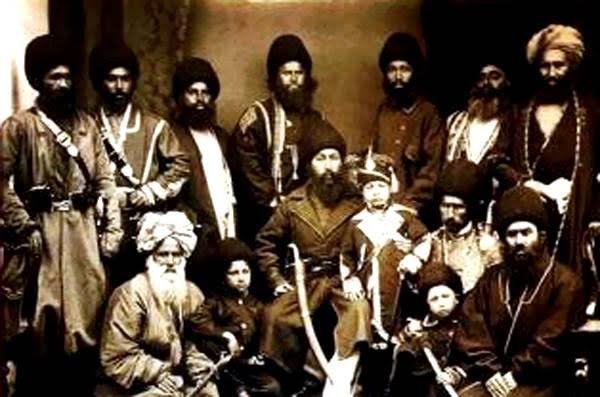
    The Pashtuns represent one of the most populous indigenous groups across South and Central Asia, predominantly in Afghanistan and Pakistan. Their social backbone relies on interconnected lineages, extended families, clans, and tribal alliances rather than a centralized political authority. From major confederations like the Durrani and Ghilzai to influential communities such as the Yusufzai, Afridi, Mohmand, Khattak, Wazir, and Mahsud, Pashtun society is a rich tapestry of overlapping regional, religious, and civic loyalties. At the core of their culture is Pashtunwali, an ancient honor code governing daily life through principles of hospitality, courage, asylum, and restorative justice. Historically, community issues and disputes were negotiated collectively through jirgas, or assemblies of local elders, maintaining order through consensus. Empire Builders and Cultural Crossroads Beyond tribal structure, Pashtuns have repeatedly reshaped the political landscape of the Indian subcontinent and Central Asia. Sultanate Dynasties: The Lodi dynasty established its rule over the Delhi Sultanate, paving the way for intricate South Asian governance structures. Administrative Reforms: Imperial leader Sher Shah Suri founded the Sur Empire in North India, pioneering sweeping reforms in taxation, infrastructure development, and currency. Empire Founding: In the 18th century, Mirwais Hotak challenged Safavid Persian dominance, while Ahmad Shah Durrani established the Durrani Empire in 1747, laying the groundwork for modern Afghanistan. This history is far more than military conquest. Pashtun territories served as vital crossroads where Persian, Turkic, Indian, and Islamic traditions converged. Consequently, their heritage spans beyond warrior traditions. It thrives in rich oral poetry, musical compositions, complex embroidery, craftsmanship, and trade networks. The Borderlands and Modern Challenges The 19th century brought prolonged conflict with British imperial forces along the northwestern frontier. A pivotal turning point arrived with the demarcation of the Durand Line in 1893. By drawing an artificial boundary between Afghanistan and British India (now Pakistan), the British divided ancestral Pashtun communities, establishing a geopolitically sensitive frontier that continues to spark debate and shape regional politics today.   In recent weeks, administrative re-alignments and border disputes in provinces like Balochistan and Khyber Pakhtunkhwa have reignited local debate. Prominent political and tribal leaders have voiced strong resistance to state restructuring, asserting that top-down administrative decisions risk erasing historical identities. Through renewed calls for broad political dialogue rather than bureaucratic divisions, modern Pashtun communities continue to rely on unified assemblies to safeguard their cultural heritage, self-determination, and historical voice in a changing region.

  • How far can you drive after low fuel light comes on?

    If you fail to keep an eye on your fuel level while driving, your car could eventually come to a stop. When a car is about to run out of fuel, a warning indicator commonly known as the low fuel light illuminates on the dashboard. But how far can you actually drive once this light comes on? The answer can be useful if there isn’t a fuel station nearby. However, there is no single answer as it depends on several factors including the car’s make and model, model year, driving habits, fuel efficiency and road conditions. According to experts, once the low fuel warning light turns on, the vehicle cannot travel very far. The good news, however, is that it can usually go farther than many people expect. Experts say the warning light typically comes on when the fuel tank has around 10 to 15 percent of its capacity remaining. On average, small cars can travel about 20 to 30 miles (32–48 km) after the light comes on while larger vehicles may cover up to 50 miles (80 km). However, if the vehicle is old or the road conditions are poor, the remaining driving range may be significantly shorter. Cold weather can also increase fuel consumption reducing the distance the car can travel after the warning light appears. Experts further caution that continuing to drive for an extended period after the low fuel light comes on may damage the engine although driving a few additional miles is generally unlikely to cause any harm.

  • | |

    The Sham Shaman

    In 1968, a graduate student in anthropology at the University of California, published a book that would reshape the publishing world. Titled The Teachings of Don Juan: A Yaqui Way of Knowledge. The book purported to be a faithful academic field report by Carlos Castaneda detailing his apprenticeship under an elderly Yaqui shaman named Don Juan Matus in the Mexican desert. Castaneda’s account became an overnight sensation as it blended desert mysticism, hallucinogenic plant rituals, and philosophical paradoxes. It sold millions of copies, earning him a doctorate from UCLA. This success made him a guru to icons like Bob Dylan, John Lennon, and Octavio Paz. A Life Built on Fabrications Long before he wrote about desert sorcery, Castaneda had mastered the art of reinventing himself. Born César Carlos Salvador Arana in Peru in 1925—the son of a humble watchmaker—he routinely rewrote his origin story. He claimed to have been born in Brazil, shaved years off his age, and concocted wild tales of fighting as a soldier in North Korea or working as a border spy. In reality, he fled Peru after fathering a child at thirteen, eventually making his way to Los Angeles in the 1950s. Ground-breaking Anthropological Discoveries. Yet beneath the celebrated field notes lay one of the most audacious literary fabrications in modern history. Don Juan Matus was not a real person. The desert apprenticeships never took place. Castaneda was not a devoted field researcher. He was a master illusionist who deceived prestigious academics and eager seekers alike. When Castaneda enrolled at UCLA, he found an academic environment eager for authentic indigenous wisdom and existential insight. Synthesizing disparate ideas into a singular narrative, he assembled Don Juan’s philosophical worldview by freely borrowing from European philosophy, Buddhist theology, ethnomethodology, and popular horror fiction. To his impressionable professors, the resulting texts appeared to be ground-breaking anthropological discoveries. Unraveling the Hoax While Castaneda’s books topped bestseller lists throughout the late 1960s and 1970s, critical cracks in his story soon began to widen into chasms. Skeptical researchers and anthropologists began scrutinizing the timeline and claims in his field notes. Archive Contradictions: UCLA library records revealed that on dates Castaneda claimed to be in the Sonoran desert learning shamanic secrets, he was actually signed into the university library reading room. Botanical and Cultural Errors: Experts on Yaqui culture noted that the spiritual concepts and language attributed to Don Juan bore almost no resemblance to authentic Yaqui traditions or language structures. Philosophical Echoes: Literary sleuths discovered that Don Juan’s most profound dialogues were near-verbatim adaptations of modern academic sociology and Western philosophical texts. Despite being systematically exposed by critics, Castaneda maintained his mystique. He avoided photo shoots, refused interviews, and cultivated an aura of secretive invulnerability. He also assured his devotees that any perceived discrepancies were simply part of a sorcerer’s duty to erase his personal history. The Guru’s Reclusive Cult and Legacy As public acclaim gave way to scholarly embarrassment, Castaneda retreated further into reclusiveness. In the 1990s, he launched a movement called Tensegrity. He promoted a series of physical movements he claimed were ancient Toltec magical passes. Critics quickly noted their striking resemblance to modern martial arts taught by a local Santa Monica instructor. Surrounding himself with a inner circle of devout disciples in Los Angeles, Castaneda governed his group with increasing paranoia until his death from cancer in 1998. Anthropology’s Ultimate Trickster Ultimately, Carlos Castaneda remains a complex figure in cultural history. His anthropological credentials were exposed as entirely fraudulent. His writings captured the yearning of an era desperate for spiritual transcendence beyond traditional structures. He stands as anthropology’s ultimate trickster. He’s a man who turned a fictional thesis into a million-dollar empire and proved that, given the right narrative, millions of people will gladly step through the looking glass.

  • Int Youth Day – concerns, challenges of Pakistani youth

    By Amir Ismaiel August 12 is observed around the world as International Youth Day. The day is observed on the recommendation of the United Nations to highlight the problems faced by young people, recognise their important role in economic and social development, and ensure their meaningful participation in decision-making. The theme of International Youth Day 2026 is “Different Contexts, Common Aspirations.” The theme recognises that young people live in different national, local and social conditions, but their basic hopes are almost the same everywhere. They want a dignified life, equal opportunities, good employment, quality education and a safe and secure future. Pakistan has 64% of those who are under the age of 30, out of the 64% half of the numbers are in educational institutions and rest of them are out with some of the reasons. We are among the countries that spend the least on education, allocating around 2% of its total budget to the education . India spends around 4% while Sri Lanka and Bangladesh allocate around 2% or less. The United Nations recommends that 4% should be allocated to education. Pakistan has more than 190 universities including private and government over 100 sub-campuses, with nearly two million students studying in higher education. Providing four to five million jobs for these students in the coming years will be essential. University students face many problems in their daily routine on campus, These include rising fees, low quality of education, a lack of research opportunities, shortage of hostels and transport, inequality and harassment. At the school level, more than 15 million children are still out of school, these stats are same for years . Poor educational facilities, shortage of furniture, lack of clean drinking water, shortage of teachers and limited funding are among the main reasons. The state of higher education is also worrying. Only one Pakistani public university, Quaid-i-Azam University is among the world’s top 500 universities, while around 10 Indian universities are included in the same list. These figures raise serious questions about government priorities and the gap between official claims and the actual condition of education. Theme of International Youth Day directly connects with the problems faced by Pakistani youth. Quality education, decent employment, mental health and meaningful participation in decision-making have remained major issues for young people for decades. These problems have also increased frustration, intolerance and extremism among youth . When an educated person fails to achieve his or her goals because of a lack of merit and fair opportunities frustration naturally grows. Unfortunately, youth in Pakistan still lack a clear vision for their future and meaningful government support. The Prime Minister’s Youth Programme has mainly focused on initiatives such as laptops and scholarships, but there is a need for a much broader plan covering employment, career development, mental health and future opportunities for youth . Holding one or two youth conferences during the year cannot be enough to address these issues.Climate change has become a major challenge for the world, but Pakistan still needs a stronger plan to involve young people in dealing with it. There is also a lack of awareness and practical programmes through which young people can contribute to tackling climate change. Mental health is another serious issue. The United Nations continues to highlight the importance of addressing mental health problems among young people, but in Pakistan the issue has not received the attention it deserves. In many countries, educational institutions have dedicated departments and support systems for students’ mental health and wellbeing. Pakistan needs similar facilities. Reports of serious mental health problems and suicides among students should be treated as a national concern. Today’s students wants to see solutions to its problems through its own participation and leadership. Across Asia, the growing role of Generation Z in political and government affairs has been remarkable. India, Bangladesh, Nepal and Sri Lanka have witnessed major youth movements in which youth have challenged governments and demanded political and social change. Youth are also important stakeholders in educational institutions. Around the world students participate in student unions and societies, which help them develop both academic and personal skills. Debates, dialogue, sports and other activities help students build confidence, leadership and communication skills. In countries such as the United States, the United Kingdom, Australia and Canada, students are generally allowed to form unions and societies in educational institutions. These organisations are supported by universities and provide students with opportunities to develop leadership and democratic skills. Many people who later become successful in medicine, science, social sciences, sports, politics and other fields gain valuable experience through such activities during their student years. The well-known historian Dr Mubarak Ali wrote in his book Tareekh Ke Naye Zaviye that when ideological politics began among young people in the subcontinent, nationalism was one of its early forms. Students became divided between the political right and left. However, this ideological debate also encouraged students to read and study different ideas. They began to understand society and its structure through different political and social perspectives. This process helped young people develop stronger intellectual and political awareness. Democratic societies recognise the right of students to participate in political and democratic activities. In Pakistan, however, student unions have faced restrictions for almost three decades. They were banned mainly because of allegations of political violence and clashes on campuses. As a result, universities lost an important platform for political discussion, debate on social issues and dialogue on national affairs.The culture of student unions in the 1990s are very different from the environment today. In the age of artificial intelligence, social media and digital communication, educational institutions can develop a new and more responsible model of student representation. Pakistan needs to create an environment where youth can discuss their problems through dialogue and democratic participation. Students should be represented in educational decision-making bodies and given a meaningful role in consultation. Instead of taking their problems to the streets, young people should have proper platforms where they can present their concerns directly to policymakers and

  • Stray dogs in Turbat raise public safety concerns

    From Muzzamil Karim To, The editorial team Stary Dogs in Turbat Respected Sir, Through the columns of your esteemed newspaper, I wish to highlight the serious issue of stary dogs in Turbat. There are many dogs on the street. Recently, a boy in my street was bitten on his leg. Now parents are afraid to send their children to outside. According to a health officials, report, six people died of rabies. Mostly, they attacks on children and old people. When they bites, they can spared deadly rabies without quick medical care. Even people feel scared to walk outside early in the morning or late at night. Stary dogs roam the streets and enters home whenever they can. The government must take serious action to address this issue.

  • Freedom: The Right We Must Protect

    Hani Rasheed Through the pages of your esteemed newspaper, I wish to highlight the importance of freedom in our society. Freedom is not a luxury or a favour; it is a basic right of every human being. People deserve the freedom to express their opinions, choose their future and live with dignity. Unfortunately, many people still face restrictions, fear and injustice when they raise their voices. When freedom is suppressed, society loses hope and progress comes to a standstill. A nation cannot truly develop if its people are afraid to speak the truth. The government and society must protect the rights and freedom of citizens. Freedom should be used responsibly, but no one should be silenced through injustice or fear. It is time to understand that protecting freedom means protecting the future of our nation. I hope your newspaper will highlight this important issue and encourage the authorities to protect the fundamental rights of the people

Leave a Reply

Your email address will not be published. Required fields are marked *