sham shaman
| |

The Sham Shaman

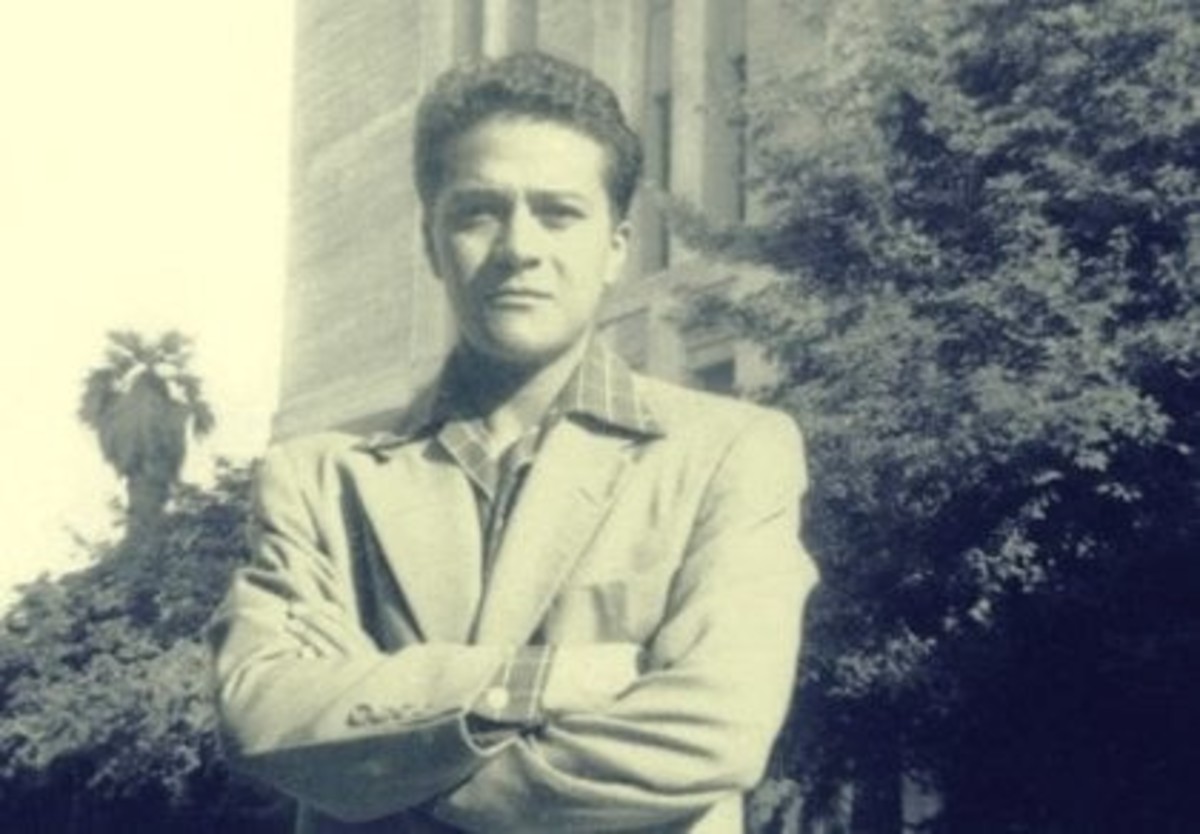
In 1968, a graduate student in anthropology at the University of California, published a book that would reshape the publishing world. Titled The Teachings of Don Juan: A Yaqui Way of Knowledge. The book purported to be a faithful academic field report by Carlos Castaneda detailing his apprenticeship under an elderly Yaqui shaman named Don Juan Matus in the Mexican desert. Castaneda’s account became an overnight sensation as it blended desert mysticism, hallucinogenic plant rituals, and philosophical paradoxes. It sold millions of copies, earning him a doctorate from UCLA. This success made him a guru to icons like Bob Dylan, John Lennon, and Octavio Paz.

A Life Built on Fabrications

Long before he wrote about desert sorcery, Castaneda had mastered the art of reinventing himself. Born César Carlos Salvador Arana in Peru in 1925—the son of a humble watchmaker—he routinely rewrote his origin story. He claimed to have been born in Brazil, shaved years off his age, and concocted wild tales of fighting as a soldier in North Korea or working as a border spy. In reality, he fled Peru after fathering a child at thirteen, eventually making his way to Los Angeles in the 1950s.

Ground-breaking Anthropological Discoveries.

Yet beneath the celebrated field notes lay one of the most audacious literary fabrications in modern history. Don Juan Matus was not a real person. The desert apprenticeships never took place. Castaneda was not a devoted field researcher. He was a master illusionist who deceived prestigious academics and eager seekers alike.

When Castaneda enrolled at UCLA, he found an academic environment eager for authentic indigenous wisdom and existential insight. Synthesizing disparate ideas into a singular narrative, he assembled Don Juan’s philosophical worldview by freely borrowing from European philosophy, Buddhist theology, ethnomethodology, and popular horror fiction. To his impressionable professors, the resulting texts appeared to be ground-breaking anthropological discoveries.

Unraveling the Hoax

While Castaneda’s books topped bestseller lists throughout the late 1960s and 1970s, critical cracks in his story soon began to widen into chasms. Skeptical researchers and anthropologists began scrutinizing the timeline and claims in his field notes.

Archive Contradictions: UCLA library records revealed that on dates Castaneda claimed to be in the Sonoran desert learning shamanic secrets, he was actually signed into the university library reading room.

Botanical and Cultural Errors: Experts on Yaqui culture noted that the spiritual concepts and language attributed to Don Juan bore almost no resemblance to authentic Yaqui traditions or language structures.

Philosophical Echoes: Literary sleuths discovered that Don Juan’s most profound dialogues were near-verbatim adaptations of modern academic sociology and Western philosophical texts.

Despite being systematically exposed by critics, Castaneda maintained his mystique. He avoided photo shoots, refused interviews, and cultivated an aura of secretive invulnerability. He also assured his devotees that any perceived discrepancies were simply part of a sorcerer’s duty to erase his personal history.

The Guru’s Reclusive Cult and Legacy

As public acclaim gave way to scholarly embarrassment, Castaneda retreated further into reclusiveness. In the 1990s, he launched a movement called Tensegrity. He promoted a series of physical movements he claimed were ancient Toltec magical passes. Critics quickly noted their striking resemblance to modern martial arts taught by a local Santa Monica instructor. Surrounding himself with a inner circle of devout disciples in Los Angeles, Castaneda governed his group with increasing paranoia until his death from cancer in 1998.

Anthropology’s Ultimate Trickster

Ultimately, Carlos Castaneda remains a complex figure in cultural history. His anthropological credentials were exposed as entirely fraudulent. His writings captured the yearning of an era desperate for spiritual transcendence beyond traditional structures. He stands as anthropology’s ultimate trickster. He’s a man who turned a fictional thesis into a million-dollar empire and proved that, given the right narrative, millions of people will gladly step through the looking glass.


Similar Posts

  • |

    America’s premier tourist destination

    During the early 1860s, an unexpected location ranked as the second most visited tourist spot in the United States: Green-Wood Cemetery in Brooklyn. Trailing only Niagara Falls in popularity, the vast burial ground welcomed roughly 500,000 visitors every year. Families routinely spent their afternoons strolling through the peaceful grounds. They took horse-drawn carriage rides and admiring the elaborate grand monuments across the landscape. When Green-Wood first opened its gates in 1838, New York City had virtually no public parks, as Central Park had not yet been conceived. By the time the early 1860s arrived, Central Park was only beginning to open its initial sections to the public. As a result, rural cemeteries like Green-Wood filled a massive void for city dwellers seeking fresh air, natural beauty, and a quiet escape from urban density. The unique charm and sweeping vistas of the cemetery caught the attention of Rudolf Cronau, a German-born illustrator and artist. Born in Solingen in 1855, Cronau trained at the prestigious Düsseldorf Art Academy under Andreas Müller before establishing his own studio. In 1881, he ventured across the Atlantic on an assignment for Die Gartenlaube, a popular German illustrated magazine. His mission was to document the landscapes, bustling cities, and diverse people of the United States, bringing the American experience to life for European readers through a mix of written reports and detailed artwork. While visiting Brooklyn in 1881, Cronau captured the cemetery’s famous skyline view in a artwork titled View from Greenwood Cemetery, Brooklyn. Rendered in delicate watercolor and black ink, the piece now resides in the permanent collection of the Brooklyn Museum. Cronau arranged his view in three distinct planes: an elaborate mausoleum anchored the foreground, Green-Wood’s iconic Gothic main entrance gates framed the middle ground, and the vast expanse of New York Harbor and the New Jersey coastline stretched out in the background. The mausoleum highlighted in the foreground of Cronau’s illustration belonged to John Anderson, a prominent NYC figure who amassed a massive fortune in the tobacco trade. Anderson, born in 1812, ran a well-known shop near Manhattan’s City Hall before eventually passing away in Paris in 1881.   Beyond serving as his final resting place, Anderson’s tomb was built as a bold political statement. Commissioned during the heights of the American Civil War, the Greek Revival-style structure was purposefully designed to symbolize a commitment to republican governance over monarchical rule, while serving as an unmistakable declaration of pro-Union support. Through art and architecture, a single cemetery hilltop managed to weave together personal wealth, national ideology, and one of the finest views of 19th-century New York.

  • Ginger: A small root with big benefits

    Ginger is a common ingredient used to add flavor to everyday meals. Although it looks like a simple root experts say it contains several natural compounds that may offer health benefits. Researchers have studied ginger for its possible effects on digestion inflammation cholesterol and blood sugar. Ginger comes from a plant in the Zingiberaceae family. It contains active compounds including gingerol which has antioxidant and anti inflammatory properties. Research published in the journal Molecules suggests that these properties may help reduce inflammation and protect the body from damage caused  by harmful molecules. May support digestion Ginger has been used for centuries to help with stomach and digestive problems.  Studies suggest that adding ginger to the diet may help reduce symptoms such as nausea stomach discomfort and bloating in some people. May help manage cholesterol Ginger has also been studied for its possible effect on cholesterol.  Keeping cholesterol levels within a healthy range is important for overall health. Some research including studies published in the Journal of Nutrition has examined whether ginger may help lower LDL, often called “bad cholesterol.” However more research is needed to fully understand its effects. May support healthy blood sugar Researchers have also looked at ginger and blood sugar control.  One study published in the Iranian Journal of Pharmaceutical Research reported lower blood sugar levels among people with type 2 diabetes who consumed ginger regularly.  Some studies suggest that ginger may also help improve the body’s response to insulin. However it should not replace diabetes treatment or prescribed medicines. Possible Anti-Cancer properties The natural compounds in ginger are also being studied for possible anti-cancer effects.  Early laboratory research suggests that some compounds in ginger may slow the growth of certain cancer cells.  Research published in Gastroenterology has also explored these possible effects. However these findings are still being studied and more research is needed before firm conclusions can be made. Use ginger in moderation Although ginger may have several potential health benefits, consuming too much is not recommended. Ginger should not be considered a replacement for medical treatment. People who have a health condition or take regular medicines should speak with a doctor or qualified health professional before using large amounts of ginger or ginger supplements. Adding a reasonable amount of ginger to a balanced diet can be a simple way to enjoy its flavor and possible nutritional benefits

  • Lack of dustbin in Chahsar

    Through the columns of your newspaper, I would like to highlight the lack of proper waste-disposal facilities in Chahsar, Turbat. There are very few large dustbins placed along the roads where residents can dispose of household garbage and in many areas people have no nearby option at all. At present, only a few such dustbins can be found in the locality which is insufficient for a large and growing population. Dustbins should be placed at reasonable intervals, perhaps around every 40 metres in populated areas, so that residents can keep their surroundings clean and the waste can be collected regularly by municipal trucks. If there is no designated place to dispose of household waste people are left with very limited choices, and garbage inevitably ends up on roadsides or vacant plots. The concerned authorities are requested to increase the number of dustbins in Chahsar and ensure their regular collection. Clean surroundings require not only public responsibility but also proper municipal facilities.

  • |

    7 easy tricks to boost internet speed on Android phones

    We all experience this: trying to load a webpage, stream a video or open an app on our Android phones. However, sometimes the internet becomes so slow that it feels like it is crawling. Slow internet on a phone affects downloads and uploads, websites take longer to open and videos may remain stuck instead of playing smoothly. Fortunately, Android phones offer several tools and tricks that can help improve internet speed. Clear background apps Apps running in the background use data, processing power and internet connectivity. Clearing or disabling unnecessary background apps can prevent them from affecting internet speed. For this purpose, go to Settings and disable unnecessary apps running in the background. Clear cache for faster internet When you use apps or visit websites on an Android phone, the device stores some data known as cache. These files are designed to help apps and websites run more efficiently and can be useful in the short term. However, when too many cache files accumulate, they may affect performance and internet speed. Therefore, clearing an app’s cache can help improve the device’s performance. To do this, go to Settings, select Apps, open the relevant app’s information page then select Storage and tap Clear Cache. Update operating system and apps Outdated operating systems and apps can affect performance and internet speed. Keeping your software and apps updated can help maintain better speed while also improving the overall performance of your phone. Use fast browser A web browser can directly affect your browsing experience and internet performance. Browsers such as Google Chrome and Firefox are regularly updated and their performance is continuously improved. Adjust Airplane Mode Airplane Mode on smartphones is primarily designed to disable radio-frequency signal transmission. When Airplane Mode is turned on, Wi-Fi, Bluetooth and cellular signals are switched off, stopping wireless communication. However, this feature can also be used to refresh your internet connection. Smartphones connect to nearby mobile towers for cellular signals. When you move around throughout the day, your phone may not always connect to the best available tower. Resetting the connection through Airplane Mode may help improve internet speed. Simply turn Airplane Mode on and wait for a short while before turning it off again. This may allow your Android phone to reconnect to a better mobile tower and improve internet speed. Restart your phone or router Restarting devices can also improve their performance. Restarting your smartphone or router may clear temporary errors and can sometimes help improve internet speed. Move closer to router Distance is important when using a Wi-Fi connection. If possible, move closer to your router. This can improve the signal strength and may result in a faster and more stable internet connection.

  • 5 Morning drinks for weight loss

    Many people think losing weight requires expensive diet plans strict food restrictions or complicated meal programs. However health experts say that eating a balanced diet staying physically active and starting your day with healthy drinks may help support your weight loss journey. While there is no magic drink for weight loss some morning beverages may help improve digestion boost metabolism and keep you feeling full for longer. Here are five drinks that are commonly recommended to enjoy on an empty stomach. •Herbal detox tea A cup of herbal detox tea in the morning may help wake up your digestive system and support metabolism.  It is often made with natural ingredients such as dandelion ginger and licorice root. Experts say dandelion may help support healthy weight management while ginger can improve digestion and increase metabolism. Licorice root may also help reduce hunger making it easier to avoid unnecessary snacking. •Turmeric water Turmeric is well known for its anti-inflammatory properties. Since long term inflammation may be linked to weight gain adding turmeric to your daily routine may offer health benefits. Mix a small amount of turmeric powder into warm water. You can also add honey or lemon for taste. Drinking it in the morning may help improve digestion support metabolism and reduce inflammation. •Warm water with ghee In Ayurveda ghee is considered a healthy source of fat. Some experts believe that taking a small amount of ghee with warm water may support digestion and metabolism. The healthy fats in ghee may also help you feel full for a longer time which could reduce overall calorie intake during the day. • Apple cider vinegar drink Apple cider vinegar is a popular natural ingredient used by many people trying to lose weight.  It contains acetic acid which may help the body process fat more efficiently. It may also help control appetite and support metabolism. Mix a small amount of apple cider vinegar with water. You can add lemon juice and a little honey if you like. This drink may also help improve digestion reduce inflammation and support healthy blood sugar levels which may lower cravings for sweet foods. •Lemon water Lemon water is a simple and refreshing way to start the day. Lemons are rich in vitamin C which supports normal metabolism. They also contain pectin a type of fiber that may help you feel less hungry. Experts say drinking lemon water on an empty stomach may improve digestion support hydration and help reduce inflammation. Tips These drinks are not a quick fix for weight loss. They work best when combined with a healthy diet regular exercise and an active lifestyle. If you have diabetes stomach problems or any other medical condition it is important to speak with your doctor before making these drinks a daily habit.

Leave a Reply

Your email address will not be published. Required fields are marked *