charges tiktok over

EU Charges TikTok over child safety failures under digital rules

The European Commission has issued preliminary findings accusing TikTok of breaching the EU’s Digital Services Act over how it protects children online. Regulators say TikTok’s account settings fall short of DSA safety standards, letting children make their accounts public and potentially exposing them to cyberbullying or contact from predators.

The charges mark the fourth set of allegations against TikTok in two years, brought under a law that requires major tech platforms to do more to tackle illegal and harmful content. This latest finding zeroes in specifically on minors’ account settings.

The Commission’s concerns do not stop at public accounts. Even private accounts are not fully safe, regulators say, since children can still be easily located through other users’ “following” and “followers” lists, visible even to people without a TikTok account.

Investigators found that teens aged 13 to 15 could switch from private to public with little friction, while accounts belonging to 16 and 17-year-olds stayed visible to anyone online by default.

TikTok has pushed back on the findings. The company said teen accounts come with more than 50 preset privacy and safety features, shaped by outside experts from the moment an account is created. It added that under-18 accounts are private by default, and that TikTok is among the only platforms where younger teens can not use direct messaging or have their posts surface in others’ feeds.

The Commission wants stricter defaults going forward. It believes TikTok should adjust settings so that minors’ content is visible only to users the minor has specifically approved, rather than being public by default.

TikTok now has a chance to respond before any final decision is made. The findings are preliminary, giving the company an opportunity to answer the allegations before the Commission issues a final ruling. If confirmed, TikTok could face fines of up to 6% of its global annual turnover.

EU tech chief Henna Virkkunen framed the case as part of a broader principle. She said the Digital Services Act requires platforms to build protections for minors directly into how their services are designed, and holds them accountable when they fail to do so. A high level of protection, she added, should not be something users opt into, it should simply be the default.

This is not TikTok’s only regulatory headache in Brussels. The platform is also facing separate EU scrutiny over allegedly addictive design features like infinite scroll and autoplay.

Similar Posts

  • |

    Former Chinese premier Zhu Rongji dies at 97

    BEIJING: Former Chinese Premier Zhu Rongji, a key figure in the country’s economic transformation during the 1990s, has died at the age of 97. Zhu was known for his direct speaking style and his strong support for economic reform. His tenure was marked by major changes aimed at restructuring China’s state-dominated economy and opening it further to global markets. He served as China’s vice premier from 1991 to 1998 before becoming premier, a position he held until early 2003. Zhu’s political career began decades earlier. He graduated from Tsinghua University and joined the Communist Party in 1949. During the Cultural Revolution, he was sent to work in the countryside and experienced a period of political hardship. He was later rehabilitated and gradually returned to senior government positions. In 1987, Zhu became mayor of Shanghai. During his tenure, he helped guide the city through early economic reforms and development that eventually contributed to its emergence as a major international financial centre. He moved to Beijing in 1991 after joining the central government. As vice premier and later premier, Zhu became closely associated with efforts to tackle economic overheating, inflation and financial instability. His government introduced wide-ranging reforms to state-owned enterprises. Many inefficient state companies were closed, restructured or privatised, while large numbers of workers were laid off. Zhu also strengthened the central government’s control over taxation and introduced reforms that encouraged private home ownership. Those changes played a major role in reshaping China’s housing market. One of his most significant achievements was helping China secure membership of the World Trade Organization in 2001, following years of difficult negotiations. China formally joined the organisation in December that year. The WTO accession accelerated China’s integration into the global economy and helped expand international trade and investment. However, Zhu’s reform programme also had critics. Some observers argued that changes to agricultural policy, tax arrangements and state-owned enterprises created difficulties that later governments had to address. Despite those criticisms, Zhu remained widely regarded as one of the most influential economic reformers in modern Chinese history. His reputation for blunt remarks became particularly prominent after a collection of his speeches was published in 2011. The books contained unusually candid assessments of corruption, government debt, banking problems and weaknesses in public administration. The speeches attracted significant public attention because they addressed many of the economic and social challenges facing China at the time. Zhu warned about corruption, inequality and problems created by local officials. His comments continued to attract interest among reform-minded officials, academics and members of the public long after he left office. His death marks the passing of a leader who played a central role in one of the most consequential periods of China’s economic development. Zhu’s legacy is closely linked to the difficult reforms of the 1990s, when China moved towards a more market-oriented economy while maintaining the political control of the Communist Party.

  • |

    China seeks Houthi assurances for safe passage of oil tankers in Red Sea

    China has held direct discussions with Yemen’s Houthi movement in an effort to secure safe passage for its oil tankers through the southern Red Sea as regional tensions continue to disrupt one of the world’s busiest shipping routes. According to sources familiar with the talks, Beijing wants to ensure that vessels carrying energy supplies to China can travel without being targeted by attacks. The negotiations follow the Houthis’ announcement on July 20 that they would block access to Saudi Arabian ports, expanding their military campaign during the ongoing regional conflict. The group said it would target ships linked to Saudi ports, raising fresh concerns over the safety of commercial shipping and global energy supplies. Sources said China was among the first countries to contact the Houthis directly after the new restrictions were announced. Beijing reportedly requested guarantees that Chinese flagged or China bound tankers would be allowed to pass safely through the Bab el Mandeb Strait, a strategic waterway connecting the Red Sea with the Gulf of Aden. A senior Iranian official was among those who confirmed that the discussions had taken place. China’s priority is to keep crude oil shipments moving from Saudi Arabia’s Red Sea export terminals, particularly the port of Yanbu. Maintaining those supplies has become increasingly important as disruptions around the Strait of Hormuz have reduced the flow of Iranian oil through another key maritime route. Officials believe uninterrupted shipments from Saudi Arabia will help stabilize China’s energy imports during the regional crisis. Shipping data shows that at least four oil tankers carrying Saudi crude for China have successfully passed through the Bab el Mandeb Strait since the Houthis announced their blockade. Industry analysts said Chinese officials coordinated the passage of each vessel individually with the Houthi movement. Sources also indicated that both sides kept Iranian authorities informed throughout the process. At the same time, the Houthis have warned international shipping companies that vessels loading or unloading cargo at Saudi Arabian ports could become military targets. The warning has increased concerns among shipping operators, prompting some vessels to reconsider their planned routes. Two oil supertankers recently altered their journeys because of security fears. The New Champion, which was scheduled to load crude oil at Yanbu, and the New Prime, which was already carrying oil, both turned away from the Bab el Mandeb Strait and returned to open waters in the Gulf of Aden rather than continue through the high risk area. Last week, the Houthis claimed responsibility for missile and drone attacks on two Saudi oil tankers, the Encelia and the Layla. Maritime security officials confirmed that the Encelia had been struck, adding to concerns over the safety of commercial vessels operating in the region. The Red Sea remains one of the world’s most important trade routes because it provides the shortest sea connection between Europe and Asia. A direct journey from Yanbu to Asian markets through the Bab el Mandeb Strait normally takes around 16 days. However, ships that avoid the route and instead travel through the Suez Canal before sailing around the southern tip of Africa face voyages lasting about 50 days, significantly increasing fuel costs and delivery times. Recent shipping data indicates that traffic through the Bab el Mandeb Strait has started to recover slightly despite ongoing security risks. Twenty eight vessels passed through the waterway on Monday, the highest daily total in four days, although traffic remained below the monthly peak recorded earlier in July. Of the 12 ships entering the Red Sea that day, four were oil tankers, showing that energy exports continue despite heightened regional tensions and continuing security concerns.

  • | | | | | | |

    [OPINION] What America’s AI boom teaches us about scrutinizing Pax Silica

    Communities across the United States are already grappling with soaring electricity demand, opaque utility agreements, environmental concerns, and questions over promised jobs. Before Pax Silica breaks ground, if ever, Filipinos should learn from those experiences.

  • | |

    Over 60,000 Gaza children lose parents amid ongoing war

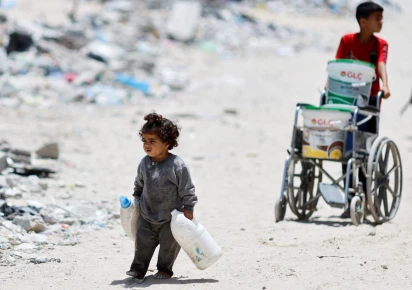
    More than 60,000 children in Gaza have lost at least one parent since the conflict began in October 2023, according to figures released by the Palestinian health ministry on Wednesday. The ministry reported that 60,737 children had either been orphaned or left with only one surviving parent. Of these, 52,095 children lost their fathers, while 5,929 lost their mothers. Another 2,713 children lost both parents during the conflict. The figures highlight the devastating impact of prolonged violence on children across the Gaza Strip. The ministry also reported that thousands of families had been completely erased from Gaza’s civil registry. According to its figures, 2,276 families comprising 8,858 people have been wiped out during the conflict. The overall death toll in Gaza has also exceeded 73,000 since the start of the war, the ministry said. A ceasefire reached in October has failed to end all violence in the territory. Palestinian authorities say Israeli forces have continued carrying out strikes, with more than 1,100 people reportedly killed since the truce began. The latest figures have renewed concerns over the humanitarian consequences of the conflict. Thousands of children have been left without one or both parents, while many families have lost multiple members. The United Nations Independent International Commission of Inquiry has also documented serious violations involving Palestinian children. In a report released in June, the commission said Israeli authorities and security forces had deliberately targeted Palestinian children. It alleged that violations amounted to genocide, crimes against humanity and war crimes in Gaza, as well as war crimes in the occupied West Bank. The commission examined alleged violations against Palestinian children since the conflict began on October 7, 2023. It found that children accounted for around 30 per cent of those killed in the Gaza war. In an earlier report released in September, the commission concluded that Israel had committed genocide in Gaza and said senior Israeli officials, including Prime Minister Benjamin Netanyahu, had contributed to incitement. Israel has rejected the accusations, describing them as unfounded and deeply offensive. The latest Palestinian figures underline the long-term consequences of the conflict for Gaza’s youngest population. Beyond the immediate loss of life, thousands of children are now facing life without parents, while entire families have disappeared from official records.

Leave a Reply

Your email address will not be published. Required fields are marked *