sbp appoints primary
| |

SBP appoints 10 primary dealers for FY27

KARACHI: The State Bank of Pakistan (SBP) has appointed 10 financial institutions as Primary Dealers (PDs) and two institutions as Special Purpose Primary Dealers (SPDs) for the fiscal year 2026-27. The appointments will strengthen the government’s domestic borrowing programme and support the country’s financial market.

The government continues to rely heavily on domestic borrowing to finance its fiscal requirements. In this system, primary dealers play an important role by participating in government debt auctions and helping raise funds through Treasury Bills and Pakistan Investment Bonds.

According to the central bank, United Bank Limited (UBL), National Bank of Pakistan (NBP), and Bank Alfalah secured the top three positions among primary dealers during the fiscal year 2025-26. Their rankings were based on overall performance in government securities auctions and market activities.

The 10 institutions selected as Primary Dealers for FY2026-27 are United Bank Limited, National Bank of Pakistan, Bank Alfalah, Habib Bank Limited, Habib Metropolitan Bank, MCB Bank, The Bank of Punjab, Pak Oman Investment Company, JS Bank, and Citi Bank NA Pakistan Branch.

The State Bank has also appointed the Central Depository Company of Pakistan Limited (CDC) and the National Clearing Company of Pakistan Limited (NCCPL) as Special Purpose Primary Dealers for the new fiscal year.

The appointments were made after evaluating applications submitted by financial institutions under the eligibility criteria laid down in the Primary Dealer System Rules. The central bank had invited applications for the new fiscal year through a circular issued earlier this year.

Primary dealers are responsible for purchasing government securities directly from the central bank during auctions. They then distribute these securities among commercial banks, financial institutions and other investors. Their participation ensures that government borrowing operations continue without disruption.

These institutions also play an important role in the secondary market by providing liquidity and facilitating the buying and selling of government securities. Their presence helps improve market efficiency and contributes to transparent price discovery.

The role of primary dealers has become increasingly important as Pakistan continues to depend on domestic sources to meet its financing needs. Through their participation in debt auctions, they help the government raise funds while supporting stability in the country’s financial system.

Similar Posts

  • |

    Pakistan’s external debt rises by Rs1.24 trillio…

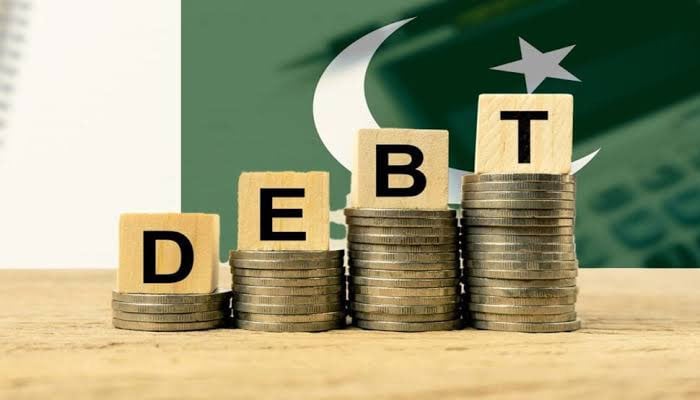
      Pakistan’s external debt has started rising again after recording a decline during the first nine months of the 2025-26 fiscal year, with official data showing a sharp increase during the final quarter. According to government documents, the country’s external debt increased by more than Rs1.24 trillion between March and June 2026. During the same three-month period, the government’s total debt rose by around Rs3.11 trillion, reflecting a significant increase in both external and domestic borrowing. The data shows that the government’s domestic debt increased by more than Rs1.87 trillion from March to June 2026. As a result, total domestic debt reached approximately Rs59.44 trillion by June 2026. Pakistan’s total external debt stood at around Rs22.96 trillion in March 2026. By the end of June, the figure had climbed to approximately Rs24.20 trillion, marking an increase of more than Rs1.24 trillion in just three months. The latest increase reverses the downward trend recorded earlier in the fiscal year. Pakistan reduced its external debt by around Rs207 billion during the first three months of 2026. From June 2025 to March 2026, the country’s external debt declined by approximately Rs458 billion.   The largest increase during the latest quarter came from long-term external borrowing. Government figures show that long-term external debt stood at around **Rs19.72 trillion in March 2026**, but increased to approximately **Rs21.77 trillion by June**, representing an increase of more than Rs2 trillion. In contrast, short-term external debt declined significantly during the same period. It fell by around Rs506 billion over the three months, partially offsetting the increase in long-term borrowing. The figures indicate that while Pakistan had made progress in reducing its external debt earlier in the fiscal year, borrowing picked up considerably during the final quarter. The sharp rise in long-term external liabilities remains a key factor behind the overall increase in the country’s external debt.

  • | |

    Court allows tax credit adjustment against super t…

    The Federal Constitutional Court has issued an important ruling in favour of corporate taxpayers. The court has declared the adjustment of tax credits against super tax legally valid. It has also overturned an earlier decision of the Islamabad High Court. Justice Amir Farooq authored the six-page detailed judgment. The court accepted the appeals filed by a private mobile phone company. The case relates to the adjustment of tax credits against super tax. The company had challenged a demand raised by the Federal Board of Revenue (FBR). The FBR had issued a notice to the private company. The notice required the company to pay super tax. The company approached the Islamabad High Court after receiving the notice. It argued that its available tax credit should be allowed to adjust against the super tax liability. The Islamabad High Court rejected the company’s petition. The company then challenged that decision before the Federal Constitutional Court. The Federal Constitutional Court has now accepted the company’s appeals. It has declared that tax credits available to a taxpayer can be adjusted against super tax. The court referred to the relevant provisions of the tax law. It observed that the tax credit available under Section 168 is a separate and legally recognised right. According to the judgment, a taxpayer should not be prevented from using this credit for adjustment. The court said forcing a taxpayer to seek only a refund would not be consistent with the intention of the law. The judgment also addressed the interpretation of financial and tax laws. The court observed that such laws should be interpreted in a manner that facilitates taxpayers. The court emphasised that taxpayers should be able to exercise rights provided to them under the law. A legal right to a tax credit cannot be unnecessarily restricted through an interpretation that creates additional difficulties for taxpayers. The court also issued directions to the FBR. The FBR has been directed to examine the taxpayer’s claim for adjustment. The department must consider the claim in response to the tax notice. The FBR will now have to decide the matter according to the applicable law and the court’s ruling. The judgment provides an important clarification for corporate taxpayers. It establishes that an eligible tax credit can be considered for adjustment against a super tax liability. The ruling may also have wider implications for companies facing similar tax demands. Businesses with legally available tax credits may now rely on the court’s interpretation when seeking adjustments against their tax liabilities. By setting aside the Islamabad High Court’s decision, the Federal Constitutional Court has clarified the legal position on the issue. The case also highlights the continuing dispute between taxpayers and the FBR over the interpretation and application of tax laws.

  • | |

    TikTok creator Rebecca Luna dies at 49 after Alzheimer’s battle

    TikTok creator Rebecca Luna, who openly documented her journey with young-onset Alzheimer’s disease to raise awareness about dementia and end-of-life care, has died at the age of 49. Luna passed away on July 25, according to a statement shared on her official TikTok account, where her family announced that she died peacefully surrounded by loved ones. The statement thanked Luna’s followers for the compassion and encouragement they had shown throughout her journey and requested privacy for the family during this difficult time. Her passing prompted an outpouring of tributes from supporters who said her honesty and courage had helped thousands of people better understand the realities of living with Alzheimer’s disease. Luna, a single mother from Victoria, British Columbia, first revealed her diagnosis publicly in April 2025. Over the following year, she gained a large online following by sharing candid videos about her symptoms, medical appointments and the emotional challenges of living with young-onset Alzheimer’s. Her openness resonated with viewers around the world, many of whom praised her willingness to discuss a disease that is often misunderstood. Beyond documenting her personal experience, Luna used her platform to educate people about dementia and advocate for greater awareness of end-of-life care. She frequently shared information about Medical Assistance in Dying (MAID), a legal option available under specific circumstances in Canada, explaining how it had become part of her own plans after careful consideration. In one of her final updates, Luna revealed that she had decided to move forward with her planned MAID date after reflecting on her declining quality of life. She described the decision as deeply personal and thanked her followers for standing by her throughout her journey. Her honesty sparked thoughtful discussions online about patient autonomy, dignity and the difficult decisions faced by people living with terminal illnesses. Throughout her videos, Luna consistently encouraged others to show kindness to themselves and prioritise their mental and emotional well-being. Even while discussing the progression of her illness, she remained focused on spreading hope, compassion and acceptance. In her final message, she reflected on the importance of self-love and expressed her wish that others would learn to embrace themselves with the same compassion. Luna’s story touched thousands of people, particularly families affected by dementia. Many followers said her videos helped them better understand the experiences of those living with Alzheimer’s while also providing comfort to caregivers facing similar challenges. Her willingness to discuss topics that are often considered difficult or uncomfortable earned widespread respect across social media. Following news of her death, tributes poured in from supporters who thanked Luna for transforming her personal struggle into a source of education and hope for others. Many described her as a courageous advocate whose legacy will continue through the conversations she inspired about young-onset Alzheimer’s, caregiving and compassionate end-of-life choices. Her family has not announced details regarding a public memorial but asked that her memory be honoured through kindness, understanding and continued awareness of the disease. 

  • Thailand Chokes Under Widespread Smog, 45 Provinces Exceed Safe PM2.5 Levels

    BANGKOK – Ultrafine dust blanketed much of Thailand on Monday, with unsafe levels of PM2.5 pollution recorded in Bangkok and 45 provinces over the past 24 hours, according to data released by the Geo-Informatics and Space Technology Development Agency (Gistda). The readings highlight a severe and persistent air quality crisis affecting the Central Plains, Northeast, […]

  • | |

    Rana Sikandar to join classroom as teacher

    Punjab Education Minister Rana Sikandar Hayat has announced that he will begin teaching students in government schools in Lahore from the first week of September as part of an initiative aimed at improving the quality of education in the province. The minister said he has decided to personally enter classrooms and teach students instead of only monitoring the education system from administrative offices. He said the experience would help him better understand the challenges faced by teachers and students while also providing an opportunity to evaluate classroom teaching firsthand. Rana Sikandar Hayat said English and Chemistry are his favourite subjects, and he will start by teaching these courses. He said he plans to teach English in primary schools and Chemistry in high schools before expanding his teaching to other subjects in the future. He added that he will visit a different government school every week without giving prior notice. According to the minister, these surprise visits will allow him to observe the actual learning environment, interact directly with students, and assess the effectiveness of teaching methods being used in classrooms. The education minister said the initiative is not symbolic but a practical effort to understand the strengths and weaknesses of the public education system. He believes that personally teaching students will provide valuable insight into issues affecting classroom learning and help identify areas that require immediate improvement. Rana Sikandar Hayat said he has immense respect for the teaching profession and considers it an honour to serve as a teacher. He added that educators play a vital role in shaping the future of the nation and deserve recognition for their contribution to society. He expressed hope that the initiative would encourage greater accountability within the education system and inspire teachers and school administrators to continue improving academic standards. He also said direct interaction with students would help the education department design better policies based on practical classroom experience rather than relying solely on reports. The minister said the feedback gathered during his teaching visits would be used to identify shortcomings in teaching methods, curriculum delivery, and classroom management. He added that the information would help the government introduce reforms aimed at improving learning outcomes and raising educational standards in government schools across Punjab.

  • | |

    Ishaq Dar, Turkish foreign minister discuss region…

      ISLAMABAD: Deputy Prime Minister and Foreign Minister Ishaq Dar held a telephone conversation with Turkish Foreign Minister Hakan Fidan on Sunday night, during which the two sides discussed recent developments in the region and reaffirmed their commitment to strengthening cooperation on issues of mutual interest. According to Pakistan’s Ministry of Foreign Affairs, the two foreign ministers agreed that dialogue and diplomacy remained the most effective means of addressing regional challenges and promoting peace and stability. The conversation took place as Pakistan continues its diplomatic engagement with regional and international partners amid the ongoing conflict involving the United States, Israel and Iran. Islamabad has increasingly emerged as an important diplomatic channel in efforts aimed at reducing tensions and encouraging negotiations between the parties. Dar has recently held discussions with several senior diplomats regarding the rapidly changing regional situation. Last week, he met US Chargé d’Affaires Natalie Baker, British High Commissioner to Pakistan Jane Marriott, Chinese Ambassador Jiang Zaidong and Pakistan’s Ambassador-designate to Sweden Ahmed Amjad Ali. During these meetings, the foreign minister exchanged views with the diplomats on regional developments and Pakistan’s efforts to contribute to peace and stability. Dar emphasized that the Islamabad Memorandum of Understanding must be implemented in both letter and spirit, describing this as the most appropriate way forward. He also reiterated Pakistan’s commitment to regional peace, security and diplomatic engagement. Dar recently held a joint press conference with Norwegian Foreign Minister Espen Barth Eide, who praised Pakistan’s role during the US-Iran conflict. Eide particularly acknowledged the efforts of Prime Minister Shehbaz Sharif, Ishaq Dar and Chief of Defence Forces Field Marshal Asim Munir during delegation-level discussions held in Islamabad. The Norwegian foreign minister said Pakistan had taken on a significant responsibility by offering Islamabad not only as a venue for negotiations but also as a facilitator between Washington and Tehran. Eide described Pakistan’s diplomatic efforts as a service to the international community and expressed strong support for the role Islamabad had assumed since the conflict began on February 28. The latest diplomatic contacts also come against the backdrop of a major regional security development: the signing of the Makkah Joint Defence Agreement by Pakistan, Saudi Arabia and Turkiye on August 7. The trilateral agreement has been described as a defensive security framework designed to strengthen collective deterrence, expand military cooperation and contribute to regional stability. The agreement has attracted considerable attention because of the growing security challenges in the region and the evolving strategic relationships among Pakistan, Saudi Arabia and Turkiye. The Makkah agreement follows the Strategic Mutual Defence Agreement signed between Pakistan and Saudi Arabia last year. That pact established a stronger bilateral security relationship and stated that aggression against either country would be regarded as aggression against both. The latest developments indicate that Pakistan is seeking to strengthen diplomatic and security partnerships while maintaining its stated preference for dialogue and peaceful resolution of regional disputes. Dar’s conversation with Fidan further reflects the close relationship between Islamabad and Ankara, particularly on regional security and diplomatic matters. Both countries have consistently emphasized the importance of cooperation, consultation and peaceful negotiations in addressing regional crises. Their latest discussion is expected to contribute to continued coordination as tensions across the region remain high.

Leave a Reply

Your email address will not be published. Required fields are marked *