south korean energy
| | |

South Korean energy firm seeks PM Shehbaz’s …

In a letter addressed to the prime minister, Korea South-East Power Co. Ltd. (KOEN) said it had spent nearly a decade developing two run-of-the-river hydropower projects on the Swat River in Khyber Pakhtunkhwa but remains unable to move forward because of unresolved regulatory approvals.

The company, a subsidiary of Korea Electric Power Corporation (KEPCO), is developing the 229-megawatt Asrit Kedam and 238-megawatt Kalam Asrit hydropower projects. Together, the projects represent an investment of approximately $1 billion, with the company already investing around $25 million in feasibility studies, surveys, and other preparatory work.

According to KOEN, the projects have met all major government requirements since development began in 2016. The company signed a memorandum of understanding with the Khyber Pakhtunkhwa government, obtained letters of intent from the Pakhtunkhwa Energy Development Organization (PEDO), completed feasibility studies, secured a power generation licence from the National Electric Power Regulatory Authority (Nepra), and maintained all required financial guarantees.

Despite fulfilling these requirements, KOEN said the tariff determination for the projects has remained pending for nearly three years. The company noted that Nepra conducted a public hearing on its tariff petition in July 2023, but a final decision has yet to be issued.

The company said it repeatedly approached Nepra and later appealed to the Nepra Appellate Tribunal, which directed the regulator to decide the tariff matter. However, KOEN claims that the tribunal’s order has still not been implemented.

Adding to its concerns, the company said both hydropower projects have been excluded from the draft Indicative Generation Capacity Expansion Plan (IGCEP) 2025–35. KOEN warned that if the revised plan is approved without the projects, its proposed investment could remain stalled indefinitely.

In its appeal, the company urged the prime minister to intervene and ensure a timely tariff determination while allowing the projects to continue under Pakistan’s Power Generation Policy 2015, the framework under which the investment was originally made.

KOEN also stated that it understands Pakistan’s current surplus electricity generation and is willing to align the commercial operation of the projects with the country’s future energy requirements rather than adding unnecessary capacity.

The issue comes as Pakistan and South Korea continue discussions aimed at strengthening bilateral trade and investment ties through a proposed Comprehensive Economic Partnership Agreement (CEPA). Analysts say resolving regulatory bottlenecks will be crucial for maintaining investor confidence and attracting future foreign direct investment into Pakistan’s energy sector.
Similar Posts

  • |

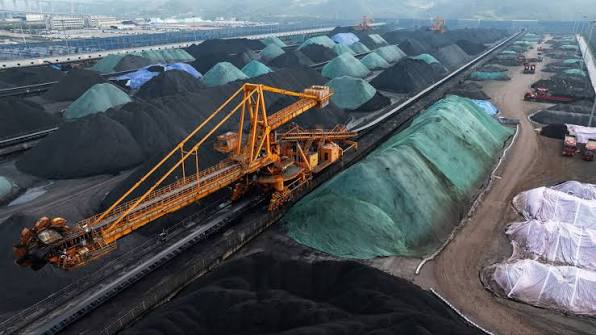
    Coal drops below half of China’s power mix for first time ever

    China has reached a turning point in its energy story. For the very first time, coal supplied less than half the country’s electricity over a six-month stretch, according to officials who spoke on Thursday. Between January and June, coal made up 49.7 percent of total power generation. That figure came from Xing Yiteng, a senior official at the energy administration’s planning office. It marks a steep fall from 65.5 percent back in 2016, based on earlier government data. Clean energy sources picked up the slack. Renewables reached 41.2 percent of the total mix, crossing the 40 percent line for the first time ever. Wind and solar alone made up nearly a quarter of all power generated, a huge leap from just under 10 percent in 2020. The remaining share came from natural gas and nuclear plants. Despite this progress, experts warn that coal use in raw terms might actually increase this year. Electricity demand across China is rising quickly, driven by more electric vehicles on the road, a boom in AI-related data centers, and steady growth in exports. Beijing has pledged that coal use will peak no later than 2030, with wind and solar expected to reach 30 percent of the power mix by then. Gao Yuhe, who works as a project manager at Greenpeace East Asia, thinks that milestone might actually arrive two years early, by 2028. She credited this to the rapid spread of home solar systems paired with battery storage, along with more flexible electricity markets that make better use of renewable supply. China still burns far more coal than most major economies, mainly because it has large domestic reserves and limited natural gas access. For comparison, coal accounted for just 17 percent of America’s utility-scale power output last year, with natural gas covering 41 percent. China’s coal reliance, though, remains lower than India’s, where coal and lignite made up 69 percent of electricity generation last year. Interestingly, China still imported close to 500 million metric tons of coal last year, even with domestic output reaching 4.83 billion tons, mostly to supply power plants along the coast. If coal consumption keeps falling, major exporters like Indonesia, Mongolia, Australia, and Russia could feel the impact, depending on global price trends. Meanwhile, coal remains central to China’s coal-to-chemicals industry, where many facilities continue relying on cheap, locally produced coal to stay competitive.

  • | |

    Barbie sequel talks hit roadblock as negotiations …

    The huge success of Barbie made a sequel seem almost inevitable. After all, the 2023 film became a global phenomenon, earning more than $1.4 billion at the worldwide box office and turning into one of Warner Bros.’ biggest hits ever. Fans quickly began asking when Barbie and Ken would return to the big screen. However, the road to a second film has become more complicated than many expected. Recent reports suggest that negotiations for a Barbie sequel have reached a major roadblock. Warner Bros. is reportedly still working to secure new agreements with key members of the original team, including director Greta Gerwig, co-writer Noah Baumbach, and stars Margot Robbie and Ryan Gosling. None of them were contractually committed to a sequel after the first film, meaning fresh deals must be negotiated before production can move forward.  Adding to the pressure is a reported deadline tied to the film rights. According to recent reports, Warner Bros. has until December to finalize arrangements for a sequel before certain rights could revert to Mattel, the company behind the iconic Barbie doll. That deadline has increased the urgency of the ongoing talks.  The creative side of the project has also played a role in the delay. Following the release of the original film, Greta Gerwig repeatedly said she did not have an idea for a sequel. She explained that she had poured everything into the first movie and was not thinking about a follow-up at the time. More recent reports, however, indicate that Gerwig and Baumbach may now have a potential story in mind, but they are reportedly keeping those details private while negotiations continue.  Money is believed to be another major factor in the discussions. Reports claim that salary demands and profit-sharing arrangements are among the issues slowing progress, with all sides trying to reach an agreement that reflects the original film’s enormous success.  Despite the current challenges, a sequel has not been ruled out. Industry insiders believe there is still strong interest from both the studio and the creative team to continue the franchise if the right deal can be reached. For now, fans will have to wait as negotiations continue behind the scenes, hoping Barbie’s next adventure eventually makes its way to theaters.

  • | |

    Lavrov’s ‘nice hairstyle’ reply …

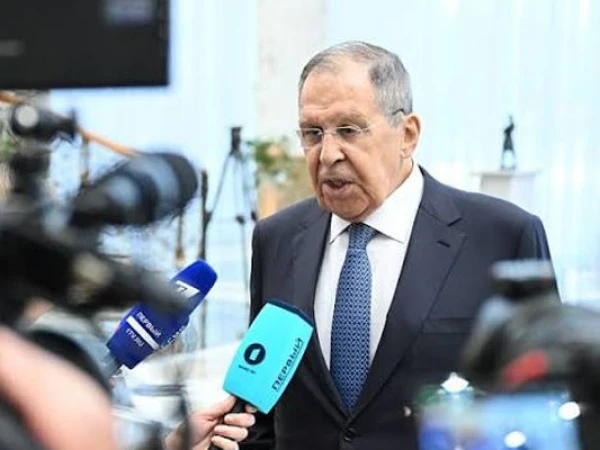
    Russian Foreign Minister Sergey Lavrov has gone viral on social media after responding to a journalist’s tough foreign policy questions with an unexpected compliment instead of an answer. The unusual moment took place during the ASEAN Regional Forum in Manila, Philippines, where Lavrov was approached by reporters following official meetings. A female journalist pressed the veteran diplomat with a series of sensitive questions covering Russia’s alleged support for Iran and Moscow’s position on ending the war in Ukraine. The reporter first asked whether Russia was helping Iran target American troops amid escalating tensions in the Middle East. She then followed up by asking if Moscow was prepared to agree to a ceasefire and peace negotiations with Ukraine. Rather than addressing either question, Lavrov continued walking calmly toward an elevator without breaking stride. As he reached the elevator doors, he briefly turned toward the journalist, smiled, and delivered a single unexpected remark. “Your hairstyle looks great,” he said before stepping into the elevator, leaving the reporter’s questions unanswered. The brief exchange was captured on camera and quickly spread across social media platforms, where it attracted millions of views and sparked widespread debate. Many users described Lavrov’s response as a classic example of diplomatic deflection, arguing that the seasoned foreign minister deliberately avoided commenting on politically sensitive issues without appearing confrontational. Others found the moment humorous, praising his composure and quick wit under pressure. Some social media users, however, criticized the response, saying it sidestepped important questions about international security and ongoing conflicts. The clip generated mixed reactions, with supporters calling it a clever diplomatic maneuver while critics argued that public officials should provide direct answers on major global issues. Lavrov, one of Russia’s longest-serving diplomats, is well known for his measured public appearances and his ability to navigate challenging media interactions. Throughout his career, he has frequently faced difficult questions from international journalists on issues ranging from the Ukraine conflict to Russia’s broader foreign policy. The latest viral moment once again highlighted how even a few unexpected words from a senior world leader can dominate online conversations. Whether viewed as a calculated diplomatic tactic, a light-hearted joke, or simply an attempt to avoid controversy, Lavrov’s short reply transformed an ordinary media encounter into one of the most talked-about moments of the ASEAN Regional Forum, proving that sometimes a single sentence can make bigger headlines than a lengthy press conference.

  • |

    Gianni Infantino defends World Cup 2026 amid criticism

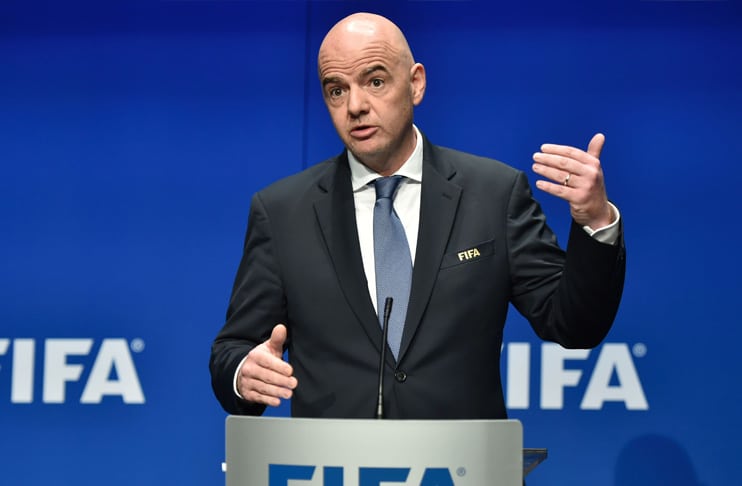
    FIFA President Gianni Infantino has issued a strong defence of the 2026 FIFA World Cup, accusing critics of focusing on controversy while overlooking what he described as a tournament that united millions of people around the world. In an open letter published on Monday and shared on his personal social media accounts as well as FIFA’s official platforms, Infantino responded to criticism surrounding the tournament, which was jointly hosted by the United States, Canada and Mexico and won by Spain. The FIFA chief argued that many detractors ignored the positive impact of the competition and instead concentrated on negative narratives. He praised the atmosphere created by fans and highlighted football’s ability to bring people together across generations. Addressing critics directly, Infantino wrote, “To all of you who missed watching kids, babies, grandparents, and parents come together for the beautiful game, I say sorry that the matches are now over and sorry that you missed all that joy and togetherness.” He continued, “Sorry that you were so consumed by hate and criticism that you missed it all.” The 56-year-old also appeared to criticise journalists and commentators, claiming that while FIFA had worked tirelessly to organise a successful tournament, others had focused on spreading misinformation. “To those behind their pens and papers, behind their screens spreading hate and false rumours, I want to say that while you are sitting behind, we at FIFA are on the front lines organising, working hard, and delivering the best show in the world,” he wrote. Infantino pointed to what he described as the tournament’s outstanding security record. According to the FIFA president, nearly seven million spectators from more than 200 countries attended matches throughout the competition. “We experienced no violence, no incidents, 100% safety and security, only joy and happiness,” he said. Despite the successful attendance figures, the tournament faced criticism over travel and visa restrictions affecting supporters and officials from several participating nations, including Iran, Haiti, Senegal and Ivory Coast. Somali referee Omar Artan was also reportedly denied entry to the United States after not receiving a visa. Responding to those concerns, Infantino said, “You mentioned the few people denied visas and overlooked the millions who were approved, from all parts of the world. Because football unites the world, and it was demonstrated impressively this summer.” The FIFA president also addressed debates over refereeing decisions, player suspensions and disciplinary rulings during the tournament. He argued that controversial officiating is common across football and questioned why FIFA had received such intense scrutiny. “Potentially mistaken red or yellow cards or subsequent decisions not to ban players in certain situations are routine and widely accepted in some of the biggest leagues worldwide,” he said, adding, “It’s curious that the same countries employing these practices are the ones criticising.” Concluding his message, Infantino urged critics to focus on football’s ability to unite people rather than dwell on controversy. “To those spending their time and energy hating us, please take a moment to reflect, meditate, pray, or watch a football match and truly observe the faces, the eyes, the emotions,” he wrote, ending with the message, “May football rise above all hate.”

  • | |

    Tarar calls for stronger narrative against terrori…

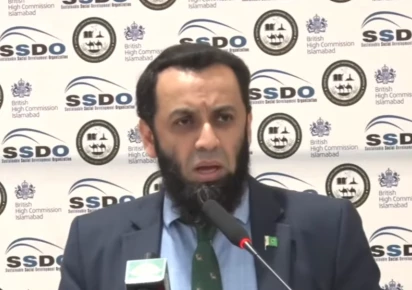
    Information Minister Attaullah Tarar has called for a stronger national effort to counter terrorism, extremism and misinformation, saying Pakistan’s fight against militancy cannot be limited to security operations. Addressing a capacity-building workshop in Islamabad, Tarar said the country also needed to win the battle of narratives by addressing misinformation and reducing the gap between public perception and facts. He said Pakistan had made considerable progress against terrorism through coordinated efforts by the federal and provincial governments, security forces and other state institutions. The National Action Plan, he added, had played an important role in bringing stakeholders together. According to Tarar, Pakistan’s security situation had improved significantly by 2017, allowing economic activity and investment to recover. However, he argued that a subsequent policy shift weakened years of counter-terrorism efforts. The minister stressed that national security policies should have continuity and should not change with changes in government. He called for political parties to develop consensus on major national policies so that long-term strategies could continue regardless of which party was in power. Tarar also highlighted the importance of Pakistan’s international narrative. He said the country had suffered heavily from terrorism and had made significant sacrifices involving security personnel, political figures, professionals and civilians. He said Pakistan had increasingly used international media platforms to present its position and challenge what it described as misleading narratives about terrorism and regional security. Discussing tensions with India following the Pahalgam incident, Tarar questioned the version of events presented by New Delhi. He reiterated Pakistan’s call for a transparent and internationally conducted investigation and said the country had sought to address the issue through diplomatic and media channels. The minister said terrorism had no religion, colour or ethnicity and maintained that the state would not allow violent groups to impose their ideologies on society. He warned that militant organisations were increasingly shifting their focus towards vulnerable and “soft” targets after facing pressure from security forces. He cited the Jaffar Express attack as an example and praised security agencies for their response. Tarar also raised concerns over the role of digital platforms in spreading extremist material and misinformation. He said the government was strengthening its legal and institutional mechanisms to deal with cybercrime and harmful online narratives. He said a Digital Communication Department had been established using modern technologies, including artificial intelligence-based monitoring and speech-to-text systems, to identify emerging narratives in the digital space. According to the minister, provincial governments were also being offered assistance in establishing similar communication structures. Tarar said state institutions also needed to promote Pakistan’s positive image by highlighting its culture, tourism, music, cuisine and arts. He praised Pakistan Television for contributing to efforts aimed at presenting a broader image of the country. He also stressed the need for better communication and timely reporting from Balochistan. The government, he said, was willing to support television networks in establishing bureaux in the province’s southern districts. Speaking about Balochistan, Tarar said development and security remained key government priorities. He highlighted infrastructure and counter-terrorism measures and said political stability and economic development were essential to addressing long-term challenges. The minister also cited Rescue 1122 as an example of a public policy that continued beyond political changes. He argued that successful national programmes should be preserved and expanded rather than discontinued because of political differences.

  • |

    ICC removes Karim Khan over sex abuse allegations

    The International Criminal Court (ICC) has officially removed Chief Prosecutor Karim Khan after member states voted in favour of his dismissal over allegations of sexual misconduct. The decision marks a significant leadership change at the world’s top war crimes court, which has been under growing international scrutiny in recent years. The vote was taken by the Assembly of States Parties, the governing body of the ICC, following months of discussions over the allegations against the British lawyer. Khan had already stepped aside from his duties in June after an oversight process recommended further action. Karim Khan has consistently denied all allegations. His legal team said the decision to remove him was politically motivated and argued that he was not given a fair opportunity to defend himself during the proceedings. His lawyers maintained that an independent judicial panel had not found sufficient evidence to establish misconduct under the court’s legal framework. They claimed the final decision ignored those findings and raised concerns about the independence and credibility of the removal process. The development comes at a sensitive time for the ICC. Khan attracted global attention in 2024 after seeking arrest warrants for Israeli Prime Minister Benjamin Netanyahu and former Defence Minister Yoav Gallant over alleged war crimes and crimes against humanity linked to the conflict in Gaza. The move sparked strong reactions from Israel and the United States. Following the warrants, the administration of US President Donald Trump imposed sanctions on Khan and several other ICC officials, increasing pressure on the court. Legal representatives for Khan argued that the prosecutor was removed while facing international political pressure and economic sanctions, suggesting that the circumstances surrounding the vote could affect the court’s independence. The ICC announced that Deputy Prosecutors Nazhat Shameem Khan and Mame Mandiaye Niang will jointly lead the Office of the Prosecutor until a new chief prosecutor is elected. The court said the process to select Khan’s successor will begin soon, but member states are not expected to elect a permanent replacement before next year. The ICC also clarified that Karim Khan’s removal will not affect existing investigations or previously issued arrest warrants. The warrants issued in 2024 against Israeli officials remain legally valid because only ICC judges have the authority to cancel or withdraw them. The court reaffirmed its commitment to conducting independent and impartial investigations despite the leadership change. It said its work to investigate alleged war crimes, crimes against humanity and genocide in different parts of the world will continue without interruption.

Leave a Reply

Your email address will not be published. Required fields are marked *