lavrov8217s 8216nice hairstyle8217
| |

Lavrov’s ‘nice hairstyle’ reply …

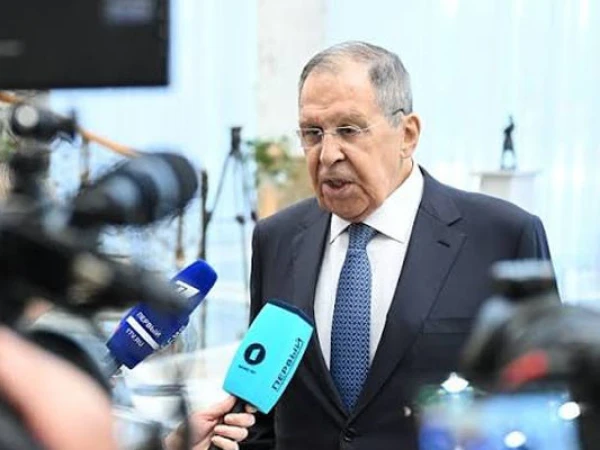
Russian Foreign Minister Sergey Lavrov has gone viral on social media after responding to a journalist’s tough foreign policy questions with an unexpected compliment instead of an answer.

The unusual moment took place during the ASEAN Regional Forum in Manila, Philippines, where Lavrov was approached by reporters following official meetings. A female journalist pressed the veteran diplomat with a series of sensitive questions covering Russia’s alleged support for Iran and Moscow’s position on ending the war in Ukraine.

The reporter first asked whether Russia was helping Iran target American troops amid escalating tensions in the Middle East. She then followed up by asking if Moscow was prepared to agree to a ceasefire and peace negotiations with Ukraine.

Rather than addressing either question, Lavrov continued walking calmly toward an elevator without breaking stride. As he reached the elevator doors, he briefly turned toward the journalist, smiled, and delivered a single unexpected remark.

“Your hairstyle looks great,” he said before stepping into the elevator, leaving the reporter’s questions unanswered.

The brief exchange was captured on camera and quickly spread across social media platforms, where it attracted millions of views and sparked widespread debate.

Many users described Lavrov’s response as a classic example of diplomatic deflection, arguing that the seasoned foreign minister deliberately avoided commenting on politically sensitive issues without appearing confrontational. Others found the moment humorous, praising his composure and quick wit under pressure.

Some social media users, however, criticized the response, saying it sidestepped important questions about international security and ongoing conflicts. The clip generated mixed reactions, with supporters calling it a clever diplomatic maneuver while critics argued that public officials should provide direct answers on major global issues.

Lavrov, one of Russia’s longest-serving diplomats, is well known for his measured public appearances and his ability to navigate challenging media interactions. Throughout his career, he has frequently faced difficult questions from international journalists on issues ranging from the Ukraine conflict to Russia’s broader foreign policy.

The latest viral moment once again highlighted how even a few unexpected words from a senior world leader can dominate online conversations.

Whether viewed as a calculated diplomatic tactic, a light-hearted joke, or simply an attempt to avoid controversy, Lavrov’s short reply transformed an ordinary media encounter into one of the most talked-about moments of the ASEAN Regional Forum, proving that sometimes a single sentence can make bigger headlines than a lengthy press conference.

Similar Posts

  • |

    TikTok star Sydney Towle dies at 26 after cancer battle

    Sydney Towle, a popular TikTok creator who documented her battle with a rare form of cancer, has died at the age of 26 after a nearly three-year fight with the disease. Her family confirmed that the American influencer passed away on Thursday due to complications from cholangiocarcinoma, a rare and aggressive cancer of the bile ducts that had spread to other parts of her body. The heartbreaking news was shared by her brother, Austin, in a video posted on TikTok. He said Sydney died peacefully after enduring an incredibly difficult journey with the illness. “Syd went peacefully last night after an almost three-year-long battle with cholangiocarcinoma,” Austin said in the emotional announcement, thanking supporters for standing by the family throughout her treatment. Sydney had built a loyal online community of more than 200,000 followers across social media platforms, where she openly documented her cancer journey. Through regular updates, she shared the physical and emotional realities of living with a life-threatening illness while encouraging others to remain hopeful in the face of adversity. Rather than focusing solely on her diagnosis, Sydney used her platform to educate people about rare cancers and the importance of recognizing symptoms early. She frequently urged followers to advocate for their own health, seek medical advice when something felt wrong, and never ignore persistent health concerns. In a statement released after her passing, her family expressed immense pride in the courage and determination she displayed throughout her battle. “We are so proud of how hard Sydney fought and for sharing her journey with so many people,” the statement read. The family also said that Sydney was deeply committed to raising awareness about rare cancers and inspiring others through her story. They pledged to continue honoring her legacy by supporting the causes she cared about and ensuring her message reaches more people. “Sydney wanted to raise awareness for rare cancers and was passionate about promoting self-advocacy. We will continue her legacy and honor her in every way we can,” they added. Just a few months before her death, Sydney posted videos from the hospital while receiving treatment for complications related to her illness. Despite the pain and uncertainty she faced, her videos reflected resilience, gratitude, and optimism, qualities that resonated with thousands of followers. Her candid updates, positive outlook, and willingness to share vulnerable moments earned her admiration from people around the world. Many supporters credited her with helping them better understand the realities of cancer while inspiring them to remain hopeful during their own struggles. Following the announcement of her death, tributes poured in across social media, with fans remembering Sydney as a courageous young woman who transformed her personal battle into a source of strength and awareness for others. Her advocacy for rare cancer research, patient empowerment, and early diagnosis leaves behind a lasting legacy that continues to inspire countless people.

  • | | |

    Fake spiritual guru arrested in Pune over alleged …

    A 23-year-old man posing as a motivational speaker, social media influencer and spiritual guide has been arrested in Pune, India, over allegations of obtaining private images of a 22-year-old woman and later using them to harass and threaten her. According to Indian media reports, police launched an investigation after the woman filed a complaint against the accused, identified as Divya Jitendra Parmar. Police subsequently arrested the suspect and seized a mobile phone and laptop believed to have been used in the alleged offence. Investigators said the accused had built an online persona portraying himself as a trusted motivational speaker and spiritual figure. He allegedly contacted the woman through social media and gradually gained her confidence. According to the complaint, the accused later told the woman that she needed to follow a particular method to remove what he described as negative energy from her body. Under this pretext, he allegedly persuaded her to share private images and follow certain physical exercises. Police allege that the accused subsequently used the images to harass the woman and threatened to circulate them if she refused to establish a sexual relationship with him. The woman then approached police and lodged a complaint. During the investigation, authorities reportedly seized the suspect’s mobile phone and laptop, along with photographs, videos, messages and other digital evidence. Police are examining the material to establish the full circumstances of the case. Investigators are also looking into whether the accused may have targeted other women using a similar method. This aspect of the investigation could determine whether the alleged incident was isolated or part of a wider pattern of online manipulation. The case has also highlighted the risks associated with individuals who use social media to build false identities and gain the trust of vulnerable people. Authorities have increasingly emphasized the importance of verifying online identities and reporting threats involving private images. Police have registered a case against the accused under relevant provisions of the Bharatiya Nyaya Sanhita (BNS) and the Information Technology Act. The investigation remains ongoing, and the allegations will be subject to the legal process. The case serves as another warning about the misuse of private digital content and the dangers of trusting unverified online personalities who claim to offer spiritual, motivational or personal guidance.

  • | |

    Sharjeel Memon turns to NCCIA over social media al…

    KARACHI: Senior Sindh Minister Sharjeel Inam Memon has approached the National Cyber Crime Investigation Agency (NCCIA) over what he described as a social media campaign aimed at damaging his reputation and that of his son, Rawal Memon. Memon filed a written complaint with the cybercrime agency on August 9, seeking an investigation into what he termed false, fabricated and malicious claims circulating online. The controversy centres on social media allegations linking Memon to a guesthouse in Gulistan-e-Jauhar, Karachi, where Mir Ali Raza was allegedly tortured and killed. Posts circulating on social media claimed that the property was owned by the Sindh minister. Taking notice of the allegations, Memon urged the NCCIA to investigate the matter and determine the facts behind the claims. He also expressed his willingness to cooperate fully with the authorities during the investigation. The minister’s complaint comes as scrutiny surrounding the Mir Ali Raza case continues to generate discussion on social media, with competing claims being circulated online.

  • Police SWAT Team Takes Down One of Thailand’s Most Wanted Murder Suspects

    BANGKOK –  A Police SWAT team has successfully captured a highly sought-after murder suspect after a long hunt in northeastern Thailand’s Sisaket province. The man had been hiding from regional law enforcement officers for nearly two full years. He was even ranked 74th on the Royal Thai Police’s official most-wanted criminal calendar. The daring arrest […]

  • |

    Pakistan targets 90% clean electricity by 2035, says Awais Leghari

    Federal Minister for Power Awais Leghari outlined Pakistan’s long-term strategy to transform its electricity sector, setting an ambitious target of raising the share of clean energy in the national power mix to 90 percent by 2035. The announcement came during the Solar, Storage and Flexibility 2026 Conference, where the minister also highlighted key policy hurdles, including restrictions under Pakistan’s International Monetary Fund (IMF) programme that are delaying the introduction of a market-based electricity pricing mechanism. Speaking at the conference on Tuesday, Leghari said the government was pursuing a major shift in energy policy by moving away from a traditional generation-focused model towards a system centred on grid flexibility, energy security, battery storage and domestic manufacturing. He said the new approach is designed to reduce Pakistan’s dependence on imported fuels, shield consumers from volatile global energy prices and maximise the benefits of the country’s rapidly expanding solar sector. The minister said Pakistan has witnessed remarkable growth in rooftop solar installations, with nearly 38 gigawatts of distributed solar capacity now installed through private consumer investment. He described the rapid adoption of rooftop solar as one of the country’s biggest energy success stories but cautioned that it has also created new challenges for the national power system. According to Leghari, Pakistan generates significant amounts of electricity from solar energy during daylight hours, yet the absence of sufficient battery storage infrastructure prevents that surplus electricity from being utilised during evening peak demand. He stressed that without modern storage systems, the country would continue to struggle with balancing electricity supply and demand despite having abundant renewable energy resources. Referring to disruptions in Re-gasified Liquefied Natural Gas (RLNG) supplies earlier this year, the minister said the episode exposed Pakistan’s continued dependence on imported fuels. He noted that the interruption in fuel supplies led to electricity shortages and load shedding even though ample solar power was available during the daytime, highlighting the urgent need for large-scale energy storage. “Battery storage is no longer an optional technology—it has become a strategic national asset that is essential for ensuring Pakistan’s energy sovereignty,” Leghari said. He noted that clean energy sources, including hydropower, nuclear, wind and solar, currently contribute approximately 55 percent of Pakistan’s total electricity generation. However, he warned that achieving the government’s renewable energy targets would require significant investment in battery storage systems, transmission infrastructure and power market reforms. The minister emphasised that expanding renewable generation alone would not be sufficient unless supported by a modern electricity network capable of storing and transmitting clean energy efficiently. To support the country’s long-term energy transition, Leghari announced a three-point strategy. The plan includes expanding battery energy storage systems across the national grid, encouraging local battery manufacturing and assembly to reduce reliance on imports while creating employment opportunities, and introducing regulatory reforms aimed at providing long-term certainty and confidence for domestic and foreign investors. During a question-and-answer session following his address, the minister also disclosed that Pakistan’s commitments under the IMF programme currently limit the government’s ability to introduce a fully flexible, market-based electricity tariff system. He explained that the government has been in discussions with the IMF for several months regarding the introduction of a time-of-use tariff, under which electricity prices would vary according to the actual cost of power generation at different hours of the day. Such a system, he said, would encourage consumers to shift electricity consumption to off-peak periods, reduce pressure on the national grid and help integrate renewable energy more efficiently.

Leave a Reply

Your email address will not be published. Required fields are marked *