delhi internet cut
|

Delhi internet cut as student protests escalate

The Indian government has reportedly suspended mobile internet services in several parts of central New Delhi as nationwide protests over examination paper leaks continue to gain momentum. The move came amid heightened security and growing demonstrations led by students and youth groups demanding accountability over alleged irregularities in the country’s examination system.

According to informed sources, telecom companies were instructed to disable mobile data services in and around the main protest sites in central Delhi. The internet restrictions affected thousands of residents, commuters and businesses in the area.

The suspension caused significant disruption to daily life. Shopkeepers, restaurants and street vendors reported difficulties accepting digital payments because many businesses in India rely heavily on internet-based payment systems. Residents also experienced problems accessing online services and communication platforms.

The protests have continued for more than a month, with students camping in central Delhi and demanding the resignation of Education Minister Dharmendra Pradhan. Demonstrators accuse the government of failing to prevent examination paper leaks that reportedly affected nearly two million students across the country.

Student leaders say the paper leak scandal has seriously damaged confidence in India’s examination system and has put the future of millions of young people at risk. They insist the demonstrations will continue until those responsible are held accountable and meaningful reforms are introduced.

Prime Minister Narendra Modi recently addressed the controversy and promised strict action against individuals involved in examination fraud. He said the future of India’s youth remains a national priority and announced plans to establish fast-track courts to ensure speedy trials in paper leak cases.

However, opposition leaders argued that the government’s response does not go far enough. Congress leader Rahul Gandhi renewed his demand for the dismissal of Education Minister Dharmendra Pradhan, accusing the government of failing to protect the country’s education system and the interests of students.

The demonstrations intensified after security forces attempted to stop protesters marching toward Parliament during the monsoon session. Police used tear gas and batons to disperse crowds after protesters tried to breach security barriers. Clashes later broke out, leaving scores of protesters and security personnel injured.

Following the unrest, authorities increased security across central Delhi by deploying additional police personnel, strengthening barricades and monitoring key government buildings to prevent further violence.

The protest movement, which initially focused on examination paper leaks, has gradually expanded into a broader campaign highlighting concerns over unemployment, educational opportunities and governance. Protest organisers say the issue is no longer limited to examination irregularities but has become a wider movement demanding transparency, accountability and reforms.

Similar Posts

  • The US-brokered security framework between Lebanon and Israel

    In a historic geopolitical turn of events, representatives from Lebanon and Israel signed a milestone, United States-brokered framework agreement in Washington. The landmark accord aims to establish a structured pathway toward ending ongoing armed conflict, restoring territorial integrity, and enforcing a lasting cessation of hostilities across their shared southern border. While diplomats have hailed the deal as an unprecedented step forward for regional stability, it has simultaneously ignited fierce domestic political debates and public outcry over sovereignty, security, and national defense. Negotiated over several rounds of high-level talks overseen by American officials, the framework establishes a phased operational roadmap designed to reshape the security dynamic along the border. The Israeli Defense Forces (IDF) are slated to progressively pull back from designated areas in southern Lebanon. Initial security sectors, known as pilot zones, will be created where control is formally transferred to standard state forces. Units from the Lebanese Armed Forces (LAF) will assume exclusive security responsibilities in these cleared zones, asserting the government’s monopoly on weapons and defense operations. Under international oversight, the Lebanese government commits to consolidating armed power under state institutions and overseeing the eventual dismantling of non-state armed infrastructure, specifically targeting Hezbollah’s military apparatus. Despite the diplomatic milestone celebrated in Washington, the agreement has met intense polarization within Lebanon. Opponents and vocal social commentators accuse the state leadership of capitulating to foreign pressure, arguing that making Israeli withdrawal contingent upon the disarming of local resistance groups compromises national defense while Israeli troops remain stationed on Lebanese territory. Critics assert that such concessions disproportionately favor foreign security interests at the expense of displaced southern residents who have borne the brunt of military strikes and displacement. Conversely, supporters of the Lebanese central authority emphasize that the country cannot endure perpetual conflict and economic paralysis. Proponents argue that reclaiming exclusive state sovereignty over military decisions is essential for securing international financial assistance, starting the rebuilding of devastated infrastructure, and allowing hundreds of thousands of displaced civilians to safely return to their homes in the south. Beyond the immediate security perimeter, the framework signals a broader effort by international mediators to reconfigure security structures in the Levant. By tying economic revitalization and diplomatic normalization to strict military compliance, Western nations hope to dismantle non-state proxy networks and prevent wider regional war spillover. However, significant hurdles remain. The execution of the agreement depends heavily on whether the Lebanese military possesses sufficient operational capability and political backing to execute its mandate without sparking internal civil strife. Furthermore, continuous monitoring mechanisms led by international entities will be critical to verify that both parties adhere to the standstill terms and avoid accidental escalations during the delicate troop transition phases. As diplomatic delegations prepare for follow-up implementation rounds, the coming months will test whether this framework represents a genuine turning point toward lasting peace or merely a brief intermission in a long-standing regional feud.  

  • | |

    Yasir Nawaz’s sister says ‘Dar-e-Nijat’ mirr…

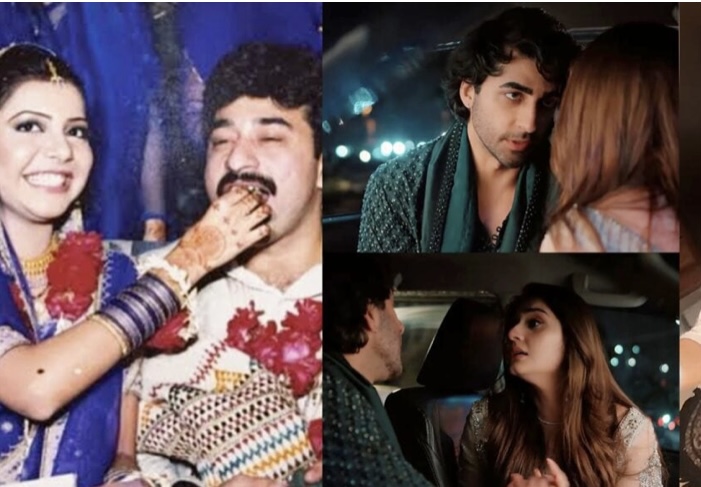
    Pakistani drama Dar-e-Nijat has caught viewers’ attention with its emotional storyline, spiritual themes and complicated relationships. But the drama recently became even more personal after Anzalna Nawaz, sister of actor and director Yasir Nawaz, revealed that the early part of the story strongly resembles her own teenage experience. Anzalna, a social media influencer, said she started watching Dar-e-Nijat partly because she admires actor Sheheryar Munawar. However, she quickly noticed similarities between the drama’s central character, Zaryab, and her own younger self. She admitted that, like Zaryab, she was once deeply in love as a teenager. (Reviewit.pk⁠) According to Anzalna, the boy she loved was also in college. She recalled one particularly impulsive moment from her youth when her family was preparing for Yasir Nawaz’s engagement. While her relatives were busy attending the celebrations at Nida Yasir’s family home, Anzalna secretly left to meet her boyfriend. She said she even went to his car and persuaded him to meet her. Looking back, Anzalna described her behavior as foolish and admitted that she did not think about her father or her three brothers at that moment. The incident was especially significant because Anzalna came from a conservative Baloch family. She explained that she was the only daughter and had always been treated with considerable affection by her family. Her father, however, strongly disapproved of the boy she loved. (Reviewit.pk⁠) When Anzalna returned home, the family celebration was still taking place. Her brothers were angry, while her father reportedly remained quiet but was deeply disappointed by what had happened. Today, Anzalna looks back at that period with regret. She acknowledged that she had allowed her feelings for someone to become more important than a special family occasion. She also suggested that the boy was ultimately not worth the sacrifices she made for him. This personal confession gives Dar-e-Nijat an interesting emotional dimension. The drama follows Zaryab, a young woman whose intense romantic attachment becomes part of a much larger journey involving family expectations, relationships and spirituality. The series, written by Umera Ahmed, explores the contrast between worldly desires and spiritual growth. (Pakistani Cinema⁠) Anzalna’s revelation does not mean that Dar-e-Nijat is officially based on her life. Rather, she has identified a striking resemblance between its early storyline and her own teenage experiences. Her confession also highlights why stories about young love can feel deeply personal. Teenage relationships can make emotions feel overwhelming, sometimes causing people to make decisions they later reconsider. For Anzalna, Dar-e-Nijat appears to have brought back memories of a chapter she now views with greater maturity. Her willingness to discuss those mistakes publicly has also made viewers curious about what happened next in her real-life story. She has hinted that there are more details she may share in the future, leaving audiences waiting to hear the rest of her personal journey.

  • |

    How K-pop stars turned concert stages into runways for luxury fashion

    Fashion and music have always crossed paths, but K-pop has taken that relationship to a whole new level. Red carpets and front-row seats used to be where haute couture made its mark, but now concert stages are doing the same job. Every costume change is planned down to the last detail, every embellishment is built to catch the light, and every custom outfit says something about who the artist is. BTS’s ongoing ‘ARIRANG’ tour and ‘BLACKPINK’s’ solo shows have both proven that concert fashion is officially having its moment. What is more, luxury houses are not just dressing these artists anymore, they are designing with them, turning performance costumes into genuine collector’s pieces. For brands, a sold-out world tour means access to a massive, engaged audience eager to study every seam and fabric choice, a crowd that’s often broader than the one watching from the front row at a runway show. K-pop concert looks now blend ready-to-wear, couture and performance-first design, and they have to survive far more than just a photo op. Outfits need to hold up through intense choreography while still fitting the artist’s public image and giving fans something to freeze-frame in fan edits. Stylists are increasingly pulling from designer archives or commissioning fully custom pieces to keep things exclusive. BTS’s Paris tour stop was a masterclass in this. V leaned into Celine’s Parisian tailoring, J-Hope brought youthful energy to Louis Vuitton’s classic menswear, and Jimin wore four custom Dior looks spanning fringed knitwear to Napoleon-inspired jackets. Jin and RM turned to Gucci for leather-and-crystal ensembles, Suga went with a beaded Givenchy suit, and Jungkook wore custom Balenciaga pieces pulled from the label’s latest collections. BLACKPINK’s members have been just as bold. Lisa’s Swarovski-crystal catsuit from her Chicago show later ended up on display at Swarovski’s own crystal museum in Austria. Jennie leaned into archival fashion, wearing vintage Chanel pieces from the Karl Lagerfeld years, while Jisoo and Rosé spotlighted Asian designers, choosing Malaysia’s Ivan Yong and Seoul-based Gyouree Kim respectively. TWICE worked with New York designer Kim Shui for futuristic, metallic-heavy looks, while G-Dragon continues to blur the line between fashion and performance entirely, recently mixing bespoke Chanel tweed with an Amiri sequin suit. Together, these artists are proving that concert wardrobes can be just as fashion-forward as anything seen on a runway.

  • | | |

    Naqvi tells tycoons: Stop funding politicians

    Federal Minister Mohsin Naqvi has called for sweeping structural reforms, warning that Pakistan cannot overcome its long-standing economic and governance challenges without fundamental changes to the country’s political and administrative systems. Speaking at the First Pakistan Investment Summit in Islamabad, Naqvi said the existing governance structure has become outdated and is no longer capable of meeting the country’s growing economic needs. He cautioned that without meaningful reforms, Pakistan could still be facing the same problems a decade from now. Addressing business leaders and investors, the minister said responsibility for the current state of affairs does not rest solely with politicians. He argued that the business community also plays a significant role in sustaining the existing system by financing political campaigns. Naqvi urged business leaders to stop funding political parties during elections and instead push for greater transparency, accountability and institutional reforms. He said reducing financial dependence on wealthy donors could help strengthen democratic institutions and improve governance. The minister also stressed the need to reduce Pakistan’s reliance on foreign loans. He said the country must focus on generating domestic resources, expanding investment and building a stronger economic foundation through long-term planning. Calling for national unity, Naqvi urged political parties to set aside differences and work together on a comprehensive reform agenda. He said lasting economic stability can only be achieved through collective decision-making and institutional improvements. Other speakers at the summit also highlighted the need for major administrative reforms. They argued that changes in governance structures, including decentralisation and stronger regional administration, could improve service delivery and reduce governance challenges. Business leader S.M. Tanvir said structural weaknesses continue to slow economic progress and called for fresh leadership and institutional reforms to strengthen the country’s administrative framework. Participants also expressed concern over Pakistan’s social and economic indicators. They noted that a large segment of the population continues to live below the poverty line, while unemployment remains a major challenge, particularly among young people. Several speakers said temporary welfare measures alone cannot address the country’s long-term economic issues. They called for policies that create sustainable employment opportunities, promote merit-based recruitment and equip young people with the skills needed to participate in the economy

  • |

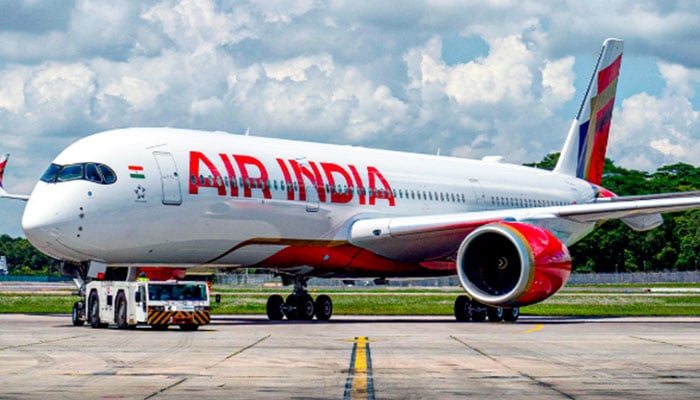
    Two more air India pilots fail initial drug tests

      Two more Air India pilots have failed preliminary drug screening following the incident involving an Air India flight from Phuket to Delhi. The airline has temporarily removed both pilots from flying duties while authorities await the results of their final tests. According to Indian media reports, Air India decided to conduct drug screening for all its pilots after the incident. More than 300 pilots have undergone testing so far, with final results generally taking between 24 and 48 hours. The captain of the Phuket-to-Delhi flight also failed two drug-related tests conducted after the aircraft landed. Subsequent testing reportedly detected cannabis in the pilot’s system. Indian media have also reported that a flight attendant complained that the captain had allegedly used cannabis before the flight. The development has raised further questions about safety procedures and pilot fitness at Air India. The airline is now reviewing the results of the wider testing campaign as it seeks to determine whether any other crew members may have violated aviation safety regulations. The Phuket-Delhi flight involved an Airbus A320neo that reportedly experienced a sudden loss of altitude during the journey. The aircraft dropped by around 300 feet before recovering, prompting concerns among passengers and crew. Officials initially described the incident as turbulence. However, detailed information from the aircraft’s systems later prompted closer scrutiny of what happened during the flight and raised questions about possible technical issues as well as the captain’s conduct. Air India has yet to receive the final laboratory results for the two newly identified pilots. Until those results arrive, the airline has kept both pilots off flight operations as a precautionary measure.

  • | | |

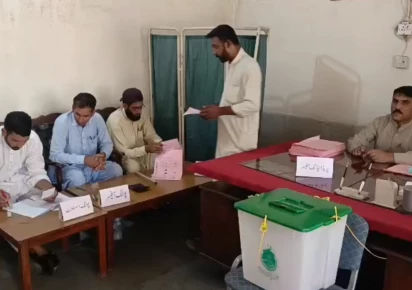
    AJK election results: PML-N, PPP in close contest

    Unofficial and preliminary results from the first phase of the Azad Jammu and Kashmir (AJK) Legislative Assembly elections have started to emerge, with the Pakistan Muslim League-Nawaz (PML-N) and Pakistan Peoples Party (PPP) locked in a close contest across several constituencies. The first phase covered 13 constituencies in Mirpur Division, including the districts of Mirpur, Kotli and Bhimber. Vote counting began after polling ended. The preliminary results from the constituencies are as follows: LA-1 Mirpur-I: Results from 17 of the 139 polling stations have been received. PML-N candidate Azhar Sadiq is leading with 1,692 votes. PPP candidate Muhammad Afsar Shahid is in second place with 1,482 votes. LA-2 Mirpur-II: Results from 34 of 149 polling stations have been reported. PPP candidate Qasim Majeed is ahead with 3,103 votes. PML-N’s Azeem Bakhsh Chaudhry has secured 2,409 votes and is in second place. LA-3 Mirpur-III: Results from 18 of 161 polling stations show PML-N candidate Chaudhry Muhammad Saeed leading with 2,265 votes. PPP candidate Chaudhry Yasir Sultan is second with 1,470 votes. LA-4 Mirpur-IV: Results from only two of 162 polling stations have been received. PML-N candidate Chaudhry Rukhsar Ahmed is leading with 327 votes. PPP candidate Chaudhry Sohaib Arshad has 223 votes. LA-5 Bhimber-I: Results from 15 of 176 polling stations show PPP candidate Chaudhry Parvez Ashraf in the lead with 2,310 votes. PML-N candidate Waqar Ahmed Noor is second with 1,767 votes. LA-6 Bhimber-II: Results from six of 195 polling stations have been received. Istehkam-e-Pakistan Party candidate Ali Shan Chaudhry is leading with 1,313 votes. PML-N candidate Chaudhry Muhammad Razzaq is second with 585 votes. LA-7 Bhimber-III: Results from 27 of 237 polling stations show PML-N candidate Chaudhry Tariq Farooq leading with 5,331 votes. Independent candidate Chaudhry Anwar-ul-Haq is second with 2,598 votes. LA-8 Kotli-I: Results from 10 of 155 polling stations show PPP candidate Zafar Iqbal Malik ahead with 1,221 votes. PML-N candidate Malik Muhammad Nawaz Khan is close behind with 1,174 votes. LA-9 Kotli-II: Results from one of 178 polling stations have been received. PML-N candidate Umair Naeem is leading with 534 votes, while PPP candidate Javed Iqbal Budhanvi has 25 votes. LA-10 Kotli-III: Results from 12 of 169 polling stations show PML-N candidate Fateh Mahmood-ul-Hassan leading with 1,649 votes. PPP candidate Chaudhry Muhammad Yasin has 1,330 votes. LA-11 Kotli-IV: Results from three of 206 polling stations have been received. PPP candidate Chaudhry Muhammad Akhlaq is leading with 489 votes. PML-N candidate Muhammad Asif has 294 votes. LA-13 Kotli-VI: Results from 67 of 193 polling stations show PML-N candidate Raja Ayaz Ahmed Khan leading with 10,389 votes. PPP candidate Muhammad Waleed Inqalabi is second with 8,785 votes. The results remain unofficial and could change as counting continues and results from the remaining polling stations are received. Claims of disruption in Bhimber PPP AJK Election Cell in-charge Sardar Abdul Shakoor claimed that disturbances took place at polling stations 119, 120 and 121 in LA-5 Barnala. He said the disruption affected the polling process. According to Shakoor, voting resumed after security forces reached the area. However, he said polling remained slow afterward. Raja Pervez Ashraf calls for action PPP leader Raja Pervez Ashraf expressed concern over alleged irregularities in several constituencies. He called for additional security personnel at sensitive polling stations, including locations in Gulpur, Thurochi and Muhajir Camp. Ashraf urged the Election Commission to take immediate and impartial notice of all complaints. He also called for steps to ensure that the elections remain free, transparent and fair. Police say polling remained peaceful The spokesperson for the AJK inspector general of police said polling in the first phase across Mirpur Division remained peaceful. The spokesperson said residents had rejected a call for a long march by a banned committee. Instead, voters chose to exercise their democratic right. Voters began arriving at polling stations soon after voting opened at 8am. AJK Inspector General of Police Liaquat Ali Malik thanked residents for cooperating with authorities and helping maintain peace during the electoral process. He warned that no one, including political workers, would be allowed to take the law into their own hands.

Leave a Reply

Your email address will not be published. Required fields are marked *