israeli banks plan
|

Israeli banks plan to end services for Palestinian banks raising fears of financial crisis

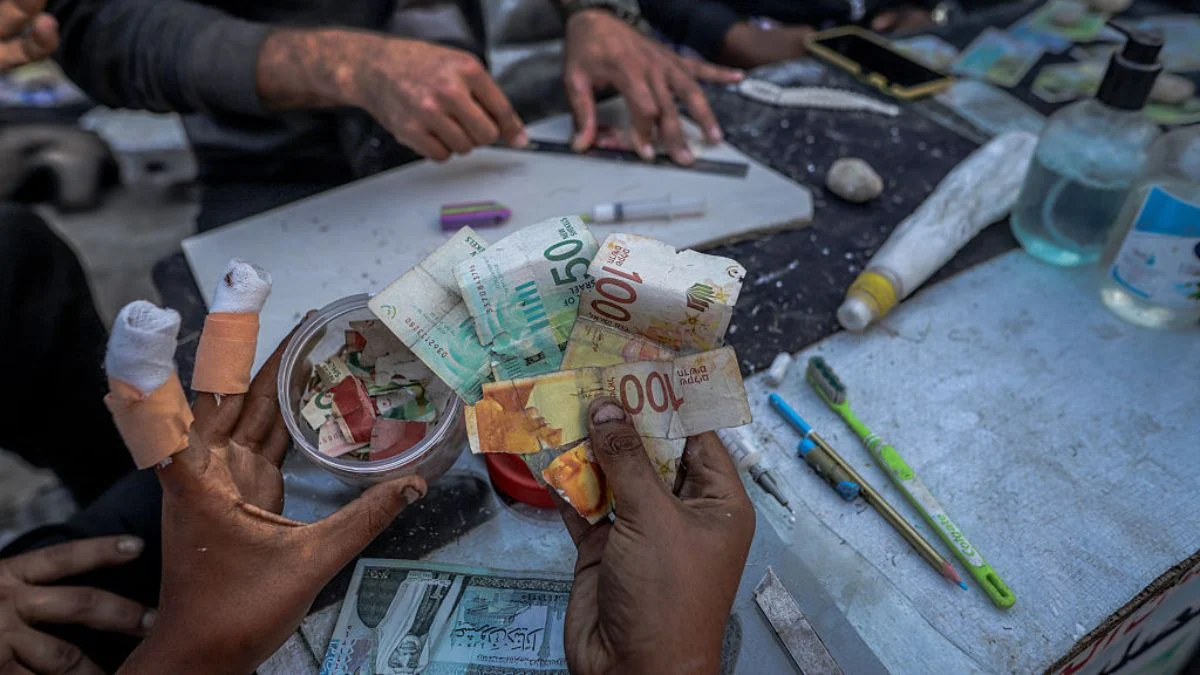
Israeli banks have informed Palestinian financial institutions that they plan to end key banking services within the coming weeks, a move that has sparked concerns about serious economic disruption in the occupied West Bank. Officials on both sides say the decision could affect trade, salaries, and the daily financial operations that rely on cooperation between the two banking systems.

The banking relationship allows Palestinian institutions to process transactions in Israeli shekels, the currency widely used in the Palestinian territories. These services are essential for paying for electricity, water, fuel, food imports, and other goods purchased from Israel. They also help transfer wages earned by thousands of Palestinians employed in Israel.

According to Palestinian banking officials, five local banks that depend on Israel’s Bank Hapoalim for correspondent banking services have been told those arrangements will end on August 13. Other Palestinian banks that work through Discount Bank have reportedly been informed that their services will stop on September 1 unless a solution is reached.

Israel’s Finance Ministry confirmed that both banks had announced plans to discontinue their correspondent banking services. The ministry said the decision reflects increasing legal and financial risks faced by Israeli banks while handling transactions for Palestinian institutions.

In a statement, the ministry said it is holding discussions with the banks to find a way to continue these services while protecting Israel’s economic and security interests. Officials are exploring options that would allow financial cooperation to continue under conditions that reduce legal exposure for the banks involved.

The banking arrangements have long depended on a government backed legal guarantee that shields Israeli banks from liability related to transactions carried out on behalf of Palestinian financial institutions. This protection is renewed every six months by the Israeli government.

However, banking officials say commercial lenders no longer believe the existing guarantees provide enough protection. They argue that the risks of possible money laundering claims or allegations linked to terrorist financing have increased over time. According to one Israeli banking official, the banks believe the responsibility should now be taken over directly by the government instead of remaining with private financial institutions.

Discount Bank confirmed that it had informed Israeli authorities of its concerns regarding the growing risks associated with these services. The bank said it has a responsibility to protect its depositors and shareholders while operating within an increasingly complex legal environment. Bank Hapoalim said the issue remains under review and did not provide further details.

Economic experts warn that ending these banking links could have serious consequences for the Palestinian economy. Without access to correspondent banking services, businesses and individuals may be forced to rely more heavily on cash transactions. That shift could weaken the formal banking sector, reduce financial transparency, and encourage the growth of an informal economy.

The decision could also place additional pressure on the Palestinian Authority, which already faces severe financial difficulties. The Authority depends heavily on local banks to finance public sector salaries and cover budget shortfalls. Financial analysts warn that if banks lose access to essential payment systems, the government’s ability to meet its financial obligations could be significantly weakened.

A Palestinian businessman with close connections to the banking sector said the stability of local banks is closely tied to the stability of the Palestinian Authority. He warned that serious disruption to the banking system could have wider political and economic consequences across the West Bank.

The latest development comes as the Palestinian Authority continues to struggle with reduced revenues after Israel suspended the transfer of customs and tax funds collected on its behalf. Those funds account for around two thirds of the Authority’s income, leaving its finances under increasing strain. Unless an agreement is reached soon, officials fear the planned banking cutoff could deepen the economic challenges already facing Palestinians in the occupied territory.
Similar Posts

  • |

    Shubman Gill returns to No.1 in ICC ODI batting rankings

    India captain Shubman Gill has reclaimed the No.1 position in the ICC Men’s ODI batting rankings after an outstanding run of form in the recently concluded three-match ODI series against England. The right-handed opener produced another impressive performance with the bat, scoring a total of 188 runs across the series. His consistency at the top of the order helped him climb back to the summit of the rankings, marking the third time in his international career that he has occupied the top spot among ODI batters. Gill’s return to the top was also influenced by New Zealand batter Daryl Mitchell, who missed the final two matches of his team’s ODI series against the West Indies because of injury. Mitchell’s absence prevented him from adding to his ranking points, allowing Gill to move ahead in the latest ICC update. The latest rankings also featured significant movements in both the batting and bowling charts across ODI and T20I cricket. Namibia spinner Bernard Scholtz emerged as one of the biggest gainers in the ODI bowling rankings. The experienced left-arm spinner climbed five places to seventh after delivering a series of impressive performances during Namibia’s ICC Men’s Cricket World Cup League 2 tri-series campaign in Utrecht against Nepal and the Netherlands. His consistent wicket-taking ability played a crucial role in Namibia’s successful campaign and earned him a place among the world’s leading ODI bowlers. Meanwhile, India’s teenage batting sensation Vaibhav Sooryavanshi continued his remarkable rise on the international stage. The youngster was named Player of the Series after a brilliant display in India’s T20I series against Zimbabwe. He scored 151 runs in just three innings while maintaining a stunning strike rate of 196.10, underlining his aggressive approach at the crease. Having played only six T20 internationals so far, Sooryavanshi made one of the biggest jumps in the latest rankings, soaring 230 places to reach 48th in the ICC Men’s T20I batting rankings. His rapid progress highlights his growing reputation as one of India’s most exciting young talents. India also enjoyed success elsewhere in the T20I batting rankings. Tilak Varma moved up two places to sixth after continuing his consistent performances in the shortest format, while Shreyas Iyer climbed seven positions to reach 24th following a productive series. The bowling rankings also witnessed notable changes. Zimbabwe fast bowler Blessing Muzarabani gained 10 places to move into 26th position after delivering impactful performances with the new ball. India leg-spinner Ravi Bishnoi also registered one of the biggest improvements of the week, jumping 31 places to claim the 41st spot in the T20I bowling rankings. The latest ICC rankings reflect recent performances across international cricket, with several players making significant progress through consistent displays. While Gill’s return to the top of the ODI batting rankings remains the biggest headline, the rise of emerging talents such as Sooryavanshi and the continued progress of bowlers like Scholtz, Muzarabani and Bishnoi highlight the growing competition across all formats of the game.

  • |

    OPEC+ expected to approve another oil output increase for September

    OPEC+ is widely expected to approve another increase in oil production when its members meet virtually on Sunday, as the alliance continues to adjust supply while global energy markets remain affected by ongoing geopolitical tensions. According to market analysts, Saudi Arabia, Russia and several other key members of the alliance are likely to raise their combined production target by around 188,000 barrels per day for September. If approved, the increase would continue a series of monthly production hikes introduced this year and is expected to mark the final step in the group’s current plan to gradually restore previously reduced output. OPEC+, which includes members of the Organization of the Petroleum Exporting Countries and allied producers, introduced major production cuts between late 2022 and 2023 after concerns that falling oil prices could weaken global energy markets. Those reductions removed nearly six million barrels of oil per day from the market in three separate phases. As demand gradually recovered, the group shifted its strategy by slowly increasing production, beginning in 2025, to balance supply while supporting market stability. A September increase would complete the reversal of the second package of production cuts introduced during that period. However, analysts note that higher production targets do not necessarily mean actual oil output will increase by the same amount. Several member countries are currently unable to reach their assigned quotas because of declining production capacity, ageing infrastructure or operational challenges. Energy analyst Giovanni Staunovo of UBS said many producers are already pumping below their official targets, making further quota increases less significant in practical terms. He noted that production capacity has declined in several member states, limiting their ability to take full advantage of higher output allowances. Regional tensions have also affected oil exports. Gulf producers continue to face challenges because shipping through the Strait of Hormuz has been disrupted during the conflict involving Iran. Although maritime traffic briefly improved after a memorandum of understanding between the United States and Iran was signed in June, transport through one of the world’s busiest oil routes remains uncertain. Russia is also dealing with production difficulties as repeated Ukrainian drone attacks have targeted parts of its energy infrastructure. Current Russian oil production remains close to nine million barrels per day, well below its official production target of 9.8 million barrels per day, highlighting the gap between quotas and actual output. Some OPEC+ members, including Iraq, have indicated they want to increase production significantly once conditions allow. At the same time, the alliance is reviewing the maximum sustainable production capacity of each member to help determine future output allocations. These discussions are expected to play an important role in setting production quotas for 2027 and beyond. Analysts believe negotiations over future production targets could become more challenging after the September meeting. While they say the alliance remains united for now, the departure of the United Arab Emirates from OPEC+ earlier this year has raised questions about the group’s long term cohesion. The UAE said its decision to leave was based on national interests and long term strategic goals, pointing to major investments aimed at expanding its oil production capacity beyond the limits previously set by the alliance. Despite these challenges, OPEC+ is expected to continue coordinating production policies in an effort to maintain stability in the global oil market as economic uncertainty and geopolitical tensions continue to influence energy demand and supply.

  • |

    SNGPL faces billions in losses after LPG air-mix project abandoned

    Pakistan’s state-owned gas utility, Sui Northern Gas Pipelines Limited (SNGPL), has incurred losses worth billions of rupees after a major liquefied petroleum gas (LPG) air-mix project was shelved despite substantial investments in land, equipment, and infrastructure. The issue surfaced during a recent meeting of the Economic Coordination Committee (ECC), where the Ministry of Energy (Petroleum Division) presented a detailed briefing on the fate of the long-delayed project and proposed options for utilising the idle assets. The LPG air-mix initiative was originally approved between 2016 and 2018 under the Pakistan Muslim League-Nawaz (PML-N) government to provide gas to remote and mountainous regions where extending conventional natural gas pipelines was either technically challenging or financially unviable. The project envisioned the installation of 16 LPG air-mix plants, backed by an estimated government subsidy of around Rs16 billion. However, after the Pakistan Tehreek-e-Insaf (PTI) government assumed office, concerns over the project’s financial sustainability prompted a review. In March 2020, the Petroleum Division informed the ECC that the scheme required substantial government support and would place an additional financial burden on already struggling gas companies. The committee was presented with two options: continue the project with government subsidies or abandon it altogether. On March 25, 2020, the ECC decided to halt the installation of all LPG air-mix plants where construction had not yet commenced. Despite this decision, SNGPL had already acquired land, imported specialised equipment, and completed procurement for several planned facilities, resulting in significant sunk costs. The Petroleum Division later sought clarification regarding three proposed plants in Drosh, Ayun, and Chitral, where procurement activities had already been completed. In December 2020, the ECC directed SNGPL to discontinue these projects as well and dispose of the purchased land and equipment through an open and transparent process while minimising financial losses. According to officials, SNGPL subsequently issued tenders on three separate occasions to sell the unused assets. However, the company failed to receive any serious offers. As a result, the equipment remains stored in Lahore, while the sale of land is still awaiting approval from the Board of Revenue, Khyber Pakhtunkhwa. The Petroleum Division informed the ECC that SNGPL now estimates approximately Rs60 million will be required merely to conduct an operational health assessment of the idle machinery before any future use can be considered. The original project was estimated to cost Rs2.775 billion over a 15-year period. Of this amount, Rs943 million was allocated for plant installation, land acquisition, and civil works, while another Rs1.832 billion was earmarked for developing a gas distribution network capable of serving around 12,000 consumers in Chitral. Financial projections prepared at the time painted a challenging picture. SNGPL estimated an annual revenue shortfall of Rs419 million in the first year, increasing to approximately Rs815 million by the sixth year. In addition, the cost of producing synthetic natural gas through the LPG air-mix system was projected at nearly Rs25,000 per million British thermal units (mmBtu) during the initial year of operations. Despite these concerns, the Petroleum Division has now proposed a revised and more cost-effective plan. Officials told the ECC that by redesigning the project, optimising engineering specifications, and utilising existing company resources, the overall capital requirement could be reduced significantly to Rs1.779 billion. The revised proposal includes cutting civil construction costs and using surplus pipeline materials already available in SNGPL’s inventory. The company also believes operational expenses can be lowered by reducing unaccounted-for-gas (UFG) losses based on operational experience from similar facilities in Gilgit, while also improving fuel and power efficiency. Under the updated estimates, the annual revenue deficit could decline to Rs119 million in the first year, rising to Rs432 million by the sixth year. Likewise, the cost of producing synthetic natural gas could be brought down to around Rs7,229 per mmBtu, assuming an initial consumer base of approximately 2,000 households. To avoid further financial losses and make productive use of equipment already purchased, the Petroleum Division has recommended that one LPG air-mix plant be established in Chitral, subject to a technical health assessment of the stored equipment and approval from the original equipment vendor.

  • |

    Pakistan boxer mysteriously disappears in Glasgow before flight home

    GLASGOW: A mystery has emerged following the conclusion of the Commonwealth Games after Pakistani boxer Qudrat Ullah reportedly disappeared from Glasgow just hours before the national squad was scheduled to fly back to Pakistan, prompting an investigation by the Pakistan Boxing Federation. According to federation sources, Qudrat Ullah failed to rejoin his teammates ahead of the team’s departure from Scotland. The boxer is believed to have gone missing approximately six hours before the group’s scheduled return flight, raising concerns among officials accompanying the contingent. The team had been instructed to assemble in the hotel lobby at 9 a.m. before leaving for the airport. However, when officials went to Qudrat Ullah’s room to escort him, they found it empty. Sources said he had last been seen in his room around 2 a.m., but by morning there was no sign of him. The circumstances surrounding his disappearance have deepened the mystery because his passport and return airline ticket were reportedly still in the custody of the team manager. Officials have not explained how the boxer could have left without the travel documents required for his scheduled journey home. The Pakistan Boxing Federation has confirmed that the athlete is missing and said the matter is under investigation. Federation officials are coordinating with relevant authorities to determine his whereabouts and establish the sequence of events leading to his disappearance. No official statement has yet been issued regarding whether local Scottish authorities have launched a formal search or whether there is any indication of foul play. Federation officials have urged caution, saying further details will be shared once the inquiry progresses. The incident has revived memories of a similar episode during the 2022 Commonwealth Games in England, when two Pakistani boxers reportedly separated from the national team and failed to return with the delegation. That case sparked debate over athlete monitoring during international competitions and the challenges sports federations face in ensuring team discipline while abroad. Qudrat Ullah’s unexplained disappearance is likely to draw renewed scrutiny of travel protocols for national teams representing Pakistan at major sporting events. As officials continue their investigation, questions remain over what happened in the final hours before the squad’s departure and when the missing boxer will be located.

  • | | | |

    PM Shehbaz directs timely implementation of privat…

    Prime Minister Shehbaz Sharif has directed all relevant ministries and institutions to ensure the timely implementation of targets and deadlines under the government’s privatisation programme, stressing the need for close coordination to complete the process according to schedule. The directives were issued during a meeting held to review progress on the privatisation of state-owned enterprises. The meeting was informed that a total of 27 public sector organisations have been included in the government’s privatisation agenda, which is being carried out in three phases. During the briefing, officials updated the prime minister on the progress of the privatisation of Islamabad, Lahore and Karachi airports, as well as several major public sector entities. The meeting also reviewed the privatisation process of electricity distribution companies, including the Islamabad Electric Supply Company (IESCO), Faisalabad Electric Supply Company (FESCO), and Gujranwala Electric Power Company (GEPCO). Officials informed the prime minister that Expressions of Interest (EOIs) have already been invited for all three companies. The deadline for investors to submit documents for FESCO has been set for August 7, while submissions for GEPCO will close on August 21. The deadline for IESCO is September 7, 2026. The briefing noted that several international companies have expressed interest in acquiring the power distribution companies. Officials added that roadshows and engagement sessions with potential investors are continuing to attract further investment. Prime Minister Shehbaz also reviewed the proposed privatisation of the Zarai Taraqiati Bank Limited (ZTBL) and directed authorities to design the transaction in a way that preserves the bank’s vital role in supporting Pakistan’s agricultural sector. He emphasised that the bank should continue providing agricultural loans and financial services to farmers even after privatisation. The prime minister said farmers’ access to financial resources is essential for increasing crop yields and improving agricultural productivity. He further stated that agriculture remains a key pillar of Pakistan’s economy and plays a critical role in ensuring food security. Therefore, any privatisation model should safeguard the sector’s long-term interests while maintaining uninterrupted financial support for farmers.

  • | |

    Karachi hosts D-8 Health Summit 2026

    The D-8 Health Summit 2026 begins today at the Karachi Expo Centre, bringing together representatives from the eight Developing Islamic Countries (D-8) to strengthen cooperation in the health sector. The three-day summit will continue until July 25. The international event is being organised jointly by the Ibn Sina Institute, the World Aging Council, and the Karachi Healthcare Expo and Conference. This year’s theme is “Healthy and Age-Friendly D-8 Countries.” The summit will focus on a wide range of healthcare issues, including health diplomacy, the challenges of an ageing population, preventive healthcare, healthy longevity, medical tourism, digital health, the impact of climate change on public health, and sustainable healthcare policies. A key highlight of the summit will be a keynote address by renowned gerontologist Dr Kamal Aydin. He will speak on “Global Health and Aging Diplomacy: A Future Vision for D-8 Countries,” presenting recommendations to promote international cooperation for developing healthy and age-friendly cities, particularly in the context of COP31. Dr Aydin, who completed his education at the University of the Punjab in 1996, has maintained close academic and professional links with Pakistan throughout his career. He is attending this year’s summit as President of the D-8 Health Summit 2026 and the honorary chief guest of the Karachi Healthcare Expo and Conference. In his message, Dr Aydin said it was a great honour to return to Pakistan, a country he considers his second home. He said it was gratifying to see the vision behind the Ibn Sina Institute and the World Aging Council, established nearly three decades ago, evolve into an international platform promoting global cooperation in health and ageing. He also thanked the organisers of the Karachi Healthcare Expo and Conference, including Tanveer Abbas, Dr Abid Abbas Sheikh, and their team, for their efforts in arranging the event. Alongside the summit, Karachi D-8 Healthcare Week 2026 is being held from July 20 to 27. The programme includes conferences, academic sessions, business-to-business meetings, investment discussions, innovation forums, and corporate social responsibility activities focused on healthcare and ageing. During the event, organisers will also launch an international signature campaign supporting the establishment of a United Nations World Assembly on Ageing. In addition, the Global Health and Aging Ambassadors Programme will be officially introduced.

Leave a Reply

Your email address will not be published. Required fields are marked *