tragic fate aurangzebs

The tragic fate of Aurangzeb’s rebellious daughter

In the residential quarters of Nawan Kot in Lahore stands a crumbling Mughal monument. To a casual bystander, it appears as little more than a neglected relic surrounded by modern brick houses and the distant roar of traffic from Multan Road. Yet, local legend fiercely protects this spot as the resting place of Princess Zeb-un-Nissa, the eldest daughter of the orthodox Mughal Emperor Aurangzeb. Historians, however, tell a very different story. Official records indicate that Zeb-un-Nissa died in Delhi at the Salimgarh Fort after two decades of imprisonment and was buried outside the Kashmiri Gate at the Tees Hazari gardens. Her original tomb was later dismantled during the British era to make way for a railway line. So how did a city hundreds of miles away come to claim this defiant, romantic princess as its own? The answer lies not in verified architectural blueprints, but in the psychological and political pulse of 17th-century Lahore.

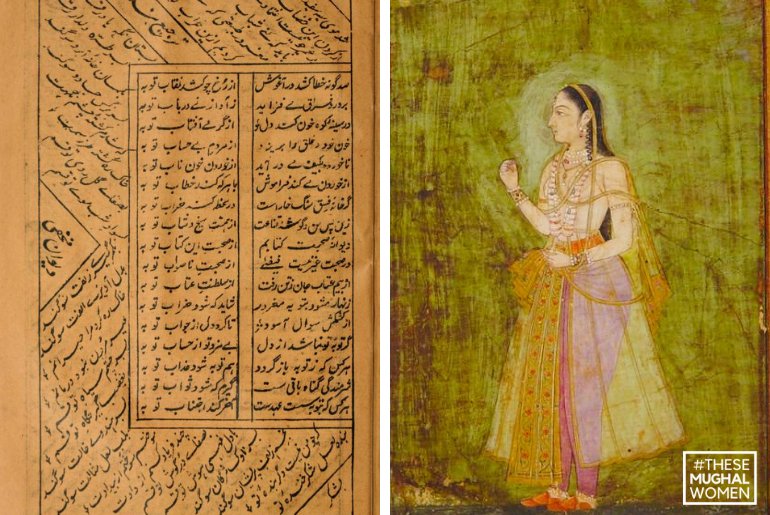
Zeb-un-Nissa was an anomaly in the puritanical Mughal court of her father. She was highly educated, exceptionally wealthy, a scholar of theology, and a devout patron of the arts. Under the secret pen name Makhfi (The Hidden One), she wrote expressive, Sufi-inspired poetry that directly challenged the orthodox ethos.

Her political inclinations further alienated her from her father. Zeb-un-Nissa had strong affinities for her uncle, Prince Dara Shikoh: Aurangzeb’s primary rival for the throne. It was originally betrothed to his son, Prince Suleiman Shikoh. After Aurangzeb executed both Dara and Suleiman during the violent war of succession, Zeb-un-Nissa reportedly vowed never to marry. Later in life, her secret correspondence supporting her rebellious younger brother, Prince Muhammad Akbar, ultimately led to her downfall and life imprisonment.

Lahore’s local folklore transformed her political tragedy into a narrative of star-crossed love. Popular stories in the city recount a passionate, poetic romance between Zeb-un-Nissa and Akil Khan Razi, the Governor of Lahore. According to local legend, after Emperor Aurangzeb forbade their union, the heartbroken princess renounced her royal luxury and retreated to a self-imposed prison in her private estate near Chauburji.

In this garden sanctuary, she allegedly ran a massive public kitchen (langar) to feed dervishes, beggars, and travelers, using poetic riddles on slips of paper to communicate with the needy and eventually, to secretly reconnect with her disgraced lover. When Aurangzeb discovered their continued meetings, legends claim he ordered Akil Khan’s brutal execution and permanently confined his daughter within the garden walls. While these romantic tales lack strict historical evidence, they reflect a deeper cultural reality. Lahore had been the favorite city of Dara Shikoh, who poured immense imperial funds into its cultural and architectural enrichment. When Aurangzeb seized power, executed Dara, and shifted the imperial capital away from the city, Lahore was left politically marginalized and financially neglected.

In an age where open political dissent against an absolute monarch was impossible, the citizens of Lahore used rumors, myths, and urban legends as their primary medium of protest. Zeb-un-Nissa: a brilliant woman who shared Dara Shikoh’s inclination toward Sufism, loved the city of Lahore. She publicly defied her father’s authority became the ultimate symbol of the city’s lost artistic spirit. By adopting her memory, attributing the Chauburji gardens to her patronage, and declaring the tomb in Nawan Kot as her final resting place, Lahore claimed the rebellious princess as its own. In doing so, the city permanently etched her spirit of resistance into its own historical identity.
 

Similar Posts

  • 106 Shark tattoos win woman guinness World record

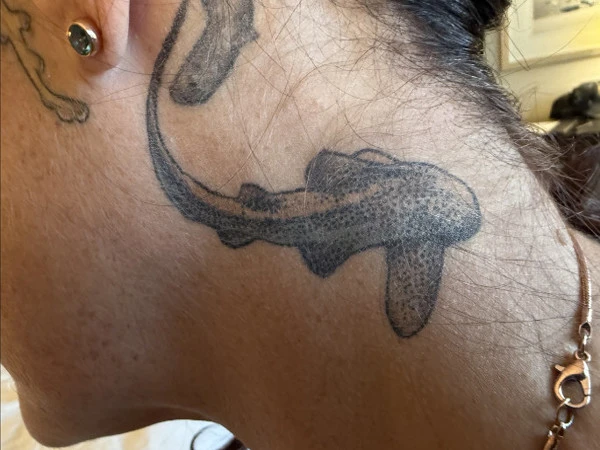
    An American woman has earned a Guinness World Record after covering her body with 106 shark tattoos turning her lifelong passion for sharks into a record breaking achievement. Emily Morrison from the U.S. state of Maine, received the Guinness World Records title in May for having the most shark tattoos on a woman’s body. Emily is a shark biologist and also owns a company that offers shark fossil diving tours. Known as “Shark Lady Emily,” she said her love for sharks began when she was just eight years old. After watching the movie Jaws she became afraid of sharks.  Her father encouraged her to learn about real sharks by reading books from the library and her fear soon turned into fascination. Over the years Emily has had many close encounters with sharks.  She has fed tiger sharks and great hammerhead sharks in the Bahamas gone cage diving with great white sharks in Australia and swum with whale sharks off the coast of Mexico. Emily is also set to appear in a special program called “My Strange Shark Addiction” during Discovery Channel’s annual Shark Week where she will share her unique journey and passion for sharks.

  • Why does food make your mouth water

    Have you ever seen your favorite food smelled it or simply thought about it and suddenly felt your mouth watering? This can happen even when you are not very hungry. Just seeing or smelling food can make your body prepare for eating. Experts call this the “cephalic phase of digestion.” In simple words it means your body can start preparing for digestion before food even reaches your mouth. Your brain prepares your body When you see, smell or think about a favorite food your brain gets a signal that food may be coming.  It then sends signals to different parts of the digestive system. One of the first things that happens is that your mouth produces more saliva.  Saliva makes food softer and easier to chew and swallow. It also helps start the digestion process. That is why seeing hot pizza, biryani, jalebi or another favorite dish can make your mouth water.  Your body is already getting ready to eat. It is not always about hunger Mouth watering does not always mean you are very hungry.  You may even feel full and still have a strong reaction to your favorite food. Food cravings can be affected by its smell appearance memories and past experiences. For example, the smell of a homemade dish from childhood may bring back old memories and make you want to eat it again. Smells can trigger strong reactions Sometimes you do not even need to see food. A delicious smell from the kitchen can make you feel hungry within seconds. But the opposite can also happen. A bad smell unpleasant sight or negative memory can make you feel sick or lose your appetite. For example if you once became sick after eating a certain food, your brain may connect that food with the bad experience. Later even its smell may make you feel nauseous. •Your body has a protective system These reactions are part of the close connection between the brain and the digestive system.  Your brain does not only help you notice food you like it can also help protect you from food that may be harmful. A bad smell or unpleasant appearance can make you avoid certain food. In some cases it may even cause nausea or reduce your appetite. So the next time your mouth waters when you see your favorite dish remember that your body may already be preparing for the meal before you take your first bite.

  • New drug treatment Center opens in Karachi

    Karachi: Sindh Health Minister Dr. Azra Fazal Pechuho has inaugurated a new Opioid Agonist Maintenance Therapy (OAMT) Center at Jinnah Hospital to help people recovering from drug addiction. Speaking to the media the minister said the center will support people in gradually overcoming addiction and returning to a healthy normal life. Patients will receive medical treatment regular health monitoring counseling and rehabilitation services under one roof. Dr. Pechuho said the facility will be staffed by experienced doctors and trained healthcare workers who will closely monitor patients throughout their recovery. She also stressed the need to speed up HIV screening so that more cases can be detected early and  treated without delay. Commenting on reports of a patient’s death at Jinnah Hospital the health minister said that every loss of life is deeply tragic. If negligence was involved she said a full and transparent investigation must be carried out to identify those responsible. She added that no patient’s death should ever be treated as unimportant and strongly condemned any remarks that appeared to downplay such incidents.

  • |

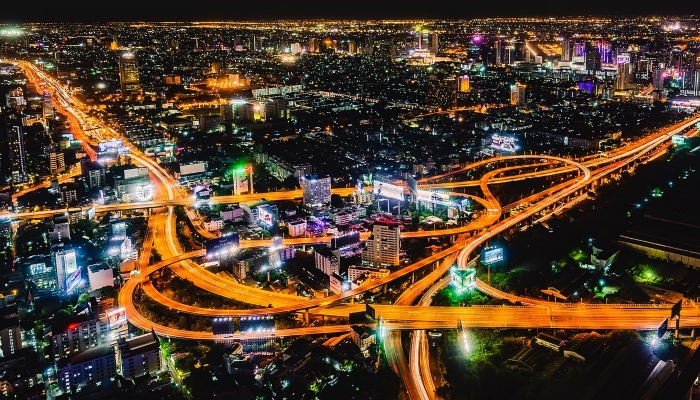
    Bangkok’s original name has 168 characters

    Did you know that the city with the world’s longest official name is also one of the most famous cities on Earth? Interestingly, the name by which most people know this city is not its official name. The city is Bangkok, the capital of Thailand whose full ceremonial name consists of 168 characters. If you ever visit Thailand, you are unlikely to hear local residents recite the full name as even many of them cannot remember it. The city’s full ceremonial name is Krungthepmahanakhonamonrattanakosinmahintharaayuthayamahadilokphopnoppharatratchathaniburiromudomratchaniwetmahasathanamonpimanawatansathitsakkathattiyawitsanukamprasit. Bangkok’s official ceremonial name is recognized by Guinness World Records as the longest place name in the world. If you find it impossible to remember, you’re certainly not alone. The city also has a shorter official name in Thai: Krung Thep Maha Nakhon which is commonly shortened further by locals to simply Krung Thep. In 2022, the Thai government announced that both Krung Thep Maha Nakhon and Bangkok would be accepted as official Romanized names for the capital. The 168-character ceremonial name is derived from Sanskrit and Pali and its shorter form roughly translates to “The Great City of Angels.” However, historians are still uncertain why such an extraordinarily long ceremonial name was originally adopted. How did name “Bangkok” come about? According to popular accounts, the name Bangkok predates the establishment of the city as Thailand’s capital. It is believed to have originated from the area’s former village or district name possibly derived from the Thai words “Bang” (a village or riverside settlement) and “Makok” referring to a type of wild plum or olive tree that once grew abundantly in the area. Over time, the name Bang Makok is thought to have evolved into Bangkok, the name by which the city became known internationally.

  • Solo travel finding its footing in Pakistan

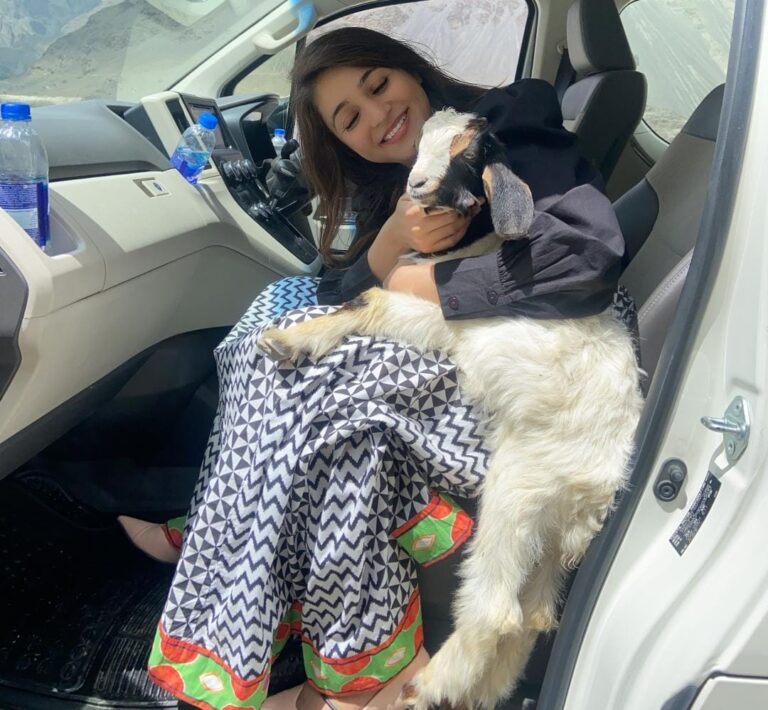
    The image of travel in Pakistan is changing. At bus terminals in Rawalpindi, at Islamabad International Airport, and on trails in Hunza, a growing number of travellers are moving with just one thing in common — they are alone. Solo travel, once seen as unusual, is now a quiet but visible trend among Pakistanis. Industry data and tour operators say bookings by single travellers have risen steadily over the last two years, driven by social media, remote work, and a desire for independence. For decades, Pakistani travel meant family trips to Murree, Nathiagali, or Swat, or group tours arranged through agencies. That model is shifting. Nevertheless, reasons are practical and personal. Let’s say, no need to coordinate leave or budgets with others, or time to navigate new places on one’s own terms. These days , hostels, cafés, and trekking groups in places like Karimabad and Skardu have become meeting points for solo travellers. However, safety remains the top concern, especially for women. That is pushing both travellers and the industry to adapt. Hotels in major tourist towns now offer female-only dorms. Ride-hailing apps provide trip sharing. Also, the Ministry of Tourism has started listing registered guesthouses and guides on its website. Taking about the top destinations, Domestically, the most popular solo destinations of 2026 are, Hunza, Skardu, and Fairy Meadows for trekking and landscapes, Swat and Kalam for short trips, easier access. And Islamabad and Lahore, for weekend culture trips, history, and food walks. Internationally, Pakistanis traveling alone are choosing Turkey, Malaysia, and Saudi Arabia for Umrah-plus-tourism packages. Portugal and Japan are also rising for first-time solo travellers abroad due to safety and transit systems. But I would say Sri Lanka is the must go. For traveling solo, One of the biggest challenge is price. Single rooms and ‘single supplements’ on tours can add 20-30% to costs. However, to counter this, some operators are launching “solo-friendly” departures — group tours where you get your own room but share activities. To combat this, solo travellers usually travel in shoulder months and spend more on local experiences — guides, food, and home-stays. I am a travelwriter, who travels solo weather traveled domestically or internationally, my advise is basic precautions, let say, safe hotels, air travel, authentic agents and no home stays, since for my travel I only prefer top notch hotels, always get the travel plan from reputable travel agencies, and travel with the guide from company. Also, I avoid night life.

  • Better Facilities in Turbat’s Hospitals

    Hani Rasheed  Turbat urgently needs better healthcare facilities. Although some improvements have been made, many patients still face shortages of medicines, medical equipment, and specialist doctors. Poor families often have to travel to other cities for treatment which is costly and difficult. Access to quality healthcare is a basic right and should be available to everyone. The authorities should ensure that hospitals are fully equipped, essential medicines are available, and qualified doctors and staff are appointed. Better healthcare services will reduce the suffering of patients and improve the well-being of the people of Turbat.

Leave a Reply

Your email address will not be published. Required fields are marked *