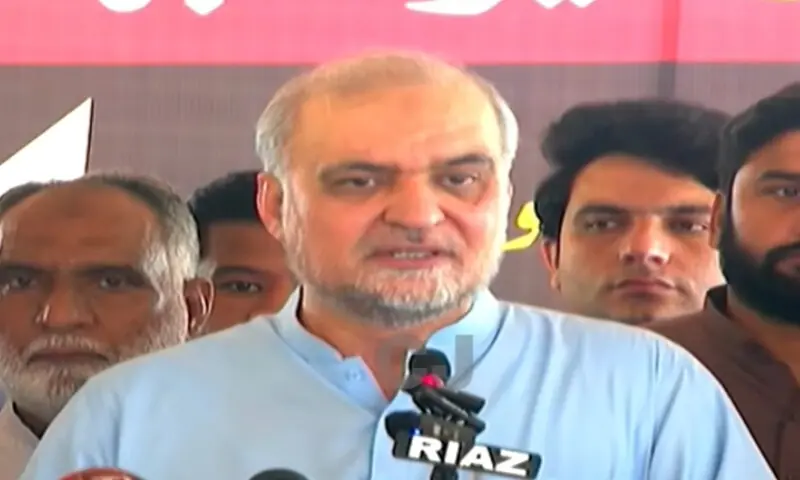
punjab university staff
| |

Punjab University staff demand forensic audit, war…

Lahore: A joint platform representing teachers, officers, employees, and other stakeholders at the University of the Punjab has accused the university administration of driving the country’s oldest and largest public university into a deep financial, administrative, academic, and research crisis, while warning of a protest movement if their demands remain unaddressed within two weeks.

Addressing a press conference in Lahore, the Joint Action Committee (JAC) said its purpose was not to target individuals but to present what it described as documented concerns regarding the university’s governance, financial management, academic standards, and research environment. The committee appealed to the Chancellor of the University, the Governor of Punjab, and the provincial government to intervene immediately to safeguard the institution.


The committee alleged that reserve funds worth approximately Rs4.88 billion, accumulated over many years, had been utilized within just 14 months without approval from the Finance and Planning Committee. It claimed that the university’s 2025–26 budget reflected a deficit of Rs2.57 billion and argued that, when combined with the depletion of reserves, the institution was effectively facing a financial shortfall of nearly Rs8 billion. It also questioned expenditures allegedly made beyond approved budget limits and called for greater transparency in financial decision-making.

JAC further claimed that around Rs786 million belonging to various academic departments and institutes had been transferred to a central account under the One-Account Policy and later utilized, raising questions about whether the expenditures had received approval from the relevant statutory bodies. It also expressed concern over what it described as the first-ever financial deficit of nearly Rs350 million in the university’s self-supporting programmes.

The committee also pointed to an apparent discrepancy in financial reporting, claiming that while the Finance and Planning Committee was informed of a Rs2.57 billion budget deficit at the end of the financial year, a subsequent Syndicate meeting was told the deficit stood at Rs1.6 billion. According to the committee, the variation requires a transparent explanation.

Expressing concern over campus security, the committee referred to the killing of a student and the son of a university employee near the Vice Chancellor’s residence despite the presence of armed security personnel, arguing that the incident had raised serious questions about the effectiveness of the university’s security arrangements.

On governance, the committee alleged that key statutory bodies, including the Senate, Deans’ Committee, Chairpersons’ Committee, Syndicate, and Selection Boards, had met only infrequently during the current administration, resulting in delays in appointments, promotions, and major policy decisions. It further criticized what it described as an excessive concentration of administrative authority in the office of the Director General (Students, Estate and Security), saying such an arrangement was inconsistent with principles of transparency, institutional balance, and accountability. The committee also referred to pending complaints and inquiries involving the office-holder, questioning the wisdom of assigning additional responsibilities while such matters remain unresolved.

Highlighting academic concerns, JAC said the university had slipped from 542nd to 588th position in the QS World University Rankings and had also experienced a decline in the Higher Education Commission’s Office of Research, Innovation and Commercialization (ORIC) rankings. It alleged that faculty members were facing an atmosphere of insecurity and harassment, while research grants, travel support, and publication funding had effectively come to a halt.

The committee claimed that although research grants of up to Rs1 million had been announced, no faculty member had yet received financial assistance under the initiative. It further alleged that several researchers had been forced to abandon nationally and internationally funded projects because of inadequate institutional support, damaging both research output and the university’s reputation with funding agencies.

According to the committee, hostel accommodation remains unavailable for many students, including research scholars, while an increasing number of inquiry committees against faculty members and officers has created an atmosphere of fear and professional uncertainty. It also expressed concern over delays in permanent appointments to several senior administrative positions, saying the lack of regular appointments had weakened institutional efficiency.

The Joint Action Committee demanded an independent forensic audit of the university’s financial affairs, including the use of reserve funds, deficit budgets, the One-Account Policy, and the finances of self-supporting programmes. It also called for the immediate removal of the Director General (Students, Estate and Security) under the principle of “one person, one post,” an end to what it described as retaliatory inquiries, restoration of a secure and professional working environment, immediate advertisement and transparent appointment of a permanent Registrar, payment of outstanding financial dues and benefits to teachers and employees, and the restoration of regular meetings of all statutory bodies in accordance with the University Act.

The committee warned that if its demands are not addressed within two weeks, it will launch a phased protest campaign, including demonstrations outside the university, a sit-in outside the Punjab Assembly, publication of a white paper containing documentary evidence, and a boycott of classes that could ultimately disrupt academic activities at the historic institution.

The university administration had not issued an official response to the allegations at the time this report was filed.

Similar Posts

  • |

    Kimberly Van Der Beek honours late husband on wedding anniversary

    Kimberly Van Der Beek has honoured her 16th wedding anniversary with James Van Der Beek. This marks the first time she’s celebrating the milestone without him by her side. The actor, best known for his role in Dawson’s Creek, passed away earlier this year. The 44-year-old took to Instagram to share her feelings. She reflected on the day she married him, calling herself the luckiest woman in the world at the time. She spoke about how their bond continues to grow stronger, even now. Kimberly credited their children for keeping that connection alive. She described how the beauty of their marriage keeps unfolding through the kids they raised together. She also shared a sense that James remains present in their lives, guiding the family forward. Her gratitude for the years they shared came through clearly in her words. This tribute carries the same emotional weight as her earlier statement. That post came when she first announced James had passed away. At the time, Kimberly wrote that James left peacefully, surrounded by courage, faith, and grace. She mentioned there would be more to share eventually. This included his wishes, his love for people, and thoughts on how precious time really is. For that moment, though, she asked for privacy. She wanted space to grieve her husband, the father of her children, and a beloved son, brother, and friend. James Van Der Beek died after a battle with colorectal cancer. He was 48 years old. He leaves behind Kimberly and their six children, a family he clearly cherished until the end. Their story captured hearts long before this tribute. James rose to fame playing Dawson Leery, a role that made him a household name in the late ’90s. His chemistry with Kimberly, though, extended far beyond the screen. Together, they built a life rooted in family and faith. Fans and followers have continued to send support since his diagnosis became public. Many have praised Kimberly’s strength throughout this difficult journey. Her willingness to share both grief and gratitude has resonated widely online. As the family navigates this new chapter, Kimberly’s words suggest a sense of peace. Even in loss, she seems to hold onto the love they built over sixteen years together.

  • | |

    14 August: Films that bring Quaid-e-Azam’s i…

    Every year on August 14, Pakistan celebrates its Independence Day, marking the day in 1947 when the country emerged as an independent nation. The occasion is a reminder of the struggle, sacrifices and leadership that shaped Pakistan’s journey towards independence. Among the many personalities connected with this historic movement, Quaid-e-Azam Muhammad Ali Jinnah remains one of the most important figures. From his early career as a lawyer to becoming the leader of the Pakistan Movement, Jinnah’s life has continued to inspire filmmakers, writers and storytellers. Over the years, several films, dramas and documentaries have explored different phases of his life, highlighting his political struggle, leadership and the challenges behind the creation of Pakistan. One of the most notable films based on his life is Jinnah (1998), directed by Jamil Dehlavi. The biographical drama stars Christopher Lee as Quaid-e-Azam Muhammad Ali Jinnah and follows his journey from a successful lawyer to the founder of Pakistan. The film focuses on important moments from Jinnah’s political career, including his efforts during the Pakistan Movement and the challenges he faced while working towards the creation of a separate homeland. Written by Akbar S. Ahmed, Farrukh Dhondy and Jamil Dehlavi, Jinnah presents a detailed portrayal of the events that shaped one of South Asia’s most influential leaders. Although the film received mixed responses at the time of its release, it remains one of the most recognised international productions based on the life of Pakistan’s founder. On television, Jinnah Se Quaid Tak became another important drama that introduced audiences to different stages of Jinnah’s life. The PTV production showed his transformation from a successful barrister into a political leader who played a central role in the independence movement. Directed by Mohsin Ali, the drama focused on key historical events and highlighted Jinnah’s dedication towards achieving his political goals. Through television, the series reached audiences who wanted to explore the personal and political journey behind Pakistan’s creation. Another production that explores Jinnah’s legacy is the documentary Quaid-e-Azam: Founder of Pakistan. Unlike fictional portrayals, documentaries use archival footage, historical records and expert discussions to present a closer look at his personal life and political career. These documentaries provide viewers with an opportunity to understand not only the major events surrounding independence but also the leadership qualities and decisions that shaped Pakistan’s early years. Apart from these productions, Pakistani cinema and television have continued to revisit stories connected with the country’s history and independence. Historical films and dramas allow audiences to connect with important moments from the past while introducing younger generations to personalities who played a significant role in shaping the nation. As Pakistan celebrates its Independence Day, these cinematic portrayals offer a chance to revisit the journey behind August 14, 1947. They highlight the determination, political struggle and leadership that contributed to the creation of Pakistan. Through films, dramas and documentaries, the story of Quaid-e-Azam Muhammad Ali Jinnah continues to remain part of Pakistan’s cultural memory, allowing new generations to learn about the man behind the independence movement.

  • |

    Pakistan’s total debt burden nears Rs84 trillion as government borrowing rises

    Pakistan’s total government debt stock climbed to a record level of nearly Rs84 trillion by the end of June 2026, highlighting the growing financial burden facing the country amid continued reliance on domestic and external borrowing. According to the latest data released by the State Bank of Pakistan (SBP), the federal government’s total debt increased by 7.4% on a year-on-year basis during the fiscal year ended June 2026. The central government’s debt stood at Rs83,642 billion in June 2026, compared with Rs77,888 billion recorded in June 2025. The debt stock also increased significantly on a monthly basis, rising from Rs81,955 billion in May 2026. The latest figures indicate that the government’s debt increased by around Rs5,754 billion, or Rs5.75 trillion, over the course of the fiscal year. Domestic debt remains major component Domestic borrowing accounted for the largest portion of the government’s total debt. According to SBP data, the federal government’s domestic debt rose by 9.1% year-on-year to Rs59,441 billion by June 2026. The increase reflects continued dependence on the domestic financial market to meet the government’s financing requirements, including budgetary needs and debt-servicing obligations. Meanwhile, the federal government’s external debt increased by 3.3% during the year, reaching Rs24,201 billion by June 2026. Although the growth in external debt remained comparatively lower than domestic borrowing, the foreign-currency component continues to place pressure on the country’s external financing position, particularly when debt repayments coincide with periods of weak foreign exchange inflows. Debt servicing poses growing challenge The continued rise in the debt stock is also raising concerns about the government’s ability to manage debt-servicing costs while creating fiscal space for development spending and public services. A growing share of government revenues is required to meet interest and principal repayment obligations, limiting the resources available for infrastructure, social development and other productive investments. Economic experts have warned that if the debt trajectory is not brought under control, the rising burden could turn into a “debt trap” for the economy. They argue that reducing dependence on borrowing would require stronger revenue mobilisation, greater fiscal discipline, higher exports and sustained economic growth. Improving the efficiency of public spending and reducing reliance on debt-financed expenditures could also help contain the pressure.

  • | | |

    PM Shehbaz’s dialogue offer remains open for PTI

    ISLAMABAD: Parliamentary Affairs Minister Tariq Fazal Chaudhry has urged Pakistan Tehreek-e-Insaf (PTI) to engage in dialogue with the government, saying Prime Minister Shehbaz Sharif’s invitation for talks remains on the table. Speaking in the Senate, Chaudhry said the government was ready to hold discussions with the opposition if PTI was serious about negotiations. He said opposition leaders could meet the prime minister or raise the matter in parliament. He also suggested that the opposition leader in the Senate could hold discussions with PML-N Senator Rana Sanaullah. Later, Chaudhry, Sanaullah and Law Minister Azam Nazeer Tarar met Senate Opposition Leader Allama Raja Nasir Abbas and National Assembly Opposition Leader Mahmood Khan Achakzai at Parliament House. Sanaullah said the meeting was linked to a letter written by Achakzai to Prime Minister Shehbaz. He said the government representatives had met the opposition leaders to discuss the prime minister’s response. The government and PTI have remained politically divided since the 2024 general elections. Disputes between the two sides have included demands for investigations into political protests, as well as issues concerning PTI founder Imran Khan’s health and continued detention. Meanwhile, the Pakistan Peoples Party (PPP) has also agreed to intensify political contacts with opposition parties. A senior PPP delegation is scheduled to meet Achakzai and Allama Nasir Abbas at the Opposition Leader’s Chamber in Parliament House on Tuesday. The meeting is expected to focus on parliamentary affairs and strengthening political engagement between the government-aligned PPP and opposition leadership. PPP leaders Sherry Rehman, Raja Pervez Ashraf, Saleem Mandviwalla and Naveed Qamar are expected to attend. Naveed Qamar said the talks would focus on strengthening parliament, improving coordination and reinforcing the role of parliamentary committees.

  • | | | |

    Nation celebrates 79th Independence Day with grand…

    Pakistan is celebrating its 79th Independence Day today with national spirit and enthusiasm. The celebrations began across the country at midnight. People came out of their homes to mark the occasion. Streets, markets and neighbourhoods were decorated with the national flag. Green and white lights illuminated many cities. Buildings and public places were also decorated for the national day. Fireworks were held in several major cities. Citizens gathered at different locations to enjoy the celebrations. Karachi, Lahore, Islamabad, Peshawar, Quetta and Multan witnessed large gatherings. Many people carried national flags and wore green and white clothes. Rallies were also organised in different parts of the country. Citizens took part in patriotic events and expressed their love for Pakistan. In Lahore, a spectacular fireworks display was held at Greater Iqbal Park. A large number of people gathered at the park to celebrate Independence Day. Another major fireworks display was organised at Liberty Chowk. Families and young people attended the event in large numbers. Hyderabad also witnessed fireworks soon after midnight. Residents came out onto the streets to celebrate the national occasion. Multan joined the celebrations with a fireworks display at Ghanta Ghar Chowk. The district administration organised the event. A large crowd gathered at the historic location. The official celebrations continued after midnight. Special prayers were offered during Fajr prayers across the country. Prayers were made for Pakistan’s development and prosperity. People also prayed for national unity and peace. Special prayers were offered for the country’s security and stability. In Lahore, the day began with a 21-gun salute. The salute was held to mark the beginning of Independence Day. A similar 21-gun salute was held at the cantonment in Quetta. Mosques across the city also held special prayers for the country’s safety and security. The national day is being marked with ceremonies and patriotic activities across Pakistan. Government institutions, security forces and citizens are participating in different events. The celebrations highlight national unity and patriotism. People are also using the occasion to remember the sacrifices made for the creation of Pakistan.

  • | |

    ‘Patience has run out’: JI warns government

    Jamaat-e-Islami (JI) Emir Hafiz Naeemur Rehman has warned the government of expanding protests across the country if the petroleum levy is not withdrawn. Speaking at a press conference at the party’s ongoing protest camp outside the Punjab chief minister’s residence in Lahore on Tuesday, the JI chief said the demonstrations had entered their 10th day. He said public patience had reached its limit and demanded immediate relief from rising fuel prices and taxes. Rehman warned that the party could announce a nationwide strike, block roads and march towards Islamabad if the government failed to meet its demands. The JI leader said the date for a nationwide shutdown would be announced on 13th Rabi-ul-Awwal. He added that demonstrations would continue during Eid Milad-un-Nabi ﷺ. According to Rehman, the JI had mobilised supporters in all four provinces. He said the protest movement would be expanded if the government continued to ignore public concerns. He criticised the petroleum levy and other fuel-related taxes, saying ordinary citizens were struggling to cope with increasing living costs. He particularly highlighted the difficulties faced by commuters, students, workers and motorcyclists. Rehman also demanded that the price of roti be reduced to Rs10. The JI emir accused the government of placing the burden of economic difficulties on the public. He argued that fuel price increases had added to the financial pressure on households while the government had failed to provide sufficient relief. He also raised concerns about alleged irregularities in coal imported for independent power producers (IPPs). Rehman called for a forensic audit and an independent investigation into coal-related transactions. He claimed that consumers were being made to pay for expensive fuel, electricity that was not produced and costly arrangements involving IPPs. He said the public should not be forced to bear the financial consequences of alleged mismanagement. Rehman recalled the JI’s earlier campaign against IPPs and claimed that public pressure had helped reduce electricity prices by around Rs10 per unit. The JI chief said his party was prepared to intensify its campaign if the government failed to respond. He described a nationwide shutdown, road blockades and a march on Islamabad as possible next steps. “Do not test our resolve,” he warned. Rehman also criticised the political system and questioned the performance of the ruling coalition. He alleged that governments without genuine public support remained unable to address the problems faced by ordinary citizens. He criticised the PPP’s governance in Sindh and raised concerns about what he called political families dominating Punjab. He also questioned the continued delay in holding local government elections. Regarding the Punjab government, the JI leader said its major announcements could not hide failures in dealing with basic public problems. Rehman maintained that the JI’s campaign was aimed at securing relief for the people rather than serving any personal or political interest. He invited the government’s negotiating team to visit the protest camp and clearly explain when the petroleum levy would be abolished. He said the JI would not travel to Islamabad simply to attend another briefing without concrete assurances. The JI emir also commented on a recent incident involving a security official at Sarhad University of Science and Information Technology in Islamabad. He demanded a transparent, merit-based investigation and said legal action should be taken against anyone found responsible, regardless of their position.

Leave a Reply

Your email address will not be published. Required fields are marked *