adani group weighs
| |

Adani group weighs entry into Indian aviation mark…

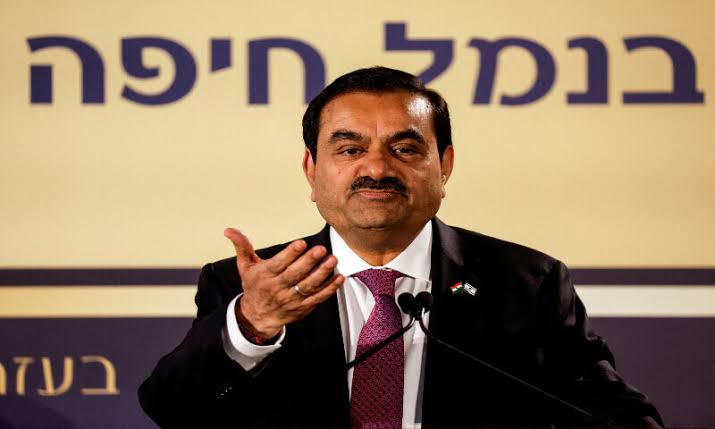
Indian billionaire Gautam Adani’s conglomerate is exploring a possible entry into the airline business, a move that could disrupt an Indian aviation market currently controlled by just two major carriers, according to two people familiar with the discussions.

The consideration marks a potential shift in direction for the group, which runs eight airports across India, including two serving Mumbai, and is midway through an expansion plan worth 11 billion dollars. The group had previously indicated it had no plans to enter the airline sector.

According to one of the sources, who spoke on condition of anonymity because they were not authorized to discuss the matter publicly, no final decision has been reached and the idea remains under internal review, partly because the airline business is widely seen as difficult to run profitably. The source said Indian officials have privately encouraged large business groups, including Adani’s, to consider launching a carrier following heightened scrutiny of Air India after a fatal crash in Ahmedabad last year, along with operational breakdowns at market leader IndiGo that disrupted air travel nationwide in December. The source characterized Adani’s interest as motivated partly by a sense of national interest, noting that the government has grown concerned that the country needs another major airline given the troubles at both existing carriers.

Shares of Adani Enterprises fell more than 3 percent on Thursday following the report. Internal talks about a possible airline venture remain in early stages, and the group has not set a timeline for a decision.

Adani ranks as Asia’s second wealthiest individual, with a net worth of roughly 89 billion dollars, though entering the airline industry would represent one of the riskier moves of his business career. Several Indian carriers, including Kingfisher, Jet Airways and Go First, have collapsed into bankruptcy over the past fifteen years amid high taxes, intense competition and supply chain problems.

While Adani has aggressively expanded his footprint in ports and airports, he has also spent time since 2024 contending with United States allegations that he paid bribes to secure a solar energy project. Those charges were dropped by American prosecutors earlier this month.

India remains one of the fastest growing aviation markets in the world, but the sector has faced persistent concern over its lack of competition. IndiGo currently holds about 65.4 percent of the domestic market, while Air India controls roughly 25 percent, leaving little room for smaller players. The Indian government has said it wants to expand the country’s airport network to between 350 and 400 facilities by 2047, up from 74 in 2014, as passenger traffic climbs and airlines place record aircraft orders with Boeing and Airbus.

Rajan Mehra, the former India head of Qatar Airways, said an Adani led entry into aviation could reshape the sector, though he added that regulators would need to ensure strong safeguards and a level playing field for all carriers going forward.

One option under consideration is acquiring a stake in an existing airline rather than building a new one from scratch, according to the second source, who said the group is keeping all possibilities open.

The government’s push for new entrants comes after it warned IndiGo in December that it could face regulatory action following a wave of flight cancellations triggered by a pilot shortage. That crisis stranded thousands of passengers and prompted officials to intervene to curb a sharp spike in airfares.

The broader push toward breaking up India’s aviation duopoly reflects a pattern seen in other fast growing emerging markets, where regulators and governments have historically encouraged new entrants once dominant carriers show signs of strain, though such efforts have a mixed record of success given the industry’s notoriously thin margins and high capital requirements.
Similar Posts

  • |

    Youth protests challenge Modi’s image ahead of key state elections

    A growing youth protest movement in India has delivered one of the biggest political setbacks to Prime Minister Narendra Modi’s government in recent years, raising questions about the ruling Bharatiya Janata Party’s appeal among younger voters ahead of crucial state elections. What began as demonstrations over alleged examination paper leaks has developed into a wider expression of frustration over unemployment, education and economic uncertainty. The protests were led by the Cockroach Janta Party, or CJP, a youth movement that quickly gained massive attention on social media. Within days of launching its campaign in May, the group attracted around 22 million followers on Instagram, most of them from Generation Z. The movement demanded the resignation of Education Minister Dharmendra Pradhan after allegations that a medical entrance examination had been compromised. As protests spread across India, thousands of students gathered in central Delhi despite heavy police action. In an effort to calm public anger, Prime Minister Modi posted a rare selfie video on Instagram, saying he understood the concerns of young people and promising action to address their grievances. However, the message failed to ease the demonstrations. Days later, Education Minister Pradhan resigned, fulfilling the protesters’ main demand and handing the movement a significant political victory. The resignation is considered unusual because Modi’s government has generally resisted removing senior ministers in response to public pressure. Political observers say the outcome has encouraged many young Indians who believe their voices can influence government decisions. Analysts say the protests extend far beyond the issue of examination leaks. Many young people are increasingly worried about unemployment, rising competition for limited jobs and the possible impact of artificial intelligence on employment opportunities, particularly in India’s large information technology and business services sectors. While the exam controversy sparked the demonstrations, experts believe it exposed much deeper concerns among the country’s youth. Political analyst Amitabh Tiwari said the paper leak became a symbol of wider frustration felt by many young Indians who are anxious about their future. He noted that disappointment over employment prospects and economic opportunities has created growing dissatisfaction that cannot be ignored. Senior government officials have acknowledged these concerns. Defence Minister Rajnath Singh said the government remains committed to understanding students’ problems and ensuring that their concerns are addressed. However, critics argue the ruling party has struggled to connect with younger generations, particularly on social media platforms where political discussions are rapidly evolving. Demographic trends also highlight the challenge facing India’s political establishment. People between the ages of 18 and 40 make up roughly 40 percent of the country’s population but hold only a small share of seats in the lower house of Parliament. The average age of members of the federal cabinet remains above 60, leading some analysts to argue that younger voices are underrepresented in national decision making. Although the CJP is not officially a political party, opposition groups have openly supported the student protests and attempted to capitalize on growing public dissatisfaction. The first major political test could come during next year’s state elections in Uttar Pradesh, Punjab and Gujarat. The BJP currently governs both Uttar Pradesh and Gujarat, making those contests particularly important. Some analysts believe the movement could have an even greater impact if it eventually enters electoral politics before the 2029 national election. CJP founder Abhijeet Dipke has said no decision has been made about transforming the movement into a political party, but its rapid popularity has already attracted widespread attention across the political spectrum. Observers also believe political campaigning in India is changing. For years, the BJP built a strong digital presence on platforms such as X and Facebook. However, younger audiences have increasingly shifted to Instagram, where authenticity and informal communication often attract greater engagement than carefully managed political messaging. While the BJP has around 10 million Instagram followers, the CJP gained more than twice that number in only a few days. Modi personally continues to command a much larger audience across multiple social media platforms, but analysts say younger users are responding differently to newer forms of political communication. Writers and political commentators argue that Generation Z is less influenced by traditional political authority and more willing to openly question established leaders. They believe successful politicians will increasingly need to engage directly with young voters rather than relying on conventional campaign strategies. For Modi, the protests represent a reminder that public expectations are changing. During much of his time in office, he built a reputation as a decisive leader who rarely reversed government decisions. Political analysts now say that demonstrating a willingness to listen and respond to public concerns may become increasingly important as India moves toward another cycle of state and national elections.

  • |

    Houthis deny reports of Red Sea transit fees

    Yemen’s Houthi movement has rejected reports claiming it plans to charge commercial vessels for passing through the Red Sea, insisting that navigation through the strategic waterway remains free. In a statement issued by the Houthi-run Humanitarian Operations Coordination Center (HOCC), the group said its safe transit service for ships using the Bab al-Mandeb Strait is voluntary and does not involve any fees. It emphasized that no authorized Houthi body is collecting payments from shipping companies. The HOCC also warned shipping operators against making payments or sharing sensitive information with unauthorized individuals or organizations claiming to represent the group. It said any such demands are fraudulent and should not be recognized as official. The clarification came after recent reports suggested that the Houthis were considering introducing transit charges for vessels passing through the Bab al-Mandeb Strait. The reports claimed the proposal had been discussed during meetings with Iranian officials and that plans were being explored to establish a system for regulating such payments. The Bab al-Mandeb Strait is one of the world’s most important maritime routes, linking the Red Sea with the Gulf of Aden. Thousands of commercial vessels carrying oil, fuel and other goods use the passage every year, making it a vital corridor for global trade between Asia, Europe and the Middle East. Security concerns in the Red Sea have remained high since attacks on commercial shipping began in late 2023. The conflict significantly disrupted international shipping, forcing many companies to divert vessels to longer and more expensive routes around southern Africa. Although attacks temporarily declined following a ceasefire last year, commercial traffic through the region has yet to return to previous levels. Shipping companies continue to monitor the security situation closely before routing vessels through the area. The latest reports have also prompted regional efforts to strengthen maritime security. Saudi Arabia recently announced a multinational maritime coalition aimed at protecting freedom of navigation in the Bab al-Mandeb Strait, the Red Sea and the Gulf of Aden.

  • | |

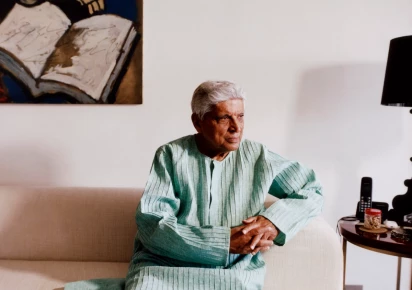
    Javed Akhtar says internet discourages originality

    Javed Akhtar has been writing words that endure for more than five decades, and in a candid conversation with Vogue India, he turned his gaze toward what he believes is happening to creativity in the digital age. What he found does not reassure him. The veteran lyricist and screenwriter argued that the internet and its algorithms have created a culture of creative fear, one in which people are no longer willing to take the risk of doing something that has not already been done before. “The echo chambers created by the internet have made most people afraid to do something for the first time,” he said. “Once someone else does it, they’re fine to follow in their footsteps.” He extended that observation into a broader concern about how people engage with ideas and the world around them. “People no longer want to pause, think, analyse or sit with an idea. They are living happily, so why would they bother to think about this universe or the vastness of nature? For them, it is a waste of time.” For Akhtar, this impatience is incompatible with the kind of work that lasts. “Meaningful creation requires time, discomfort and reflection,” he said, adding that his own willingness to question dominant voices and widely accepted ideologies has always come from exactly that kind of sustained engagement with ideas. He was particularly pointed about the music industry and the way commercial priorities have pushed the role of lyrics to the margins. “Today, words have become less important because the marketing team has decided that slow music won’t trend,” he said. The result, in his view, is an industry that remixes old material with inferior new writing rather than producing something genuinely fresh. “But then they take those same songs, edit the mukhras and remix them with some inferiorly written antaras. There was a time when writers had more space. Today, other forces dictate what music gets made. And yet, songs that are decades old still endure, while many recent ones have a short shelf life.” His advice to young writers was direct and unglamorous. Read more. Not only classical literature and celebrated authors, but light reading too. “The real loss is not in reading something trivial but in not reading at all,” he said. On the creative process itself, Akhtar drew a distinction that cuts to the heart of what separates craft from genuine art. “All arts can be divided into two parts. On one hand, there’s imagination, passion, fantasy and romance, and on the other, there is craft. You can learn the craft in a crash course. But imagining, fantasising and romanticising cannot be learned. There are no courses for yearning.” He closed with a lesson passed down from his father that has stayed with him throughout his career. “It is very easy to write in difficult language, but very difficult to write in easy language. When you write simply, there is no space for your idea to hide behind big words. Only if you are totally convinced of what you are writing can you afford to use transparent language.” It is a principle that has shaped some of Hindi cinema’s most enduring words, and one that no algorithm is likely to teach.

  • | |

    Trump vows heavy strikes on Iran’s Pickaxe M…

    President Donald Trump said Monday that US forces will hit the Pickaxe Mountain area, located near Iran’s already heavily damaged Natanz uranium enrichment facility, very heavily in the near future. Trump had threatened the site last week, saying the United States was going to take out Pickaxe Mountain, a heavily fortified location tied to Iran’s nuclear program that contains two deeply buried tunnel complexes. He also said Tuesday that Tehran wanted to meet desperately, adding that Washington has no interest until Iran shows readiness to engage in a meaningful way. Facing mounting political pressure at home over rising gasoline prices since the war began, and with Iran having effectively closed the Strait of Hormuz, Trump defended the latest strikes as a response to the deaths of American service members killed in recent Iranian attacks. He wrote on social media Monday that Iran will pay many times over every time it kills an American soldier, saying he had passed the directive to Secretary of War Pete Hegseth, Joint Chiefs Chairman Daniel Caine and every military leader. The broader conflict has killed thousands of civilians, most of them in Iran and Lebanon, where Israeli forces have occupied part of the country following attacks by Hezbollah fighters who said they acted in solidarity with Tehran. Lebanese President Joseph Aoun met Trump at the White House Tuesday, thanking him for what he called a historic achievement in signing a Lebanon Israel framework agreement. Aoun said he had looked forward to the visit for a long time and that the region is due for stability and security. Trump said he would speak with Hezbollah if Aoun wanted him to, noting he has already communicated with the group through intermediaries in June and secured a pledge that it would not attack Israel, a first for any US president given Hezbollah’s designation as a terrorist organization. Trump also addressed threats from Yemen’s Houthi movement to block Red Sea shipping, saying the United States would take care of business if the group follows through on a naval blockade. Two oil tankers carrying Saudi crude toward Asia reversed course in the Red Sea Tuesday after Houthi threats, diverting toward the Suez Canal, though Saudi Arabia’s Red Sea port of Yanbu continued operating normally. The Houthis said Monday they were imposing an immediate maritime embargo against Saudi Arabia, citing what they called an unjust and oppressive siege imposed on Yemen for nearly 12 years. The Saudi led coalition in Yemen said it would respond with force and began protective measures for ships transiting the Bab el Mandeb Strait, a critical route for Saudi oil exports following the effective closure of Hormuz. Yemen’s defence minister said separately that the government’s army stood ready to end what he called the Houthi coup, while clashes between government forces and Houthi fighters have resumed in parts of the country. Iran’s Revolutionary Guards said two oil tankers exploded after attempting to pass through the Strait of Hormuz via an unsafe route, a claim that followed a similar Sunday statement describing an accident involving two vessels in the same area, though it remains unclear whether the incidents were connected. A separate vessel was struck by an unidentified projectile off Oman’s coast near the strait, according to the United Kingdom Maritime Trade Operations agency. Inside Iran, explosions were reported in Tabriz, Chabahar, Konarak, Bandar Mahshahr and Bandar Imam Khomeini, with one person killed and several wounded southwest of Tabriz, state media reported. Iran’s Guards said they targeted US aircraft at Jordan’s Aqaba airport with ballistic missiles, along with military assets at Kuwait’s Al Adiri camp and Ali Al Salem Air Base, and additional positions in Syria. Air raid sirens sounded repeatedly in Bahrain throughout Monday, and Kuwait’s army said early Tuesday that its air defenses had again intercepted Iranian drones. Kuwait also said Iran struck its power and desalination infrastructure for a fourth consecutive day, sparking fires at several critical facilities that authorities have since extinguished while damage assessments and repairs continue. The United Arab Emirates condemned Iranian strikes on Bahrain, Kuwait and Jordan as a flagrant violation of sovereignty and pledged full solidarity with the three nations. A separate vessel was struck by an unknown projectile off the UAE coast near Dibba, damaging its steering gear, though all crew members remained safe. Iranian state media quoted a military source as saying the Strait of Hormuz will stay closed as long as US strikes continue, with the source describing the waterway as fully under Iranian military control. Iran’s Guards also claimed a strike on central data infrastructure belonging to Amazon in Bahrain, a claim that could not be independently verified. Amid the widening conflict, the Association of Southeast Asian Nations called Tuesday for maximum restraint and an immediate halt to hostilities between Washington and Tehran, warning that continued fighting undermines mediation efforts and diminishes prospects for a peaceful resolution. A senior Iranian official said Tehran had received a proposal from mediators for a ten day ceasefire aimed at salvaging the interim agreement reached in June, though no further details were provided. Pakistani officials said Iran’s interior minister had asked Islamabad to resume its mediation role, and he later traveled to Pakistan for additional talks, continuing a diplomatic effort that Pakistan and Qatar have led since the earlier memorandum of understanding was signed. Separately, Britain’s new government faces pressure from Washington to maintain American access to strategic military bases including RAF Fairford and the Diego Garcia base on Chagos Island, according to a British newspaper report, with Trump said to be pressing new Prime Minister Andy Burnham on the issue shortly after Burnham took office this week.

  • Relatives of Teen School Shooter Shocked as Death Toll Climbs to Nine

    BANGKOK – A devastating school shooting in Thailand has left the entire nation in deep shock and mourning. The terrifying tragedy unfolded at Debsirin Nonthaburi School early on Friday morning. Families are now struggling to understand how a quiet 14-year-old boy could commit such extreme violence. What started as a completely normal school day quickly […]

  • |

    Peru and Mexico resume diplomatic relations after political dispute

    The diplomatic break occurred when Mexico granted political asylum to former Peruvian Prime Minister Betssy Chavez, who faced conspiracy charges regarding former President Pedro Castillo’s 2022 attempt to dissolve Congress. As part of the bilateral agreement to restore relations, Peru granted Chavez safe-conduct guarantees under the 1954 Caracas Convention on Diplomatic Asylum, enabling her to leave the Mexican Embassy in Lima and travel to Mexico. Peruvian Foreign Minister Carlos Espa confirmed she departed in good health. The Peruvian Ministry of Foreign Affairs maintained that no political persecution exists in the country and stated that granting safe-conduct does not waive Peru’s legal right to request Chavez’s extradition in the future. The diplomatic rapprochement follows commitments made by newly elected Peruvian President Keiko Fujimori ahead of her inauguration to normalize ties with Mexico, an initiative welcomed by Mexican President Claudia Sheinbaum.

Leave a Reply

Your email address will not be published. Required fields are marked *