pmd issues high
|

PMD issues high flood alert as Head Marala records over 205,000 cusecs inflow

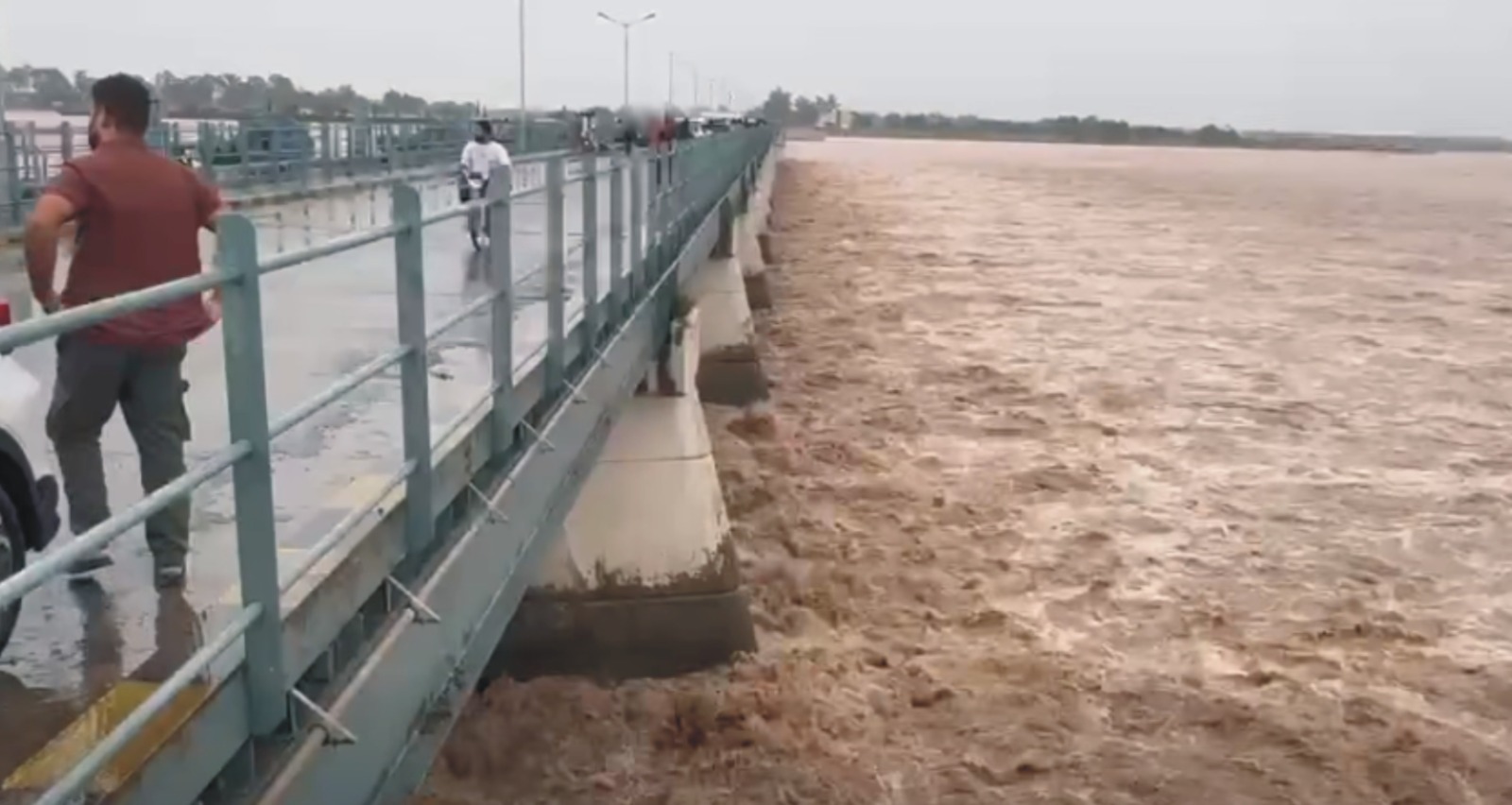
SIALKOT: The Pakistan Meteorological Department (PMD) has issued a High Flood Level Advisory for the River Chenab, warning that high water flows are expected to persist over the next 6 to 8 hours before gradually receding as rainfall over the upper catchments continues to decrease.

According to the latest flood monitoring data, Head Marala has reached a high flood level, with water inflow recorded at 205,488 cusecs and outflow at 187,388 cusecs, indicating sustained high water levels in the Chenab River system.

The Flood Forecasting Division (FFD) said the high flood situation has been caused by heavy rainfall across the upper Chenab catchment, as observed through hydro-meteorological data and the Sialkot weather radar. Although rainfall has now weakened across the major sub-catchments, river flows are expected to remain high for the next several hours before gradually declining.

The advisory states that the River Chenab at Marala will likely remain at High Flood Level for the next 6 to 8 hours, provided current rainfall trends continue. It further warns that Khanki and Qadirabad are expected to reach High Flood Level within the next 10 to 12 hours.

Besides the Chenab, the Jammu Tawi River is currently experiencing a medium-level flood, with a recorded inflow of 11,868 cusecs, while the Manawar Tawi is flowing at a low flood level, carrying 8,123 cusecs of water.

The PMD has cautioned that residents living in riverine (Kacha) areas adjacent to the Chenab may face hazardous conditions and should avoid unnecessary movement near riverbanks and flood-prone locations until water levels begin to recede.

The advisory also warns that standing crops, fodder fields and livestock in low-lying floodplain areas remain vulnerable to inundation. Low-lying roads, river crossings, embankment approaches and transport routes close to the river may also experience localized disruptions due to the elevated water levels.

The Flood Forecasting Division said it will continue to closely monitor hydro-meteorological conditions, river flows and weather radar observations, issuing further updates if the situation changes.

Meanwhile, provincial and district administrations, irrigation departments and other concerned agencies have been urged to maintain enhanced monitoring of river conditions and remain fully prepared for any emergency. The PMD noted that decisions regarding rescue, relief and emergency response will be taken by the National Disaster Management Authority (NDMA), the Provincial Disaster Management Authority (PDMA) and the respective district administrations.

Authorities have advised residents, particularly those living in riverine and low-lying areas, to stay alert, follow official instructions and avoid unnecessary travel near flood-affected locations until the situation improves.

Similar Posts

  • |

    PSX sheds over 1,800 points as US-Iran peace deal uncertainty triggers selling

    KARACHI: Selling pressure intensified at the Pakistan Stock Exchange (PSX) on Tuesday, with the benchmark KSE-100 Index suffering a sharp decline as investors turned cautious amid growing uncertainty surrounding the prospects of a near-term peace agreement between the United States and Iran. By 1:24pm, the benchmark index had dropped 1,806.12 points, or 0.89%, to 178,896.29, compared with the previous close of 180,502.44. The decline reflected widespread profit-taking and fresh selling across several key sectors of the market. The KSE-100 started the session at 180,502.44 and initially moved higher, reaching an intraday peak of 180,602.44. However, the early gains failed to hold as investors began offloading positions, pushing the index steadily lower. During the session, the benchmark touched an intraday low of 178,488.91, highlighting the intensity of selling activity. At one stage, the index was down 1,545.52 points, or 0.86%, at 178,956.92, before losses widened further. Market sentiment was affected by renewed uncertainty over the possibility of a diplomatic breakthrough between Washington and Tehran. Investors remained concerned that prolonged tensions could create additional risks for energy supplies and regional trade, particularly if disruptions affect major oil-producing and transportation routes. The rise in international oil prices added another layer of concern for investors. Higher crude prices can increase Pakistan’s import bill and place additional pressure on external-sector balances, while also raising concerns about inflationary pressures and corporate costs. The selling was not confined to a single segment. Significant weakness was witnessed in automobile assemblers, cement manufacturers, commercial banks, oil and gas exploration companies, oil marketing companies and power generation firms. The broad-based nature of the decline suggested that investors were adopting a cautious stance rather than selectively rotating into individual sectors. Market participants appeared particularly sensitive to developments in global geopolitics and their potential implications for commodity prices and Pakistan’s macroeconomic outlook. Trading activity, meanwhile, remained robust despite the decline in the benchmark. Around 358.21 million shares had changed hands by midday, while the total traded value stood at approximately Rs22.47 billion, indicating considerable participation from investors. The latest decline came after the KSE-100 ended the previous trading session at 180,502.44, leaving the index vulnerable to profit-taking following its recent strong performance. Tuesday’s movement therefore reflected a combination of investor caution, external geopolitical concerns and selling in major market segments. Analysts and market participants are expected to closely monitor developments on the US-Iran front, movements in international crude oil prices and domestic economic indicators for direction in the coming sessions. Any improvement in geopolitical sentiment or a renewed expectation of progress toward a peace agreement could help restore confidence, while further escalation and sustained increases in global oil prices could continue to weigh on equities.

  • | | |

    Field Marshal Asim Munir vows unrelenting war on t…

    Field Marshal Syed Asim Munir, Chief of Army Staff and Chief of Defence Forces, has reaffirmed Pakistan’s commitment to eliminating terrorism, saying security forces will continue intelligence-based and targeted operations until militant networks and their facilitators are completely dismantled. He made these remarks while addressing participants of the 20th National Workshop Balochistan during an interaction at the General Headquarters (GHQ) in Rawalpindi on Wednesday. The army chief said lasting peace in Balochistan can only be achieved through sustained efforts by the armed forces, law enforcement agencies and the unwavering support of the people. He stressed that operations against militant groups would continue with full determination to ensure long-term peace and stability across the country. Field Marshal Asim Munir said hostile elements backed by foreign interests have repeatedly attempted to create unrest in Balochistan, weaken national unity and disrupt peace. However, he maintained that such attempts would not succeed because of the professionalism of Pakistan’s armed forces and the resilience of the nation’s people. He reaffirmed that Pakistan remains determined to dismantle terrorist infrastructure wherever it poses a threat to the country’s security and the safety of its citizens. He said the state would continue taking decisive action against all groups involved in terrorism or supporting extremist violence. Highlighting the importance of Balochistan, the army chief described the province as a vital part of Pakistan with enormous natural resources and a resilient, patriotic population. He said the people of Balochistan are the province’s greatest asset and play a key role in the country’s future. He also pointed to ongoing development projects being carried out by the federal and provincial governments, saying these initiatives are aimed at improving infrastructure, creating economic opportunities and enhancing the quality of life for local communities through an inclusive development strategy. During the interaction, the army chief praised the contributions of civil society, academics, media professionals and the youth in promoting national harmony and supporting efforts for lasting peace and development in Balochistan. He emphasized that unity, resilience and collective national resolve are essential for overcoming challenges and ensuring Pakistan’s continued progress.

  • | |

    Maryam hits back at Bilawal with video proof

    Punjab Senior Minister Maryam Aurangzeb has responded to criticism by Pakistan Peoples Party (PPP) Chairman Bilawal Bhutto Zardari by releasing video footage showcasing the condition of roads, streets, and sanitation in several cities across Punjab. The response followed Bilawal’s address at an election rally in Azad Jammu and Kashmir (AJK), where he questioned the state of development and municipal services in different parts of Punjab. During his speech, Bilawal raised concerns about the condition of cities beyond Lahore and asked whether residents of other districts were receiving the same level of attention and development. Soon after the speech, Maryam Aurangzeb shared a series of videos on social media. The footage focused on the same cities mentioned by Bilawal. According to her, the videos were intended to present the actual situation on the ground and respond directly to the questions raised during the rally. The videos highlighted roads, streets, and cleanliness operations in different districts. They showed paved roads, cleaned streets, and sanitation activities carried out by local authorities. Maryam Aurangzeb maintained that the footage reflected the provincial government’s ongoing efforts to improve infrastructure and public services across Punjab. She gave special attention to Vehari and Kasur, two districts specifically mentioned by Bilawal in his speech. To answer his criticism, she shared separate videos from both cities. The footage displayed roads, residential streets, and cleanliness arrangements, which she described as evidence of the government’s development work. Maryam Aurangzeb said the videos served as visual proof of the progress made in Punjab. She maintained that the provincial government was working to improve civic facilities in both major cities and smaller districts, rather than focusing only on Lahore. https://x.com/i/status/2079953668946976948

  • | | |

    PPP to challenge AJK election results over rigging…

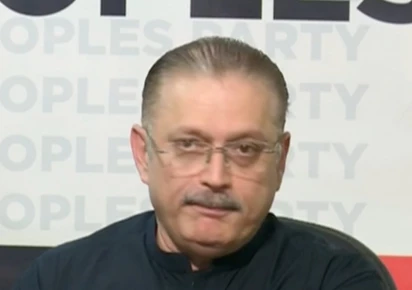
    The Pakistan Peoples Party (PPP) has announced that it will challenge the results of the Azad Jammu and Kashmir (AJK) Legislative Assembly elections through legal and constitutional forums, alleging widespread rigging, voter manipulation and administrative interference during the electoral process. Speaking at a press conference in Islamabad, Sindh Senior Minister Sharjeel Inam Memon, accompanied by senior PPP leader Chaudhry Yasin, accused the federal government, the AJK Election Commission and the Pakistan Muslim League-Nawaz (PML-N) of working together to influence the election outcome. He claimed the electoral process was neither transparent nor impartial and alleged that several complaints submitted by the PPP were ignored by the election authorities. Memon said PPP Chairman Bilawal Bhutto Zardari had repeatedly called for free, fair and transparent elections in AJK. He said Bilawal had urged all institutions to protect the democratic process and ensure that the interests of the Kashmiri people remained above political considerations. The PPP leader alleged that the AJK Election Commission failed to perform its constitutional responsibilities fairly. He claimed the commission did not take action on complaints submitted by the party during polling and questioned its impartiality throughout the election process. According to Memon, polling staff and election materials reached several polling stations late, affecting the voting process and creating unnecessary confusion among voters. He also questioned the postponement of polling in constituency LA-27, saying the decision was based on weather conditions despite what he described as clear circumstances. He further alleged that violence and intimidation were reported in several constituencies during polling. Referring to the killing of PPP worker Mukhtar Younis in LA-9 Nikyal, Memon claimed the incident reflected the deteriorating security situation on election day. He also alleged that attacks on PPP workers and political leaders were not properly investigated despite complaints to the relevant authorities. Memon accused authorities of failing to take action against those allegedly involved in election-related violence. He also claimed that PPP workers who reached certain polling stations after receiving reports of irregularities came under fire. The senior minister further alleged that ballot papers had reached some candidates before polling day and claimed there were serious violations during the voting process. He also alleged that voter turnout in one constituency exceeded 100 percent and called on the Election Commission to investigate the matter immediately. He said the PPP would continue to pursue all available legal and constitutional options to challenge the election results. The party, he added, would present evidence before the appropriate forums and seek action against those responsible for the alleged irregularities. PPP Chairman Bilawal Bhutto Zardari also criticised the conduct of the elections, saying the Election Commission had failed to address complaints raised after the first phase of polling. He maintained that the party reserved the right to demand re-elections in constituencies where it believed the electoral process had been compromised.

  • |

    Iran denies holding talks with US

    Iran has dismissed reports of ongoing negotiations with the United States, saying there are currently no direct talks between the two countries, while confirming that discussions with Oman are focused solely on establishing a temporary maritime route through the Strait of Hormuz. Iranian Foreign Ministry spokesperson Esmaeil Baghaei said the consultations with Oman are aimed at ensuring safe navigation in the strategic waterway and should not be interpreted as an agreement to fully reopen the strait. He maintained that the security situation in the region remains unchanged and insisted that any broader decision regarding the Strait of Hormuz would depend on regional developments. Baghaei also said there are no plans for Iranian or American delegations to meet in the coming days, rejecting speculation that formal negotiations are currently underway. His remarks came after US President Donald Trump announced that Washington expected to begin talks with Iran and suggested that diplomatic efforts had prompted him to cancel a planned military operation. Trump said discussions involving Saudi Arabia, the United Arab Emirates, Qatar and Iran had encouraged the United States to pursue diplomacy instead of military action. The US president said he preferred reaching a negotiated settlement but warned that military options remained available if diplomacy failed. He expressed hope that an agreement could eventually address both navigation through the Strait of Hormuz and concerns over Iran’s nuclear programme. Meanwhile, regional tensions remain high despite renewed diplomatic efforts. Reports emerged that an explosion occurred near a commercial tanker off the coast of Oman. Maritime authorities said the vessel and its crew were safe, while an investigation into the incident is underway. In another development, Iraq’s state oil marketing company reportedly offered significant discounts on Basrah crude exports to encourage buyers to lift cargoes from facilities inside the Strait of Hormuz, reflecting continuing uncertainty in regional energy markets. Iran also announced the execution of two men convicted of spying for Israel’s intelligence agency, saying they had provided sensitive military information to foreign operatives. The uncertainty surrounding the Strait of Hormuz continues to affect global energy markets. The waterway handles a significant share of the world’s oil and liquefied natural gas shipments, making any disruption a major concern for international trade and energy security.

  • |

    Viral 1970s PTV clip reignites debate over changing TV standards

    A vintage clip from a 1970s Pakistan Television (PTV) drama has gone viral on social media, reigniting conversations about how the country’s television industry and cultural standards have changed over the decades. PTV, Pakistan’s oldest television network, first went on air in November 1964 and quickly became known for producing memorable dramas, educational programs, and family-oriented entertainment. Many of its productions from the 1960s and 1970s are still remembered for their strong storytelling, talented actors, and high production quality. Over the years, however, the broadcaster’s programming evolved alongside Pakistan’s changing political and social landscape. The recently resurfaced clip is from the classic PTV play Parchaiyaan. In the scene, several female characters are seen wearing elegant sarees paired with sleeveless blouses, a fashion choice that has caught many younger viewers by surprise. The attire, which reflected the style of that era, has sparked widespread discussion online, with many people saying such costumes would be unlikely to appear on mainstream Pakistani television today. The video quickly gained traction across social media platforms, where users compared the fashion and creative freedom of the 1970s with modern television standards. Many viewers expressed surprise that such scenes were once broadcast on the country’s state-owned television network. Some social media users described the clip as evidence that Pakistani television once embraced a more modern and progressive visual style. Others questioned whether the footage was authentic, with one user asking if it had really aired on PTV. Another remarked that the television industry of the time appeared far more liberal than many people assume today. Not everyone viewed the clip positively. Some users argued that the clothing shown in the scene was too revealing by today’s standards, while others said the discussion highlighted how cultural expectations and public attitudes have shifted over the decades. Several viewers, however, praised the actresses featured in the clip for carrying the traditional outfits with grace and elegance. One user admired the woman dressed in a black saree, saying she wore the outfit confidently despite the short-sleeved blouse. Others pointed out that sarees were a common part of formal fashion in Pakistan during that period, particularly among urban families and in television productions. The viral discussion has also revived broader conversations about the evolution of Pakistan’s entertainment industry. Many users reflected on how television content has changed over time due to shifting social values, cultural preferences, and broadcasting policies. Some believe earlier productions offered greater artistic freedom, while others argue that changing audience expectations naturally influenced the direction of television programming. As the clip continues to circulate online, it serves as a reminder of how fashion, media, and public opinion evolve across generations. Whether viewed as a symbol of artistic expression or simply a reflection of its time, the decades-old scene has once again placed PTV’s rich television history at the center of public conversation.

Leave a Reply

Your email address will not be published. Required fields are marked *