karachi hosts health
| |

Karachi hosts D-8 Health Summit 2026

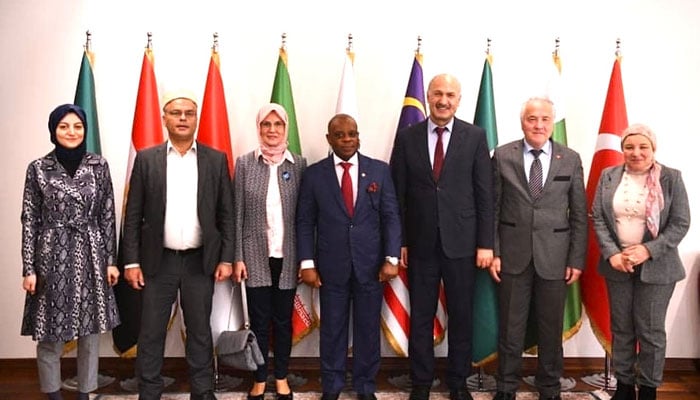
The D-8 Health Summit 2026 begins today at the Karachi Expo Centre, bringing together representatives from the eight Developing Islamic Countries (D-8) to strengthen cooperation in the health sector. The three-day summit will continue until July 25.

The international event is being organised jointly by the Ibn Sina Institute, the World Aging Council, and the Karachi Healthcare Expo and Conference.

This year’s theme is “Healthy and Age-Friendly D-8 Countries.” The summit will focus on a wide range of healthcare issues, including health diplomacy, the challenges of an ageing population, preventive healthcare, healthy longevity, medical tourism, digital health, the impact of climate change on public health, and sustainable healthcare policies.

A key highlight of the summit will be a keynote address by renowned gerontologist Dr Kamal Aydin. He will speak on “Global Health and Aging Diplomacy: A Future Vision for D-8 Countries,” presenting recommendations to promote international cooperation for developing healthy and age-friendly cities, particularly in the context of COP31.

Dr Aydin, who completed his education at the University of the Punjab in 1996, has maintained close academic and professional links with Pakistan throughout his career. He is attending this year’s summit as President of the D-8 Health Summit 2026 and the honorary chief guest of the Karachi Healthcare Expo and Conference.

In his message, Dr Aydin said it was a great honour to return to Pakistan, a country he considers his second home. He said it was gratifying to see the vision behind the Ibn Sina Institute and the World Aging Council, established nearly three decades ago, evolve into an international platform promoting global cooperation in health and ageing.

He also thanked the organisers of the Karachi Healthcare Expo and Conference, including Tanveer Abbas, Dr Abid Abbas Sheikh, and their team, for their efforts in arranging the event.

Alongside the summit, Karachi D-8 Healthcare Week 2026 is being held from July 20 to 27. The programme includes conferences, academic sessions, business-to-business meetings, investment discussions, innovation forums, and corporate social responsibility activities focused on healthcare and ageing.

During the event, organisers will also launch an international signature campaign supporting the establishment of a United Nations World Assembly on Ageing. In addition, the Global Health and Aging Ambassadors Programme will be officially introduced.


Similar Posts

  • |

    ‘Super’ El Niño threatens $20bn Africa hit

    Africa could suffer economic losses of between $10 billion and $20 billion if a powerful El Niño weather pattern develops, the African Development Bank’s climate chief has warned. The expected weather event could bring severe droughts, floods and storms to different parts of Africa. It could put additional pressure on food supplies, water resources and government finances. Anthony Nyong, the African Development Bank’s director for climate change and green growth, said countries facing the worst effects could see their gross domestic product decline by around 1% to 2%. He said the potential losses could amount to between $10 billion and $20 billion across the continent. The warning comes as forecasters monitor rising temperatures in the Pacific Ocean. Current conditions have raised concerns that the next El Niño could become unusually strong. El Niño is a climate pattern that can significantly change weather conditions in different parts of the world. In Africa, it can contribute to drought, heavy rainfall, flooding and storms. A severe event could deepen existing climate problems across the continent. The Sahel region has already faced serious drought conditions in recent years. Other parts of Africa are still recovering from major storms and floods. Nyong warned that the economic consequences may continue long after the weather event ends. He pointed to Mozambique’s experience after Cyclone Idai in 2019. The country needed years to recover from the damage caused by the storm. Agriculture could be among the sectors hit hardest by the expected climate shock. The previous El Niño, which occurred during 2023 and 2024, brought severe drought to Southern Africa. East Africa experienced heavy rainfall and flooding. The extreme weather contributed to crop failures and higher food prices. Coastal areas also recorded unusually high sea levels. African farmers are already facing substantial losses. The African Development Bank estimates that agricultural losses could reach around $327 million this year. Fishing communities could also suffer. Rising sea temperatures and storms are expected to affect fisheries productivity. The bank estimates that fisheries productivity could decline by between 1% and 4%. Nyong warned that food shortages could become a major concern if the expected weather pattern intensifies. Maize is particularly important because it is a major staple food in many African countries. A significant decline in production could push prices higher and increase pressure on vulnerable households. The expected disaster could also put further pressure on national budgets. Many African governments already have limited resources to respond to climate emergencies. Severe weather could force them to spend more on relief, reconstruction and infrastructure repairs. This could mean less money for health, education and development projects. Nyong described the situation as a “climate finance trap”. Countries may have to divert funds from essential services to deal with climate-related emergencies. The African Development Bank is preparing to assess the possible effects of El Niño on its investments. The bank plans to hold a major seminar in September. Senior officials will examine the potential risks to existing and planned projects. The institution is also prepared to restructure some projects if necessary. It will work with affected countries to seek additional international climate financing. Possible sources include the Green Climate Fund, Adaptation Fund and Climate Investment Funds. New loss-and-damage financing mechanisms could also provide support to countries suffering serious climate impacts. The expected strength of El Niño could increase Africa’s climate financing needs significantly. Nyong estimated that the continent could require up to $100 billion this year to strengthen climate resilience and adaptation. He said the need for climate adaptation funding was already extremely high. The possible El Niño event could add billions of dollars to that requirement. The financing gap remains a major challenge for developing countries. Without sufficient funding, vulnerable countries may struggle to prepare for droughts, floods and storms before they occur. The humanitarian consequences could be severe if drought and food shortages intensify. Nyong warned that large numbers of people could be forced to leave their homes in search of food, water and livelihoods. Sudan, South Sudan, the Democratic Republic of Congo, Somalia, Mali, Burundi and Nigeria were among the countries identified as potentially vulnerable to severe impacts. Agricultural losses could leave many communities without reliable sources of income. Shortages of water and grazing land could also increase competition between communities. Such pressures could worsen instability in regions already affected by conflict, poverty and displacement. The African Development Bank has therefore called for greater investment in preparedness and climate resilience. Nyong stressed that governments should act before disasters strike rather than wait until the damage has already occurred.

  • Thailand to Transform Cannabis Shops into Medical Clinics

    BANGKOK — Thailand’s new administration is steering the country’s cannabis industry tightly toward a medical framework, with ordinary cannabis shops set to disappear as operators renewing their licences will be required to transform their businesses into medical facilities, the Bangkok Post reported. Krabi Police Raid Israeli-Linked Cannabis Farm Operated Through Thai Nominees The policy shift […]

  • | | |

    PM Shehbaz’s dialogue offer remains open for PTI

    ISLAMABAD: Parliamentary Affairs Minister Tariq Fazal Chaudhry has urged Pakistan Tehreek-e-Insaf (PTI) to engage in dialogue with the government, saying Prime Minister Shehbaz Sharif’s invitation for talks remains on the table. Speaking in the Senate, Chaudhry said the government was ready to hold discussions with the opposition if PTI was serious about negotiations. He said opposition leaders could meet the prime minister or raise the matter in parliament. He also suggested that the opposition leader in the Senate could hold discussions with PML-N Senator Rana Sanaullah. Later, Chaudhry, Sanaullah and Law Minister Azam Nazeer Tarar met Senate Opposition Leader Allama Raja Nasir Abbas and National Assembly Opposition Leader Mahmood Khan Achakzai at Parliament House. Sanaullah said the meeting was linked to a letter written by Achakzai to Prime Minister Shehbaz. He said the government representatives had met the opposition leaders to discuss the prime minister’s response. The government and PTI have remained politically divided since the 2024 general elections. Disputes between the two sides have included demands for investigations into political protests, as well as issues concerning PTI founder Imran Khan’s health and continued detention. Meanwhile, the Pakistan Peoples Party (PPP) has also agreed to intensify political contacts with opposition parties. A senior PPP delegation is scheduled to meet Achakzai and Allama Nasir Abbas at the Opposition Leader’s Chamber in Parliament House on Tuesday. The meeting is expected to focus on parliamentary affairs and strengthening political engagement between the government-aligned PPP and opposition leadership. PPP leaders Sherry Rehman, Raja Pervez Ashraf, Saleem Mandviwalla and Naveed Qamar are expected to attend. Naveed Qamar said the talks would focus on strengthening parliament, improving coordination and reinforcing the role of parliamentary committees.

  • |

    Modi ramps up Gen Z outreach on Instagram

    Indian Prime Minister Narendra Modi has launched a fresh social media campaign aimed at winning over young voters, shifting to a more informal and relatable style on Instagram after recent student-led protests exposed growing frustration over jobs and education. The campaign features selfie-style videos, casual greetings and short clips with popular music, reflecting a departure from the highly polished political messaging traditionally associated with Modi and his Bharatiya Janata Party (BJP). The strategy is designed to connect with India’s Generation Z audience, which is expected to play a decisive role in the 2029 general election. The renewed digital push follows nationwide protests by students and job seekers last month after an examination paper leak triggered widespread anger over the country’s education and employment system. The demonstrations eventually led to the resignation of India’s education minister. In response, BJP leaders and government ministries have increased their presence on youth-focused platforms by sharing short videos with minimal editing and a more spontaneous style. Officials believe authentic content is more likely to resonate with younger audiences than carefully scripted political messaging. Political observers say Instagram and similar platforms reward creativity, humour and genuine interaction, making them more challenging environments for traditional political campaigns. They note that recent protests gained significant momentum through viral reels and short videos that amplified public dissatisfaction. Beyond social media, the BJP and its ideological affiliate, the Rashtriya Swayamsevak Sangh (RSS), have also expanded outreach efforts by organising events and discussions targeting students and first-time voters. With more than half of India’s 1.4 billion population under the age of 35, analysts say younger voters are expected to become one of the most influential electoral groups in the next general election.

  • Thailand’s Songkran Festival Named World’s Liveliest Festival

    BANGKOK — Thailand’s Songkran festival has been officially named the world’s liveliest festival, a recognition that government officials say reflects the global appeal of the traditional Thai New Year celebrations and their unique blend of cultural heritage and contemporary joy. US Secretary of State Marco Rubio Sends Songkran Greetings to Thailand Government spokeswoman Rachada Dhnadirek […]

  • | |

    US revokes over 600 visas in crackdown on birth to…

    The United States has revoked more than 600 visas from foreign nationals over the past month as part of a sweeping campaign against birth tourism operations, the State Department announced Wednesday. Secretary of State Marco Rubio said on social media that American citizenship is not for sale, accusing criminal organizations of profiting by coaching foreign nationals to defraud the visa system and forge documents in order to secure citizenship for their children. He said these networks have systematically exploited weaknesses in US immigration law for financial gain. The State Department recently launched a dedicated Birth Tourism Prevention Task Force tasked with identifying and dismantling these networks. Rubio said the unit will continue reviewing the activities of visa holders to put an end to what he called a heinous abuse of national law, and said the department intends to use every tool available to dismantle birth tourism networks and protect the integrity of American citizenship. The crackdown follows an executive order President Donald Trump signed on August 6 that describes birth tourism as a calculated exploitation of immigration policy and casts it as a threat to national security. The order gives the State Department and the Department of Homeland Security authority to permanently bar entry and revoke documentation for individuals found to be facilitating these schemes. Trump signed two executive orders on August 6 in a narrower attempt to limit birthright citizenship, again testing a constitutional provision even after the Supreme Court rejected an earlier version of his effort. Curbing birthright citizenship has remained one of the central goals of Trump’s broader immigration crackdown, with the White House specifically targeting birth tourism, in which pregnant foreign nationals travel to the United States specifically to give birth on American soil. Following the Supreme Court setback on June 30, Trump initially urged Congress to pass legislation addressing the issue before ultimately turning to executive orders instead, a route that allows the administration to set policy directly but carries less legal weight than legislation passed by Congress.

Leave a Reply

Your email address will not be published. Required fields are marked *