karachi hosts health
| |

Karachi hosts D-8 Health Summit 2026

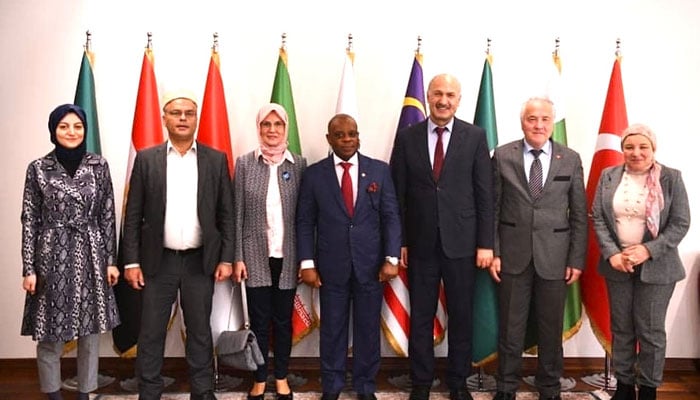
The D-8 Health Summit 2026 begins today at the Karachi Expo Centre, bringing together representatives from the eight Developing Islamic Countries (D-8) to strengthen cooperation in the health sector. The three-day summit will continue until July 25.

The international event is being organised jointly by the Ibn Sina Institute, the World Aging Council, and the Karachi Healthcare Expo and Conference.

This year’s theme is “Healthy and Age-Friendly D-8 Countries.” The summit will focus on a wide range of healthcare issues, including health diplomacy, the challenges of an ageing population, preventive healthcare, healthy longevity, medical tourism, digital health, the impact of climate change on public health, and sustainable healthcare policies.

A key highlight of the summit will be a keynote address by renowned gerontologist Dr Kamal Aydin. He will speak on “Global Health and Aging Diplomacy: A Future Vision for D-8 Countries,” presenting recommendations to promote international cooperation for developing healthy and age-friendly cities, particularly in the context of COP31.

Dr Aydin, who completed his education at the University of the Punjab in 1996, has maintained close academic and professional links with Pakistan throughout his career. He is attending this year’s summit as President of the D-8 Health Summit 2026 and the honorary chief guest of the Karachi Healthcare Expo and Conference.

In his message, Dr Aydin said it was a great honour to return to Pakistan, a country he considers his second home. He said it was gratifying to see the vision behind the Ibn Sina Institute and the World Aging Council, established nearly three decades ago, evolve into an international platform promoting global cooperation in health and ageing.

He also thanked the organisers of the Karachi Healthcare Expo and Conference, including Tanveer Abbas, Dr Abid Abbas Sheikh, and their team, for their efforts in arranging the event.

Alongside the summit, Karachi D-8 Healthcare Week 2026 is being held from July 20 to 27. The programme includes conferences, academic sessions, business-to-business meetings, investment discussions, innovation forums, and corporate social responsibility activities focused on healthcare and ageing.

During the event, organisers will also launch an international signature campaign supporting the establishment of a United Nations World Assembly on Ageing. In addition, the Global Health and Aging Ambassadors Programme will be officially introduced.

Similar Posts

  • | |

    Aqib Javed’s daughter Aqaba gets married in UK c…

    Former Pakistan cricketer and national team head coach Aqib Javed’s daughter, Aqaba Aqib, has tied the knot in a wedding ceremony held in the United Kingdom. Aqaba’s mother, renowned poet and writer Farzana Aqib, shared photographs from the wedding on social media, revealing that the ceremony took place in the UK on August 9. She extended prayers and best wishes to the newlyweds and both families. The wedding photographs showed Aqaba dressed in an elegant white bridal gown, while the groom appeared in a formal suit. Aqaba has also established an impressive academic background. Around three to four years ago, she completed a degree in Media and International Journalism from the University of Sussex. The wedding has attracted attention because of the family’s prominent association with Pakistani cricket and literature. Aqib Javed has made significant contributions to Pakistani cricket, while Farzana Aqib is known for her work in English literature and poetry. Farzana Aqib has a substantial following on social media and has reportedly authored around 70 books of English poetry. She has also received several international literary awards and has written works exploring Islamic history through English poetry.

  • | | |

    Pakistan seeks stronger economic ties with Califor…

    Pakistan’s Ambassador to the United States Rizwan Saeed Sheikh has held a series of meetings with senior officials, business leaders and members of the Pakistani-American community during his visit to California. The ambassador discussed ways to expand economic and commercial cooperation between Pakistan and the US state. He said developing stronger economic, trade and educational links with California was among Pakistan’s key priorities. Sheikh highlighted the potential for cooperation in sectors including modern technology and agriculture. He said both sides should focus on creating more opportunities for investment, business partnerships and the exchange of expertise. The ambassador also engaged with representatives of the American business community and investors. He encouraged them to examine Pakistan’s growing investment potential and explore opportunities for launching business ventures in the country. Sheikh said stronger links between Pakistani and American businesses could help increase trade and create new avenues for economic cooperation. He also highlighted the importance of educational connections between Pakistan and California. According to the ambassador, greater interaction between educational institutions, professionals and technology sectors could contribute to knowledge sharing and long-term cooperation. During his meetings with Pakistani-Americans, Sheikh praised their contribution to strengthening relations between Pakistan and the United States. He said the community had played an important role in promoting cultural understanding, local trade and people-to-people contacts. The ambassador said Pakistani-Americans could further contribute by building stronger business and cultural connections between the two countries. The meetings were part of Pakistan’s efforts to deepen engagement with California’s government, business sector and Pakistani-American community.

  • | |

    Eight bodies recovered after Broad Peak avalanche

    Rescue teams have recovered the bodies of eight mountaineers following the devastating avalanche on Broad Peak, while the search continues for two missing climbers. Another victim has been identified, but the body remains trapped in an area that rescuers have so far been unable to reach. Speaking to the media, the President of the Alpine Club of Pakistan described the incident as one of the deadliest accidents in the history of Broad Peak. He said a total of 11 climbers are believed to have been caught in the avalanche, triggering a large-scale rescue operation. He said the first phase of the operation began immediately after the incident. On the opening day, rescuers recovered the bodies of two climbers and also found partial human remains believed to belong to another victim. According to the Alpine Club, the first two recovered victims were a Nepalese mountaineer and a female climber from Oman. Rescue operations were carried out under extremely difficult weather and terrain conditions at high altitude. The Pakistan Army assisted the mission by providing helicopters to transport rescue teams and airlift the recovered bodies from the remote mountain. The aerial support played a key role in speeding up the recovery process. The Alpine Club president said that during the latest phase of the operation, the bodies of four Nepalese climbers and one Chinese mountaineer were successfully recovered and transported from the mountain. He added that rescuers have also identified another climber’s body. However, it is located in an inaccessible area, making immediate recovery impossible because of dangerous terrain and the continued risk of avalanches. Search teams are still looking for the remaining two missing climbers. Rescue officials said every effort is being made to locate them despite severe weather, snow-covered slopes and difficult mountain conditions. The tragedy has shocked Pakistan’s mountaineering community and highlighted the dangers faced by climbers attempting to scale some of the world’s highest peaks. Broad Peak, located in the Karakoram mountain range, is one of Pakistan’s tallest mountains and attracts climbers from around the world each year.

  • | |

    Trump hails Makkah Defence pact, calls it bold ste…

    WASHINGTON: US President Donald Trump has welcomed the newly signed Makkah Joint Defence Agreement between Pakistan, Saudi Arabia and Türkiye, describing the trilateral pact as an important step toward greater regional security. Trump said he was pleased to see the three countries formalise the agreement, arguing that it demonstrated a growing willingness among Middle Eastern and regional states to strengthen their ability to protect themselves. The agreement was signed in Makkah on August 7 during a summit involving Prime Minister Shehbaz Sharif, Saudi Crown Prince Mohammed bin Salman and Turkish President Recep Tayyip Erdogan. It establishes a framework for closer defence cooperation, collective deterrence and enhanced strategic coordination among the three countries. Although the pact has drawn comparisons with NATO, security analysts say it is primarily an institutionalisation of longstanding political and military ties rather than the creation of a new offensive military alliance. The framework is expected to facilitate greater cooperation in areas including intelligence sharing, defence planning, military coordination and strategic consultations. The agreement comes amid an increasingly complex regional security environment marked by conflicts, shifting alliances and emerging military threats. Supporters argue that stronger coordination among the three countries could enhance deterrence and contribute to regional stability. Pakistan brings extensive military and operational experience, while Saudi Arabia offers significant economic and political influence. Türkiye, meanwhile, contributes a developed defence industry, military technology and industrial capabilities. Analysts believe combining these strengths could improve the partners’ collective preparedness. Turkish President Erdogan has also described the agreement as a significant message for global peace. Speaking in an interview with Al Jazeera Arabic, he said the decision to sign the pact in Makkah gave it additional significance, particularly amid tensions between the United States and Iran. Erdogan stressed that Pakistan, Türkiye and Saudi Arabia sought to position themselves as advocates of peace and said the three countries would continue supporting diplomatic efforts to prevent conflict. Asked whether the agreement was comparable to NATO’s Article 5, Erdogan said its collective defence principle meant the three countries would have the opportunity to respond jointly if any member faced a serious threat. He also revealed that the framework could eventually expand beyond the three founding members. According to Erdogan, the agreement leaves the door open for other countries to join, with Egypt among the potential future participants. The pact is therefore emerging as a significant development in regional security cooperation, while its proponents present it as a defensive mechanism designed to strengthen deterrence and promote stability rather than fuel confrontation.

  • | | |

    Trump says US controls Strait of Hormuz

    US President Donald Trump has claimed that the United States is now controlling the Strait of Hormuz. Trump said the US Navy had cleared the entire waterway of naval mines. He made the remarks while speaking to reporters at the Oval Office. The Strait of Hormuz is a major international shipping route. It is also an important passage for global energy supplies. Any disruption in the area can affect international trade and energy markets. Trump was asked about the next steps following recent talks with Iran. However, he declined to provide details about what the United States would do next. The US president also indicated that Washington could increase pressure on Iran. He did not give specific details about what further action could be taken. Trump has also announced plans to seek compensation from Iran. The demand is linked to Americans who were killed or injured in various conflicts involving Iran. He had earlier said that Iran should provide compensation to the families of those killed aboard the US Navy destroyer USS Cole. Trump said his administration was seeking compensation for people who had been killed or wounded in different conflicts. He argued that Iran should be held responsible for the losses. According to Trump, Iran had not previously demanded compensation during earlier negotiations or discussions at different levels. He said Tehran had now unexpectedly raised such a demand. Trump said his decision to seek compensation from Iran would be made in response to the Iranian demand. The latest statements come as tensions between Washington and Tehran remain high. Trump has continued to signal that the United States is prepared to take further action if necessary. However, he did not reveal whether the US would pursue additional military or diplomatic measures.

  • | | | |

    Iran, Oman move closer to Hormuz shipping agreement

    TEHRAN: Iran and Oman have reached a preliminary understanding on the geographic coordinates of a proposed shipping route through the Strait of Hormuz, marking progress in negotiations aimed at regulating navigation through one of the world’s most strategically important waterways. Iranian Foreign Ministry spokesperson Esmaeil Baghaei said discussions between Tehran and Muscat had advanced positively and that both sides had agreed on the geographical framework of the proposed route. He added that a joint statement outlining the key points of the understanding was in its final stages and could be issued if the process is not disrupted by external factors. Despite the progress, Baghaei emphasised that the agreement alone would not automatically guarantee security in the Strait of Hormuz. He noted that ensuring stability in the region would require broader cooperation and continued diplomatic engagement. According to regional officials familiar with the negotiations, the proposed arrangement would give Iran a greater role in overseeing vessels entering the Gulf through the strategic waterway. However, several technical and operational issues still need to be resolved before any final agreement can be implemented. The Strait of Hormuz remains one of the world’s busiest energy transit routes, carrying a significant share of global oil and gas exports. Any changes to shipping arrangements in the area are closely watched by international markets due to their potential impact on global trade and energy supplies. Officials involved in the negotiations described the talks as constructive, while indicating that further consultations would continue before a formal announcement is made. Both Iran and Oman have maintained that dialogue remains the preferred path for addressing issues related to maritime navigation and regional stability.

Leave a Reply

Your email address will not be published. Required fields are marked *