fbr gst excise
|

FBR GST and excise collections rise by Rs 45 billion

The Federal Board of Revenue (FBR) recorded a net increase of 45 billion rupees in revenue generated from Federal Excise Duty (FED) and General Sales Tax (GST) during the 2025-26 fiscal year.

According to official sources, total combined collections from FED and GST reached 329 billion rupees for FY2025-26, compared to 284 billion rupees collected during the preceding 2024-25 fiscal year.

The overall tax collection figures reflect broader gains, with FBR’s total revenue reaching 357 billion rupees, an increase of 42 billion rupees over the previous year’s total.

Similar Posts

  • |

    Yungblud refuses to let injury stop his performances

    Yungblud is refusing to let a painful leg injury keep him away from the stage, even after suffering an accident just hours before one of his recent performances. The 29-year-old English musician revealed that he injured his leg in a dirt bike accident only two hours before taking the stage at the Sturgis Motorcycle Rally in South Dakota on August 9. Despite the injury, the singer decided to continue with the scheduled performance and appeared in front of thousands of fans. According to footage shared by a fan on TikTok, Yungblud addressed the crowd and admitted that his injury would affect the way he performed. He jokingly told concertgoers that he would not be able to move around or dance as energetically as he normally does because of the condition of his leg. However, the musician made it clear that the injury would not prevent him from doing what he loves. Rather than cancelling the show, he pushed through the pain and completed his performance for fans attending the motorcycle rally. Yungblud later gave an update to fans who were unable to attend the South Dakota concert. On August 17, the singer shared several photographs on Instagram showing his injured and bandaged leg, along with a crutch that he has been using while recovering. Alongside the pictures, he reassured fans that although his leg was in bad shape, he was still determined to continue performing. He also confirmed that he would be heading to Europe for upcoming shows in Portugal and Belgium, promising fans that the performances would still be full of energy. His update quickly attracted a wave of supportive messages from followers. Many fans praised the singer for refusing to let the injury stop him from appearing on stage, while others encouraged him to take some time to rest and properly recover. Some followers also used humor to lighten the situation. One fan praised him for continuing to show up despite the injury, while another jokingly referenced the phrase “break a leg,” suggesting that he had taken the expression a little too literally. Others were more concerned about his health and urged him to be careful and look after himself during his recovery. The Sturgis Motorcycle Rally performance marked the conclusion of the American leg of Yungblud’s Idols World Tour. Despite his unexpected injury, the singer appears determined to keep the tour moving forward, with European performances now on his schedule. Yungblud’s decision to perform just hours after the accident has further highlighted his commitment to his fans and his determination to remain on the road, even when faced with an unexpected setback.

  • | |

    PM Shehbaz calls for faster rightsizing reforms

      Prime Minister Shehbaz Sharif has emphasized the need to improve the efficiency and performance of government institutions by adopting modern technology and enhancing the professional training of public sector employees. He made these remarks while chairing a high-level meeting on the federal government’s rightsizing initiative and measures aimed at improving the overall efficiency and effectiveness of state institutions. The meeting reviewed the progress made under the government’s administrative reform agenda, which seeks to reduce the size of the public sector, eliminate unnecessary expenditures, and ensure more efficient delivery of public services. Addressing the participants, the Prime Minister said that technological innovation and skill development are essential for transforming the public sector into a more responsive, transparent, and efficient system. He stressed that government institutions must embrace modern digital solutions while ensuring that employees receive the training required to adapt to new technologies and administrative practices. Shehbaz Sharif said the government’s rightsizing policy is already producing positive results by reducing unnecessary spending and improving the utilization of public resources. He noted that several major reforms have been implemented under the initiative, including the closure of the Utility Stores Corporation, Pakistan Public Works Department (Pak PWD), and the Pakistan Agricultural Storage and Services Corporation (PASSCO). According to the Prime Minister, these decisions were taken after careful consideration to streamline government operations, eliminate overlapping functions, and reduce the financial burden on the national exchequer. He said the objective of the reforms is to build a leaner and more efficient public sector capable of delivering better services to citizens while ensuring fiscal discipline. The Prime Minister stated that the savings generated through the rightsizing initiative would help strengthen the country’s financial position and allow the government to allocate more resources toward priority sectors such as education, healthcare, infrastructure, and economic development. To ensure transparency and accountability, Shehbaz Sharif directed that all positions and institutions abolished under the rightsizing programme should undergo an independent third-party audit. He said the audit would assess whether the reforms had been implemented effectively and whether the expected financial and administrative benefits had been achieved. The Prime Minister also instructed the relevant authorities to accelerate the implementation of all remaining rightsizing measures. He emphasized that administrative reforms should be carried out efficiently while maintaining transparency and ensuring that public services are not disrupted during the restructuring process. During the meeting, officials briefed the participants on the progress achieved so far. They informed the Prime Minister that vacant positions across various federal ministries and government departments have been abolished as part of the government’s effort to reduce unnecessary staffing and improve administrative efficiency. The meeting was further informed that work is also underway on the privatization of several state-owned enterprises. Officials said the government is taking practical steps to transfer selected public sector entities to the private sector in accordance with its broader economic reform programme. The privatization process aims to reduce the financial burden of loss-making enterprises on the national budget while encouraging greater investment, improved management, and enhanced productivity. Participants also reviewed the overall progress of the government’s institutional reform agenda and discussed future steps to further improve governance and public sector performance. The Prime Minister reiterated that administrative reforms are essential for ensuring sustainable economic growth, strengthening public finances, and delivering better services to the people. Concluding the meeting, Shehbaz Sharif reaffirmed the government’s commitment to continuing structural reforms aimed at creating a modern, efficient, and accountable public sector. He said that through the adoption of technology, improved training, transparent governance, and responsible financial management, Pakistan’s government institutions can become more effective in meeting the needs of citizens and supporting the country’s long-term development goals.

  • | | | |

    Iran warns Ukraine of response over alleged Caspian Sea attack

    Iranian officials have warned Ukraine that Tehran will not ignore attacks against its interests. The warning came after Iran accused Ukraine of allegedly targeting an Iranian commercial vessel in the Caspian Sea. Ebrahim Azizi, chairman of the Iranian Parliament’s National Security and Foreign Policy Committee, said any action against Iran would carry consequences. He said the United States and Israel were already aware of Iran’s position. Azizi also warned that Ukraine could soon realise that Iran does not leave hostile actions against it unanswered. He said the list of countries making what he described as wrong calculations about Iran’s response was growing. The remarks followed an alleged attack on an Iranian commercial ship in the Caspian Sea. Iranian authorities said one crew member was killed and another was injured in the incident. Iran’s Foreign Ministry condemned the reported attack. It also summoned Ukraine’s chargé d’affaires to formally lodge a protest. The incident has raised concerns about the possibility of the wider Middle East conflict creating new tensions involving Ukraine and Iran. The Caspian Sea has now emerged as another area of concern amid the escalating regional disputes. Earlier, Ukrainian President Volodymyr Zelenskyy claimed that a Russian vessel allegedly carrying weapons to Iran had been targeted in the Caspian Sea. Kyiv has previously accused Iran of supporting Russia in its war against Ukraine. Iran, however, has strongly criticised what it describes as attacks on its territory and interests. Tehran has repeatedly warned that hostile actions could trigger retaliation. Azizi’s latest comments suggest that tensions between Iran and Ukraine could increase following the reported maritime incident. His warning also comes at a time when Iran is already facing heightened military and diplomatic pressure

  • |

    Electricity tariff may rise by Rs2.50 per unit as July FCA pushes recovery above Rs34bn

    ISLAMABAD: Electricity consumers across Pakistan could face an additional burden of around Rs2.50 per unit as the government moves to recover more than Rs34 billion through the July 2026 monthly Fuel Charges Adjustment (FCA), according to sources. The proposed increase is expected to affect consumers of distribution companies (Discos) as well as K-Electric, with the final adjustment to be determined by the National Electric Power Regulatory Authority (Nepra) after reviewing the relevant power purchase and generation costs. Sources said the expected positive FCA for July has largely been driven by higher electricity consumption during the peak summer season and greater reliance on expensive generation sources. Among the key factors behind the anticipated increase are the use of liquefied natural gas (LNG) procured from the spot market and furnace oil to meet additional electricity requirements, particularly during periods of high demand. June FCA already approved The expected July adjustment comes after Nepra approved a positive FCA of Re0.7503 per unit for electricity consumed in June 2026. The adjustment was lower than the Rs1.20 per unit sought by the Central Power Purchasing Agency-Guaranteed (CPPA-G). Under the FCA mechanism, variations in fuel costs and other electricity generation and purchase-related expenses are passed on to consumers through periodic adjustments. For July, CPPA-G will submit its relevant claims to Nepra, which will examine the costs and determine the admissible adjustment before issuing separate decisions for the respective distribution companies. Multiple costs to be examined The regulator is expected to assess several components included in the FCA claim before determining the final amount recoverable from consumers. Separate adjustments will subsequently be calculated for each Disco after taking into account electricity purchased through CPPA-G, bilateral arrangements with small power producers and captive power producers, as well as electricity supplied under net-metering arrangements. The final impact on consumers could therefore vary depending on the individual power procurement mix and applicable tariff structure of each distribution company. Expensive generation raises concerns The expected tariff increase has emerged at a challenging time for Pakistan’s industrial sector, where electricity prices remain a major concern for manufacturers and exporters. Industrial consumers are already facing pressure from elevated production costs, while exporters are also dealing with uncertainty caused by deteriorating security and economic conditions in the Middle East. The latest FCA discussion has also brought the issue of partial-loading charges under scrutiny. During a recent hearing, Nepra raised questions over approximately Rs4.9 billion in partial-loading costs and asked CPPA-G to explain the reasons behind the additional expenditure and measures being considered to control it. Solar power changes demand pattern CPPA-G told the regulator that the partial-loading charges were not primarily the result of inefficient operation by power plants. Instead, the agency attributed the costs largely to changes in electricity consumption patterns caused by the rapid expansion of rooftop solar generation. According to CPPA-G, daytime demand from the national grid has declined as more consumers generate electricity through rooftop solar systems. Conventional power plants are consequently required to operate below their optimum capacity during solar-generation hours. However, demand rises again in the evening when solar generation falls, forcing grid-connected power plants to increase generation quickly. This change in the daily demand curve has created additional operational costs for the power system. The authority noted that partial-loading charges recorded in June 2026 were around Rs1 billion higher than the corresponding amount in June 2025, highlighting the growing financial impact of the changing electricity demand pattern. Plant shutdowns could increase costs The Independent System and Market Operator (ISMO) also informed the regulator that shutting down power plants during periods of lower demand would not necessarily provide a cheaper solution. According to ISMO, taking plants completely offline to avoid partial-loading charges could result in substantial start-up expenses when the units are required again to meet evening demand. The issue has therefore become increasingly important as the rapid growth of distributed solar generation continues to alter the traditional pattern of electricity consumption. Exporters seek cheaper fuel options Amir Sheikh, a prominent textile exporter, called for the removal of the levy imposed on high-speed diesel and furnace oil-related generation costs, arguing that furnace-oil-based power plants could offer an alternative to expensive RLNG-fired generation under certain circumstances. He maintained that allowing more flexible use of available generation sources could help reduce the overall cost of electricity, particularly during periods when LNG prices remain elevated. Sheikh also proposed a change in the way FCA-related surcharges are calculated. He suggested that the additional charges should be recovered on the basis of projected electricity consumption rather than only through the conventional mechanism, similar to the approach followed under quarterly tariff adjustments (QTA). Falling demand creates another challenge Another concern raised during the discussion was the continuing decline in electricity demand and its possible implications for future tariff adjustments. Rehan Javed highlighted the potential impact of lower electricity consumption on the power sector’s financial structure, particularly as fixed system costs are spread over a smaller volume of electricity sales. The Ministry of Energy’s Power Division, however, said the decline in demand was largely linked to the increasing number of consumers using net-metering facilities. The ministry maintained that although distributed solar generation was changing electricity consumption patterns, its impact on future quarterly tariff adjustments would not necessarily be as severe as feared by industrial consumers. Government seeks to avoid costly LNG purchases The Power Division further explained that electricity demand was being managed in a manner designed to reduce dependence on expensive RLNG spot-market cargoes. Officials said excessive reliance on spot LNG during the summer could significantly increase power generation costs and ultimately translate into higher electricity tariffs for consumers. The government is therefore attempting to balance electricity availability, fuel costs and demand management while dealing with the changing structure of Pakistan’s power market. If Nepra ultimately approves an FCA close to the expected Rs2.50 per unit, consumers could face another substantial increase in their electricity bills. The final adjustment, however, will depend on Nepra’s assessment of CPPA-G’s July claim and the costs deemed

  • | | |

    Suicide blast outside Swat police station injures …

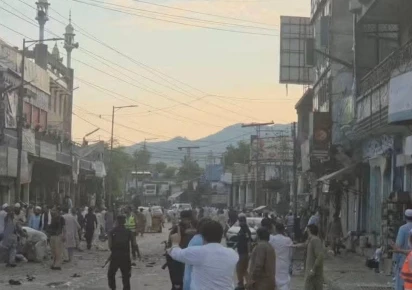
    A suspected suicide bomber detonated explosives outside the Kabal Police Station in Swat district on Sunday after reportedly failing to enter the premises, leaving several police personnel and civilians injured. According to senior police officials, the attacker tried to force his way into the police station but was intercepted by an alert police officer at the main entrance. Unable to gain access, the suspect blew himself up near the station’s gate, triggering a powerful explosion. Authorities said the police station is located close to the police lines and several other sensitive government installations, raising concerns that the attacker may have intended to target security facilities. Officials credited the swift response of police personnel with preventing the bomber from reaching the compound, which likely averted greater casualties and damage. Initial reports indicated that at least four police officers sustained serious injuries in the blast, while two civilians were also hurt. However, rescue officials later confirmed that more than 15 injured people had been transported to different hospitals for medical treatment, suggesting the number of casualties could rise as rescue efforts continued. Emergency response teams rushed to the scene immediately after the explosion, providing first aid to the injured and shifting them to nearby healthcare facilities. Security forces cordoned off the area, launched a search operation, and began collecting evidence to determine the nature of the attack and identify those behind it. Police officials also clarified that a protest by local youths was taking place in the wider area at the time of the incident, but the demonstration was located some distance from the blast site and was not directly affected.

  • | |

    Dar vows stronger, peaceful and prosperous Pakista…

    Deputy Prime Minister and Foreign Minister Ishaq Dar has stressed the need to implement the Islamabad Memorandum of Understanding (MoU) in accordance with its spirit and text. Dar said dialogue and diplomacy are the only practical ways to resolve outstanding issues. He said Pakistan has always supported peace, negotiations, cooperation and mutual respect among nations. The foreign minister said developments during the past year had once again highlighted the urgent need to settle longstanding disputes peacefully. He said unresolved disputes remain a major challenge to regional peace and stability. Dar particularly highlighted the Jammu and Kashmir dispute. He described the issue as one of the key causes of instability in the region. He reaffirmed Pakistan’s continued moral, political and diplomatic support for the Kashmiri people. He said Pakistan would continue supporting the Kashmiri people in their struggle for their rights. He also stressed the importance of resolving disputes through peaceful dialogue and diplomatic engagement. Dar paid tribute to the people serving Pakistan and confronting threats from its enemies. He said these threats exist both inside and outside the country. He added that the nation stands united with those working to protect the country. The foreign minister expressed gratitude for the sacrifices made by security personnel and other individuals serving the national interest. He said their services and sacrifices would always be remembered. Dar also called for stronger national institutions. He urged the people to maintain national unity and work together for the country’s progress. He stressed the need to fully utilise the abilities and potential of Pakistan’s people. He said collective efforts were essential to building a strong and prosperous future.

Leave a Reply

Your email address will not be published. Required fields are marked *