field marshal asim
| |

Field Marshal Asim Munir,  Iranian Momeni hold ke…

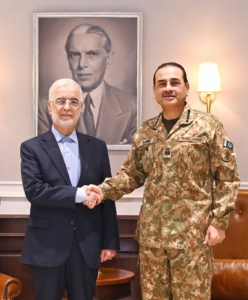
Iranian Interior Minister Eskandar Momeni called on Field Marshal Syed Asim Munir, Chief of Army Staff and Chief of Defence Forces, at the General Headquarters (GHQ) in Rawalpindi on Tuesday to discuss regional security and bilateral cooperation.

Field Marshal Asim Munir,  Iranian Momeni hold key security talks

The meeting focused on issues of mutual interest, including regional security, defence cooperation and effective border management between Pakistan and Iran.

Both sides exchanged views on the evolving regional security environment and stressed the importance of maintaining close coordination to address common security challenges and strengthen bilateral relations.

The Iranian interior minister appreciated Pakistan’s diplomatic efforts in promoting regional peace and stability. He acknowledged the country’s role in encouraging dialogue, reducing tensions and supporting peaceful solutions to regional disputes.

The two sides also underscored the importance of continued cooperation to improve border security and strengthen mechanisms aimed at preventing cross-border threats while promoting stability in the region.

The meeting concluded with a shared commitment to enhancing cooperation and maintaining regular coordination in support of regional peace, security and mutual prosperity.

Similar Posts

  • | | |

    Weak bureaucracy lies at heart of governance crisi…

    Recent remarks by Interior Minister Mohsin Naqvi, who said that Pakistan’s governance system has “collapsed,” have once again sparked debate over the country’s administrative failures. However, the real issue goes far beyond the number of provinces or administrative units and cannot be attributed solely to a lack of political will at the highest level. The core problem, according to the analysis, is the gradual weakening of Pakistan’s civil administrative structure, which has steadily lost its ability to govern effectively over the past several decades. Instead of identifying this institutional failure, the minister’s comments appear to focus on the symptoms of the crisis rather than its root causes. The repeated reliance on extraordinary measures, task forces, and parallel administrative structures itself reflects the inability of the regular civil bureaucracy to perform its responsibilities efficiently. Under the leadership of Army Staff Field Marshal Asim Munir,the military leadership has consistently emphasized economic revival, action against organized mafias, and restoring investor confidence. The establishment of the Special Investment Facilitation Council (SIFC) also emerged as a response to the inability of the civil bureaucracy to deliver timely economic solutions. However, such initiatives cannot permanently replace an efficient civilian administrative system. The governance crisis stems from the persistent decline in the effectiveness of Pakistan’s civil bureaucracy across the federation, provinces, divisions, and districts. Political interference, weak accountability, and poor human resource management have significantly undermined its performance. Punjab is often cited as a partial exception, where relatively limited political interference in routine administration has enabled the bureaucracy to function more effectively. This reinforces the argument that sustainable governance depends on institutional autonomy and merit-based administration rather than temporary or emergency arrangements. Governance experts have long advocated restoring the Establishment Division at the federal level and the Services and General Administration Departments (S&GADs) in the provinces to their original role as independent institutions responsible for managing human resources. Their objective is to ensure that appointments, promotions, and career planning remain protected from political influence and external pressure. The analysis further argues that Pakistan’s civil service should adopt a structured personnel management system similar to the military’s Military Secretary Branch at General Headquarters (GHQ), where recruitment, promotions, training, and career progression are managed through institutional discipline based on merit and performance rather than political considerations. The military’s internal human resource management system is often regarded as organized, merit-based, and largely insulated from political interference. In contrast, the civil Establishment Division is frequently viewed as a bureaucratic office where transfers and appointments are influenced by political lobbying, personal connections, and pressure from powerful groups instead of institutional needs. These practices have produced long-term consequences. Civil servants are often assigned to positions unrelated to their expertise, career planning remains weak or absent, and accountability mechanisms continue to be inconsistent and ineffective. As a result, governance across various sectors has suffered. The report notes that these shortcomings have been identified repeatedly over the years. More than 20 commissions and reform committees have reviewed Pakistan’s civil service structure during the country’s history. Between 1996 and 2008 alone, at least six major studies highlighted the same concerns, including politicization of the bureaucracy, the absence of merit-based appointments, and weak institutional management of human resources. Despite these findings, most recommendations were never implemented. Successive governments, whether civilian or military, have shown little willingness to reduce their influence over administrative appointments and transfers. Consequently, repeated attempts at civil service reform have failed to produce lasting institutional change. The analysis concludes that Pakistan’s governance crisis is not the result of a failure to identify the problem but rather a lack of political commitment to implementing meaningful institutional reforms. In this context, Mohsin Naqvi’s recent remarks do not fully address the deeper structural weaknesses within the state. The central issue is not merely that the system has collapsed, but that the country’s primary administrative engine—the civil bureaucracy—has been allowed to deteriorate without comprehensive reform. The proposed solution is not the creation of additional provinces but the rebuilding of the civil administrative system on the principles of merit, protection from political interference, and professional career management comparable to the military’s administrative framework.

  • |

    Trump’s former lawyer Todd Blanche confirmed as US attorney general

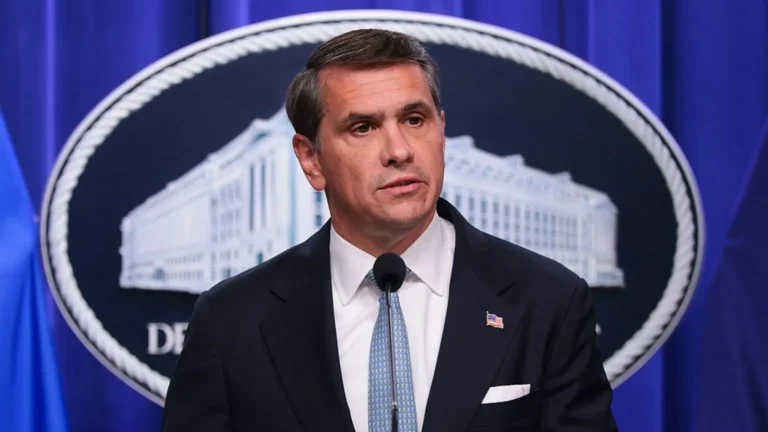
    Todd Blanche, a former personal attorney to US President Donald Trump, has been confirmed as the country’s attorney general after a closely contested Senate vote. Blanche secured confirmation by 50 votes to 49, with Republican Senators Susan Collins and Lisa Murkowski joining Democrats in opposing his nomination. Senator Bill Cassidy provided the crucial Republican vote in Blanche’s favour after saying he believed Blanche was the strongest candidate Trump was likely to nominate. The vote ended a prolonged dispute between the Trump administration and Senate Republicans over Blanche’s appointment. He had been serving as acting attorney general since April, after Pam Bondi was removed from the position. All Senate Democrats voted against Blanche’s confirmation. Several Republican lawmakers had questioned Blanche’s record and raised concerns about his involvement in a number of controversial matters. Among them was his handling of documents related to convicted sex offender Jeffrey Epstein and his role in developing Trump’s proposed $1.8 billion “anti-weaponization” fund. The proposed fund was intended to compensate people who claimed they had been politically targeted or persecuted by the government. However, critics, including Murkowski, warned that the scheme could potentially benefit people prosecuted for their involvement in the January 6, 2021 attack on the US Capitol. During his confirmation process, Blanche promised to abandon the proposed fund following opposition from Republican senators. Questions remain over whether that commitment would prevent the administration from introducing a similar programme under a different structure in the future. Murkowski said she opposed Blanche because she lacked confidence that he would be willing to challenge what she described as the administration’s worst impulses. She also expressed concern about the increasing politicisation of the Justice Department. Collins raised separate concerns over Blanche’s involvement in Trump’s $10 billion lawsuit against the Internal Revenue Service. Despite those reservations, she ultimately did not support his confirmation. Cassidy, meanwhile, said he trusted Blanche to provide Trump with independent and candid legal advice. He acknowledged that the president ultimately determines the direction of the Justice Department but argued that Senate confirmation would give Blanche greater authority to advise the administration and push back when necessary. Cassidy also said he did not want political disagreements to prevent the Justice Department from carrying out its responsibilities, particularly in combating violent crime. Blanche’s confirmation marks a significant development for the Trump administration, given his previous role as Trump’s personal lawyer. He was serving as deputy attorney general when he assumed the department’s temporary leadership in April.

  • | | | |

    Petrol down Rs3.39, diesel Rs4.07

    The federal government has announced another reduction in petroleum prices, lowering the rates of both petrol and high-speed diesel (HSD) effective August 5 under the recently introduced daily fuel pricing mechanism. According to a notification issued by the Ministry of Petroleum, the price of petrol has been reduced by Rs3.39 per litre, bringing the new rate to Rs328.56 per litre. The price of high-speed diesel has also been cut by Rs4.07 per litre, with the revised rate set at Rs385.86 per litre. The latest reduction follows a similar decrease announced a day earlier, reflecting continued adjustments under the government’s daily fuel price review system. The new pricing mechanism, introduced on July 17, determines fuel prices using a seven-day average of international oil market rates. The policy aims to align domestic petroleum prices more closely with global market trends and allow quicker adjustments in response to fluctuations in crude oil prices. Pakistan remains heavily dependent on imported crude oil and refined petroleum products, making local fuel prices highly sensitive to movements in international energy markets. Changes in global oil prices directly affect the country’s import bill, foreign exchange reserves and inflation. Energy analysts say international petroleum prices continue to be influenced by geopolitical developments, including tensions in the Middle East, decisions by OPEC+ countries, sanctions on major oil producers and disruptions in key global shipping routes. These factors can significantly impact crude oil prices and transportation costs, ultimately affecting domestic fuel prices in Pakistan.

  • | |

    What Keith Urban really thinks of Nicole Kidman’…

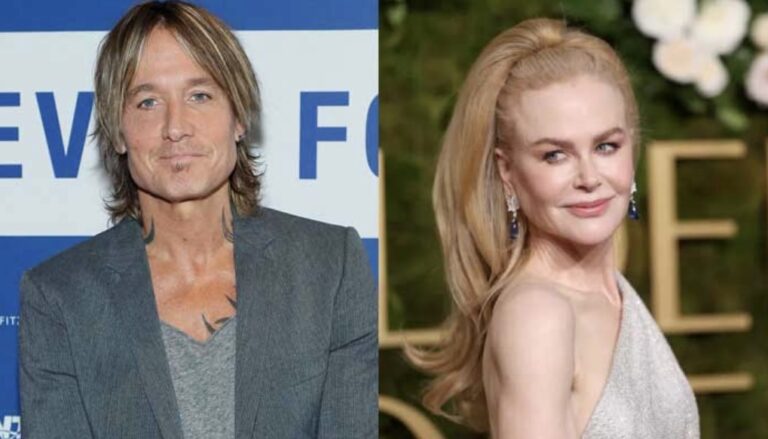
    Keith Urban and Nicole Kidman have officially entered a new chapter after ending their nearly two-decade marriage. The former couple finalized their divorce in January 2026, months after their separation became public in September 2025. Now, reports about Kidman’s possible new romance with businessman Michael Reinstein have sparked fresh interest in how Urban feels about his ex-wife moving on. According to recent reports, Urban is not necessarily feeling relieved about Kidman’s new relationship. In fact, one report claimed that the country singer was “absolutely devastated” after seeing his former wife grow closer to Reinstein. The conflicting reports show that Urban’s private feelings remain difficult to confirm. (Page Six⁠) Nicole Kidman’s new romance rumors Kidman first sparked romance speculation with Reinstein after the pair were photographed together during a trip to Portofino, Italy, in July. Reinstein is a private-equity businessman, and photographs showed the two spending time together at a hotel during their Italian getaway. (Page Six⁠) The romance rumors continued after the pair were reportedly seen together in Los Angeles. On July 30, Reinstein was photographed picking Kidman up from the airport, and the two were later seen together in his Ferrari. (¡HOLA!⁠) Neither Kidman nor Reinstein has publicly confirmed that they are officially dating. Where Keith Urban reportedly stands Reports about Urban’s reaction have been inconsistent. Some outlets have claimed that he feels relieved to see Kidman moving forward, while others have cited sources saying that the singer has struggled emotionally with seeing his former wife with someone new. (News.com.au⁠) Because neither Urban nor Kidman has publicly confirmed these private feelings, the reports should be treated as speculation rather than established fact. What is confirmed is that their marriage has officially ended. The couple were married for 19 years and share two daughters. Since their divorce, both stars have continued focusing on their careers and family lives. A new chapter for both stars Kidman has largely remained private about her personal life following the split. After the divorce, she has continued working on major acting projects and spending time with her family. Urban, meanwhile, remains focused on his country music career. Although public interest continues to surround their relationship, the former couple now appear to be navigating separate lives. For now, speculation surrounding Urban’s reaction to Kidman’s rumored romance continues, but the singer himself has not publicly revealed exactly what he thinks about her relationship with Reinstein.

  • |

    Harry sees Invictus Games as chance to reconnect with King Charles

    Prince Harry reportedly views next year’s Invictus Games in Birmingham as a genuine opportunity to repair his strained relationship with King Charles. The event is said to hold deep personal significance for him. According to RadarOnline, organisers of the Invictus Games are planning to invite the monarch to attend next year’s edition. Insiders claim the Duke of Sussex sees the homecoming event as a meaningful chance to grow closer to his father. A source told the outlet that Harry views the Birmingham Games as one of the most significant moments he’s experienced in years. According to the insider, bringing Invictus back to Britain carries deep personal weight for him. The source explained that Harry is determined to make the event a landmark occasion, one that celebrates both the organisation’s achievements and the servicemen and women it was created to support. That ambition, they said, remains central to his motivation. Beyond the event itself, insiders suggest there’s an added layer of significance given where things currently stand between Harry and his father. According to the source, Harry believes Invictus offers a rare setting where Charles could attend without the visit becoming solely about their relationship. The insider explained that the competitors would remain the true focus of the occasion throughout. At the same time, father and son could appear together in support of a cause they both understand and care about. That dynamic, sources suggest, could offer a low-pressure opportunity for the two to reconnect. Rather than a formal reconciliation attempt, the setting would allow any interaction between them to unfold naturally within a broader, shared purpose. For Harry, insiders say, the Games represent more than just an athletic event. They are being viewed as a potential turning point in a relationship that has remained visibly strained in recent years. Whether King Charles ultimately accepts the invitation remains to be seen. If he does, though, the Birmingham Games could become one of the more closely watched royal moments of the coming year.

  • |

    Atiqa Odho questions casting choice in Dar Ke Nijat

    Veteran Pakistani actress Atiqa Odho has shared her thoughts on what she believes was a casting mismatch in the drama serial Dar Ke Nijat, saying one particular casting decision made it difficult for her to fully connect with the story. During a recent episode of the television review show Kya Drama Hai, Odho discussed different aspects of the drama and praised most of its casting. However, she admitted that she struggled to accept actress Saba Hameed in the role of Faran Tahir’s mother, explaining that the casting felt unconvincing to her. According to Odho, the overall cast of Dar Ke Nijat has been carefully selected, but she felt that Saba Hameed portraying the mother of Faran Tahir did not appear believable on screen. She noted that while actors are capable of playing a wide variety of characters regardless of their real-life age or appearance, audiences also need to feel that the relationships presented in a drama are convincing. The actress explained that her reservations were influenced by another television drama currently airing at the same time. In Bus Tera Saath Ho, Saba Hameed and Faran Tahir are seen portraying husband and wife, making it difficult for viewers to immediately accept them as mother and son in Dar Ke Nijat. Odho pointed out that watching the same pair in two entirely different family dynamics simultaneously affected the realism of the characters for her. She said that although actors often take on diverse roles, parallel broadcasts can sometimes create confusion and reduce the emotional impact of a performance. She also commented on Saba Hameed’s appearance, describing her as an elegant, stylish and youthful actress whose screen presence does not naturally align with traditional grandmotherly roles. Odho said that despite efforts to transform her look for the character, she still found it difficult to view her as an elderly matriarch. In her opinion, the makeover appeared forced rather than natural, preventing her from becoming fully immersed in the story. She stressed that this was her personal perspective and acknowledged that other viewers may have different opinions about the casting. Odho further remarked that she understands actors frequently portray characters outside their real-life age brackets and appreciates the creative freedom that comes with acting. Nevertheless, she believes that casting decisions should also consider audience perception, particularly when the same performers are appearing in multiple dramas at the same time in dramatically different relationships. The veteran actress emphasized that this single issue stood out to her while watching Dar Ke Nijat, even though she otherwise admired the production and its performances. Her comments have since sparked discussion among drama fans, with many debating whether simultaneous casting in contrasting family roles can affect a viewer’s ability to suspend disbelief. The conversation has also reignited broader discussions about casting choices in television dramas, particularly when popular actors appear in multiple projects airing concurrently. While some viewers agree that repeated pairings can be distracting, others argue that talented performers should be judged solely on how convincingly they portray their characters, regardless of their roles in other productions.

Leave a Reply

Your email address will not be published. Required fields are marked *