weak bureaucracy lies
| | |

Weak bureaucracy lies at heart of governance crisi…

Recent remarks by Interior Minister Mohsin Naqvi, who said that Pakistan’s governance system has “collapsed,” have once again sparked debate over the country’s administrative failures. However, the real issue goes far beyond the number of provinces or administrative units and cannot be attributed solely to a lack of political will at the highest level.

The core problem, according to the analysis, is the gradual weakening of Pakistan’s civil administrative structure, which has steadily lost its ability to govern effectively over the past several decades.

Instead of identifying this institutional failure, the minister’s comments appear to focus on the symptoms of the crisis rather than its root causes. The repeated reliance on extraordinary measures, task forces, and parallel administrative structures itself reflects the inability of the regular civil bureaucracy to perform its responsibilities efficiently.

Under the leadership of Army Staff Field Marshal Asim Munir,the military leadership has consistently emphasized economic revival, action against organized mafias, and restoring investor confidence. The establishment of the Special Investment Facilitation Council (SIFC) also emerged as a response to the inability of the civil bureaucracy to deliver timely economic solutions. However, such initiatives cannot permanently replace an efficient civilian administrative system.

The governance crisis stems from the persistent decline in the effectiveness of Pakistan’s civil bureaucracy across the federation, provinces, divisions, and districts. Political interference, weak accountability, and poor human resource management have significantly undermined its performance.

Punjab is often cited as a partial exception, where relatively limited political interference in routine administration has enabled the bureaucracy to function more effectively. This reinforces the argument that sustainable governance depends on institutional autonomy and merit-based administration rather than temporary or emergency arrangements.

Governance experts have long advocated restoring the Establishment Division at the federal level and the Services and General Administration Departments (S&GADs) in the provinces to their original role as independent institutions responsible for managing human resources. Their objective is to ensure that appointments, promotions, and career planning remain protected from political influence and external pressure.

The analysis further argues that Pakistan’s civil service should adopt a structured personnel management system similar to the military’s Military Secretary Branch at General Headquarters (GHQ), where recruitment, promotions, training, and career progression are managed through institutional discipline based on merit and performance rather than political considerations.

The military’s internal human resource management system is often regarded as organized, merit-based, and largely insulated from political interference. In contrast, the civil Establishment Division is frequently viewed as a bureaucratic office where transfers and appointments are influenced by political lobbying, personal connections, and pressure from powerful groups instead of institutional needs.

These practices have produced long-term consequences. Civil servants are often assigned to positions unrelated to their expertise, career planning remains weak or absent, and accountability mechanisms continue to be inconsistent and ineffective. As a result, governance across various sectors has suffered.

The report notes that these shortcomings have been identified repeatedly over the years. More than 20 commissions and reform committees have reviewed Pakistan’s civil service structure during the country’s history. Between 1996 and 2008 alone, at least six major studies highlighted the same concerns, including politicization of the bureaucracy, the absence of merit-based appointments, and weak institutional management of human resources. Despite these findings, most recommendations were never implemented.

Successive governments, whether civilian or military, have shown little willingness to reduce their influence over administrative appointments and transfers. Consequently, repeated attempts at civil service reform have failed to produce lasting institutional change.

The analysis concludes that Pakistan’s governance crisis is not the result of a failure to identify the problem but rather a lack of political commitment to implementing meaningful institutional reforms.

In this context, Mohsin Naqvi’s recent remarks do not fully address the deeper structural weaknesses within the state. The central issue is not merely that the system has collapsed, but that the country’s primary administrative engine—the civil bureaucracy—has been allowed to deteriorate without comprehensive reform.

The proposed solution is not the creation of additional provinces but the rebuilding of the civil administrative system on the principles of merit, protection from political interference, and professional career management comparable to the military’s administrative framework.

Similar Posts

  • |

    Progressive Abdul El-Sayed and moderate Haley Stevens lock horns in high-stakes Michigan Democratic Senate primary

    Voters across Michigan headed to the polls on Tuesday for a pivotal Democratic Senate primary that has emerged as a major battleground testing the ideological direction of the party. Former public health director Abdul El-Sayed faced four-term US Representative Haley Stevens in a fierce contest to secure the nomination to replace retiring Democratic Senator Gary Peters. The election night watch party for El-Sayed in Detroit saw left-wing commentator Hasan Piker launch a sharp critique against the Democratic political establishment while speaking to media representatives. Piker praised El-Sayed’s campaign as an “issues-first” movement, asserting that grassroots engagement carried greater weight than financial backing. Piker drew specific attention to external campaign funding, taking aim at the more than $30 million (£23.5 million) poured into the race by political action committees affiliated with the American Israel Public Affairs Committee (AIPAC) in support of Stevens. Describing the influx of negative advertising against El-Sayed as a “heinous smear campaign”, Piker expressed hope that mainstream Democrats would learn from El-Sayed’s approach. He also dismissed suggestions that the candidate or his high-profile backers would prove to be a general election liability, arguing that voters are disillusioned with personality-driven politics and seeking structural policy changes. Throughout the primary, the candidates presented starkly contrasting visions for the party’s future in the battleground state. El-Sayed, who gained endorsement from Senator Bernie Sanders, focused his platform on reducing corporate influence in politics, expanding healthcare access, and providing economic support to working families. Responding to characterisations regarding his political stance, El-Sayed clarified that he advocates for regulated capitalism rather than socialism. Conversely, Stevens leaned on her tenure in the US House of Representatives and her previous role in the Obama administration, positioning herself as a pragmatic candidate with the legislative track record needed to retain the seat. While earlier polling indicated El-Sayed held a slight edge, surveys suggested Stevens might hold broader appeal amongst moderate voters in the upcoming general election. The political friction surrounding the primary also drew public commentary from US President Donald Trump, who characterised the race as a contest between a “communist and a socialist.” The winning Democratic nominee will move on to face Republican candidate Mike Rogers in the November general election, a race anticipated to play a crucial role in determining party control of the US Senate.

  • |

    Missing pet dog Duke returns to Wasim Akram

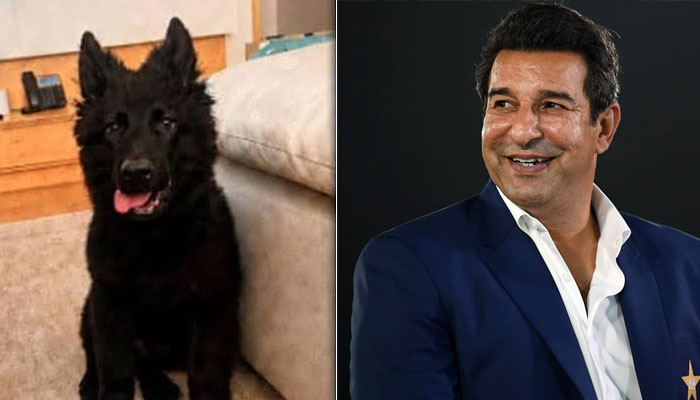
    Former Pakistan cricket captain Wasim Akram has been reunited with his missing pet dog, Duke, bringing an end to an anxious search that drew widespread public attention on social media. The dog had gone missing from DHA Phase 8 in Karachi earlier this week. Concerned about Duke’s disappearance, Akram appealed to the public for help in locating the pet and asked anyone with information to come forward. To encourage people to assist in the search, the former fast bowler announced a cash reward of Rs250,000 through his Instagram Story. In his message, he described Duke as a young black dog and requested that anyone who found him contact the family immediately. The appeal quickly gained traction online, with cricket fans, animal lovers and social media users sharing Akram’s posts in an effort to help locate the missing pet. The case also attracted the attention of local police, who assisted in the search. On Friday, Akram confirmed that Duke had been found safe. He shared the update through a video on social media, expressing his happiness and relief after being reunited with his beloved pet. The former captain thanked everyone who participated in the search, including members of the public who shared information and police officers who extended their support during the operation. He said the overwhelming response from people helped make the reunion possible. Akram also expressed appreciation for the kindness shown by well-wishers, saying the support received during the search reflected the compassion of the community. Meanwhile, his wife, Shaniera Akram, celebrated Duke’s safe return by sharing photographs of the dog on her Instagram Story. She also thanked everyone who had helped spread the family’s appeal and prayed for Duke’s safe recovery.

  • | |

    Danyal Zafar’s embarrassing school moment goes viral

    Pakistani singer and actor Danyal Zafar has delighted fans after a humorous personal anecdote detailing an embarrassing moment from his school days resurfaced on social media, quickly going viral across digital platforms. ​Known for his candid personality and self-deprecating humor, the young artist—who made a name for himself in television hit series like Tanaa Banaa and Zanjeerain—recalled the nostalgic incident during an interactive digital appearance, leaving viewers in splits. ​Sharing the lighthearted memory, Danyal reminisced about his student days at Beaconhouse in Lahore and the awkward situations that often accompany adolescence. He recalled a specific instance where an attempt to look cool and impress his peers completely backfired in front of his entire class and teachers. The unexpected blunder instantly turned him into the center of attention for all the wrong reasons, leaving him thoroughly mortified at the time. ​”Looking back at school memories, you realize that the moments you thought were total disasters back then are actually the funniest stories you tell later in life. We all had those days where we just wanted the ground to open up and swallow us whole.” ​The viral clip struck a relatable chord with netizens and fans, who flooded comment sections with their own nostalgic and embarrassing school experiences. Fans praised Danyal for his down-to-earth persona and willingness to share vulnerable, relatable moments without worrying about maintaining a polished celebrity image. ​Danyal, who has built a versatile career spanning music and acting while carving out his own identity alongside his elder brother Ali Zafar, continues to maintain a strong rapport with his fanbase through genuine, unfiltered interactions. The viral response highlights how public figures sharing humorous, everyday missteps can foster a deeper, more authentic connection with their audience.

  • | | |

    Karachi oil spill: NRL pipeline bursts in DHA phas…

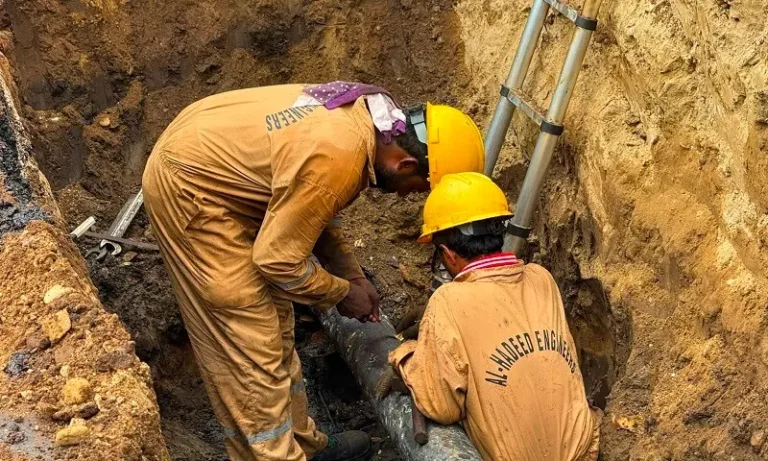
    A crude oil pipeline operated by National Refinery Limited (NRL) burst in Karachi’s DHA Phase VI, triggering an emergency containment and repair operation, authorities said. The leak occurred around 10:30pm on Saturday on Khayaban-e-Sehar, Street 13. The pipeline carries crude oil from Keamari to Korangi and reportedly runs through a road median. The incident caused crude oil to spill onto the road, prompting authorities to restrict access to the affected area. NRL’s response team arrived around midnight and began containment and cleanup operations using specialised spill kits. More than 20 drums of leaked oil had been collected, while excavation work was launched to identify the exact point of the damaged pipeline and stop the leak completely. The Sindh Environmental Protection Agency (Sepa) directed authorities to safely remove contaminated soil, sand and sludge and dispose of the material according to environmental regulations. Fresh sand will reportedly be placed after remedial work is completed. Officials urged residents to stay away from the affected location and avoid smoking or using open flames near the spilled oil. They also warned residents against attempting cleanup themselves or washing oil into nearby drains. Authorities continue to monitor the situation closely.

  • | |

    Pakistani climbers open historic new route on broa…

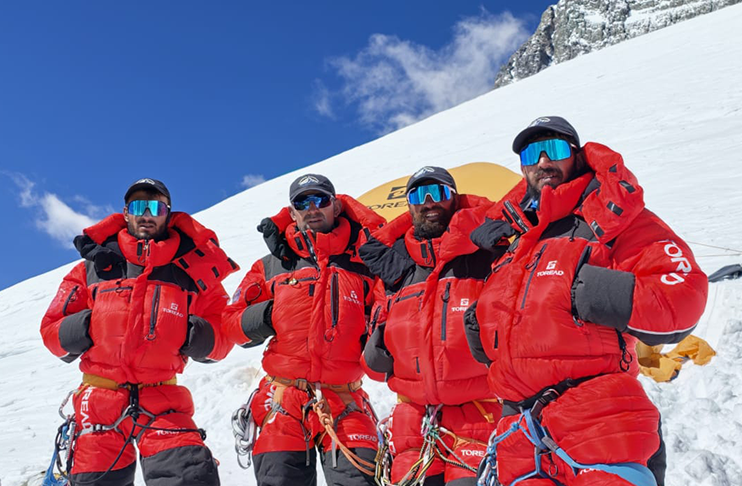
      Pakistani mountaineers have achieved a landmark feat by opening a brand-new climbing route on Broad Peak, one of the world’s highest mountains. The accomplishment is being hailed as a major milestone for Pakistan’s mountaineering community, showcasing the country’s growing expertise in high-altitude climbing and technical expedition planning. Broad Peak, standing at 8,051 metres (26,414 feet), is located in the Karakoram mountain range of Gilgit-Baltistan, approximately five miles from K2. Ranked as the world’s 12th-highest mountain, Broad Peak has long attracted climbers from around the globe because of its challenging terrain and unpredictable weather conditions. The newly established route, officially named the Mirza Ali Legacy Route, begins above Camp 3 and offers a fresh approach to the summit. The route was created after an intensive three-day effort that required climbers to navigate deep snow, steep rock faces, and mixed sections of snow and rock under extremely demanding conditions. The expedition was led by renowned Pakistani mountaineer Mirza Ali, founder of Karakorum Expeditions. Along with his team, he spent days fixing ropes and securing the mountain to make the route accessible for future expeditions. Their summit push began at 2:00 a.m. local time on July 19. Battling continuous snowfall, freezing temperatures, and severe weather, the climbers finally reached the summit at 9:55 p.m. after more than 24 hours of nonstop climbing. To establish the route, the team installed over 1,600 metres of fixed rope and placed permanent rock pitons at critical points to improve safety and stability. According to expedition organisers, the new line is shorter, more direct, and significantly safer than the traditional path, which passes through Broad Peak’s hazardous “V Section.” The redesigned route is expected to reduce climbers’ exposure to avalanches and falling rocks, two of the mountain’s most serious risks. Organisers estimate that under normal weather conditions, climbers using the new route should be able to reach the summit from Camp 3 within seven to eight hours and descend in approximately two to three hours, making the ascent both faster and more efficient. The route was unanimously named in honour of Mirza Ali to recognise his 16 years of dedication to Pakistan’s mountaineering sector. Throughout his career, he has trained aspiring climbers, organised national and international expeditions, and promoted Pakistan as a premier destination for adventure tourism. Reflecting on the achievement, Mirza Ali said the successful opening of the route demonstrates the technical capability, determination, and resilience of Pakistani climbers. He also stressed the importance of investing in mountaineering education, safety training, and adventure tourism, highlighting Gilgit-Baltistan’s enormous untapped potential within the mountain economy. International members of the expedition also praised the accomplishment. Argentine climber Juan Toro described the project as a historic milestone for Pakistani mountaineering, while Hungarian climber David Klein called the newly opened path an innovative and technically brilliant route that reflected the team’s exceptional skill and perseverance. The summit team included Mirza Ali, Ahmed Baig, Rizwan Dad, Waqar Ali, Nawaz Ali Khan, Zaman Karim, Juan Toro, and David Klein. To support future expeditions and improve emergency response, the team also recorded all major anchor locations using Garmin inReach GPS technology, ensuring the new route can be safely managed for climbers in the years ahead.

  • | |

    Pakkay dost season 4: Bilal Maqsood brings educati…

    Singer and songwriter Bilal Maqsood has announced the fourth season of his popular children’s programme Pakkay Dost, promising a fresh mix of educational songs, entertainment and Urdu-language learning for young audiences. The new season of Pakkay Dost is set to premiere on YouTube on August 22. Maqsood shared the announcement on Instagram, expressing excitement about bringing the programme back with more engaging content for children and families. Maqsood explained that the main idea behind Pakkay Dost is to create healthy and wholesome entertainment in Urdu while making the language feel fun, modern and relevant to children. The upcoming season will continue using music as a way to teach children about different subjects. The programme will explore topics including Urdu, physical fitness, kindness towards animals, vegetables and the human body. One of the performances features actor Syra Yousuf, who can be seen dancing to a song about the history of the Urdu language. The performance introduces children to vocabulary influenced by languages such as Arabic and Turkish while making language learning entertaining. The new educational songs will also teach children about exercise and healthy habits. Other songs will introduce the names of vegetables as well as bones and joints in the human body. According to Maqsood, Pakkay Dost now has more than 50 songs covering a wide variety of subjects and facts. He has encouraged parents to watch the programme with their children, emphasizing that the show has been created to entertain adults as well as young viewers. The singer also said that enjoying the music himself is an important part of his creative process. His approach combines catchy songs with educational themes, allowing children to learn without making lessons feel like traditional classroom activities. With Pakkay Dost Season 4 arriving on YouTube on August 22, Bilal Maqsood is continuing his effort to introduce children to Urdu through music, humour and wholesome entertainment. The new season is expected to appeal to families looking for educational content that can keep children entertained while helping them learn about language, health, nature and their own bodies.

Leave a Reply

Your email address will not be published. Required fields are marked *