vows stand ukraine
|

UK vows to stand by Ukraine as Russia warns of “Consequences” over British drone support

UK Prime Minister Andy Burnham has reaffirmed Britain’s commitment to supporting Ukraine, saying the country will continue to stand firmly with Kyiv despite warnings from Moscow over Britain’s involvement in the conflict.

Burnham said the UK would remain a reliable supporter of Ukraine and would continue providing assistance as the war continues. His comments came after Russia criticised Britain’s role following confirmation that British-made drones had been used in recent Ukrainian attacks inside Russian territory.

“We are not fair-weather friends,” Burnham said, stressing that Britain would remain with Ukraine during what he described as its “hour of need”. He added that the UK’s position was to provide Ukraine with the support necessary to defend itself.

The Russian embassy in the UK responded by accusing Britain of deliberately increasing tensions surrounding the war. It warned that the greater Britain’s involvement in the conflict became, the greater the consequences could be for the UK.

The embassy said London’s actions would eventually have consequences for which Britain would have to take responsibility. However, it did not provide specific details about what form those consequences might take.

The latest dispute follows an increase in Ukrainian attacks against targets deep inside Russia. Ukrainian forces have recently focused on areas including Moscow and other parts of the country, with oil refineries, logistics facilities and other strategically important sites among the reported targets.

One company affected by the attacks is Wildberries, a major Russian online retailer. Its logistics infrastructure has reportedly been damaged during recent Ukrainian drone strikes.

Asked about Moscow’s warning, Burnham defended the UK’s policy of assisting Ukraine. He said Britain was providing support to enable Ukraine to protect itself and argued that this had been the country’s position throughout the conflict, including under previous British prime ministers.

The UK has been one of Ukraine’s strongest international supporters since Russia launched its full-scale invasion in February 2022. Britain has supplied Kyiv with military equipment, training and technology, including drone capabilities and Storm Shadow missiles.

The UK’s Ministry of Defence has also reiterated its commitment to supplying Ukraine with the equipment it needs to defend itself against Russian forces and what it described as President Vladimir Putin’s illegal invasion.

Russia currently occupies around one-fifth of Ukraine, but Russian troops have made limited progress along the front line in recent months. Despite the lack of major advances, however, attacks and casualties continue to occur far from the main battlefield.

United Nations officials have reported a sharp increase in civilian casualties. At least 437 civilians were killed in Ukraine last month, making it the country’s deadliest month for civilians since May 2022.

More people were killed in the latest Russian attacks on Tuesday. Seventeen Ukrainians reportedly died in different parts of the country. Ten people were killed in the north-eastern village of Pechenihy after two missiles struck the area. Residential buildings, a cafe and a post office were among the places damaged.

Other deaths were reported in Sumy, Zaporizhzhia and Kherson, with three people killed in Sumy and two each in Zaporizhzhia and Kherson.

Meanwhile, Moscow’s latest warning came after a series of Ukrainian strikes inside Russia. Five people were reportedly killed in a residential area of Russia’s Rostov region during attacks over the weekend.

Ukraine has also launched hundreds of drones towards the Moscow region in recent days. Regional governor Andrey Vorobyov said on Tuesday that a 10-year-old girl was injured and a Wildberries warehouse was damaged.

Alongside foreign-made equipment, Ukraine has increasingly relied on its own defence industry. Ukrainian forces have recently used domestically developed drones and missiles, including the FP-5 Flamingo cruise missile.

The latest developments demonstrate the increasingly long-range nature of the conflict and the growing risks faced by countries supporting Ukraine. Despite Moscow’s warnings, Britain maintains that helping Ukraine defend itself remains a central part of its policy.

Similar Posts

  • U.S. Slashes F-1 Visas for Chinese Students By Nearly 50 Percent

    WASHINGTON, D.C. – The landscape of American higher education is undergoing a quiet but massive transformation. Recent data shows that the United States has sharply reduced the issuance of F-1 academic visas for Chinese students. This shift comes as federal authorities implement stricter vetting procedures and national security checks. University campuses, which have long relied […]

  • |

    Iran advances in Hormuz talks with Oman

      Iran and Oman have made significant progress in negotiations over a shipping route through the Strait of Hormuz, with both sides agreeing on the precise maritime coordinates. Iranian Foreign Ministry spokesperson Esmaeil Baghaei said a joint statement is currently being prepared, although its release depends on the absence of outside interference. He stressed that the understanding, while important, would not by itself guarantee complete security in the strategically vital waterway. According to sources, the proposed arrangement would place Iran in charge of overseeing vessels entering the Gulf through the Strait of Hormuz. The sources described the proposal as one of Tehran’s most substantial concessions in the ongoing discussions. However, they dismissed claims made by US President Donald Trump that a comprehensive agreement to fully reopen the strait was close, saying several key issues remain unresolved. Baghaei described the negotiations with Oman as constructive and professional, noting that both countries have reached consensus on the shipping corridor. He added that officials are now working on the final wording of the joint declaration. An Iranian diplomatic source also expressed optimism that an agreement could be reached within the next couple of days if no external actors complicate the process. The source further clarified that the Strait of Hormuz has never been closed due to disagreements between Iran and Oman, insisting that any disruption to navigation depends on actions taken by the United States. Separately, Ebrahim Azizi, chairman of the Iranian parliament’s National Security Committee, said the time would eventually come when US military forces would withdraw from the region. He argued that countries hosting American bases would ultimately be responsible for financing their own security after the departure of US troops. Iranian state media also maintained that any shipping agreement with Oman would not automatically result in the reopening of the strait if Washington continued policies that Tehran considers hostile. A source quoted that the discussions with Oman are strictly bilateral and unrelated to negotiations involving the United States. In another development, United Nations High Commissioner for Human Rights Volker Türk voiced concern over a sharp increase in executions in Iran since March. He said at least 56 individuals have been executed on national security charges during this period, including 27 people connected to earlier anti-government protests. Meanwhile, Yemen’s Houthi movement claimed responsibility for launching ballistic missiles at the Saudi oil tanker Wafaa near Yanbu in the northern Red Sea. A Houthi spokesperson said the missiles struck their intended target and described the attack as part of the group’s continuing blockade against Saudi Arabia. According to the group, the tanker is the eighth vessel targeted since the blockade began in July. Iranian parliamentarian Esmail Kowsari criticised President Trump’s public statements on the Strait of Hormuz, accusing him of making inconsistent and misleading claims about the negotiations. He argued that repeated assertions about the strait reopening and Iran’s position have failed to match developments on the ground. President Trump, however, said the waterway would reopen soon and warned that Iran would face severe consequences if negotiations collapsed. He also claimed that easing tensions in the region could lead to a significant drop in global oil prices. Qatar said diplomatic mediation efforts are making steady progress, with the country’s Emir discussing the latest developments with President Trump in an effort to narrow differences between Washington and Tehran. At the same time, Israeli officials reportedly expressed concern that the United States appears willing to secure an agreement regardless of the terms, adding that Israel is receiving updates on the Hormuz negotiations only through indirect channels.

  • |

    US accuses China’s Moonshot AI of stealing technology from American rival

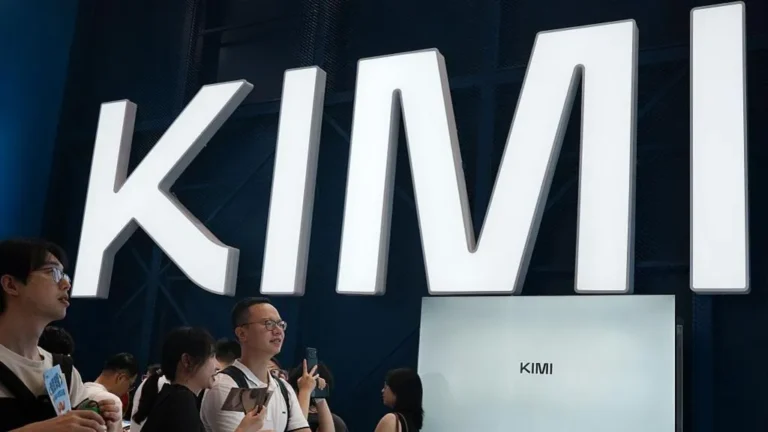
    The United States has accused Chinese artificial intelligence company Moonshot AI of illegally using technology from a leading American AI developer, escalating tensions between the world’s two largest technology powers. The allegations were made by White House Science and Technology adviser Michael Kratsios, who claimed the Chinese company copied the capabilities of a US model to develop its own advanced AI system. Kratsios said Moonshot AI used a technique known as distillation to build its recently unveiled Kimi K3 model. Distillation is a process in which a smaller or less advanced AI model repeatedly interacts with a more powerful model to learn from its responses and improve its own performance. While the technique has legitimate uses within companies that own both models, using it to copy another company’s proprietary system without permission could violate intellectual property rights. According to Kratsios, the US government has information indicating that Moonshot AI extracted capabilities from Anthropic’s AI technology during the development of Kimi K3. He also alleged that the company gained access to restricted Nvidia servers powered by the advanced GB300 Grace Blackwell computing platform, despite US export controls designed to limit China’s access to cutting edge semiconductor technology. Moonshot AI has not publicly responded to the accusations. The Chinese embassy in Washington, Anthropic, Nvidia, and the White House had also not issued detailed comments following the allegations. The claims come just days after Moonshot AI introduced Kimi K3, an advanced open source language model that attracted global attention for its strong performance. Many industry experts said the model significantly narrowed the gap between Chinese and American AI technology. Moonshot described Kimi K3 as being capable of competing with some of the most advanced AI systems developed in the United States. The allegations have intensified concerns within Washington over the protection of American technology. US Treasury Secretary Scott Bessent recently said authorities are investigating whether Chinese AI companies have copied the capabilities of American competitors through large scale distillation efforts. He warned that sanctions remain an option if Chinese firms are found to have engaged in intellectual property theft. Bessent said the United States supports open source artificial intelligence because it encourages innovation and wider access to technology. However, he stressed that open source development does not give companies permission to copy protected American research or commercial products. The dispute comes at a sensitive time in US China relations. President Donald Trump is expected to meet Chinese President Xi Jinping in September as both countries continue negotiations on trade, technology, and security issues. Artificial intelligence has become one of the most important areas of competition between the two nations. The United States first imposed restrictions on exports of Nvidia’s most advanced AI chips to China in 2022 over concerns that the technology could strengthen China’s military capabilities. Since then, governments have increased efforts to prevent the illegal transfer and smuggling of high performance semiconductor chips into China. Moonshot AI plans to release Kimi K3 as an open source model on July 27, allowing developers around the world to download, modify, and build applications using the software. The planned release has generated significant interest because it would become one of the largest freely available AI models developed by a Chinese company. The latest accusations are not the first involving Anthropic. Earlier this year, the American AI company accused Chinese technology giant Alibaba of using similar distillation methods to copy the capabilities of its Claude AI models. Anthropic urged US lawmakers to strengthen legal protections for American AI technology and introduce tougher penalties for companies found to be stealing intellectual property. The White House has also announced broader measures to protect American innovation from foreign cyber and technology theft. Officials say the government is working more closely with leading AI companies to detect and prevent organised efforts aimed at copying proprietary research. As investigations continue, the allegations against Moonshot AI are expected to become another major issue in the growing technological rivalry between the United States and China.

  • |

    Indian ex-editor jailed 10 years for rape

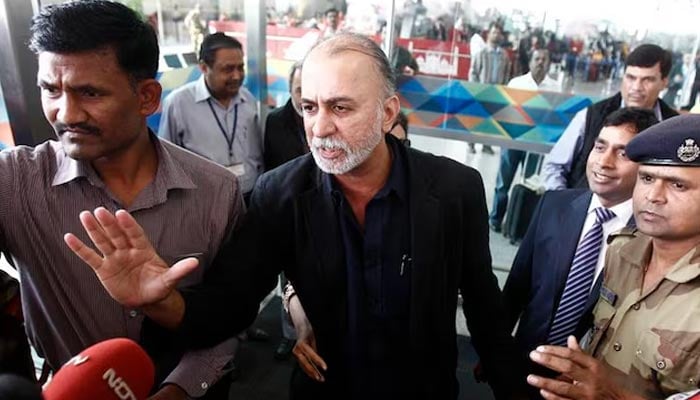
    An Indian court has sentenced former investigative magazine editor Tarun Tejpal to 10 years of rigorous imprisonment after convicting him in a rape case involving a junior colleague, bringing a high-profile legal battle that has spanned more than a decade to a major turning point. The case stems from allegations that Tejpal sexually assaulted a female journalist inside a lift at a luxury hotel in the coastal state of Goa during a media event in November 2013. A trial court had acquitted Tejpal in 2021 of charges including rape, sexual harassment and wrongful restraint. However, the Goa government challenged the verdict before the Bombay High Court, which overturned the acquittal and found him guilty. The court ordered Tejpal to surrender within two weeks to begin serving his sentence. In addition to the prison term, he was directed to pay a financial penalty imposed by the court. Following the verdict, Tejpal announced that he would challenge the conviction before India’s Supreme Court. He maintained that the case against him was politically motivated and claimed he had faced a prolonged campaign against him over the past 13 years. Tejpal was first arrested in 2013 after the allegations surfaced and spent several months in custody before being granted bail by the Supreme Court. Throughout the proceedings, he consistently denied the allegations and argued that the prosecution was driven by political considerations. The case attracted nationwide attention because it emerged during a period of heightened public concern over violence against women in India. Public debate over sexual assault had intensified following the 2012 gang rape and murder of a young woman in New Delhi, which led to widespread protests and significant reforms to India’s criminal laws on sexual offences. The conviction also had a lasting impact on Tehelka, once regarded as one of India’s leading investigative publications. The scandal severely damaged the magazine’s reputation and influence, despite continuing operations under new management.

  • |

    US says it will deepen security role in Asia

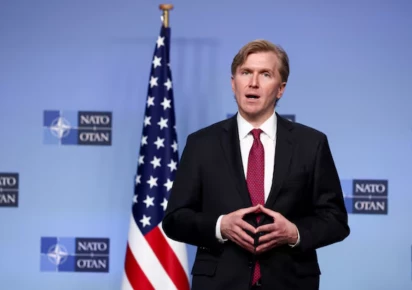
    The United States has rejected suggestions that it is reducing its involvement in Asia. A senior Pentagon official said Washington plans to strengthen its position in the Indo-Pacific and maintain what it considers a favourable balance of power in the region. US Undersecretary of Defense for Policy Elbridge Colby made the remarks during a speech in Manila on Monday. He said the United States was not leaving Asia. Instead, Washington was increasing its focus on the region. Colby also called on US allies and partners to take greater responsibility for their own defence. He said Washington wanted stronger partnerships rather than relationships based on dependence. According to Colby, the United States expects its regional allies to increase defence spending and strengthen their own military capabilities. He said greater responsibility from partner countries should not be interpreted as a sign that Washington is abandoning the region. Colby argued that stronger allies would contribute to stronger deterrence and help maintain regional stability. The Pentagon official said the US strategy includes maintaining a credible military presence along the First Island Chain. The strategic area stretches from Japan through Taiwan and the Philippines toward Borneo. It is considered important to US efforts to deter potential military threats in the Indo-Pacific. Colby said the United States was committed to maintaining a balance of power in the region. He also emphasised the need for allies to contribute more to regional security. His comments come amid continuing questions about the long-term US security commitment to Asia. Some regional governments and analysts have expressed concerns about whether Washington will remain as deeply involved in the Indo-Pacific as it has been in previous years. Colby sought to address those concerns by stressing that the United States intends to remain engaged. The Philippines is the first stop on Colby’s Southeast Asian tour. He is also scheduled to visit Indonesia, Thailand and Cambodia. The Philippines is a longstanding US treaty ally and has strengthened defence cooperation with Washington in recent years. The Pentagon official’s remarks are likely to be closely watched by US partners across the region. Washington is seeking to strengthen cooperation with allies while encouraging them to invest more heavily in their own defence. The approach reflects a broader US strategy of sharing the security burden with regional partners while maintaining a strong American military presence. Colby said the goal was to build capable partners rather than create countries that depend entirely on US protection. He maintained that stronger regional partners would make the overall US deterrence strategy more effective.

  • | |

    Nestle turns to AI to build products for weight lo…

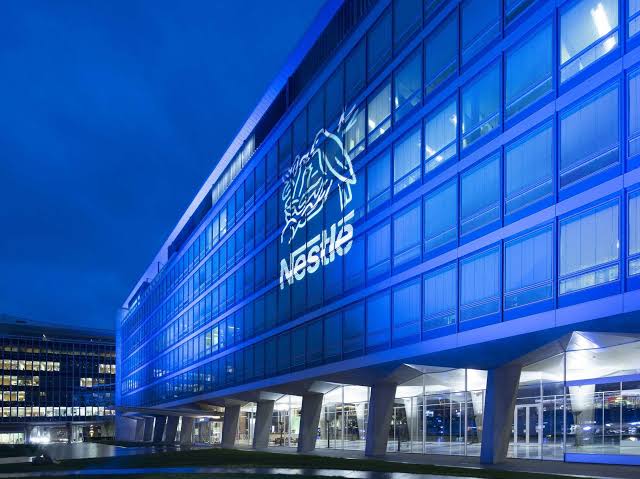
    Nestle is working to convert the rapid rise of GLP-1 weight loss drugs from a business threat into an opportunity, deploying artificial intelligence and nutritional research to develop products aimed at the millions of consumers now taking medications like Ozempic and Wegovy. The fast growing adoption of drugs made by Novo Nordisk and Eli Lilly has raised concerns among investors that appetite suppressing medications could permanently dent demand for packaged foods, snacks and beverages. Nestle sees the same trend differently, believing the drugs are creating a new market for products that address the side effects associated with rapid weight loss. Chief Technology Officer Stefan Palzer told a foreign news agency that Nestle is using artificial intelligence and other technology to analyze clinical research, identify effective nutrient combinations and build products tailored specifically to GLP-1 users. He said the company believes its existing product portfolio positions it well to capture what he described as a major opportunity. Materials shown to reporters outlined side effects tied to rapid weight loss, including muscle loss and the loss of facial volume sometimes referred to informally as Ozempic face, along with areas where Nestle believes its products could help address those issues. The GLP-1 drug market remains dominated by Eli Lilly’s Mounjaro and Zepbound alongside Novo Nordisk’s Wegovy and Ozempic. Roughly 16 million Americans currently take GLP-1 medications, according to Boston Consulting Group, a number expected to grow significantly by the end of the decade. Nestle’s strategy centers on developing products suited to the needs of weight loss drug users while relying on AI to speed up research, product development and consumer analysis. Addressing side effects directly Palzer said Nestle scientists have spent time studying the downstream effects of rapid weight loss and building products intended to help consumers manage them. The company uses AI tools to process large volumes of clinical research and identify nutrient combinations that may support muscle health, hydration and overall nutritional intake. Nestle has already begun adding collagen protein to products under its Vital Proteins brand to address concerns about skin, hair and nail health linked to rapid weight loss. In the United States, Nestle’s business created the Boost Advanced Nutrition Shake, marketed as containing 35 grams of protein to support muscle health during weight loss. In Asia and Australia, the company introduced a higher protein version of its Milo malt drink called Milo PRO High Protein. Rival ice cream makers are grappling with similar pressures, shifting toward higher protein products, smaller portions and simpler ingredient lists. An AI powered recipe database Artificial intelligence plays an increasingly central role throughout Nestle’s product development process. The company has built internal systems to analyze scientific literature, simulate consumer behavior, spot emerging trends and help product developers navigate a database containing roughly 120,000 recipes. One such tool, an internal platform called Food Genie, helps scientists and developers predict how recipes might perform and identify opportunities for reformulation, according to Palzer. He said the scale of Nestle’s recipe database gives the company an advantage, noting that a smaller company with only a thousand recipes would struggle to model and predict outcomes using AI, since the technology depends heavily on large volumes of data. Nestle is also testing AI driven consumer simulations designed to predict how shoppers will respond to new products and health claims before they reach store shelves, and the company uses AI to monitor social media activity and identify emerging consumer trends. Palzer said the technology helps distinguish genuine, lasting trends from short term noise around particular topics, and said he expects AI to play a growing role in that kind of trend analysis going forward. Skepticism remains among some experts Not everyone is convinced specialized products offer meaningful advantages over conventional food. Amanda Avery, an associate professor of nutrition and dietetics at the University of Nottingham in central England, said it is unfortunate that consumers keep turning to new, more expensive products that often contain the same protein and nutrients found in whole, fresh foods. She noted that meat, fish, eggs, dairy, beans, nuts and pulses remain relatively affordable sources of protein and other nutrients. Even so, Avery said she expects products marketed specifically to GLP-1 users to find a ready customer base, acknowledging that marketing exerts significant influence over consumer choices and suggesting Nestle has likely done its homework before entering the space.

Leave a Reply

Your email address will not be published. Required fields are marked *