Artificial Intelligence vs Human Creativity
By Muhammad Talha Karim
A workshop under the project titled “Digital Trust and Free Expression in the AI Era” at the Department of Media and Development Communication, University of the Punjab, supported by the U.S. Mission to Pakistan in partnership with the Pakistan-U.S. Alumni Network (PUAN) made me ask myself that: “can a machine create, or does it only create what humans have already imagined?”
Creativity has always been a phenomenal ability for human beings, which makes it unique from all other creatures. It helps us solve problems, create art, design new things, think differently, compose music, and write stories. The rapid development of AI has made machines so capable that they can generate music, create art, write essays, and even solve human-related problems. But a very serious question arises here: “Can AI truly be more creative than humans?
AI has shown that it can perfectly help humans create new ideas. It simply analyzes the large amount of information, follow the pattern that is previously provided and by combining all the sources, generates content within few seconds. For example, can write an essay, assist you in providing you with the needed material, and make the stories for you. It can also make the process quicker by giving different alternatives.
But, if we talk about human creativity, no AI-powered tool can match the detailing, background content and emotional support of a human creativity.
AI-powered tools merely scan the information, combine it, rearrange the patterns and give you the required material. It does not use any kind of emotional power, background knowledge to do it. While on the very opposite side, human creativity holds this very significant and unique ability to use emotions, feeling and history with the art. Humans use attach emotions like love, loneliness, sadness, happiness, betrayal and attachment and many more and they are feeling with the art to create it perfectly.
For example, if an artist creates a painting, it is not merely the amalgamation of colors, strokes and lines but it experiences the emotion that made the artist create the art. Human beings can physically and mentally feel that specific emotion and a sense of attachment with the art and artist.
Creativity has always been deeply linked with emotions and feelings. Certainly, AI powered tools can create content more quickly, but it lacks a major factor “attachment”. It simply rephrases and rearrange the words that are already given and/or uploaded on it. but cannot explain it by using emotions.
For instance, if a user commands any AI powered tool to write a story, it will be done in just few seconds, but it will lack the emotional attachment. On the other hand, a story written by a human being will be rich in emotions and feelings. Maybe the writer turned his own experience into the story. As the writer himself experienced that feeling, he can put that in words in such a
way that it hits directly in the heart of the reader or any other person. They can feel more attachment to it. They can see themselves in that story, which connects people more strongly.
The second major factor is intention and purpose. Human beings have their purpose and intentions for doing a certain job. It can either be an emotion or a thought. Human beings can challenge the society, write to change the entire perspective of a group of people, and many other reasons while AI does not possess any of this. It writes only because it is being commanded. It does not experience childhood, young age, love, hate, separation, loneliness – nothing at all which makes it merely a content provider while Human beings are the content experiencers.
They personally go through those feelings and phases, and they can better explain this!
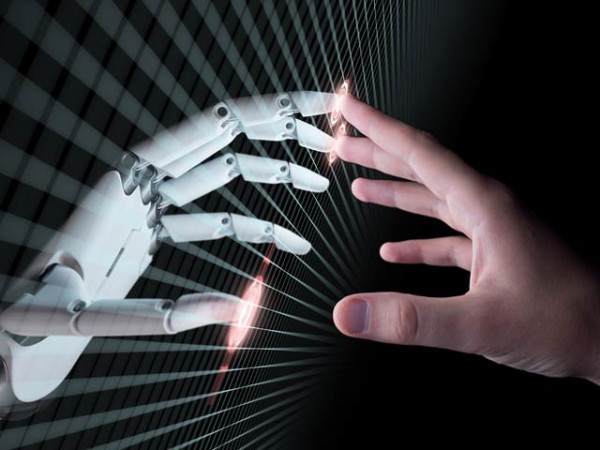
Despite all these differences, both AI and Human creativity can go together. Humans can provide emotions, feelings, ideas and content while AI can provide speed, more information, new ideas and solutions to different problems. Instead of making AI and humans competitors they can become partners and offer better outcomes. For example, a graphic designer can ask AI to give him various initial concepts and then use his own concepts and creativity to make the best one. AI may be able to imitate creativity, but human creativity comes from a life that no machine has ever lived.
AI has changed the way humans think about creativity. No matter how Fastly AI can generate the content to create pictures, write stories and compose music, it still cannot connect it with emotions. But human beings connect emotions, feelings, thoughts, ideas more creatively. As a human being, it’s the need for us to keep getting the content, art, music and information which emotionally connects us with each other.
The views, thoughts, and opinions expressed in this blog are solely those of the author and do not necessarily reflect the official policy or position of the U.S. Mission to Pakistan or USEFP/PUAN.