sindh government spokesperson
| |

Sindh government spokesperson accuses Hafiz Naeem …


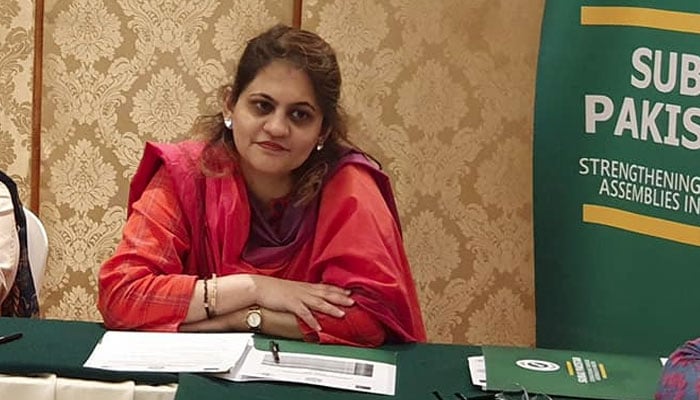
Sindh government spokesperson Sadia Javed has accused Jamaat-e-Islami Pakistan Emir Hafiz Naeem ur Rehman of distorting the context of what she described as sincere national agreements reached in the past.

In a statement issued from Karachi, Sadia Javed said that Hafiz Naeem was presenting previous national agreements in a misleading manner. She criticised the Jamaat-e-Islami leader for allegedly attempting to portray past understandings between political stakeholders in a way that did not reflect their original spirit or context.

She questioned Hafiz Naeem’s position on electricity generated from Thar coal, asking why he remained silent about what she described as some of the cheapest electricity being produced through the country’s indigenous coal resources.

“Why is Hafiz Naeem silent on the inexpensive electricity generated from Thar coal?” she questioned, while responding to his criticism of the Sindh government and the Pakistan Peoples Party (PPP).

Sadia Javed also strongly rejected what she described as allegations against the Sindh government, saying that Hafiz Naeem had no justification for issuing what she termed “mafia certificates” to others.

She challenged the Jamaat-e-Islami leader to examine his own political record before making accusations against others. According to her, political leaders should first reflect on their own actions and positions before questioning the credibility or performance of others.

The Sindh government spokesperson further defended the provincial government’s policies and highlighted the importance of Thar coal in meeting Pakistan’s energy requirements. She suggested that criticism of the provincial government should be based on facts and a complete understanding of the agreements and projects under discussion.

Another Sindh government spokesperson, Ghanhor Khan, also criticised Jamaat-e-Islami and Hafiz Naeem, accusing them of making allegations based on what he described as political hypocrisy.

Ghanhor Khan said that making accusations against the PPP over the issue of Independent Power Producers (IPPs) was part of what he called Jamaat-e-Islami’s unsuccessful political strategy. He argued that the party was attempting to use the controversial issue of IPPs to create political pressure against the PPP and the Sindh government.

The dispute comes amid renewed political debate over Pakistan’s electricity sector, particularly the cost of power generation, agreements with IPPs and the role of domestic energy resources. Political parties have frequently criticised successive governments over electricity prices, power-sector contracts and energy policies.

The Sindh government has continued to highlight Thar coal as an important component of its energy strategy, while its political opponents have raised questions about governance, transparency and the broader impact of energy-sector agreements.

The exchange between the Sindh government and Jamaat-e-Islami reflects growing political tensions over energy policy and the interpretation of past agreements. While Hafiz Naeem has criticised the government’s handling of the power sector, Sindh government representatives have rejected his allegations and questioned the consistency of his political position.

Both sides have continued to defend their respective positions, with the Sindh government emphasising its energy initiatives and Jamaat-e-Islami maintaining its criticism of the power-sector policies.


Similar Posts

  • | |

    Six non-local workers killed in Kech

    Six non-local workers have been killed by militants linked to Fitna al-Hindustan in the Nasirabad area of Kech district, Balochistan, according to security sources. The sources said militants initially abducted six workers and killed another worker, identified as Javed, on July 27. The attackers later killed all six abducted workers, bringing the total number of victims in the incident to seven. The deceased workers have been identified as Muhammad Arshad, Muhammad Taimur, Muhammad Parvez, Muhammad Wazir, Muhammad Amjad and Muhammad Yahya. According to security officials, four of the victims came from Punjab, while two belonged to Khyber Pakhtunkhwa. The workers had reportedly been employed on development projects in Balochistan. Their deaths have raised fresh concerns about the security of workers from outside the province who travel to Balochistan for employment and infrastructure projects. Security sources also recalled a separate incident in Mashkel, Balochistan, where militants recently killed five non-local workers. The victims in that attack were also reportedly working on development-related projects. The latest killings come amid continued security challenges in parts of Balochistan, where militants have repeatedly targeted civilians, security personnel and workers involved in development activities. Security forces have been conducting operations against militant groups in various parts of the province.

  • | |

    Noreen Gulwani’s bold take on love, respect and freedom

    Actor Noreen Gulwani has spoken about financial independence, relationships and personal growth, saying respect and understanding should remain the foundation between men and women. In a recent interview, Gulwani said women should not become overconfident or self-centred after becoming financially independent. She explained that some women may develop such attitudes after experiencing years of social restrictions. She said earning money should bring confidence but should not lead to arrogance. According to her, everyone should remain open to advice and criticism regardless of their financial status. Gulwani also said men have an equal responsibility in building respectful relationships. She added that women want to be treated with kindness and dignity rather than feeling controlled or restricted. Talking about marriage, the actor said she has not rushed into the decision because she is waiting for the right partner. She said she meets people and tries to understand their thoughts and personalities before considering marriage. Gulwani encouraged young people to see their twenties as a time for exploring their identity and discovering their goals. She said society often creates pressure to complete education, get a job, marry and have children quickly, but people should also focus on understanding themselves. She shared that her priorities have changed over time. The actor said she now dreams of living closer to nature and raising children away from the pressures of city life and excessive screen use. Discussing her career journey, Gulwani revealed that she initially studied journalism and broadcasting abroad. However, she later realised that the field did not match her personality and decided to focus on writing and acting. She described theatre as her biggest artistic passion. According to Gulwani, stage acting requires more energy, creativity and quick decision-making compared with television performances. She recalled that live theatre often requires actors to handle unexpected situations immediately because there is no chance to stop and repeat a scene. Speaking about social media controversies, Gulwani said she avoids unnecessary public debates. She believes that not every statement requires a response and prefers to maintain a neutral approach. Commenting on singer Falak Shabir’s views about women’s clothing, she said she did not agree with his opinion but did not think responding publicly would change the situation. She added that everyone should have the freedom to make personal choices.

  • |

    North Korea issues fresh warning to US allies

    PYONGYANG: North Korea has accused the United States, Japan and South Korea of creating a new security crisis in the Asia-Pacific, claiming their expanding military cooperation is increasing regional tensions and threatening stability. In a commentary published by the state-run Korean Central News Agency (KCNA), a military commentator alleged that the three allies are strengthening their joint combat capabilities through large-scale military exercises and closer defence coordination. The statement specifically criticized the recently concluded Rim of the Pacific (RIMPAC) naval exercise, describing it as a rehearsal for military aggression rather than a routine multinational drill. According to North Korean officials, the exercise involved more than 30,000 personnel, over 30 warships, five submarines and nearly 190 aircraft. Pyongyang claimed the United States is attempting to strengthen its military influence across the Asia-Pacific with the support of Japan and South Korea. It also objected to recent US-South Korea air force and logistics exercises, plans to expand American military command structures in Japan and the deployment of advanced US missile systems in the region. North Korea warned that it would respond to what it described as growing military threats by further strengthening its own deterrence capabilities. Officials said any increase in external pressure would be met with corresponding defensive measures. Separately, North Korea’s Foreign Ministry rejected recent accusations by the United States and its allies that Pyongyang poses a growing cyber threat. The ministry dismissed the allegations as politically motivated and without evidence. A foreign ministry spokesperson argued that the United States has been expanding military activities in cyberspace through cyber commands, joint cyber exercises and the use of artificial intelligence in defence operations. The spokesperson claimed Washington, rather than Pyongyang, was contributing to rising tensions in the cyber domain. North Korea reaffirmed that it would continue taking measures to safeguard its national security and protect its development interests against what it described as increasing pressure from Western countries.

  • | |

    Only 170 officials and rising HIV cases push Sindh…

    Islamabad / Karachi: The Sindh Healthcare Commission came under intense scrutiny in the Senate after lawmakers questioned its ability to control illegal medical practices and respond effectively to the growing HIV situation in Sindh. Senators raised concerns over delayed action, staff shortages, and legal weaknesses that they said were limiting the Commission’s performance. The issue was discussed during a meeting of the Senate Standing Committee on National Health Services, Regulations and Coordination chaired by Senator Amir Waliuddin Chishti. The meeting was attended by Senator Syed Masroor Ahsan, Senator Samina Mumtaz Zehri, Senator Nadeem Ahmed Bhutto, Senator Nasir Mehmood Butt, Senator Anusha Rehman Ahmad Khan through Zoom, Federal Minister Syed Mustafa Kamal and Sindh Labour Minister Saeed Ghani along with senior federal and provincial health officials. Senator Nasir Mehmood Butt questioned why FIRs had still not been registered against those responsible in connection with the HIV situation, while Senator Syed Masroor Ahsan expressed dissatisfaction over delays in action and questioned the role of the Sindh Healthcare Commission in preventing the spread of the disease. Responding to the Committee, the Chief Executive Officer of the Sindh Healthcare Commission said the Commission had already registered several FIRs against medical quacks. However, he stated that weaknesses in the existing legal framework allowed many accused to obtain bail shortly after arrest. He informed the Committee that amendments to the law were being prepared to strengthen action against quackery. The CEO also disclosed that the Commission has only around 170 officials serving across the entire province, highlighting a serious shortage of human resources. Senator Samina Mumtaz Zehri questioned why the Commission remained understaffed and asked whether the issue had been formally raised with the Sindh Government. Federal Minister Syed Mustafa Kamal requested the Committee Chairman to issue directions so the matter could move forward. Senator Syed Masroor Ahsan stressed that the Government should acknowledge administrative shortcomings wherever they exist. He also asked how many times the Sindh Healthcare Commission had formally requested additional staff from the Provincial Government. The discussion also focused on the governance structure of the Commission. Members were informed that after the 18th Constitutional Amendment, the Sindh Health Department no longer exercises administrative control over the Sindh Healthcare Commission. Federal Minister Syed Mustafa Kamal suggested that legislative measures should be considered to address governance-related issues affecting provincial institutions. The Committee also examined the appointment process for members of the Sindh Healthcare Commission Board. The Secretary Health informed members that the Department did not have the authority to appoint or remove Board members. Senator Samina Mumtaz Zehri observed that such limitations weaken accountability, while Senator Nasir Mehmood Butt expressed concern that the Chief Executive Officer of the Commission was not administratively answerable to the Secretary Health. Earlier in the meeting, Sindh Labour Minister Saeed Ghani informed the Committee that two inquiries had been conducted into the Valika Hospital incident, during which 37 officials were identified for disciplinary action. He said the inquiry findings had not been made public due to security considerations but assured the Committee that strict action would be taken against those found responsible. He also informed members that the Sindh Government had established a social security fund to support families affected by HIV.

  • |

    FIFA’s $20bn plan shakes football power balance

    FIFA’s plan to bring private equity investment into global football is opening a new chapter in its long-running struggle with Europe over the sport’s power, finances and commercial control. The world football governing body, led by President Gianni Infantino, is considering the creation of a subsidiary valued at around $20 billion. The proposed company would manage the World Cup and other major FIFA events. Under the plan, outside investors could acquire stakes of up to 20% in the new entity. The proposal has already triggered strong opposition from European football authorities. UEFA has criticised the idea and accused FIFA of putting the “soul” of football at risk by allowing private investors greater access to the sport’s most valuable competitions. Infantino has defended the proposal as an effort to make football’s financial system more inclusive. He has described the initiative as a form of “democratisation” that could allow more football nations to benefit from the sport’s growing commercial revenues. The plan could also provide financial incentives to FIFA’s 211 member associations. Under the proposal, each association could receive up to $20 million in immediate funding for special projects. Further grants of $20 million or more could be provided during subsequent four-year cycles. Such funding could prove particularly attractive to smaller and emerging football nations that depend heavily on FIFA for financial support. FIFA already generates billions of dollars through broadcasting rights, sponsorships and other commercial agreements. The organisation had set a revenue target of $13 billion for its previous four-year cycle, which included the latest World Cup and the Club World Cup. However, FIFA’s financial strength remains smaller than the overall commercial value of European football. UEFA reported that Europe’s top club competitions generated around €4.4 billion during the 2024-25 season alone. Football competitions across Europe generated more than €40 billion during the same period, according to Deloitte’s annual football finance review. The continent’s five major domestic leagues — the Premier League, Bundesliga, LaLiga, Serie A and Ligue 1 — accounted for more than half of that revenue. FIFA has spent decades trying to reduce Europe’s dominance over the global game. The organisation’s leadership has repeatedly sought to give greater influence to football associations in Africa, Asia and Latin America. Former FIFA president João Havelange was a major figure in that effort. He expanded the World Cup and built political support among smaller football nations, helping shift the balance of influence within FIFA. Successive FIFA presidents continued that approach. Infantino has expanded the World Cup from 32 teams to 48, increasing opportunities for countries outside Europe’s traditional football powers. The FIFA president has also suggested that a 64-team World Cup could be considered for the 2030 centenary tournament. The idea followed calls from South American football’s governing body CONMEBOL for an expanded competition. The proposal has faced criticism from European football officials. LaLiga president Javier Tebas has accused FIFA of damaging the sport. His criticism reflects wider concerns in Europe about the growing number of international competitions and the commercial expansion of FIFA. FIFA has previously attempted to attract external investment into its competitions. A proposed expansion of the Club World Cup backed by a consortium led by SoftBank in 2018 failed to materialise after strong resistance from UEFA. The latest private equity proposal could face a similar challenge. However, Infantino has a major advantage within FIFA’s political structure. The organisation’s decisions are determined by its global membership rather than European football alone. FIFA has 211 member associations, meaning support from Africa, Asia, Latin America and other regions could allow Infantino to advance the plan despite European opposition. Experts believe the financial incentives could make the proposal attractive to developing football nations. Eric Windholz, an associate professor at Monash University’s law faculty, said countries in the Global South could find the plan appealing because their domestic football competitions generate far less commercial income than major European leagues. The regional football authorities have also reacted cautiously

  • |

    Fatima Sana heads to England for The Hundred

    Pakistan women’s cricket team captain Fatima Sana has left Sri Lanka for England. She is travelling to England to take part in The Hundred. Fatima Sana will represent Birmingham Phoenix in the tournament. Her participation in The Hundred is a significant milestone for Pakistan women’s cricket. She is the first Pakistani female cricketer to play in The Hundred. Fatima Sana recently led Pakistan during the ODI series against Sri Lanka. She was given the responsibility of captaining the national side in the 50-over matches. Her departure for England means she will miss Pakistan’s upcoming T20I series against Sri Lanka. Fatima Sana will not be available for the T20I series because of her commitments in The Hundred. Her absence will be a key change for the Pakistan women’s team. Muneeba Ali will lead Pakistan in the T20I series against Sri Lanka. The change in leadership will give Muneeba an opportunity to guide the national team in the shorter format. Fatima Sana has become an important player for Pakistan in recent years. She has contributed to the team with both her bowling and batting. Her selection for The Hundred also gives her an opportunity to gain experience in a major overseas competition. Playing in England can provide valuable exposure to different playing conditions. It can also help her compete alongside and against leading international players. Her participation is also being viewed as an important step for women’s cricket in Pakistan. It highlights the growing presence of Pakistani players in international franchise competitions. Meanwhile, Pakistan’s women’s team will continue its Sri Lanka assignment without its regular captain for the T20I series. Muneeba Ali will now take charge of the side. The team management will look to her for leadership during the upcoming matches. Pakistan will aim to build on its performance in the ODI series. The T20I series will provide another opportunity for the players to strengthen their position in the national squad. For Fatima Sana, the focus will now shift to Birmingham Phoenix and The Hundred. Her participation will be closely followed by Pakistani cricket fans. It could also open further opportunities for Pakistani women cricketers in international franchise tournaments.

Leave a Reply

Your email address will not be published. Required fields are marked *