nestle turns build
| |

Nestle turns to AI to build products for weight lo…

Nestle is working to convert the rapid rise of GLP-1 weight loss drugs from a business threat into an opportunity, deploying artificial intelligence and nutritional research to develop products aimed at the millions of consumers now taking medications like Ozempic and Wegovy.

The fast growing adoption of drugs made by Novo Nordisk and Eli Lilly has raised concerns among investors that appetite suppressing medications could permanently dent demand for packaged foods, snacks and beverages. Nestle sees the same trend differently, believing the drugs are creating a new market for products that address the side effects associated with rapid weight loss.

Chief Technology Officer Stefan Palzer told a foreign news agency that Nestle is using artificial intelligence and other technology to analyze clinical research, identify effective nutrient combinations and build products tailored specifically to GLP-1 users. He said the company believes its existing product portfolio positions it well to capture what he described as a major opportunity. Materials shown to reporters outlined side effects tied to rapid weight loss, including muscle loss and the loss of facial volume sometimes referred to informally as Ozempic face, along with areas where Nestle believes its products could help address those issues.

The GLP-1 drug market remains dominated by Eli Lilly’s Mounjaro and Zepbound alongside Novo Nordisk’s Wegovy and Ozempic. Roughly 16 million Americans currently take GLP-1 medications, according to Boston Consulting Group, a number expected to grow significantly by the end of the decade. Nestle’s strategy centers on developing products suited to the needs of weight loss drug users while relying on AI to speed up research, product development and consumer analysis.

Addressing side effects directly

Palzer said Nestle scientists have spent time studying the downstream effects of rapid weight loss and building products intended to help consumers manage them. The company uses AI tools to process large volumes of clinical research and identify nutrient combinations that may support muscle health, hydration and overall nutritional intake. Nestle has already begun adding collagen protein to products under its Vital Proteins brand to address concerns about skin, hair and nail health linked to rapid weight loss.

In the United States, Nestle’s business created the Boost Advanced Nutrition Shake, marketed as containing 35 grams of protein to support muscle health during weight loss. In Asia and Australia, the company introduced a higher protein version of its Milo malt drink called Milo PRO High Protein. Rival ice cream makers are grappling with similar pressures, shifting toward higher protein products, smaller portions and simpler ingredient lists.

An AI powered recipe database

Artificial intelligence plays an increasingly central role throughout Nestle’s product development process. The company has built internal systems to analyze scientific literature, simulate consumer behavior, spot emerging trends and help product developers navigate a database containing roughly 120,000 recipes. One such tool, an internal platform called Food Genie, helps scientists and developers predict how recipes might perform and identify opportunities for reformulation, according to Palzer. He said the scale of Nestle’s recipe database gives the company an advantage, noting that a smaller company with only a thousand recipes would struggle to model and predict outcomes using AI, since the technology depends heavily on large volumes of data.

Nestle is also testing AI driven consumer simulations designed to predict how shoppers will respond to new products and health claims before they reach store shelves, and the company uses AI to monitor social media activity and identify emerging consumer trends. Palzer said the technology helps distinguish genuine, lasting trends from short term noise around particular topics, and said he expects AI to play a growing role in that kind of trend analysis going forward.

Skepticism remains among some experts

Not everyone is convinced specialized products offer meaningful advantages over conventional food. Amanda Avery, an associate professor of nutrition and dietetics at the University of Nottingham in central England, said it is unfortunate that consumers keep turning to new, more expensive products that often contain the same protein and nutrients found in whole, fresh foods. She noted that meat, fish, eggs, dairy, beans, nuts and pulses remain relatively affordable sources of protein and other nutrients.

Even so, Avery said she expects products marketed specifically to GLP-1 users to find a ready customer base, acknowledging that marketing exerts significant influence over consumer choices and suggesting Nestle has likely done its homework before entering the space.
Similar Posts

  • | |

    Iran war spreads beyond Gulf, raising regional ten…

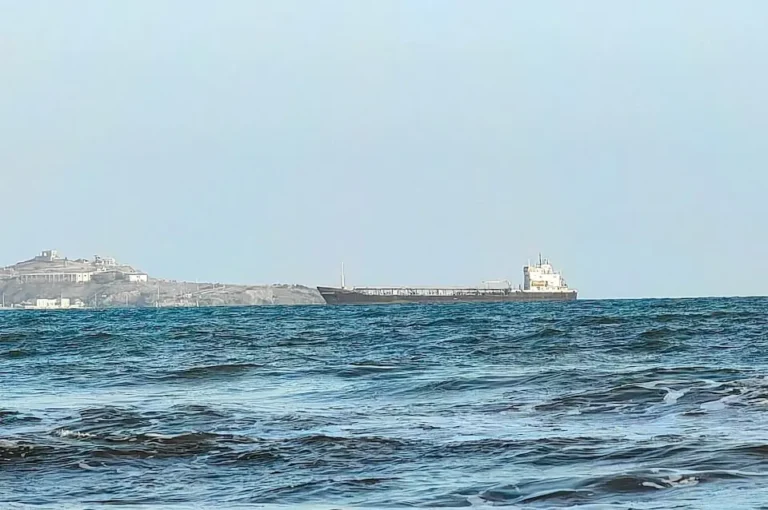
    WASHINGTON: The conflict involving Iran widened significantly over the weekend, spilling into the Red Sea and the Caspian Sea despite a temporary halt in direct US military strikes, raising fresh concerns over regional stability and global energy security. The United States military confirmed that its naval blockade against Iran remains in place but offered no explanation for suspending a series of nightly airstrikes that had continued for nearly two weeks. A senior official in President Donald Trump’s administration said Washington still preferred a diplomatic solution, while warning that Iran would face serious consequences if negotiations failed. According to US media reports, President Trump has decided to pause plans for intensified military action after advisers expressed concerns about the risks of expanding the conflict, including pressure on US weapons stockpiles, potential strain on relations with Gulf allies and disruptions to global energy markets. While the Gulf region remained relatively calm, tensions escalated elsewhere. Yemen’s Iran-backed Houthi movement claimed responsibility for missile and drone attacks targeting Saudi Aramco oil facilities in Jizan and Yanbu along the Red Sea coast. Videos circulating online showed smoke rising near the Jizan refinery, one of Saudi Arabia’s major oil-processing sites, while Saudi air defences reportedly intercepted additional missiles aimed at Yanbu. The attacks have heightened fears that the conflict could spread further across key international shipping routes, particularly after earlier disruptions in the Strait of Hormuz. Despite the escalation, Houthi officials said they were not seeking to block the Bab al-Mandeb Strait, another vital maritime corridor for global trade. Meanwhile, Iran accused Ukraine of attacking one of its commercial vessels in the Caspian Sea, claiming the strike killed one sailor and injured another. Tehran summoned Ukraine’s senior diplomat to lodge a formal protest, describing the alleged attack as a hostile act. The accusation came shortly after Ukrainian President Volodymyr Zelensky said Russia had been providing Iran with satellite intelligence to assist its military operations in the region. In Yemen, fighting also intensified as forces aligned with the internationally recognised government launched airstrikes on Houthi positions in Marib and Al-Jawf provinces. Military officials reported troop movements on both sides, raising concerns that the country’s fragile ceasefire has effectively collapsed after years of relative calm. Analysts warn that the expanding conflict now threatens to destabilise multiple regions simultaneously, with growing risks to international shipping, oil supplies and broader Middle East security.

  • Relatives of Teen School Shooter Shocked as Death Toll Climbs to Nine

    BANGKOK – A devastating school shooting in Thailand has left the entire nation in deep shock and mourning. The terrifying tragedy unfolded at Debsirin Nonthaburi School early on Friday morning. Families are now struggling to understand how a quiet 14-year-old boy could commit such extreme violence. What started as a completely normal school day quickly […]

  • | |

    Noah Kahan slams White House over unauthorised song use.

    Noah Kahan has become the latest musician to publicly push back against the Trump administration after the White House used his music without permission, joining a growing list of artists who have objected to their songs being used in administration social media content. The dispute began when the White House posted photographs and video to both Instagram and TikTok showing President Trump touring General Motors’ Milford Proving Ground in Michigan. The posts were set to Kahan’s song American Cars, taken from his chart-topping album The Great Divide. The pairing was clearly intended to evoke a sense of American pride and manufacturing strength, but the artist whose voice and music gave the posts their soundtrack had not been consulted and had not given his approval. Fans were quick to notice and quickly alerted Kahan by tagging him in the comments. His response was direct and unambiguous. “Would never approve of my music being used in support of you or this administration,” he wrote beneath the post. The comment rapidly accumulated tens of thousands of likes, suggesting the sentiment resonated well beyond Kahan’s own fanbase. His frequent collaborator and co-writer on the track, guitarist Noah Levine, also left a response of his own beneath the White House post. His comment was reportedly more direct in its language than Kahan’s, though it was subsequently removed. At the time of publication, the song itself remained attached to the White House’s video despite both objections. The White House did not respond to requests for comment on Kahan’s objection. The incident is part of a pattern that has become increasingly familiar during the Trump administration’s social media operations. Just days before Kahan spoke out, Katy Perry criticised the White House for using her 2010 hit Firework in a TikTok post featuring footage of military strikes. “I’m deeply appalled and angry,” she wrote, adding that she had not approved its use and had not even been asked. Ariana Grande raised similar concerns in June after a version of her song Bye appeared in a White House TikTok post depicting ICE arrests. The list of artists who have previously objected to the administration’s use of their music is extensive. Sabrina Carpenter, Olivia Rodrigo, Celine Dion, Neil Young and the Rolling Stones have all at various points voiced comparable complaints, reflecting a consistent tension between an administration that appears to deploy popular music as a tool of political imagery and the musicians whose work is being used without their knowledge or consent. For Kahan, the issue was clearly not simply procedural but personal. His response made clear that the objection was not only about the absence of permission but about the specific association itself, one he said he would never willingly choose.

  • | |

    Mir Raza murder probe hits geo-fencing hurdles, po…

    KARACHI: Investigators probing the murder of young businessman Mir Raza are facing challenges in completing geo-fencing around the crime scene, with the passage of several days making it harder to accurately reconstruct movements in the area. According to investigative sources, the crime scene is located near a hilly area that has been subjected to geo-fencing. Mobile towers belonging to three different telecom companies are situated around the location, allowing investigators to collect data on mobile activity in the vicinity. Sources said geo-fencing has so far produced location data covering several blocks of Gulistan-i-Jauhar. However, because considerable time has elapsed since the incident, investigators are finding it difficult to establish which individuals were present near the crime scene at the relevant time. Police have also collected various pieces of evidence from the surrounding area. Investigators reportedly conducted a search within a radius of around 500 metres from the location where the body was found. Meanwhile, the newly formed investigation committee has obtained details linked to Mir Raza’s smartwatch. Investigators are now attempting to retrieve the device’s complete data, which could potentially provide additional information about his movements and activities before his death. The investigation remains ongoing as authorities work to combine digital records, physical evidence and device data to determine what happened in the final hours of Mir Raza’s life.

  • |

    Student protests intensify over exam paper leaks in India

    Student protests against repeated examination paper leaks have intensified across India, with growing anger among young people and an increasingly active anti-government campaign on social media. Thousands of students marched toward Parliament in New Delhi on July 20, demanding the resignation of Education Minister Dharmendra Pradhan. The demonstration reportedly turned tense as police and protesters clashed, with reports claiming that more than 100 students suffered injuries during the unrest. Police officials have rejected allegations that officers used excessive force against the protesters. However, several videos recorded by students and shared widely on social media appear to show police personnel using batons and tear gas and dealing harshly with demonstrators. The footage has further fueled public anger and drawn attention to the growing student movement. The protests have since spread beyond the capital, with demonstrations reported in cities including Mumbai, Bengaluru, Patna, Lucknow and Aizawl. Student groups say they will continue their campaign until the authorities address their concerns and meet their demands. The Cockroach Janta Party (CJP), which is leading the student movement, has called for sustained protests over the issue. The group has demanded the resignation of Education Minister Dharmendra Pradhan, assurances that authorities will not file cases against students who took part in the demonstrations, and financial compensation for the families of students who allegedly died by suicide after examination papers leaked. The controversy has also gained significant momentum online. Young Indians have turned to memes, short videos and satirical posts to criticize the government and question its handling of examination leaks. Social media discussions have also included calls for the education minister to step down, with some posts targeting the ruling Bharatiya Janata Party (BJP) over the issue. The protests come amid wider concerns about the integrity of competitive examinations in India, where millions of students rely on national and state-level tests for admission to universities and access to government jobs. Repeated allegations of paper leaks have raised questions about examination security and fairness, while students have expressed frustration over the disruption to their academic and career plans. Prime Minister Narendra Modi has also responded to the growing protests. In a post on X, he addressed the issue for the first time and said that nothing matters more than the welfare and future of the country’s young people. The student movement continues to put pressure on the government, as protesters demand stronger measures to prevent examination paper leaks and greater accountability from officials. With demonstrations spreading to multiple cities and the issue gaining traction on social media, the controversy has emerged as a significant challenge for the Indian government.

  • | | |

    PML-N secures first wins in AJK refugee seats

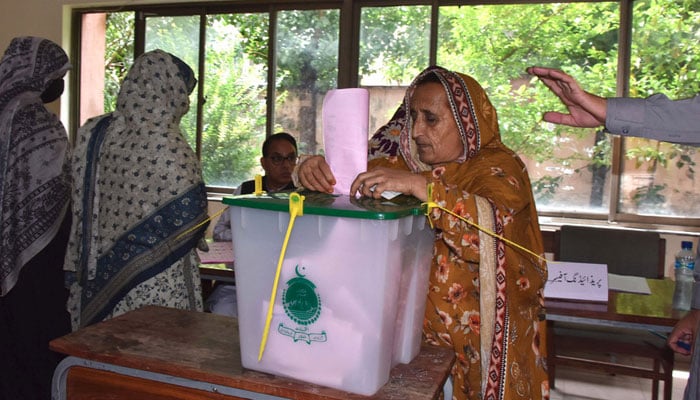
    Unofficial and provisional results have started coming in following the completion of polling for the second phase of the 2026 Azad Jammu and Kashmir (AJK) Legislative Assembly elections. Early results indicate that the Pakistan Muslim League-Nawaz (PML-N) has secured victory on two refugee constituencies, while vote counting continues across the remaining seats. Polling was held for eight constituencies in the Muzaffarabad Division and 12 refugee seats reserved for Kashmiri migrants living in different cities across Pakistan. Voting in the Muzaffarabad Division began at 8:00 a.m. and, due to high voter turnout, the Election Commission extended polling by one hour until 6:00 p.m. Polling for the refugee constituencies concluded at 5:00 p.m. Early Results from Muzaffarabad Division In LA-25 Neelum Valley-I, with results from 10 of 143 polling stations, PML-N candidate Shah Ghulam Qadir was leading with 1,364 votes, followed by Abid Afzal of the All Jammu and Kashmir Muslim Conference with 951 votes. In LA-26 Neelum Valley-II, after results from 8 of 135 polling stations, PPP candidate Mian Abdul Waheed led with 1,157 votes, while PML-N’s Shah Ghulam Qadir had 940 votes. In LA-29 Muzaffarabad-III, results from 2 of 138 polling stations showed Barrister Iftikhar Ali Gilani of PML-N leading with 379 votes, ahead of PPP’s Sardar Mukhtar Khan, who secured 353 votes. In LA-30 Muzaffarabad-IV, PML-N’s Mustafa Bashir Abbasi was ahead with 247 votes, while PPP’s Mubashir Munir Awan had 206 votes, according to results from 2 of 129 polling stations. In LA-31 Muzaffarabad-V, PML-N candidate Saqib Majeed Raja led with 2,934 votes, while PPP’s Chaudhry Latif Akbar received 1,660 votes, based on results from 14 of 249 polling stations. In LA-32 Muzaffarabad-VI, former AJK Prime Minister Raja Muhammad Farooq Haider of PML-N was narrowly ahead with 892 votes, while PPP candidate Sahibzada Muhammad Ashfaq Zafar had 871 votes, according to results from 5 of 163 polling stations. In LA-33 Muzaffarabad-VII, PPP candidate Diwan Ali Khan Qamar Chughtai was leading with 1,349 votes, followed by PML-N’s Mian Muhammad Rashid, who secured 1,029 votes after counting at 7 of 155 polling stations. Refugee Seats The first complete unofficial results declared PML-N victorious in two refugee constituencies. In LA-43 Kashmir Valley-IV, PML-N’s Muhammad Yasin Lone won the seat with 1,276 votes, defeating PPP candidate Javed Butt, who received 563 votes. In LA-44 Kashmir Valley-V, PML-N’s Muhammad Ahmad Raza Qadri was declared the winner with 1,700 votes, while Mehr-un-Nisa of the All Jammu and Kashmir Muslim Conference secured 650 votes. Vote Counting Continues In LA-34 Jammu-I, PML-N’s Nasir Hussain Dar was leading with 1,690 votes after results from 51 of 131 polling stations, while independent candidate Raja Riaz Ahmad had 741 votes. In LA-35 Jammu-II, PML-N’s Chaudhry Muhammad Ismail maintained a commanding lead with 18,788 votes, followed by independent candidate Sardar Muhammad Ghayas with 5,041 votes, based on results from 100 of 142 polling stations. In LA-36 Jammu-III, PML-N’s Muhammad Ahsan Raza led with 10,002 votes, while PPP’s Ahsan Ismail had 4,756 votes after counting at 50 of 140 polling stations. In LA-37 Jammu-IV, PML-N candidate Maryam Javed was ahead with 19,014 votes, while independent candidate Usman Aleem had 14,734 votes, according to results from 121 of 185 polling stations. In LA-38 Jammu-V, PML-N’s Zeeshan Ali was leading with 5,524 votes, narrowly ahead of Muhammad Akbar Chaudhry of the Muslim League AJK, who had 4,988 votes, based on results from 49 of 115 polling stations. In LA-39 Jammu-VI, PML-N’s Raja Muhammad Siddique secured 3,176 votes, while PPP’s Chaudhry Fakhar Zaman followed with 945 votes after counting at 41 of 157 polling stations. In LA-40 Kashmir Valley-I, PPP candidate Aamir Abdul Ghaffar led with 1,178 votes, while PML-N’s Muhammad Naeem Khan had 65 votes, according to results from 23 of 47 polling stations. In LA-41 Kashmir Valley-II, PML-N’s Muhammad Aamir Shah was ahead with 922 votes, while independent candidate Saba Diwan received 556 votes after counting at 13 of 19 polling stations. In LA-42 Kashmir Valley-III, PML-N candidate Syed Shaukat Ali Shah led with 1,326 votes, followed by PPP’s Muhammad Asim Sharif with 682 votes after results from 13 of 43 polling stations. In LA-45 Kashmir Valley-VI, PPP’s Abdul Majid Khan was leading with 2,444 votes, while Khawaja Muhammad Dilawar of the All Jammu and Kashmir Muslim Conference had 562 votes, according to results from 15 of 41 polling stations. The Election Commission had established 1,483 polling stations across the Muzaffarabad Division. Polling in LA-27 Muzaffarabad-II was postponed because of severe weather and landslides. Voting for the refugee constituencies was held in several cities across Pakistan. Polling for Jammu-I and Kashmir Valley-I took place in Karachi, while Rawalpindi and Islamabad hosted polling for LA-43 Kashmir Valley-IV, LA-44 Kashmir Valley-V, and LA-39 Jammu-VI. Vote counting is continuing, and official results are expected after the completion of the counting process.

Leave a Reply

Your email address will not be published. Required fields are marked *