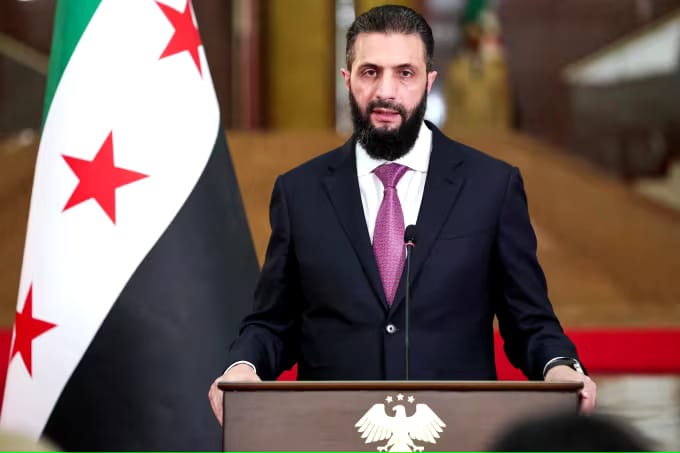
iran condemns israeli
|

Iran condemns Israeli minister’s remarks over Gaza killings


Iran’s Deputy Foreign Minister Kazem Gharibabadi has strongly condemned remarks attributed to Israeli National Security Minister Itamar Ben-Gvir regarding the killing of Palestinians in Gaza, accusing him of openly advocating mass violence and the forced displacement of Palestinians.

According to media reports, Gharibabadi said Ben-Gvir had set a daily target of killing between 30 and 40 people in Gaza. He described the remarks as further evidence of what Iran considers systematic violence against Palestinians and called for such statements to be preserved as evidence for possible future legal proceedings.

Gharibabadi said that Israeli officials were openly discussing the expulsion of Palestinians from Gaza and the establishment or expansion of Jewish settlements in Palestinian territory. He argued that these statements should not simply be treated as political rhetoric but should be documented carefully because they could potentially become important evidence in future cases involving alleged violations of international law.

“The statements and admissions made by Israeli officials should be preserved as evidence,” Gharibabadi said, according to the reports. He added that such evidence could be presented when Israeli officials are held accountable and legal proceedings are initiated against those accused of crimes against Palestinians.

The Iranian official’s comments came in response to statements attributed to Ben-Gvir concerning Israel’s military campaign in Gaza. Media reports said the Israeli minister had spoken about killing between 30 and 40 people in Gaza every night. He was also reported to have said that the people of Gaza should not remain alive.

Ben-Gvir, a far-right Israeli politician, has repeatedly faced international criticism over his statements and positions concerning Palestinians and the Gaza conflict. His remarks have frequently generated controversy, particularly when he has discussed military operations, Palestinian displacement and the future of Gaza.

Gharibabadi’s response reflects Iran’s broader criticism of Israel’s military operations in Gaza. Iranian officials have repeatedly accused Israel of committing serious violations against Palestinians and have called for international action against Israeli leaders and officials. Tehran has also consistently supported the establishment of an independent Palestinian state and opposed the expansion of Israeli settlements in Palestinian territories.

The issue of accountability has become increasingly prominent amid the continuing conflict in Gaza. Palestinian officials and international organizations have reported extensive civilian casualties and destruction in the territory since the outbreak of the war. Israel, meanwhile, has maintained that its military operations are aimed at Hamas and other armed groups and has defended its actions as necessary for national security and the release of hostages.

The latest exchange between Iran and Israel comes amid continued regional tensions. Iranian officials have frequently used international forums and diplomatic statements to call attention to the humanitarian situation in Gaza and to demand accountability for alleged violations of international humanitarian law.

Gharibabadi’s call to preserve statements made by Israeli officials highlights Iran’s argument that public comments by political and military figures could later be examined in legal proceedings. He suggested that remarks regarding killings, forced displacement and settlement expansion should be documented so they can potentially be used when questions of responsibility and accountability are considered.

The controversy surrounding Ben-Gvir’s reported remarks is therefore likely to add to international scrutiny of Israel’s conduct in Gaza and the statements of its political leaders. As the conflict continues to generate diplomatic and legal debate, allegations concerning civilian killings, displacement and settlement policies remain major points of contention between Israel and its critics, including Iran.
Similar Posts

  • |

    Environmental groups warn Trump-linked Albania resort is harming protected coastline

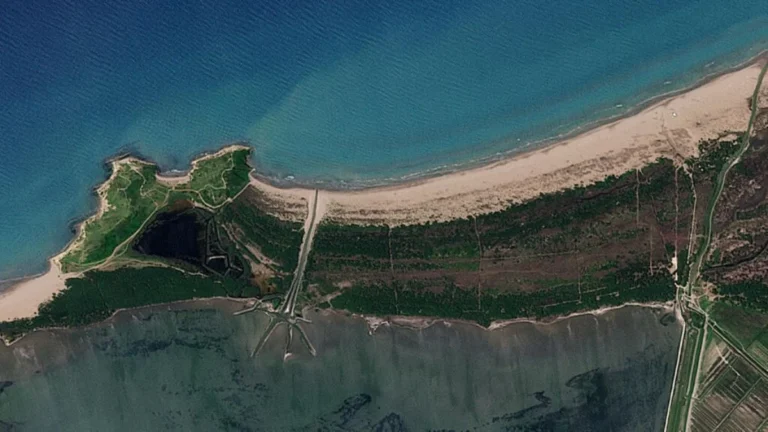
    Environmental groups and scientists have warned that early work on a luxury resort linked to the Trump family has already caused lasting damage to one of Albania’s most environmentally sensitive coastal areas. They say construction activity has affected wildlife habitats and fragile ecosystems even before the main development has begun. According to satellite images reviewed by AFP, major changes took place over a period of 25 days in May. Workers cleared a new road, removed large areas of forest and built a bridge across the channel connecting the Narta Lagoon to the Adriatic Sea. Conservationists argue that these early activities have already disrupted a protected landscape known for its rich biodiversity. Marine biologist Olsi Nika, who heads the environmental organization EcoAlbania, said heavy machinery operating on the beaches has damaged nesting areas used by endangered loggerhead sea turtles. He also said the construction of access roads through sand dunes and the removal of trees have disturbed important breeding grounds for many bird species. Environmental experts further warned that work on the water channel linking the lagoon to the sea has interfered with the natural flow of water that is essential for maintaining the surrounding wetlands. Scientists describe the impact as severe, warning that the destruction of habitats could have long term consequences for local wildlife. Ferdinand Bego, a professor at the University of Tirana, said much of the damage to the protected area cannot easily be reversed, even though some construction work has been paused following public protests. The project, valued at approximately 4.5 billion euros, was first announced in 2024 by Jared Kushner, the son in law of US President Donald Trump. Plans include the construction of luxury hotels near flamingo habitats and on a nearby uninhabited island. Trump’s daughter Ivanka has previously spoken publicly about the site’s attractive coastline, lagoon and white sand beaches, describing it as an exceptional location for tourism development. Opposition to the project has grown steadily over recent months. Local residents and environmental activists have staged daily demonstrations, with protests becoming more intense after barbed wire fencing was installed to mark the boundaries of the planned resort. Tensions increased further when private security guards confronted demonstrators during one of the protests, leading to continued public rallies against the development. Albanian Prime Minister Edi Rama has defended the investment, describing it as one of the country’s most important tourism projects. His government argues that the development will attract international investment, create jobs and help Albania compete with neighboring coastal destinations such as Montenegro, Greece and Croatia. Officials believe the project could significantly strengthen the country’s tourism industry and economic growth. In June, a team of scientists visited the site to assess the environmental impact of the preparatory work. Their report concluded that turtle nesting sites, bird habitats and coastal sand dunes had already been affected. Researchers warned that continued development without stronger environmental protections could place additional pressure on the area’s unique ecosystem. The campaign against the project has also received international attention. British singer Dua Lipa, whose family has roots in Kosovo, has publicly expressed support for those opposing the development. Environmental campaigners hope that growing international concern will encourage Albanian authorities to strengthen protections for the coastline. The European Union has also raised concerns as Albania continues its efforts to join the bloc by 2030. European Commissioner for Enlargement Marta Kos recently said Albania had agreed to reverse changes made to laws governing protected areas and strategic investments. Environmental experts say such reforms will be important if the country wants to meet European environmental standards during its accession process. Professor Friedrich Schiemer of the University of Vienna, who inspected the site in June, stressed that immediate action is needed to limit further damage. He warned that large tourism developments in ecologically sensitive areas could permanently alter the region’s natural environment if stronger safeguards are not introduced before construction continues.

  • | | |

    Houthis claim two hypersonic missiles fired at Mok…

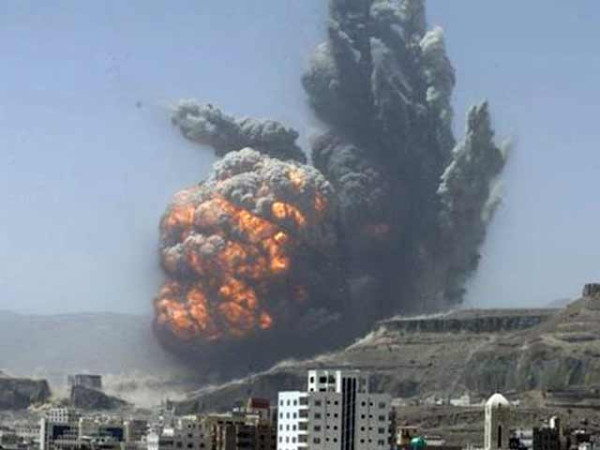
    SANAA: Yemen’s Houthi group has claimed it launched two hypersonic ballistic missiles towards the strategically important Mokha port on the Red Sea coast, adding to growing security concerns around one of the world’s busiest maritime routes. According to Turkey’s Anadolu Agency, the Yemeni military said the two missiles were fired towards Mokha port and the surrounding Red Sea area. However, there was no immediate independent confirmation of whether the missiles reached their intended targets or were intercepted before impact. No casualties or material damage were immediately reported following the alleged missile launches. Mokha, located on Yemen’s western coastline, is an important port area overlooking the Red Sea. The region has remained highly sensitive amid continuing tensions and repeated missile and drone attacks linked to the wider Middle East conflict. The latest claim is likely to raise fresh concerns over maritime security in the Red Sea, where attacks on commercial shipping have previously disrupted international trade and forced some vessels to consider longer alternative routes. The Houthis have repeatedly used missiles and drones in attacks around the Red Sea, saying their operations are connected to the broader regional conflict. Such incidents have drawn international attention because the waterway is a major passage for cargo and energy shipments between Asia, Europe and other global markets. For now, key details surrounding Monday’s alleged attack remain unclear, including the exact type of missiles used, their intended targets and whether any interception took place. The Houthi claim has not been independently verified, and further information from Yemeni authorities or other sources is expected to clarify what happened. With tensions already high across the region, the reported launch underscores the continuing risks facing ports and shipping lanes along the Red Sea.

  • |

    Syria and Russia redefine military ties

    Syria and Russia have reached a new agreement regarding the future of two strategically important Mediterranean military sites, marking a major shift in Moscow’s role in the country after years of close military cooperation with the former Syrian government. According to Syria’s Foreign Ministry, the agreement will bring changes to the way Russia operates at the Hmeimim air base near Latakia and the Tartus naval facility on Syria’s Mediterranean coast. Both locations served as key Russian military positions during the rule of former President Bashar Assad, who relied heavily on Moscow’s political and military support throughout Syria’s long civil war from 2011 to 2024. The Hmeimim air base became one of Russia’s most important overseas military installations, supporting Russian air operations in Syria and strengthening Moscow’s influence in the eastern Mediterranean. Meanwhile, the naval base at Tartus provided Russia with its only major naval facility outside the former Soviet Union, allowing it to maintain a strategic presence in the region. Under the newly announced arrangement, Syria will assume control of the Hmeimim air base and the commercial section of Tartus port as part of its civilian administration. The remaining military areas at both locations will reportedly be transformed into joint training and qualification centers rather than serving as traditional Russian military outposts. Syria’s Foreign Ministry described the agreement as a “reorganization of the Russian presence” along the country’s coastline. The ministry said the deal represents the most significant step forward in negotiations that have continued for around 18 months and could open the door to a new stage in Syrian-Russian relations. Russia has not yet issued an official public response to the announcement. However, Moscow’s position in Syria has changed significantly since the fall of Assad’s government. During the uprising and subsequent conflict, Russia was one of Assad’s strongest supporters, providing military assistance that helped his government remain in power. After Assad was removed from office, Russia allowed him and his family to seek asylum, while many remaining Russian forces gradually withdrew from Syria. Despite these changes, Syria’s new leadership has attempted to maintain diplomatic relations with Moscow. Interim President Ahmad al-Sharaa has met Russian President Vladimir Putin in Moscow on two occasions since taking office, with the future of the Mediterranean bases being one of the main issues discussed during their talks. At the same time, Syria has expanded its diplomatic engagement with Western nations and regional Arab countries. Several states that had distanced themselves from Damascus during Assad’s crackdown on opposition movements have begun rebuilding relations with the new Syrian authorities. The United States has also removed many of the sanctions that had severely affected Syria’s economy, while European countries have increased diplomatic contacts. French President Emmanuel Macron’s visit to Syria in July marked another important step, with both countries announcing plans to appoint ambassadors for the first time in 14 years. The agreement over Hmeimim and Tartus reflects the changing balance of international influence in Syria. While Russia remains an important partner, the country’s new government appears to be pursuing broader relationships with multiple global and regional powers as it seeks to redefine Syria’s future after years of conflict.

  • | |

    Pakistan blames Afghan-based militants for rising …

    Islamabad: Pakistan’s Deputy Prime Minister and Foreign Minister Ishaq Dar has said that banned militant groups, including Tehreek-e-Taliban Pakistan (TTP), the Balochistan Liberation Army (BLA), and the East Turkestan Islamic Movement (ETIM), are operating from Afghan territory under the protection of the Afghan Taliban. Speaking at the Shanghai Cooperation Organization (SCO) Council of Foreign Ministers meeting, Dar described terrorism originating from Afghanistan as a serious threat to regional peace and stability. He said these militant groups continue to carry out attacks from across the border, posing a major security challenge for Pakistan. Dar stated that Pakistan has witnessed more than 2,000 terrorist attacks so far this year, resulting in the deaths of over 560 civilians. He also claimed that evidence had emerged linking some Afghan nationals to several of these attacks. The foreign minister urged SCO member states to call on the Afghan Taliban to fulfill their counterterrorism commitments and prevent Afghan territory from being used by militant organizations. Reaffirming Pakistan’s commitment to regional peace, Dar said dialogue, diplomacy, and mutual respect remain the only sustainable solutions to regional disputes. He highlighted Pakistan’s role in promoting diplomatic engagement and stressed the importance of supporting ongoing peace initiatives. Dar also noted that Pakistan hosted talks between Iran and the United States in April 2026, which, according to him, led to the signing of the Islamabad Memorandum of Understanding in June 2026. He urged the international community to support diplomatic efforts while remaining vigilant against attempts to undermine the peace process. Looking ahead, Dar said Pakistan will assume the chairmanship of the SCO Council of Heads of State in September 2026 and host the SCO Summit in 2027. During its chairmanship, Pakistan plans to prioritize regional connectivity, trade, agricultural cooperation, youth exchanges, and stronger people-to-people ties. On the sidelines of the SCO meeting, Dar also met Iranian Foreign Minister Abbas Araghchi. The two leaders discussed bilateral relations, regional developments, and efforts to promote peace and stability. Dar emphasized the need for restraint, de-escalation, and continued diplomatic engagement in addressing regional challenges, while both sides agreed to maintain close coordination on issues of mutual interest.

  • |

    US military faces growing strain as Iran conflict tests support for Israel

    A senior American military commander has warned that the United States could soon struggle to maintain its support for Israel while also protecting its own military interests across the Middle East. The warning reflects increasing concern inside the Pentagon that the ongoing conflict with Iran is placing heavy pressure on US naval forces and missile defence resources. According to reports from The Washington Post and other international media outlets, General Alexus Grynkewich, who leads US European Command, has told Pentagon officials that American naval assets in the region are becoming overstretched. He reportedly said that unless another US Navy destroyer is deployed, military commanders may eventually have to choose between defending American personnel and continuing missile defence operations in support of Israel. His assessment has drawn attention because it comes from one of the senior officers directly responsible for overseeing US military operations rather than from outside analysts. It suggests that the growing demands on American forces are becoming a serious concern at the highest levels of military planning. US Navy destroyers equipped with the Aegis combat system have played a major role in helping defend Israel from Iranian missile attacks. These warships are capable of detecting incoming ballistic missiles and intercepting them using advanced SM-3 and SM-6 missile systems. However, these destroyers are also critical to American security operations around the world. They are needed in the Indo-Pacific to counter China’s growing military presence, in Europe to support NATO allies, and across the Middle East to protect US military bases and key shipping routes. Sending more of these ships to one conflict reduces the military’s ability to respond quickly to other global crises. The conflict has also placed significant pressure on America’s stockpile of advanced missile defence systems. Pentagon assessments reported by The Washington Post indicate that US forces have fired more than 200 THAAD interceptors during the fighting with Iran, which is believed to be nearly half of the country’s available inventory. In addition, US Navy ships have launched more than 100 missile interceptors. Although Israel also relied on its own defence systems, including the Arrow and David’s Sling missile shields, American support proved essential during the most intense phases of the missile exchanges. Military experts say the challenge goes beyond the number of missiles used. Advanced interceptors are highly sophisticated weapons that require considerable time and resources to manufacture. Replacing depleted stockpiles cannot happen quickly, raising concerns about America’s ability to sustain long conflicts while remaining prepared for new security threats elsewhere. Defence planners have warned that prolonged military operations could leave the United States with reduced inventories of some of its most important air defence weapons. For many years, US military strategy has been based on the ability to respond to several major conflicts at the same time. The country maintains security commitments across Europe, the Middle East, and the Indo-Pacific, requiring a constant supply of military equipment and personnel. The latest warning from US European Command suggests those assumptions are now being tested as growing global tensions demand the same resources in multiple regions. An analysis by the Center for Strategic and International Studies, cited by CNN, estimates that the US has already used a large share of its advanced missile inventory in recent weeks. The report suggests that around half of the country’s THAAD and Patriot interceptors have been consumed, while substantial numbers of Precision Strike Missiles, Tomahawk cruise missiles, Joint Air-to-Surface Standoff Missiles, and SM-3 and SM-6 interceptors have also been used. The findings highlight a broader challenge facing the US military. Although it remains one of the world’s strongest armed forces, modern warfare is consuming advanced weapons at a pace that is difficult for defence industries to match. As conflicts continue across different regions, Washington may increasingly face difficult decisions about where to deploy its military resources.

  • | | | | |

    Hlun Solo’s Death Devastates Fans, We Explain Why He Was The Exact Opposite of Most Influencers and YouTubers and Why He Was So Beloved by Thais

    Thailand/Georgia His real name was Bowornthat Pengsuk, born in 1999 in Kalasin province in northeastern Thailand, he grew up in modest circumstances. After his father died, he was raised primarily by his grandmother, who focused on education and practical values. He attended local schools that offered scholarships and support, then worked factory jobs in Bangkok, […]

Leave a Reply

Your email address will not be published. Required fields are marked *