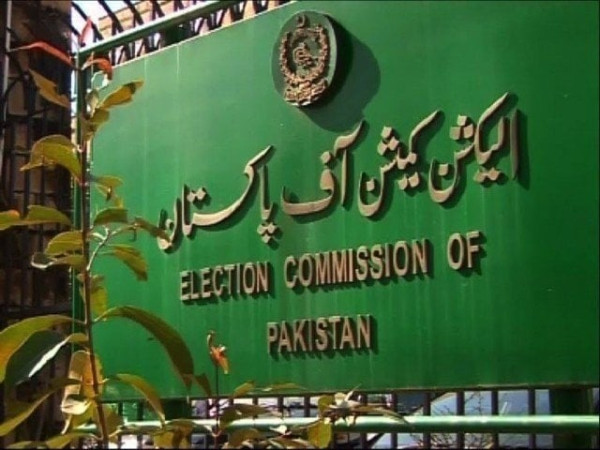
ecp backs punjab
| |

ECP backs Punjab polls from December 15

The Election Commission of Pakistan has agreed in principle to hold long-delayed local government elections in Punjab between December 15, 2026, and January 15, 2027.

The decision was reached during an ECP meeting chaired by Chief Election Commissioner Sikandar Sultan Raja on Thursday. The meeting was held to discuss the proposed schedule and preparations for local polls in the province.

A Punjab government delegation attended the meeting. The delegation included Local Government Minister Zeeshan Rafiq, Mines and Minerals Minister Sardar Sher Ali Gorchani, Agriculture Minister Syed Muhammad Ashiq Hussain Shah and Education Minister Rana Sikandar Hayat. The Punjab chief secretary and senior local government officials were also present.

The ECP was informed that the delimitation process for Punjab had been completed, clearing an important hurdle in preparations for the elections.

Chief Election Commissioner Sikandar Sultan Raja stressed that elected local governments are a constitutional requirement under Article 140-A. He also pointed out that election authorities are legally required to conduct local government elections within the prescribed period after the expiry of elected local bodies.

Punjab officials said the provincial government needed sufficient time to complete administrative preparations, arrange financial resources and deploy staff for the electoral process.

The provincial government proposed the December 15 to January 15 window as the most suitable period for polling. Officials said school examinations would have concluded by then, allowing educational staff to be available for election duties.

The government also cited weather conditions as a factor. Holding the elections during the proposed period could help avoid difficulties associated with heavy fog during other parts of the winter season.

Punjab authorities further informed the ECP that they preferred conducting the elections in phases. Officials said phased polling would allow better security arrangements and make it easier for the administration to manage the large-scale electoral exercise.

The ECP accepted the proposed timeframe in principle and directed the Punjab government to submit a detailed plan promptly if it wanted the elections to be conducted in multiple phases.

The commission said the proposed arrangements could help move the province toward fulfilling its constitutional obligation of establishing elected local governments.

The Punjab government has already allocated Rs12.52 billion for the local elections. It has also approved the recruitment of 900 Union Council secretaries to support the functioning of local bodies.

Punjab has not held local government elections since 2015. The previous polls were conducted in several phases between October and December that year.

The elected local councils began functioning in 2017 after mayors and chairpersons were selected through indirect elections.

The local governments were dissolved in April 2019 by the then Punjab government before completing their full term. The Supreme Court subsequently ordered their restoration, and the councils eventually completed their tenure on December 31, 2021.

Since then, local government elections have remained pending amid repeated changes to Punjab’s local government laws.

Successive provincial administrations amended or replaced the relevant legislation, forcing the ECP to repeatedly revise its preparations and carry out fresh delimitation exercises.

Similar Posts

  • |

    Sonu Nigam explains why he will not discuss NEET protests publicly

    Sonu Nigam has addressed his decision to stay silent on the NEET protests, after a video of his reaction went viral online. The clip had sparked mixed reactions among fans and critics alike. Back in July, a video circulated showing Nigam being asked about the ongoing student protests during a media interaction. He appeared visibly uncomfortable, responding briefly before stepping away from the question entirely. The moment triggered widespread discussion on social media, with some users questioning why he chose not to comment. Nigam has now clarified his reasoning in a new interview with Bombay Times. He explained that every discussion has its own appropriate time and setting. According to Nigam, he has followed one clear rule throughout his career, staying focused strictly on the purpose of whatever event he’s attending. He said that after three decades of working in Mumbai, he’s learned to always stick to the agenda of a given occasion. Nigam added that he avoids letting conversations drift toward unrelated topics during press interactions. At the time of the viral video, Nigam was attending an event honouring the late singer Pankaj Udhas. He felt discussing an unrelated political issue there would have been inappropriate given the occasion’s purpose. He said bringing up politics during a tribute dedicated to his mentor felt disrespectful to him personally. For Nigam, staying on-topic was not avoidance, but a matter of basic professional etiquette. Nigam also revealed a personal commitment he’s made regarding public commentary. He said he promised his father he would never comment on issues he doesn’t fully understand or have proper knowledge of. He clarified that this does not mean he avoids speaking up altogether. Nigam pointed to past instances where he’s taken clear public stances, including issues like loudspeaker regulations at religious sites and royalty rights for performing artists. He said he has taken plenty of stands throughout his career and has played a role in pushing for real systemic changes. Nigam maintained that silence on one particular issue doesn’t reflect indifference, but rather a conscious choice about when and where to speak. Reactions to his explanation have remained divided, with some praising his restraint and others still critical of his initial response.

  • | | |

    PWPA approves key reforms to strengthen women&#821…

    Lahore: The 5th meeting of the Board of the Punjab Women Protection Authority (PWPA) was held under the chairpersonship of Ms. Hina Pervaiz Butt, where members reviewed the Authority’s performance and approved a series of important policy and administrative measures aimed at strengthening institutional capacity and expanding protection services for women across Punjab. The Board reviewed the implementation status of decisions taken during its previous meeting and expressed satisfaction over the progress achieved. Members emphasized the importance of further strengthening the Authority to ensure accessible, effective and survivor-centred services for women throughout the province. The Board approved the revised organizational structure of PWPA and stressed the need for the early filling of vacant positions to enhance the Authority’s operational efficiency and institutional capacity. The Board also approved the Punjab Women Protection Authority (Terms and Conditions of Service) Regulations, 2026, including revised provisions relating to appointments and service matters, to establish a transparent and efficient human resource framework for the Authority. It was further decided that the Punjab Social Welfare & Bait-ul-Maal Department will undertake development initiatives relating to the establishment of new PWPA facilities and infrastructure in coordination with the Authority. Director General Punjab Women Protection Authority, Dr. Lubna Nazir, briefed the Board on the Authority’s recent achievements, including the digitization of case records, implementation of awareness campaigns, progress in service delivery, and the increasing number of registered cases being handled by PWPA. She also informed the Board that the Authority had received more than 3,000 applications for its Internship Programme, reflecting growing public confidence and youth engagement. Dr. Lubna Nazir further informed the Board that the PWPA Helpline has been upgraded to a toll-free service (0800-01737) to make support services more accessible to women across Punjab. During the meeting, Secretary Punjab Social Welfare & Bait-ul-Maal Department, Ms. Sara Omar, emphasized that every woman in Punjab who needs assistance should have access to PWPA’s services. She underlined that achieving this objective requires further strengthening the Authority through enhanced human resources, institutional development, and capacity building so that PWPA can effectively extend its outreach across the province. The Board also appreciated the Authority’s growing collaboration with the Japan International Cooperation Agency (JICA), acknowledging its role as an important development partner supporting institutional strengthening and capacity-building initiatives. Speaking on the occasion, Chairperson Hina Pervaiz Butt reaffirmed PWPA’s commitment to working in close coordination with all relevant government departments and partner organizations to further strengthen Punjab’s women protection system. She stated that under the leadership and special focus of Chief Minister Maryam Nawaz Sharif, the Government of Punjab is committed to building strong and responsive institutions that provide timely protection, legal assistance, rehabilitation, psychosocial support, and other essential services to women across the province. The Chairperson thanked all Board members for their valuable input and reiterated the Authority’s resolve to implement the Board’s decisions effectively to further strengthen the protection framework for women in Punjab.

  • | |

    NCLEX programme under fire: only 7 nurses pass out…

    Islamabad: A Government backed programme designed to help Pakistani nurses qualify for international jobs came under strong questioning in the National Assembly after lawmakers raised concerns over the transparency, student selection and results of the NCLEX Nursing Training Programme. The National Assembly Standing Committee on Federal Education and Professional Training questioned how a Rs 150 million programme selected its training partner and why only seven nurses had cleared the NCLEX exam out of 500 trainees so far. The committee supported opportunities for Pakistani nurses to work abroad but demanded complete transparency regarding the programme’s planning, the selection of the implementing partner, and the use of public money. The issue was discussed during the 25th meeting of the committee, where members reviewed the performance and implementation of the NCLEX Nursing Training Programme launched by the National Vocational and Technical Training Commission (NAVTTC). NAVTTC Executive Director Muhammad Amir Jan informed the committee that before this initiative, Pakistani nurses had to travel to countries such as Dubai, Bahrain, Turkey and Thailand to appear in the NCLEX examination. He said that with support from SIFC, NAVTTC was given responsibility to bring the examination system to Pakistan for the first time through Pearson VUE during 2024 and 2025. Officials informed the committee that the programme was designed to train 500 nurses. The training phase has been completed, 182 nurses have applied for the NCLEX examination and seven nurses have successfully cleared the test. However, members questioned the low success rate and asked whether the programme was producing the expected results. One committee member pointed out that seven successful candidates out of 500 trainees represented a very small percentage and questioned whether the programme needed improvements before more public funds were spent. NAVTTC officials defended the programme, saying that NCLEX is a difficult international examination and nurses who pass the test still require additional time before moving abroad for employment. Officials said nurses might need eight to eighteen months after passing the exam before they can travel for work opportunities. The committee also raised questions about the selection of the implementing partner, the Institute of Contemporary Studies. Members questioned whether a public advertisement was issued before selecting the organisation or if other institutions were given an opportunity to compete. They said programmes funded through public money must follow transparent procedures to maintain public confidence. NAVTTC officials explained that the programme was developed under an industry led model and was based on a proposal received from the Pakistan Nursing and Midwifery Council. They said such programmes do not always follow open advertisement procedures because they are based on specific industry requirements. However, members questioned whether a government body could recommend a specific private organisation without a competitive process. The committee also raised concerns about the role of the Pakistan Nursing and Midwifery Council. Members noted that in previous discussions, representatives of the council had stated they were not fully aware of the nurse selection process and training arrangements. NAVTTC officials responded that the council had formally approached NAVTTC for the project and that decisions taken by government bodies should be accepted by all stakeholders involved. Financial matters also came under discussion. NAVTTC informed the committee that the total project cost was Rs 150 million and that Rs 87 million had been released so far. Officials clarified that the remaining funds would be released only after achieving agreed results under a performance-based payment system. They said a bank guarantee was also available to protect government funds. The committee also questioned the quality and locations of the training centres. MNA Dr Shazia Sobia Aslam Soomro raised concerns about some training locations, including Matta in Swat, and asked how proper facilities and monitoring were ensured in those areas. NAVTTC officials responded that Khyber Medical University conducted training in Matta and promised to provide complete details of nurses trained there. Questions were also raised about trainer qualifications. Members asked how individuals with nursing degrees could provide NCLEX preparation training. Officials explained that trainers must themselves be NCLEX qualified according to programme requirements. The committee further discussed the selection of nurses for training. NAVTTC officials said their role was to set eligibility criteria, not directly select candidates. They explained that under the pay for success model, the training provider selects participants because the provider is responsible for results. At the conclusion of the meeting, the committee decided to invite the Pakistan Nursing and Midwifery Council in the next session to clarify the selection process of nurses and the appointment of the training partner. Chairperson Mahtab Akbar Rashdi said that every concern must be properly addressed because public funds were involved and the programme was created to provide international opportunities for Pakistani nurses.

  • Travelers Cautioned When Crossing the Chiang Rai-Myanmar Border in Tachileik

    CHIANG RAI – The Mae Sai District Chief is currently sending a very strong warning to Thai citizens and tourists traveling across the border to Myanmar. If you plan to visit the bustling city of Tachileik, you must strictly follow all local rules. Doing so will help you avoid severe legal trouble and unexpected detentions […]

  • | |

    Jamaat-e-Islami announces nationwide sit-ins on Au…

    Jamaat-e-Islami Pakistan chief Hafiz Naeemur Rehman has announced that his party will hold simultaneous sit-ins across all four provinces on August 16, as part of its campaign against what he described as injustice and oppressive policies. Speaking about the planned demonstrations, Naeemur Rehman said a sit-in would be held outside the Punjab Chief Minister’s House in Lahore. In Khyber Pakhtunkhwa, Sindh and Balochistan, party workers will stage protests outside the respective Governor Houses. The Jamaat-e-Islami chief said the demonstrations would be held at the same time across the country. He called on the rulers to stop what he termed oppression and injustice, saying the government must pay attention to the concerns of the people. Naeemur Rehman said his party would continue raising its voice on issues affecting citizens. He maintained that the government should take practical steps to address public grievances instead of ignoring them. The announcement comes as Jamaat-e-Islami continues its political activities and prepares to mobilise workers in different parts of the country. The party is expected to organise demonstrations in provincial capitals and other major areas as part of its campaign. The JI chief also welcomed the recent defence agreement signed by Pakistan, Türkiye and Saudi Arabia. He described the agreement as a positive development and said stronger cooperation among the three countries could contribute to regional security and closer ties.

  • | |

    Bilawal vows to fight alleged poll rigging in AJK

    Pakistan Peoples Party (PPP) Chairman Bilawal Bhutto Zardari has accused the Pakistan Muslim League-Nawaz (PML-N), without naming the party directly, of relying on electoral manipulation to gain power and warned that his party would resist any attempt to rig the upcoming elections in Azad Jammu and Kashmir (AJK). Addressing a PPP workers’ convention in Muzaffarabad, Bilawal said the large turnout at the gathering showed that his party was heading towards victory in the August 2 elections. He urged party workers to remain active and mobilise voters, expressing confidence that the “arrow” — the PPP’s electoral symbol — would emerge victorious. Bilawal alleged that certain political groups had historically benefited from manipulated elections and now believed they could use the same tactics in AJK. He said the people of Kashmir would not allow such efforts to succeed and that PPP workers and voters would stand against any attempt to undermine the electoral process. Referring to his party’s political rivals, Bilawal claimed that their rise to power had often followed controversial election processes. He said the PPP had repeatedly faced electoral challenges but continued to win public support despite what he described as unfair political practices. The PPP chairman also raised allegations of rigging in the constituency of senior party leader Chaudhry Yasin. He claimed that polling agents and workers had reported irregularities at around 30 polling stations, alleging that the stations were occupied and votes were unlawfully cast. Bilawal said he had evidence regarding the alleged irregularities and called on the Election Commission to order immediate re-polling at the affected polling stations if it had no involvement in the alleged misconduct. He maintained that the PPP would accept defeat if voters rejected the party through a transparent and fair election. However, he said the party would not accept what he called a “stolen election” and would continue to challenge any result that emerged through alleged manipulation. Bilawal also pledged to fight for the restoration of what he described as the “stolen seats” of Kashmir and promised to pursue the rights of the people through democratic and constitutional means. He said the PPP wanted to secure ownership and political rights for the people of AJK through the power of the ballot rather than through armed struggle. He urged voters to support the party’s electoral campaign and vowed that the PPP would continue its efforts to raise the Kashmir issue at the international level. Bilawal said the Bhutto family and the PPP had worked for three generations to highlight the Kashmir cause globally, adding that his party would continue to advocate for the rights and aspirations of the people of the region through political and diplomatic channels.

Leave a Reply

Your email address will not be published. Required fields are marked *