carly simon revisits
| |

Carly Simon revisits troubled James Taylor marriag…

Carly Simon is taking listeners back to one of the most complicated chapters of her life. More than four decades after her marriage to James Taylor ended, the legendary singer-songwriter appears to be questioning what their relationship really meant.

Simon, 83, addresses the uncertainty surrounding her former marriage in “Maybe I Never Loved You,” a deeply personal song from her new album Comes in Waves. The album, released on August 14, marks her first collection of original music in 18 years. (People.com⁠)

The song does not mention Taylor by name. However, its subject matter has led many listeners and publications to believe that Simon is reflecting on her relationship with the singer. The pair were married from 1972 until their divorce in 1983 and share two children, Sally and Ben. (Page Six⁠)

Rather than offering a simple answer about whether she loved Taylor, Simon appears to embrace the uncertainty. The song explores the conflicting emotions that can remain after a relationship ends, including affection, disappointment and regret.

That complexity is important because Simon has spoken about her feelings for Taylor very differently in the past.

In a 2015 interview following the publication of her memoir, Boys in the Trees, Simon said she still loved her former husband despite the fact that they had not spoken for decades. Her earlier comments suggested that the emotional connection had never completely disappeared. (People.com⁠)

Her new song therefore does not necessarily mean Simon has suddenly decided that she never loved Taylor. Instead, it seems to show how memories of a long and difficult relationship can change with time.

Their marriage was heavily affected by Taylor’s struggles with heroin addiction, while both musicians have previously acknowledged the difficulties surrounding their relationship. The couple eventually separated in 1981 before their divorce was finalized two years later. (Nine⁠)

Simon also explores the impact of the divorce on their children in another song on Comes in Waves, “Mother of Pearl.” The track reflects on Sally and Ben growing up amid their parents’ separation and the emotional tension surrounding their family. (People.com⁠)

The new album arrives during a significant period in Simon’s life. She has recently faced health challenges, including a Parkinson’s disease diagnosis and treatment for skin cancer. Music has once again provided her with a way to process difficult emotions and memories. (WSB-TV Channel 2 – Atlanta⁠)

Ultimately, Simon’s latest work is less about rewriting history and more about confronting it. Her complicated feelings toward Taylor remain part of her story, and Comes in Waves gives her space to examine them with honesty.

After decades of silence, Carly Simon has found another way to speak about a love story that clearly still carries emotional weight.

Similar Posts

  • | |

    Pakistan gets $3.6bn remittances in July, PM welco…

    ISLAMABAD: Prime Minister Shehbaz Sharif has welcomed a strong increase in remittances sent by overseas Pakistanis, with the country receiving $3.6 billion during July. Reacting to the latest figures, the prime minister described the inflow as encouraging, noting that remittances recorded a 13 per cent increase compared with the same month last year. He also highlighted a month-on-month rise, saying remittances grew by 4.5 per cent in July. The continued increase provides further support to Pakistan’s foreign exchange position and reflects the growing contribution of overseas Pakistanis to the national economy. Shehbaz praised the Pakistani diaspora for playing an important role in supporting economic stability. He said overseas Pakistanis remain an important part of the country’s economic strength and appreciated their continued support through financial transfers. The latest rise in remittances comes as Pakistan continues efforts to strengthen its external account, improve foreign exchange liquidity and maintain economic stability.

  • | | |

    Security forces kill five militants in Panjgur ope…

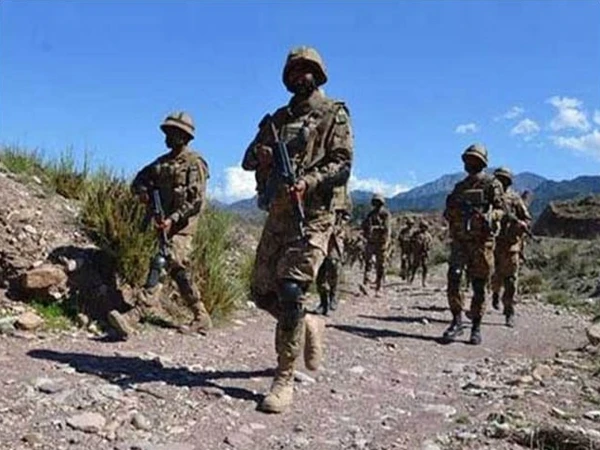
    Security forces have killed five militants during an intelligence-based operation in Panjgur district of Balochistan, according to the Inter-Services Public Relations (ISPR). The operation was conducted after security agencies received intelligence about the presence of militants in the area. Security personnel moved into the suspected location and carried out the operation. Five militants were killed during the operation, ISPR said. A significant quantity of weapons and ammunition was also recovered from the militants. The recovered weapons and ammunition were taken into custody. They were later destroyed by the security forces, according to ISPR. Following the operation, security personnel launched a clearance and search operation in the surrounding area. The search operation is aimed at checking the area for any remaining militants and possible hideouts. Security forces are also examining the area for additional evidence and material linked to militant activities. ISPR said the operation was part of ongoing efforts to eliminate terrorism from Balochistan. The military’s media wing said security forces remain determined to prevent militant groups from carrying out attacks. It further said efforts would continue against terrorism allegedly being carried out with foreign support and assistance. Security forces have intensified operations against militant networks in different parts of the province. Authorities have repeatedly stressed the need for intelligence-based operations to identify and target militant elements. The latest operation in Panjgur comes amid continued security efforts in Balochistan

  • | |

    Maryam Nawaz orders faster rollout of clean drinki…

    Punjab Chief Minister Maryam Nawaz has directed authorities to accelerate efforts to ensure the supply of safe drinking water to citizens across the province, calling it one of her government’s highest priorities. Chairing a meeting of the Punjab Clean Water Authority, the chief minister instructed officials to speed up projects aimed at improving access to clean drinking water in both urban and rural areas. Maryam Nawaz said the Punjab Clean Water Authority should be reorganized and strengthened on the model of the province’s Suthra Punjab initiative. She stressed that inefficiency, delays, and negligence would not be tolerated in implementing public welfare projects. She also directed officials to ensure the repair, maintenance, and smooth operation of existing water filtration plants. In addition, she ordered the installation of new filtration plants wherever needed to improve public access to safe drinking water. During the meeting, participants agreed to seek the services of an international consultancy to help modernize the province’s water supply system. They also approved the introduction of advanced Japanese and Chinese water filtration technologies to improve the quality and efficiency of clean water projects. According to the Punjab government spokesperson, the Punjab Clean Water Authority will undergo restructuring and be upgraded on modern lines. The authority will also be equipped with the latest filtration technology to strengthen its capacity and improve service delivery across the province. The provincial government says the initiative is part of broader efforts to improve public health and ensure reliable access to clean and safe drinking water for communities throughout Punjab.

  • |

    Saudi Arabia forms 14-nation maritime defence alliance

    RIYADH: Saudi Arabia has announced the formation of a new multinational maritime defence alliance with 13 other countries to strengthen security along some of the world’s busiest shipping routes amid rising tensions in the Middle East. The Saudi Ministry of Defence said the coalition has been created to protect freedom of navigation through the Bab al-Mandeb Strait, the Red Sea and the Gulf of Aden. These waterways are critical for global trade and international energy supplies. The new alliance includes Saudi Arabia, Pakistan, Türkiye, Kuwait, Bahrain, Qatar, Jordan, Egypt, Djibouti, Somalia, Bangladesh, Yemen, Sudan and the Comoros. According to Saudi authorities, representatives from 43 of the 51 invited countries attended the meeting that led to the creation of the alliance. A delegation from the European Union also participated in the discussions. The ministry said the coalition aims to improve coordination among member states to address growing maritime security challenges. It will focus on intelligence sharing, joint operational planning, military exercises and coordinated maritime operations. Saudi officials stressed that the alliance is purely defensive and is not intended to target any country. They said its primary objective is to secure international shipping lanes and ensure the uninterrupted flow of global trade. The announcement comes as security concerns continue to grow across the region due to escalating tensions involving Iran and attacks on commercial vessels in strategic waterways. The Bab al-Mandeb Strait has become increasingly important for international shipping. It connects the Red Sea with the Gulf of Aden and serves as a vital link between the Indian Ocean and the Mediterranean through the Suez Canal. Experts estimate that around 10 to 12 percent of global maritime trade passes through the narrow waterway every year. Millions of barrels of crude oil and petroleum products are transported through the route daily, making it one of the world’s most strategically important sea lanes. Saudi Arabia has increasingly relied on the Red Sea route for oil exports through its East-West pipeline, which transports crude from the country’s eastern oil fields to the port of Yanbu on the Red Sea coast. However, ships departing from Yanbu must still pass through the Bab al-Mandeb Strait before reaching international markets. Regional instability has increased concerns over the safety of commercial shipping. Repeated attacks on vessels operating in the Red Sea have disrupted maritime traffic and raised fears of higher transportation costs and energy prices.

  • Cambodia Hires U.S. Firm to Wage Information War, Documents Show

    BANGKOK — A U.S.-based consulting firm has been formally contracted by the Cambodian government to conduct an international information campaign aimed at discrediting Thailand and swaying global opinion amid ongoing border hostilities, according to documents published by the STRONG Anti-Corruption Thailand Club. Civilian Death Toll in Thailand Rises to 16 Amid Continued Border Clashes The […]

  • |

    Wildfire smoke drives dangerous air pollution across France and Spain

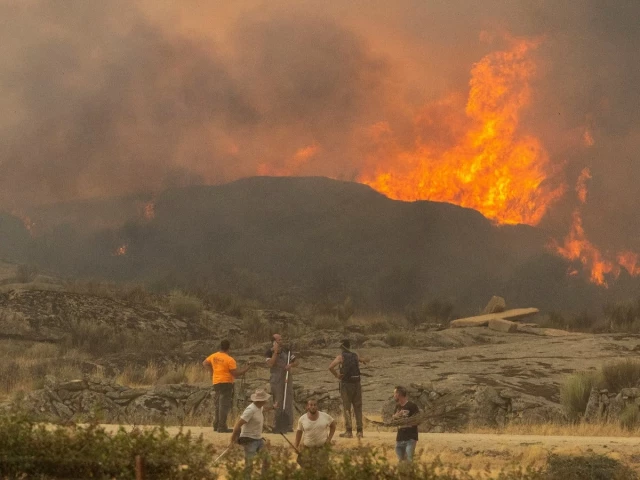
    Massive wildfires burning across France and Spain have pushed air pollution to dangerous levels, exposing millions of people to harmful smoke and raising fresh concerns about public health and climate change. Scientists say the fires have released large amounts of fine particulate matter known as PM2.5, a pollutant linked to heart disease, lung cancer and serious respiratory illnesses. Experts explained that wildfire smoke can travel hundreds of kilometres, reducing air quality far beyond the areas directly affected by the flames. They warned that prolonged exposure to high levels of PM2.5 poses a significant health risk, especially for children, older adults and people with existing medical conditions. Theodore Keeping, a climate scientist at Imperial College London, said repeated exposure to dense wildfire smoke can have serious health consequences. He noted that climate change is contributing to more frequent and intense wildfires, increasing the number of people breathing unhealthy air for extended periods. Air quality data from the European Union’s Copernicus Atmosphere Monitoring Service showed that pollution levels in the French city of Bordeaux rose sharply on July 26. PM2.5 concentrations exceeded 300 micrograms per cubic metre at their highest point, while the daily average reached around 115 micrograms. Scientists said this was nearly five times higher than the European Union’s recommended daily limit. Smoke from the fires also spread across large parts of southern France and central Spain. In Limoges, located more than 200 kilometres northeast of Bordeaux, PM2.5 levels climbed above 400 micrograms per cubic metre during the weekend. Scientists said these figures demonstrate how wildfire pollution can affect communities located far from the fires themselves. Mark Parrington, a senior scientist at the European Centre for Medium Range Weather Forecasts, said the fires are producing enormous amounts of smoke that continue to spread across the region. He explained that particles released by wildfires may become even more harmful because they mix with other chemicals in the smoke. These tiny particles can travel deep into the lungs, increasing the risk of breathing problems and other health complications. Health experts have advised people living in affected areas to follow official safety guidance. Recommended precautions include staying indoors whenever possible, keeping windows closed to prevent smoke from entering homes and wearing protective masks if outdoor travel cannot be avoided. Scientists also warned that the environmental impact of the fires extends beyond air pollution. Europe’s forests normally absorb large amounts of carbon dioxide from the atmosphere, helping to slow global warming. When forests burn, much of that stored carbon is released back into the air, adding to greenhouse gas emissions. According to data from the European Forest Fire Information System, wildfires across Europe have released around 18 million metric tons of carbon dioxide so far this year. France has recorded its highest wildfire related carbon emissions ever measured by this stage of the year. Researchers said nearly half of the European Union’s wildfire emissions for 2026 were produced during the past week alone. Although wildfire emissions currently represent only a small share of the European Union’s overall greenhouse gas output, scientists cautioned that the situation could become more serious in the future. As climate change creates hotter and drier conditions, wildfire risks are expected to expand into northern Europe, where vast forests play a major role in storing carbon. Researchers warned that increasingly destructive fire seasons could make it more difficult for European countries to achieve their long term climate goals.

Leave a Reply

Your email address will not be published. Required fields are marked *