soldier mechanic cold

A Soldier, a Mechanic, and the Cold Arithmetic of …

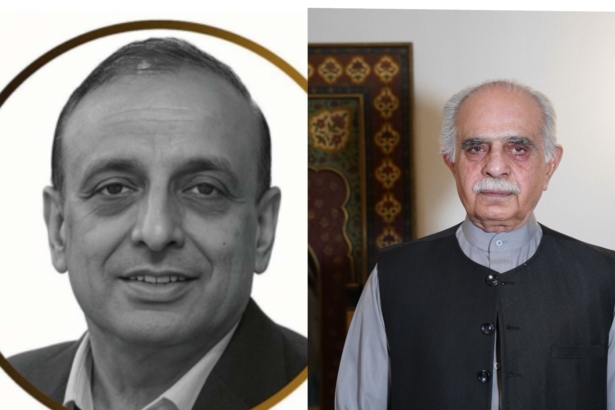
By General Ghulam Mustafa (Served in different staff and command assignments, commanded a Corps, raised and commanded Army Strategic Force Command)

&

Engineer Arshad H Abbasi, Co-founder, Energy Excellence Centres at NUST and Engineering University Peshawar, International Transboundary Water Expert

We are not screenwriters, and this is not the plot of some Hollywood picture about killer robots. We write this together as two men who came to the same conclusion from two different directions — one of us a soldier who has stood post and commanded troops, the other a mechanic and engineer who has spent his life with his hands inside machines, the kind who can tell you what’s wrong with an engine by the sound it makes before it ever fails. Between us, we have spent the last two years doing the same thing every serious military professional on earth has been doing: watching. Watching Russia and Ukraine grind through the third year of a war that has quietly buried the twentieth century. Watching the United States and Israel fight Iran through the spring and summer of 2026 in a conflict that opened with a strike on a supreme leader and closed, for now, with tankers stacked outside a blockaded Strait of Hormuz. We have not been watching for drama. We have been watching for the future, because the future is what these two wars have been showing us, in plain daylight, for anyone willing to look.

In these two wars, our role has not been that of commentators cheering for one flag or another. It has been closer to that of historians standing over wreckage — the unglamorous, unsleeping work of the crash investigator rather than the war correspondent. Every video of an intercepted missile over the Gulf, every geolocated frame of a naval drone striking a Russian hull, every leaked spec sheet of a downed quadcopter over the Black Sea or a jammed loitering munition over the Iranian coast, has to be logged, timestamped, and cross-checked against the next one. That is what wreckage analysis actually is: not excitement, but discipline — recording what a piece of equipment was asked to do, and what it actually did, until the pattern becomes undeniable. Two years of that discipline, applied to two very different wars fought six thousand kilometres apart, keeps returning the same verdict.

Here is what we have seen. The age of the tank column, the massed infantry advance, the fighter squadron duel, and even the aircraft carrier as the ultimate expression of national power — that age is closing. Not because these machines have become useless overnight, but because a battlefield now watched by satellites, saturated with cheap sensors, and swarmed by thousands of low-cost drones has no room left for anything large, slow, or expensive to hide in. Ukraine, a country with no serious blue-water navy, used naval drones costing a fraction of a warship to cripple roughly 40 percent of Russia’s Black Sea Fleet and force the rest to retreat from Crimea’s shores. In the Iran war, American carrier strike groups sat further offshore than doctrine once assumed necessary, and the campaign’s real damage was done by long-range strike, electronic warfare, and a naval blockade — not by tank divisions crossing a border, because there was no border to cross. The lesson repeats itself in both theatres: mass a large, valuable, human-crewed asset in the open, and you have built an expensive target. The war has moved to the phone in a soldier’s hand and the joystick on a folding table a hundred kilometres from the front.

That is the second thing the two of us keep coming back to, and we believe it is right: future wars will be fought on mobile phones, controlling drones and robots. A robotic aircraft or ground vehicle can turn harder, dive faster, and sit still for longer than any pilot or driver, because it carries no pulse, no fear, no fatigue, and no family waiting at home. It needs no food. It needs no rest. It bleeds nothing when it dies except budget. Robots are already taking on the jobs that used to cost human lives — clearing minefields, hauling ammunition across exposed ground, flying reconnaissance into airspace too dangerous for a manned cockpit, making split-second targeting decisions with artificial intelligence faster than any human crew ever could. Armed drones and robotic ground vehicles now engage targets without risking a single pilot or driver. And because production, not stockpiling, decides who wins a prolonged war, the country that can build the most machines the fastest — not the country with the largest inherited arsenal — will hold the advantage. That is why the truest weapon in this new age is not a missile or a jet. It is the strength of a nation’s economy: its factories, its chip supply, its ability to iterate a drone design in weeks instead of years.

Nowhere is this arithmetic more urgent than on the roof of the world, along the disputed frontier between India and China. China is not merely testing drones there; it is one of the most important production engines in the world for both, and it has been pouring resources into robotic ground systems, sensors, and autonomous platforms specifically postured along the Line of Actual Control, at altitudes where a human soldier struggles simply to breathe, let alone fight. Every one of those machines can be commanded from a warm room in Beijing, thousands of kilometres from the mountain. It needs no oxygen tent, no field ration, no medical evacuation. It can occupy a ridge and simply wait there, indefinitely, with a precision no human sentry can match, and it costs Beijing nothing but electricity and silicon when it is destroyed.

Against that, India fields one of the largest land armies on the planet — an active strength of roughly 1.25 million soldiers, organized into seven operational commands and fourteen corps of holding and strike formations, built on a tradition of sacrifice, discipline, and sheer human courage that has held some of the most unforgiving terrain on earth. But courage was built for a battlefield that had an opposing human being on the other end of it. What happens when the enemy on the ridge is not a person who can be reasoned with, worn down, or made to retreat out of exhaustion, but a machine that simply does not tire? India’s soldiers will offer their blood, as they always have. China’s robots will offer their chips — and chips, unlike blood, can be replaced by the next production run.

And here is the contrast that should trouble every planner in Delhi and every parent in a Punjab or Ladakh village alike, should the standoff on that frontier ever turn hot. When an Indian soldier falls on the Line of Actual Control, the Indian Army does what armies with a soul have always done: it wraps him in the national flag, marches him home behind a bugler, folds that flag into his mother’s or his widow’s hands, and inscribes his name where his village can visit it for the rest of time. That is a military funeral — solemn, human, and costly in every sense that matters. When a Chinese robot is destroyed on the same ridge, there is no bugle and no flag. There is, at most, a retrieval team sent up in the next supply window to strip the wreckage for salvage or simply leave it as scrap, because a machine has no name to inscribe and no family waiting for a folded flag. Beijing will not mourn a drone. It will order the next one off the production line before the mountain wind has finished scattering the debris of the last.

That asymmetry runs deeper than sentiment. A Chinese robotic sentry on the Himalayan frontier can, in principle, operate 24 hours a day, seven days a week, through the entire winter, without a single one of the needs that govern a human soldier’s life on that mountain. It needs no ration resupply, no field kitchen, no rest rotation, no medical evacuation for altitude sickness or frostbite. It needs no washroom, no shelter tent, no rotation home to see a family. It needs no specialised high-altitude snow gear, no oxygen support, no acclimatisation period before it can function at 15,000 feet — because it feels neither the cold nor the thin air at all. Every one of those needs is, for the Indian soldier holding the same ridge, a matter of life and death, logistics, and enormous expense. For the machine, none of it exists. That is the arithmetic India’s planners must confront honestly: not whether Indian soldiers have the courage to hold the line, because history has already answered that question many times over, but whether it is fair to ask flesh and blood to keep matching an adversary that no longer sends flesh and blood to the fight at all.

This is not a call to despair, and it is certainly not a script for a film. It is a mechanic’s plain diagnosis and a soldier’s plain warning: the nature of the fight has changed, and the side slower to industrialize its response will pay for that delay in the coin that never gets cheaper — the lives of its own people. While we hold profound respect for the Indian Army’s unwavering dedication over the Chinese border, a stark technological divide separates the two forces: India continues to rely on traditional personnel and conventional warfare, whereas China has deployed precision-engineered military robotics capable of striking critical vulnerabilities—including a soldier’s target head—with absolute, lethal accuracy, regardless of helmet type on their head.
Similar Posts

  • Makkah Joint Defence Agreement – opportuniti…

    Saudi Arabia, Pakistan, and Turkey signed the Makkah Joint Defense Agreement (MJDA) to strengthen their defense cooperation. The agreement was signed at a critical juncture in history, both globally and regionally. On the global front, the old order is in disarray, and conflicts are breaking out one after another. The West’s dominance and hegemony are fading. Economic power, which the West once used to rule the world, is in decline. Western control over weapons of destruction has weakened. Simultaneously, Western diplomatic influence has softened, and their grip on the UN and decision-making has weakened.    This has destabilized global peace, and in 2025 alone, 50 countries were engaged in conflicts or wars. As a result, new powerhouses, in economic, diplomatic, and defense production, have emerged. On a regional level, the Middle East and South Asia have emerged as flashpoints, where conflict or war can break out at any time due to the reckless behavior of Israel and India in their respective regions.    In this context, the signing of the Makkah Joint Defense Agreement has raised many questions, and people are exploring possible answers. First, what does the Makkah Joint Defense Agreement include? According to available information at this time, the three Muslim countries have joined hands to strengthen their defense cooperation. It sends a strong message to opponents and enemies that any attack on Saudi Arabia, Pakistan, or Turkey will be treated as an attack on all. The aggressor will have to face the wrath of three powers.    Second, why is it important? It is important for two reasons. First, three countries are in hostile regions and face numerous security challenges. Let’s start with Saudi Arabia. Saudi Arabia is in a region where Israel is committing the worst genocide in modern history. The genocide in Gaza has destabilized the whole region. Unconditional support from the USA and the West allows Israel to continue the genocide in Gaza with complete immunity. They are providing all types of weapons of mass destruction and financial support to Israel. Even the USA and some Western countries are threatening the International Court of Justice or other UN agencies for asking for accountability of Israel. The USA and Israel’s attack on Iran has further complicated the situation. Iranian attacks on regional countries in the context of US bases are threatening a wide-scale war in the region. Saudi Arabia is also facing direct attacks by the Houthis on Saudi Arabia, especially on oil installations, which pose serious threats to the whole region.     For Pakistan, it has two hostile neighbors, India and Afghanistan. In 2025, India attacked Pakistan based on self-assumed allegations. However, a strong, full-scale retaliation from Pakistan compelled India to come to its knees. Pakistan destroyed many Indian fighter jets and missile systems. India rushed to the USA to beg for a ceasefire. On the other border, Pakistan is facing terrorism originating from Afghanistan. Afghanistan, with the support of India and Israel, has launched a full-scale proxy and terrorism war. It is also harboring terrorist groups such as BLA, TTP, etc. India, acting as a proxy of Israel, is providing full support to terrorists and fueling terrorism in Pakistan.   In the case of Turkey, it is facing multiple threats, including direct threats from Israel, Greece, and some regional proxies. Over the past few months, Israel has begun to portray Turkey as a new threat to Israel. Greece has also been encouraged by Israel and other Western powers to create problems for Turkey. Some Western countries also have historical grievances with Turkey and are seeking opportunities to harm it.    Therefore, this agreement is extremely important for the three countries and for both regions, the Middle East and South Asia.    Third, how will regional countries react, and what impact will the MJDA have on the region? First, Israel will not like it at all. Why? Because it will view it as a hurdle to creating a Greater Israel. Therefore, Israel will do everything to sabotage the agreement. It can use this agreement to create a sectarian divide in the region by portraying Iran as the enemy. It can conspire to instigate sectarian violence in the region, especially in Saudi Arabia, Pakistan, and Turkey. The USA and Western countries can also join hands to facilitate Israel. President Trump’s recent statement on the potential role of Syria in tackling the issue of Hezbollah is a strong indication of this strategy. He is urging Israel to stop attacking Lebanon and let the Syrian government fight Hezbollah. Lastly, Israel can also exploit the civilizational context and emotions of the custodians of the Arab, Iranian, and Turkish civilizations. It can trigger feelings of self-greatness and urge each civilization to pursue past glory.     Simultaneously, some elements in Iran, especially those pro-Israel or influenced by Israel, can propagate the MJDA against Iranian interests. They can argue that it will undermine Iran’s status and create hurdles for Iran to become the region’s major power. Proponents of this view can argue that, in the presence of this alliance, it will be difficult for Iran to dominate the region. It would be an ideal situation for Israel and other elements to create a divide along sectarian lines and fan sectarian violence in the region and in respective countries. Therefore, all countries (Pakistan, Turkey, Iran, and Saudi Arabia) need to be extremely vigilant and coordinate closely.     Fourth, what would be the reaction of the global community, especially from the USA and China? China and the USA are important because they are major powers at this point in time. First, I do not believe the USA will have an independent view or reaction. It is strongly suspected, rather sure, that Israel will dictate the American response. It is an open secret that Israel does not want peace and stability in the region. Thus, the USA will follow this policy.    It is also in the USA’s interest. How and why? The USA considers the Middle East and South Asia vital to

  • How China Intimidated the United States of America

       For as long as the world can recall, the United States have controllably preserved their seat as the strongest one in the council of global superpowers- defeating the Nazis, USSR and setting their currency as the medium of trade and exchange. However, in recent events this strong hold seems to have become weakened as on the other side of the world a new power emerges, a power that the United States considers the biggest threat to their existence- the new super power China.   Ironically, China was still developing and submerged in poverty a few decades ago holding up its communist views and rejecting the new capitalist western world. Though they were not completely cut off on giving this new ideology a try, opening their first economic zone in Shenzhen in 1980 to pursue foreign investments and market based economic trade. Soon enough they realized the potential it had and once they started, they were quite impossible to stop.   It was in the 2010s that China had found numerous ways to include itself in the exporting and manufacturing industry. Every household was filled with items labeled “made in China”, however they were referred to as a low quality item hence cheaper. China nevertheless learnt, and they were fast learners. They knew that in a world dominated and feared by the United States they would have to have a friendlier approach. They started helping countries including Pakistan and many African nations with infrastructure projects in exchange for leverage and usage of their resources.   On the outside it seemed like a friendly deal, a helpful one even, but China knew that this was their way into achieving ultimate domination. The US was watching this very closely knowing very well what kind of abomination was taking place in front of their eyes, yet they could only spread propaganda about it, calling it “Debt trap Diplomacy” and “Predatory Lending”. The world did not give much thought since theyfinally had someone helping them without any threats and sanctions which they had experienced harshly in the past with the United States .   Uptil now, the USA still had the upper hand on oil and currency domination which was soon to get shaken up as well. Bill Clinton had put a ban on trading Iranian oil in his regime and so was done to Russia after they invaded Ukraine, meaning almost the whole world trading in US dollars could not buy Russian and Iranian oil.  Few of the other powerful currencies that could trade without the US dollar are euro, Japanese yen and Chinese yuan. Thus only China had the willingness to buy the sanctioned oil in their currency under different company names, trade routes which the US would find it difficult to identify and stop.   The United States has had  a history of having these geographical threats against major countries in order to secure their position. The same goes with China, with them using the strait of Malacca in southeast Asia as a passage they could close which would disrupt 80% of China’s oil trade. Chinese leaders have called this the “Malacca Dilemma” in the past.   Since the Iran war, it has come to light that China has once again found a path out of this misery and showed the world silently that this dilemma is far gone. When the whole world was panicking due to the Strait of Harmoz shutting down, China with no hurdles dropped their oil imports by 50% and started using their oil reserves which were more than double than usa. This was a direct showcase to the USA that even if they block straight out of Malacca- China will survive and wont go into an economic shutdown.   Now it is very evident that China has secured its position as an export leader, having significant oil reserves, defenses as well as the support of major countries through mutual diplomacy, and the US is forced down on its knees- especially after the Trump and Biden administration. The US has no options but to comply with China which was seen when Trump and his billionaire delegation visited China- which they were deemed to be intimidated by.

  • Devolution Without Governance Reform

    The original 1973 Constitution, Charter of Democracy (COD), and the landmark 18th Amendment all call for a strong local government system. Till today, it remains the unfinished agenda of good governance. It is key to the modernization of the state, society, and politics. The consensual Constitution was a miracle and a masterstroke of the elected government of Zulfikar Ali Bhutto (ZAB). Devolution was a cornerstone of this document, so painfully drafted by elected representatives of the people. As the newly created provinces after the break-up of the infamous One Unit lacked the capacity to handle vital areas like education, health, and agriculture, a concurrent list was prepared to devolve these departments systematically to the provincial governments. A Department of Provincial Coordination was created to oversee this transfer from Islamabad to Lahore, Karachi, Peshawar, and Quetta. Unfortunately, after the fall of the government in July 1977, the entire process was stalled. Governments that followed did not take this transfer seriously, resulting in serious governance issues. The two mainstream political parties of the time, PPP and PML-N, followed with the COD in May 2006, in which it was agreed to build an effective local government system. Unfortunately, after the assassination of Benazir Bhutto, the driving force behind the Charter, it was not fully adhered to. Instead, the 18th Amendment was passed by the legislature in April 2010 to restore the original document. Through this constitutional clean-up, Islamabad was cut to size while power and resources were handed over to the provincial governments, with the hope that they would be devolved all the way down to the tehsil and union council levels. But that did not take place. While the federal government was depleted, the provinces grew fat and started indulging in frivolous projects. In Punjab, Lahore was developed as a flagship showcase project for publicity while the rest of the province was left to languish. Karachi was ignored; resources were moved inland by the provincial government. The menace of incompetence, corruption, and abuse of authority has to be addressed at the national level before it is devolved; otherwise, it will be more of the same. The Civil Secretariat in Lahore, also called Lat Sahib Ka Daftar, which runs the largest province of the federation, reveals it all. Office hours are not observed; files do not move without wheels; records are poorly managed. There was a time when the Chief Minister resided only in GOR-I on Club Road, while official work was carried out at the Secretariat, but not anymore. Most senior officers (Chief Secretary, Commissioner, Deputy Commissioner, etc.) have established home offices, resulting in duplication and waste. Till the decade of the 1970s, only the telephone operator and one coordinator manned most official residences, but not anymore. Great Britain ruled the world with its Commissioners System. The only difference was that there was civilian oversight and accountability by the British Parliament, which has faded over time in the Islamic Republic of Pakistan (IRP). Till today, the flag is unfurled at the office and residence of the Deputy Commissioner (DC), as representative of the Crown with sovereign powers (administrative, judicial, and revenue). Over the years, some judicial powers have been taken away; otherwise, the DC runs the district while the Commissioner controls the division. Recently, in Lahore, the Commissioner’s office was moved from the Sanda area to the Mall, across from Aitchison College. It is a fancy structure right on the main artery of the city, where millions have been spent on refurbishing the building vacated by the Naval Staff College, which was established close to the waters of the Lahore Canal. Perhaps it has been moved to the BRB waters now. One office move has strained the budget of the province. What will happen if scores of such infrastructures are built for new provincial governments? Growing up on the Mall, close to the Town Hall (Lahore Municipal Corporation, now Metropolitan Corporation of Lahore), my memory is of a functional city run by an elected mayor. Today, the metropolis is non-functional as it is under the control of the bureaucracy instead of an accountable elected representative of the people. In the USA, the President runs the federation, the fifty states are under the Governors, while the Mayor controls the city, all directly elected by the people. Except for the President, there is an Electoral College as well. The state of Texas is larger in area than Pakistan, yet it is fully functional. The cities are run by elected city governments. Town hall meetings are regularly held where public input is solicited to improve services; service to the people is the common agenda. Once the system is made functional by getting rid of the evils, devolution can be effective. The federal government has offices in major cities of America, but most day-to-day work is carried out by state and city governments. The Americans believe that no government is the best government; as such, employment is limited to minimal functional staff. Procedures are updated and simplified for the smooth flow of work. Obstacles are removed for functionality. More of the same has never worked in the past, nor will it work in the future. Dysfunctional bureaucracy has to be made functional to kick-start the stalled system for real devolution to take place.

  • Shehbaz Sharif: A proven troubleshooter steering P…

    Every political leader is eventually defined not by promises but by performance under pressure. Pakistan has faced repeated political, economic and administrative challenges over the decades, and each crisis has demanded leadership with experience, patience and the ability to find solutions. In my view, Prime Minister Muhammad Shehbaz Sharif has established himself as a leader who understands governance, negotiation and crisis management. His journey from grassroots politics to becoming Chief Minister of Punjab and later Prime Minister of Pakistan has given him decades of experience in dealing with the practical realities of administration and public service. His reputation as a hands-on administrator comes from his approach to governance. During his tenure as Chief Minister of Punjab, he focused on reforms in education, healthcare, infrastructure and public service delivery. His fast-paced working style earned him the title “Shehbaz Speed”, reflecting his emphasis on implementation and results. I first met Shehbaz Sharif in 2005 at his flat in Avenfield House, London. Over the past twenty-one years, I have had the opportunity to observe his political journey closely. While journalism requires independence and critical analysis, personal observation also provides a unique perspective. Throughout this period, his commitment to Pakistan and his passion for public service have remained evident. During his years as Chief Minister of Punjab, I witnessed his determination to create opportunities for young Pakistanis, particularly through education reforms. Initiatives such as the Punjab Education Endowment Fund, Danish Schools, merit-based scholarships, laptop schemes for students and stipends for high achievers aimed to expand access to quality education. The policy of sending high-performing students abroad, including to the United Kingdom and other European countries, was designed to broaden their vision and expose them to international standards. These initiatives reflected a belief that education is the foundation for long-term national development. His reforms in healthcare and infrastructure also became a significant part of his governance record. Supporters believe that his focus on improving public services in Punjab provided a model of administrative delivery that he later brought to the national level. As Prime Minister, Shehbaz Sharif has faced one of the most challenging periods in Pakistan’s recent history. His supporters credit his government with helping stabilise the economy, restoring international engagement and steering Pakistan away from the risk of a deeper financial crisis. Although major economic challenges remain, they argue that difficult decisions have helped create a more stable foundation. One of the notable features of the current political landscape has been cooperation between state institutions. Supporters view the working relationship between Prime Minister Shehbaz Sharif and Field Marshal Syed Asim Munir as an example of institutional coordination aimed at achieving national stability and economic progress. Pakistan has also sought a more active role on the international stage. Supporters point to its diplomatic engagement, including efforts to promote dialogue during periods of international tension, as evidence that Pakistan continues to play an important role in regional and global affairs. In my view, Prime Minister Shehbaz Sharif has repeatedly demonstrated the ability to steer Pakistan through difficult circumstances. Based on my observations over more than two decades, I believe he has faced major challenges before and has the experience and determination to overcome them again. His strength lies in his understanding of governance, his ability to negotiate with different stakeholders and his focus on delivery. Whether dealing with political partners, institutions or international partners, his supporters believe his experience gives him an advantage in managing complex situations. However, Pakistan’s journey towards prosperity requires continued reforms. Economic pressures, inflation, unemployment and governance challenges remain serious concerns. The next phase must focus on ensuring that national progress translates into improvements in the daily lives of ordinary citizens. In my opinion, Pakistan also needs stronger administrative decentralisation. Whether through new provinces or more empowered administrative units, decision-making should be brought closer to the people. More effective local governance can improve accountability, strengthen public services and accelerate development across the country. Pakistan now needs consistency, stability and a collective commitment from all stakeholders. Political differences are part of democracy, but national progress requires institutions to work together and focus on the common goal of prosperity. Prime Minister Shehbaz Sharif has built his political career around crisis management and public administration. His greatest challenge now is to convert stability into sustainable growth and lasting development. History will ultimately judge every leader by the impact they leave behind. For Shehbaz Sharif, the opportunity remains to transform difficult times into a period of economic recovery, institutional strength and a stronger Pakistan for future generations.

  • Pakistan’s Defence Alliance: Is Islamabad Sh…

    Pakistan has just taken on a new kind of commitment, and it has caught people’s attention in a way that ordinary diplomatic announcements rarely do. Pakistan’s ties with Saudi Arabia go back decades, and its defence relationship with Türkiye has grown steadily closer in recent years, so cooperation between the three is not surprising on its own. What is new is the nature of the commitment: an attack on any one of the three countries is now to be treated as an attack on all three.   This is not really about whether Pakistan should be working with Saudi Arabia and Türkiye. It is about whether Islamabad has entered this arrangement with a clear enough sense of what it wants from it, and what obligations it may quietly be creating for the future.   It also helps to get the timeline right. This is not Pakistan’s first mutual-defence commitment with Saudi Arabia. Back in September 2025, the two countries had already signed a Strategic Mutual Defense Agreement, treating aggression against either as aggression against both. What is new in 2026 is the attempt to bring Pakistan, Saudi Arabia and Türkiye together inside one shared framework. Seen that way, this is less a first step and more a new layer added to a relationship that was already forming. An Alliance at a Complicated Moment The agreement comes at a difficult time. Pakistan sits right next to Iran and has a tense relationship with India, while both Saudi Arabia and Türkiye maintain strong economic ties with New Delhi. At the same time, Islamabad has to keep managing working relationships with Iran, China, the United States and its Gulf partners. Any defence commitment, then, has to be understood against several relationships that do not always move in the same direction.   Pakistan is also not entering this alliance from a position of comfort. The country is dealing with economic, security and political pressures all at once, along with instability on its Afghan border and a delicate Iran border to manage. That is a lot to balance already, which is exactly why the practical details of this new commitment matter more than the ceremony around its announcement. What Has Pakistan Actually Committed To? The basic idea is simple: an attack on one member is treated as an attack on all. But what does that actually mean in practice? What would genuinely trigger the commitment, and what military support would Pakistan be expected to give—or receive? And what happens if the three countries find themselves with different interests in the same crisis?   Pakistan’s own Foreign Ministry offered some sense of this in July 2026, saying that agreements of this kind mostly involve peacetime military cooperation, and that in an actual war, how far the commitment would go still needs to be worked out. If anything, that statement makes the case for more clarity, not less.   That uncertainty matters most in two situations close to home. If Pakistan faced another serious confrontation with India, would Saudi Arabia and Türkiye offer real support, given their own important ties to New Delhi? And if tensions with Iran escalated, would Pakistan be expected to take a position that could strain its relationship with its neighbour? Even the growing water dispute with India, one of Pakistan’s most basic security concerns, has not been publicly linked to any shared plan among the three partners. These questions remain open.   There is also a quieter concern worth sitting with. Saudi Arabia brings financial strength to the table, Türkiye brings a growing defence industry, and Pakistan brings manpower, real operational experience and nuclear deterrence. If these strengths are genuinely shared, all three countries could benefit. But if the load falls unevenly, with Pakistan carrying most of the manpower while its own position in a future India crisis stays unclear, the costs could end up outweighing the gains.   History offers a useful reminder here. In his 1983 book Can Pakistan Survive? The Death of a State, Tariq Ali examined Pakistan’s political system, its foreign policy, and the powerful role the military has long played within the state. The circumstances today are very different, but his broader question still feels relevant: can Pakistan turn its usefulness to other powers into lasting strength of its own?   Something else stood out alongside the agreement itself: the mood surrounding it. Governments naturally welcome diplomatic wins, but a defence pact carrying possible wartime obligations is a different kind of agreement than a trade deal. With so many practical details still unclear, the celebratory tone raises a fair question: is this a carefully thought-through long-term strategy, or mostly the excitement of the moment? Commitments this serious deserve a clear explanation before they deserve applause.   Pakistan must also make sure its growing ties with Saudi Arabia and Türkiye stay compatible with its long-standing relationship with China, and with the working relations it still needs with Iran and the United States. Strategic Relevance Is Not Strategic Autonomy Pakistan is becoming more important to other countries. Its military strength, its geography, its nuclear deterrence, and its relationships across very different global camps all give Islamabad real value in the eyes of others. But being useful to other countries is not the same as having a clear strategy of your own.   Strategic autonomy simply means that Pakistan knows what it wants and makes sure its partnerships actually serve that. It means asking not only what Saudi Arabia, Türkiye, China or the United States want from Pakistan, but what Pakistan wants from each of them in return. A country can be militarily valuable, geographically important and courted by several powers, and still have no defined national strategy behind it. That difference sits at the heart of this entire discussion.   Washington’s fairly quiet response also deserves attention. There is no evidence that the United States is deliberately setting a trap for Pakistan. But Islamabad should still think carefully about whether a closer Saudi-Pakistani security relationship could, over time,

  • Fiscal turnaround—or fiscal illusion?

    The fiscal deficit fell to just 2.6 of GDP—the lowest in 22 years—while the primary surplus reached a record 2.9%, the highest since at least FY 2000-01— tweet by Khurram Schehzad, Adviser to Federal Finance Minister The latest official numbers tell an impressive story. Pakistan closed fiscal year 2025–26 with a consolidated budget deficit of Rs. 3.313 trillion, equal to 2.6% of gross domestic product (GDP), and a primary surplus of 2.9%. They accompany a familiar boast: the Federal Board of Revenue (FBR) achieved a “record” collection of Rs. 13.010 trillion. In the post cited above, Adviser to the Federal Finance Minister, Khurram Schehzad, described the outcome as the “strongest fiscal performance in 22 years”. He highlighted three consecutive primary surpluses, the “lowest fiscal deficit in 22 years”, and the highest primary surplus in at least 26 years, debt growth at a 20-year low, and declining debt-to-GDP and interest burdens. He concluded that Pakistan was moving decisively from recurring fiscal stress towards discipline, stability and sustainable growth. The improvement is real. The conclusion is premature. The Finance Division’s newly released Fiscal Operations for July–June 2025–26 show consolidated revenue of Rs. 19.774 trillion and expenditure of Rs. 23.087 trillion. The resulting deficit is unquestionably lower than the enormous gaps of recent years. Fiscal consolidation has occurred and should be acknowledged. The claim of a 22-year low, however, does not survive the adviser’s own infographic. The chart accompanying the post places the deficit at 1.7% in 2003–04 and 2.5% in 2004–05—both below 2.6%. The contemporaneous Pakistan Economic Survey 2006–07, using the series then published, recorded 2.4% for 2003–04. Revisions may explain the discrepancy between 1.7% and 2.4%, but neither figure supports an unqualified record claim. The latest statement is also provisional. The defensible description is that 2.6% is among the lowest deficits in about two decades. More importantly, 2.6% is the consolidated deficit. The federation did not run a deficit of Rs. 3.313 trillion. Its net revenue receipts, after transfers to provinces, were Rs. 10.520 trillion, against expenditure of Rs. 15.283 trillion. The federal deficit was Rs. 4.763 trillion, or about 3.8% of GDP. It fell to the consolidated figure because the provinces produced a combined surplus of Rs. 1.450 trillion. Punjab alone contributed Rs. 914 billion. Provincial surpluses assist macroeconomic management but do not extinguish the federation’s borrowing requirement. They are intergovernmental cash offsets while the federal government remains deeply indebted. The earlier article, Bankruptcy of ideas—X: Debt, Taxes & Democracy, argues that shifting cash between tiers cannot repair a debt-driven state. An even more striking adjustment appears under “statistical discrepancy”. The detailed expenditure table reports total consolidated expenditure of Rs. 23.940 trillion. A negative statistical discrepancy of Rs. 853 billion lowers expenditure in the summary to Rs. 23.087 trillion. Without this adjustment, the gap between revenue and expenditure would be about Rs. 4.167 trillion, or approximately 3.3% of GDP. Statistical discrepancies are not unusual in provisional accounts. An adjustment equal to more than one-quarter of the celebrated deficit nevertheless demands explanation before a historic record is proclaimed. Transparency requires reconciliation of this amount when the accounts are finalised. The composition of expenditure further weakens the triumphal narrative. Mark-up payments reached Rs. 6.948 trillion—5.5% of GDP. Federal Public Sector Development Programme expenditure, excluding development grants to provinces, was only Rs. 727 billion. Interest was therefore about 9.6 times the federal development programme. A deficit can fall because investment and public services are compressed while inherited interest obligations continue dominating expenditure. That is fiscal compression, not fiscal transformation. The “record” FBR’s collection claim presents a similar illusion. With inflation and nominal GDP growth, the largest rupee collection will normally recur. The relevant questions are whether revenue rose relative to GDP, the base broadened and additional taxation reduced borrowing. FBR’s Rs. 13.010 trillion was only 10.3% of GDP. It was about Rs. 1.12 trillion below the original target of Rs. 14.13 trillion and barely exceeded the subsequently revised figure of approximately Rs. 12.983 trillion. The goalpost was moved, and arrival at the moved goalpost was described as a record. Analysis of Pakistan’s withholding-based system [Tax Proposals for Budget 2027—III: Withholdingisation: Weapon of destruction, Minute Mirror, May 25, 2026 and FBR’s Performance FY 2024-25 (Part II): Income Tax or Expropriatory Taxation, Minute Mirror, April 14, 2026] has repeatedly shown why aggregate collection cannot be equated with administrative performance. During FY 2024–25, withholding and advance collection accounted for about 96% of income tax, leaving only a small fraction attributable to returns and enforcement. Employers, banks, utilities, importers and businesses collect much of FBR’s revenue on behalf of the state. Extraction at source is not evidence that concealed income has been discovered or that privileged sectors have entered the tax net. The latest statement also exposes reliance on non-tax revenue. Federal non-tax receipts reached Rs. 5.178 trillion. These included Rs. 2.428 trillion transferred as State Bank of Pakistan surplus and Rs.1.567 trillion collected as petroleum levy. Together, the two sources provided almost Rs. 4 trillion. As explained in Bankruptcy of ideas—VII: The Petroleum (Levy) State, the petrolem levy operates as inflationary and regressive extraction. It raises transport, agricultural, industrial and household costs. It also remains outside the divisible pool, allowing the federation to retain revenue that would otherwise be shared under the National Finance Commission framework. A large central-bank transfer and an ever-rising fuel levy cannot substitute for fair, broad-based taxation. Debt servicing supplies the decisive test. Cash mark-up payments of Rs. 6.948 trillion absorbed 53.4% of FBR collection and about 66% of federal net revenue receipts. Domestic interest alone was Rs. 6.030 trillion; foreign interest was Rs. 917 billion. These figures do not include refinancing of maturing domestic principal. The financing table reports gross external financing of Rs. 3.805 trillion and external debt repayments of Rs. 2.627 trillion. Programme loans alone amounted to Rs. 2.054 trillion. The federal deficit required net financing of Rs. 4.763 trillion: Rs. 1.178 trillion externally and Rs. 3.585 trillion domestically. State Bank financing reached Rs. 3.202 trillion. These amounts

Leave a Reply

Your email address will not be published. Required fields are marked *