iran says regional
|

Iran says regional states seek new security and economic cooperation 


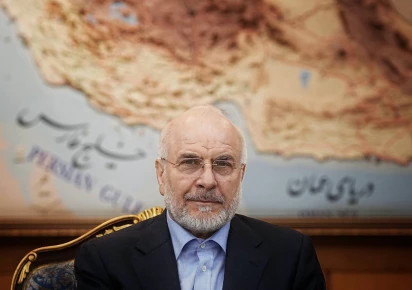
TEHRAN/BAGHDAD: Iranian Parliament Speaker Mohammad Bagher Ghalibaf said Saturday that Tehran had received messages from neighbouring countries expressing interest in developing new regional security arrangements and expanding economic cooperation.

In a statement on X, Ghalibaf argued that US policies had placed the security of its regional allies at serious risk, particularly because of Washington’s support for Israel. He said the situation had prompted countries in the region to reconsider their security arrangements.

Ghalibaf said a “homegrown, independent” regional security order would be the most effective way to establish lasting peace and stability in the Middle East. His comments came amid heightened tensions between Iran, the United States and Israel and growing concerns over regional security.

Meanwhile, the Iranian army said its military doctrine was gradually shifting from a defensive posture toward a more offensive strategy. Army spokesman Brigadier General Mohammad Akraminia told state news agency IRNA that the change had developed during what he described as the recent 12-day and 40-day wars.

According to Akraminia, the shift was reflected in Iran’s faster and broader responses to attacks, including pre-emptive military operations.

He also said the Iranian army had prepared a reward plan in case US forces launched a ground invasion of Iran. Under the plan, members of the armed forces or civilians legally possessing hunting weapons would receive 5 billion tomans, estimated at around $26,000, for killing or capturing US troops entering Iranian territory. The reward would reportedly rise to 10 billion tomans, or approximately $53,000, if a woman carried out the action.

Akraminia further claimed that the weapon used in such an operation would be purchased by the army for twice its value and preserved in a military museum under the owner’s name, with a replacement weapon provided to the individual.

He also pointed to the Makkah Joint Defence Agreement as evidence of what he described as declining US influence in the region, calling it a regional security mechanism established without US participation.

In Iraq, President Nizar Amidi said some vessels carrying Iraqi oil had been permitted to pass through the Strait of Hormuz following requests from Baghdad. Speaking at the eighth Baghdad Dialogue conference, he stressed that developments in the strategic waterway had consequences not only for Iraq but for the global economy.

Amidi said Iraq faced difficulties transporting its oil because it lacked a national tanker fleet. He added that Baghdad was determined to remain outside the ongoing conflict between Iran and the United States, despite being among the countries most affected by regional instability.

The Iraqi president also said Baghdad would not allow its territory to be used to attack another country and reiterated that weapons should remain under state control.

Separately, US President Donald Trump said Friday that Iran was not yet prepared to reach what he considered the “right deal” with Washington. He said the United States was closely monitoring developments in the conflict while maintaining pressure on Tehran.

The tensions have also disrupted oil shipments through the Strait of Hormuz, with concerns over the security of the waterway affecting international energy markets. US Treasury Secretary Scott Bessent is expected to announce what Washington has described as its toughest-ever sanctions on Iran, while urging China to cooperate. China remains a major buyer of Iranian oil and has called for diplomacy to resolve the crisis.

Similar Posts

  • |

    Delhi pushes electric vehicle drive to tackle worsening air pollution

    Delhi has launched one of India’s boldest electric vehicle plans as authorities step up efforts to reduce dangerous air pollution in the capital. The new policy, introduced on July 1, aims to ensure that most newly registered vehicles in the city are electric by 2027. Officials believe the move will improve air quality and reduce harmful emissions, although experts say its success will depend on expanding charging facilities and strengthening the electricity network. Across several parts of Delhi, electric vehicle charging stations are becoming increasingly busy as more residents switch to battery powered scooters, cars and commercial vehicles. Even so, many drivers say the city still lacks enough charging points to support widespread use. Shyam Singh, who uses an electric scooter for work, said the existing infrastructure is not sufficient, especially for people who travel long distances. He explained that limited battery range and the shortage of charging stations remain major concerns for potential buyers. Under the new policy, existing petrol and diesel vehicles will not be banned, but the government expects their numbers to decline over time as electric vehicles become more common. Buyers will receive financial incentives including subsidies, exemptions from registration fees and some road taxes. People who scrap older fuel powered vehicles will also qualify for additional cash rewards. Authorities estimate the policy will cost around 150 billion rupees and is designed to encourage faster adoption of cleaner transport across the city. The plan focuses heavily on two and three wheelers, which make up nearly 70 percent of vehicles on Delhi’s roads. From 2027, all newly registered three wheelers and small commercial trucks must be electric. The same requirement will apply to newly registered two wheelers from the following year. Larger passenger cars and heavy vehicles running on conventional fuels will still be allowed for now. Electric vehicles currently account for only about five percent of the nearly 8.7 million vehicles registered in Delhi. However, registrations have grown steadily over the past year, with more than 100,000 new electric vehicles added, most of them scooters and auto rickshaws. Experts say the latest policy sends a clear signal that the city is committed to reducing dependence on fossil fuel powered transport. Energy specialists have described Delhi’s strategy as one of the most ambitious electric vehicle policies introduced by any Indian state. Jaideep Saraswat of the Vasudha Foundation said the firm deadlines make it clear that the transition to electric transport is unavoidable. He believes the policy will encourage both manufacturers and consumers to prepare for a future where electric vehicles dominate the market. Delhi has struggled with severe air pollution for years, particularly during winter when smog often reaches hazardous levels. The city regularly experiences school closures, restrictions on construction and emergency health measures because of poor air quality. Vehicles contribute around one quarter of pollution across the National Capital Region, while two and three wheelers alone account for almost half of transport related emissions within the city. Analysts say Delhi has already taken important steps toward cleaner transport in the past, including shifting many public vehicles to compressed natural gas. According to energy experts, electric vehicles represented around 12.7 percent of new vehicle sales in Delhi during the 2026 financial year, compared with the national average of 8.3 percent. They believe the latest policy builds on that progress by linking financial incentives with strict registration deadlines for conventional vehicles. Despite the optimism, several challenges remain. Some residents are still hesitant to switch because they worry about battery life, charging convenience and the effect of seasonal flooding on electric vehicles. Others believe more advanced and affordable models will become available in the coming years, making it worthwhile to delay their purchase. Experts also stress that expanding charging infrastructure is only part of the solution. Delhi must increase the use of renewable energy to power electric vehicles and modernize its electricity grid to handle rising demand. Fast charging stations, battery storage systems and better electricity management will all be necessary to support large scale adoption. Specialists also believe cooperation with neighboring states will be essential to reduce emissions from the wider power network and create a cleaner transport system for the entire region.

  • | | | | |

    Israel won’t leave Gaza until Hamas disarms, Pea…

    JERUSALEM: Israeli forces will not withdraw from the Gaza Strip until Hamas is fully disarmed, according to Nikolay Mladenov, following high-level talks with Israeli Prime Minister Benjamin Netanyahu. The remarks came after a meeting in West Jerusalem between Mladenov, who heads the US-backed Board of Peace, and Netanyahu, where the two sides discussed the future of Gaza, regional security and the implementation of a proposed peace framework. According to a statement issued by the Board of Peace, reports suggesting that Israel had agreed to withdraw from Gaza before Hamas is disarmed are inaccurate. The organization stressed that the Israeli military’s withdrawal would only take place once Hamas had surrendered all of its weapons, including both light and heavy arms, and dismantled its network of underground tunnels. “The objective is clear and leaves no room for ambiguity,” the Board of Peace said in a statement shared on social media. It added that the long-term goal is the complete removal of weapons from the Gaza Strip and the transition toward civilian governance capable of maintaining stability and security. The meeting also highlighted concerns raised by Israeli political leaders regarding the peace initiative recently announced by the US president. While details of the proposal have not been fully disclosed, Israeli officials reportedly voiced reservations about aspects of the plan during discussions with Mladenov. Meanwhile, Hamas rejected the latest position, insisting that implementation of any agreement would remain impossible unless Israel fulfills its own obligations under the proposed framework. The group argued that both parties must comply with agreed commitments for any lasting ceasefire or political settlement to succeed. According to a news agency report citing two people familiar with the discussions, Mladenov also urged Netanyahu to halt Israeli military operations in Gaza, emphasizing the importance of reducing violence and creating conditions for diplomatic progress. Despite a ceasefire announced in October 2025, Israeli military operations in Gaza have continued, with both sides accusing each other of violating understandings reached under previous agreements. The continued fighting has complicated international efforts to revive negotiations and address the humanitarian situation in the territory. The latest statements underscore the deep divisions that continue to hinder peace efforts, with disarmament, security guarantees and governance remaining among the most contentious issues in negotiations over Gaza’s future.

  • | |

    Makkah Defence pact aims at regional security not …

    Turkish Foreign Minister Hakan Fidan has said the recently signed defense agreement between Pakistan, Saudi Arabia and Turkey is designed to strengthen regional cooperation and security rather than target Iran. Speaking in Ankara, Fidan said the agreement follows the principle of collective defense reflected in Article 5 of the North Atlantic Treaty Organization (NATO), under which an attack on one member is treated as an attack on all. He explained that the new framework will include a ministerial committee and a general secretariat modeled partly on NATO’s structure. The secretariat is expected to be based in Saudi Arabia. Fidan also indicated that Egypt could potentially join the arrangement once outstanding technical matters are resolved, suggesting that the emerging security framework could expand beyond the three founding countries. The Turkish foreign minister stressed that the agreement should not be viewed as an alliance directed against any particular country. Instead, he described it as a mechanism intended to promote cooperation, strengthen defense capabilities and contribute to peace and stability across the region. The agreement, signed by Pakistan, Saudi Arabia and Turkey in Makkah, has attracted considerable attention across the Muslim world amid growing regional security concerns. Several Islamic countries and the Organisation of Islamic Cooperation have welcomed the initiative. Turkish President Recep Tayyip Erdogan has also said the agreement could enhance regional security while encouraging greater cooperation in the defense industry. The development marks another step in the long-standing strategic relations among Pakistan, Saudi Arabia and Turkey and could potentially reshape security cooperation in the wider Middle East and South Asian region.

  • |

    Israeli forces detain 48 Palestinians in West Bank raids

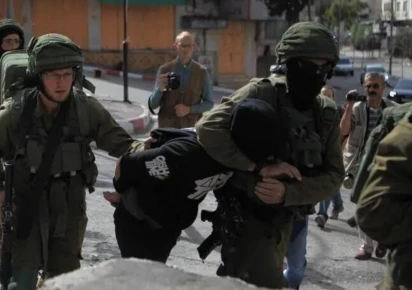
    Israeli forces detained at least 48 Palestinians during raids across the occupied West Bank on Saturday, while eight Palestinians were reportedly injured in a separate attack, according to Palestinian sources and the Palestinian Red Crescent Society. More than 40 young Palestinian men were detained during an ongoing military operation in the town of Tell, west of Nablus, Palestinian media reported. Israeli troops reportedly took control of a residential building in the town and used it as a temporary interrogation facility. Raids and searches of homes were also reported across Tell, with forces reportedly surrounding the town from several directions. The latest arrests came a day after Israeli authorities announced a large-scale military operation in Palestinian villages across the West Bank. The move followed an attack near the Havat Gilad settlement in which two Israeli soldiers were killed and three others were wounded. Following the attack, Palestinian communities in the Nablus area reportedly came under further attacks. Local sources said homes and other Palestinian property were set on fire. The Palestinian Health Ministry said four Palestinians were killed on Friday during violence involving Israeli forces and settlers in Tell. Meanwhile, Israeli forces carried out additional raids in Jenin city and several surrounding communities before dawn, according to Palestinian reports. Troops searched homes and detained five Palestinians in the governorate as military activity continued in several locations. Three more Palestinians were reportedly detained in the Bethlehem governorate. In a separate incident in the northern West Bank, the Palestinian Red Crescent Society said eight Palestinians were injured during an attack in Farata village, east of Qalqilya. Six of the injured were reportedly struck by live ammunition.

  • |

    Tanzania opens government debt market to all overseas investors

    Tanzania has relaxed its foreign exchange regulations to permit all international investors to purchase government-issued Treasury bills and bonds. The Bank of Tanzania announced that the policy change aims to deepen domestic financial markets and position the country as an attractive investment destination. Participation in government securities was previously restricted to residents of the East African Community, the Southern African Development Community, and the Tanzanian diaspora. President Samia Suluhu Hassan’s administration is seeking fresh revenue options following recent reductions in aid from international partners.

  • | | |

    Lindsay Clancy psychiatrist ‘surprised’ by sui…

    Lindsay Clancy’s psychiatrist testified in court Monday as her defense lawyer questioned whether warning signs were missed during the Massachusetts mother’s deteriorating mental health in the months before the deaths of her three young children. Dr. Jennifer Tufts, who began treating Clancy in September 2022, faced detailed questioning from defense attorney Kevin Reddington about her approach to treatment, medication decisions and the use of relatively brief video appointments. According to the Associated Press, Reddington argued that Clancy’s mental healthcare may have been inadequate at a time when she was experiencing serious emotional and psychological difficulties. He focused on 25-minute telehealth appointments, computerized clinical forms and the numerous medications prescribed as Clancy reported different symptoms and side effects. During questioning, Reddington challenged Tufts over whether Clancy should have received more intensive or in-person care. When asked why she did not recommend that Clancy meet her face-to-face instead of continuing with video appointments, Tufts said she did not believe there was a problem with providing treatment through telehealth. The psychiatrist also told jurors she was “surprised” to learn that Clancy had contacted a suicide hotline twice while receiving treatment. Tufts said Clancy had denied experiencing suicidal thoughts during their treatment, although she acknowledged that she had been “close to feeling suicidal.” Reddington highlighted an appointment roughly two months before Clancy strangled her children, asking the psychiatrist what she had done after Clancy described feeling hopeless. Tufts responded that she had reassured Clancy that there was hope and that treatment options and different programs were available. She said her goal was to make Clancy understand that she still had options and reasons to hope. Reddington highlighted an appointment roughly two months before Clancy strangled her children, asking the psychiatrist what she had done after Clancy described feeling hopeless. Tufts had previously testified for prosecutors that Clancy initially sought treatment because of anxiety and had raised concerns about medication side effects. Court records indicate that Clancy was prescribed more than a dozen psychiatric medications through multiple healthcare providers before the killings. The testimony is part of the ongoing trial involving Clancy, whose case has drawn significant attention because of the deaths of her three children. The defense continues to examine the care she received and whether her mental health deterioration was properly recognized and addressed before the tragedy. As the trial continues, jurors are expected to hear further testimony about Clancy’s mental state, treatment history and the circumstances surrounding the deaths of her children.

Leave a Reply

Your email address will not be published. Required fields are marked *