iran says regional
|

Iran says regional states seek new security and economic cooperation 


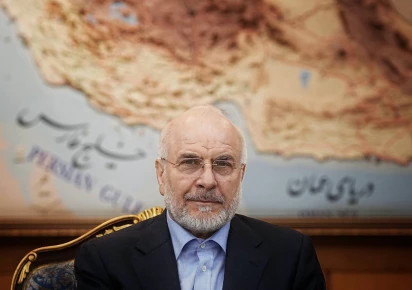
TEHRAN/BAGHDAD: Iranian Parliament Speaker Mohammad Bagher Ghalibaf said Saturday that Tehran had received messages from neighbouring countries expressing interest in developing new regional security arrangements and expanding economic cooperation.

In a statement on X, Ghalibaf argued that US policies had placed the security of its regional allies at serious risk, particularly because of Washington’s support for Israel. He said the situation had prompted countries in the region to reconsider their security arrangements.

Ghalibaf said a “homegrown, independent” regional security order would be the most effective way to establish lasting peace and stability in the Middle East. His comments came amid heightened tensions between Iran, the United States and Israel and growing concerns over regional security.

Meanwhile, the Iranian army said its military doctrine was gradually shifting from a defensive posture toward a more offensive strategy. Army spokesman Brigadier General Mohammad Akraminia told state news agency IRNA that the change had developed during what he described as the recent 12-day and 40-day wars.

According to Akraminia, the shift was reflected in Iran’s faster and broader responses to attacks, including pre-emptive military operations.

He also said the Iranian army had prepared a reward plan in case US forces launched a ground invasion of Iran. Under the plan, members of the armed forces or civilians legally possessing hunting weapons would receive 5 billion tomans, estimated at around $26,000, for killing or capturing US troops entering Iranian territory. The reward would reportedly rise to 10 billion tomans, or approximately $53,000, if a woman carried out the action.

Akraminia further claimed that the weapon used in such an operation would be purchased by the army for twice its value and preserved in a military museum under the owner’s name, with a replacement weapon provided to the individual.

He also pointed to the Makkah Joint Defence Agreement as evidence of what he described as declining US influence in the region, calling it a regional security mechanism established without US participation.

In Iraq, President Nizar Amidi said some vessels carrying Iraqi oil had been permitted to pass through the Strait of Hormuz following requests from Baghdad. Speaking at the eighth Baghdad Dialogue conference, he stressed that developments in the strategic waterway had consequences not only for Iraq but for the global economy.

Amidi said Iraq faced difficulties transporting its oil because it lacked a national tanker fleet. He added that Baghdad was determined to remain outside the ongoing conflict between Iran and the United States, despite being among the countries most affected by regional instability.

The Iraqi president also said Baghdad would not allow its territory to be used to attack another country and reiterated that weapons should remain under state control.

Separately, US President Donald Trump said Friday that Iran was not yet prepared to reach what he considered the “right deal” with Washington. He said the United States was closely monitoring developments in the conflict while maintaining pressure on Tehran.

The tensions have also disrupted oil shipments through the Strait of Hormuz, with concerns over the security of the waterway affecting international energy markets. US Treasury Secretary Scott Bessent is expected to announce what Washington has described as its toughest-ever sanctions on Iran, while urging China to cooperate. China remains a major buyer of Iranian oil and has called for diplomacy to resolve the crisis.
Similar Posts

  • |

    Calgary housing complex fire sends 6 to hospital, …

    CALGARY: A devastating apartment fire in southeast Calgary left six people hospitalized on Sunday after flames rapidly spread through a residential housing complex, triggering a major emergency response and forcing firefighters to battle multiple blazes across the city. Emergency crews rushed to the scene in the 400 block of MacLeod Trail S.E. at approximately 12:25 p.m. following reports of a fire inside the apartment building. According to the Calgary Fire Department, the blaze originated in a single residential suite before quickly spreading, causing significant damage throughout the complex. Firefighters worked to contain the flames and prevent the fire from extending to nearby structures while rescue teams assisted residents trapped inside the building. Alberta Health Services Emergency Medical Services confirmed that six people were transported to hospital with varying degrees of injuries. Among the victims, one person remains in critical condition, while two others sustained serious injuries. Three additional patients were reported to be in stable condition after receiving treatment at the scene before being taken to hospital for further medical care. Officials have not disclosed the identities of the injured or provided details about the circumstances that led to their injuries. Investigators are now working to determine what sparked the fire. Authorities said the cause remains unknown, and a formal investigation has been launched to establish how the blaze began and whether any safety concerns contributed to the incident. The apartment fire was one of several emergencies handled by Calgary firefighters on Sunday, stretching emergency resources across different parts of the city. Earlier in the day, crews responded to another fire in the northwest community of Kensington, where two detached garages and a power pole were damaged. Firefighters also tackled a large blaze at the Shepard Landfill and Eco Centre in southeast Calgary, highlighting an unusually busy day for emergency services. Officials have not yet released information on the number of residents displaced by the apartment fire or the full extent of structural damage to the building. Authorities are expected to continue examining the scene over the coming days as investigators gather evidence and assess the cause of the blaze. The incident serves as another reminder of the dangers posed by rapidly spreading residential fires and the critical role of emergency responders, whose swift action helped evacuate residents and prevent what could have been an even greater tragedy.

  • | | | |

    IRGC releases satellite images of US jets in Jordan

    Iran’s Islamic Revolutionary Guard Corps (IRGC) has released satellite images that it says show hangars housing US military aircraft at Jordan’s Al Azraq air base, escalating its information battle with Washington. The IRGC also called on the United States to end what it described as censorship and urged officials to provide the public with accurate information about the ongoing conflict. The release comes after the United States rejected an Iranian claim that its forces had destroyed US F-35 fighter jets. Iranian authorities had earlier claimed that three American fighter aircraft were destroyed at the Al Azraq air base in Jordan. In a statement, the IRGC said its forces had targeted three US F-35 aircraft stationed at the base. The claim has not been independently verified, while US officials have denied that Iran destroyed any American F-35s. By publishing the satellite imagery, the IRGC appears to be seeking to support its version of events and challenge the US account of the reported attack. However, the images alone do not independently confirm whether any aircraft were damaged or destroyed. The conflicting claims come amid heightened regional tensions and an ongoing exchange of accusations between Iran and the United States over military operations and attacks in the Middle East.

  • | |

    Russia’s FSB charges Telegram founder Pavel Durov with facilitating terrorism

    The FSB says the charges are related to Telegram’s failure to remove material ‘used by Ukrainian special services and by terrorist and extremist organizations to prepare and coordinate acts of sabotage and terrorism… within the Russian Federation’

  • |

    Poland unveils Europe’s tallest Virgin Mary statue in tiny village

    A towering new statue of the Virgin Mary has been unveiled in a small Polish village, instantly becoming the tallest statue anywhere in Europe. Standing at 55.6 metres, the monument now dominates the local skyline. The devotional sculpture was consecrated by a local bishop during a ceremony held on Saturday in the rural village of Konotopie. The unveiling comes at a notable moment, as the Catholic Church’s broader influence over public life in Poland continues to decline. Despite its scale, the statue sits in a remote location, far from any of Poland’s major population centres. Its placement was reportedly requested specifically by a wealthy local couple who funded the project. During the ceremony, two helicopters were seen circling above the towering figure, which stands with arms open and a large crown atop its head. The dramatic aerial display added to the significance of the occasion. While Poland remains a predominantly Catholic country, many younger Poles living in urban areas have grown increasingly distant from the church and its traditions. The statue’s unveiling arrives against that broader backdrop of shifting religious engagement. Among those attending Saturday’s ceremony was Lech Walesa, the former Polish president who played a central role in the collapse of communism in the country. Now 82, Walesa reflected on his own life journey in comments to the Associated Press, describing his story as one that started and ended with the Virgin Mary. Local authorities are hoping the massive structure will serve a dual purpose going forward, functioning as both a significant pilgrimage site and a tourist attraction. To support that goal, the statue includes a viewing platform built directly into its base, offering visitors a chance to take in sweeping views of the surrounding countryside. The unveiling adds Poland to the small list of countries hosting record-breaking religious monuments, and local officials appear hopeful the structure will draw visitors from well beyond the immediate region in the years ahead.

  • |

    Britain faces potential food shortages as prolonged drought impacts agricultural harvest

    The National Farmers’ Union (NFU) has warned that the United Kingdom could face shortages of certain food products as prolonged drought conditions and heatwaves continue across England. Following severe winter flooding that disrupted planting, many agricultural businesses are now facing water abstraction restrictions during the third drought in five years. NFU President Tom Bradshaw called on the UK government to prioritise domestic food production and offer tax relief to enable farmers to invest in water storage systems. Record-breaking heat and dry soil have pushed cereal crops, including wheat, to half their normal height, driving the earliest harvest recorded since data collection began in 2006. According to the Agriculture and Horticulture Development Board (AHDB), cereal yields across southern and eastern England are below the 10-year average, exacerbating financial strains on farming businesses following years of rising costs and diminished EU-derived subsidies. In response to sustained temperatures above 30°C, the UK Health Security Agency (UKHSA) issued amber and yellow heat health alerts across several regions, advising social care providers and the public to take precautions for vulnerable populations. Meanwhile, industry representatives from the Country, Land and Business Association urged the government to fund long-term infrastructure and wildfire prevention to protect the future of British agriculture.

  • | |

    Iran vows to withstand sweeping new US sanctions

    TEHRAN: Iran has said it is fully prepared to deal with the latest expansion of US economic sanctions, as Washington launches what it describes as a major campaign to cut Tehran off from international financial and trade networks. Iranian Economy Minister Ali Madanizadeh said the government had anticipated the new measures and prepared a long-term strategy to limit their impact. He said Tehran had its own economic tools and expected to continue commercial relations with countries willing to trade with Iran. The remarks came after US Treasury Secretary Scott Bessent announced a broad package of sanctions targeting Iran’s financial connections and revenue sources. Washington said the measures were designed to put further pressure on Tehran and force it to choose between greater international isolation and a return to normal economic relations. Bessent described the campaign as an unprecedented financial offensive against Iran. He said the United States would target networks and channels allegedly used by Tehran to generate revenue and bypass existing sanctions. The new measures cover several sectors, including digital assets, technology, gold, aviation and shipping. The US Treasury also announced sanctions against dozens of entities, individuals and vessels allegedly connected to Iran’s economic activities. Washington warned governments, banks and businesses that continue dealing with Iran that they could also face consequences. Bessent said the administration would move quickly against entities that continued to support Tehran’s financial networks. Iran, however, rejected the pressure campaign and said it expected to maintain economic relations with key trading partners. China has also criticised the latest US measures, describing unilateral sanctions as illegitimate. Beijing said economic pressure would not resolve disputes and stressed that it would protect its own economic interests. China is particularly important to Iran because it remains a major buyer of Iranian oil. Analysts say the effectiveness of the latest sanctions will depend heavily on whether countries such as China enforce Washington’s restrictions. Experts have also questioned how much additional pressure the new measures can place on Iran’s energy sector. Some analysts argue that existing restrictions and disruptions to oil exports have already significantly affected Tehran’s energy revenues. The confrontation is also affecting global energy markets. Oil prices have risen sharply since the conflict began, raising concerns about inflation and fuel costs in several countries. Iran has warned that it could take further action against regional oil exports if the conflict continues. Tehran has also issued warnings to vessels seeking to pass through the Strait of Hormuz, a strategically important waterway through which a significant share of global oil and gas shipments normally travels. The latest sanctions come after months of escalating pressure between Washington and Tehran. The United States has repeatedly sought to use economic measures to force Iran to change its policies, while Tehran has continued to reject what it calls unilateral American pressure. The economic consequences are also being felt in the United States. Higher oil prices have pushed gasoline costs above $4 per gallon in parts of the country, adding to concerns over household expenses ahead of the November midterm elections. For Iran, the latest US campaign presents another major economic challenge. However, Tehran’s response indicates that it intends to rely on existing trade relationships, particularly with countries that oppose unilateral US sanctions, to keep its economy functioning.

Leave a Reply

Your email address will not be published. Required fields are marked *