owaisi slams hijab
|

Owaisi slams hijab ruling, calls it ‘Attack on Islam’

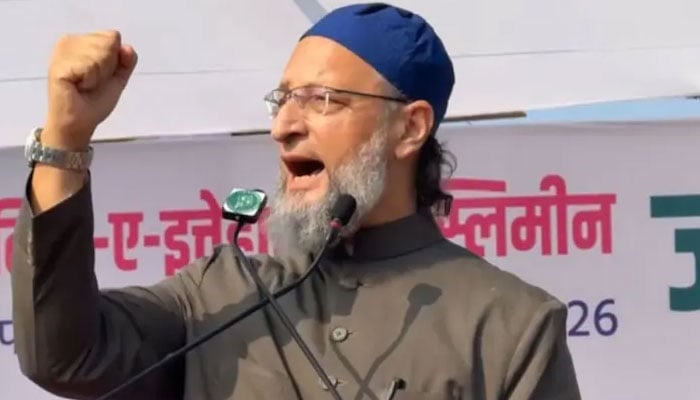
AIMIM chief and Hyderabad MP Asaduddin Owaisi has strongly criticised the Allahabad High Court’s recent decision rejecting a Muslim student’s plea to wear a hijab with her school uniform.

Reacting to the ruling, Owaisi described the decision as an “attack on Islam” and argued that judges cannot determine which practices are essential to a religion.

“Islam is our religion, and we will decide what is essential in it,” Owaisi said, while questioning the court’s approach to matters of religious practice.

The AIMIM leader also pointed out that the Supreme Court is already considering issues related to essential religious practices and freedom of religion. He argued that the Allahabad High Court should therefore have avoided making a ruling on the matter while the broader legal question remains before the apex court.

Owaisi further claimed that the judgment conflicts with Articles 19 and 25 of the Indian Constitution, which protect freedom of expression and religious freedom.

Defending the student’s right to wear a hijab, Owaisi said the decision concerns a personal and religious choice. He remarked that the student was wearing a hijab on her head, “not on her brain,” stressing that wearing the religious garment should not be viewed as a barrier to education or academic ability.

He also warned that the ruling could discourage Muslim girls from pursuing education, particularly in Uttar Pradesh. According to Owaisi, Muslim girls already have relatively low enrolment at the secondary-school level in the state, and restrictions on religious attire could create additional obstacles for them.

The controversy follows an Allahabad High Court ruling issued on August 21, in which a two-judge bench dismissed a petition filed by a Muslim student from a private school in Prayagraj. The student had sought permission to wear a hijab along with the prescribed school uniform.

The student had already completed her high school education and wanted to continue in Class 11 at the same institution. Her petition challenged the school’s restriction on wearing the hijab as part of the uniform.

The bench, comprising Justices J.J. Munir and Indrajeet Shukla, rejected the argument that wearing a hijab constitutes an essential religious practice in Islam. The judges noted that several High Courts have previously held that wearing a hijab is not an obligatory religious practice for Muslim women to the extent that failing to observe it would affect their faith.

The court also maintained that students cannot unilaterally alter an institution’s prescribed uniform based on their individual preferences. The ruling has since sparked debate over the balance between uniform regulations, religious freedom and students’ rights in educational institutions.

Similar Posts

  • |

    Iran denies holding talks with US

    Iran has dismissed reports of ongoing negotiations with the United States, saying there are currently no direct talks between the two countries, while confirming that discussions with Oman are focused solely on establishing a temporary maritime route through the Strait of Hormuz. Iranian Foreign Ministry spokesperson Esmaeil Baghaei said the consultations with Oman are aimed at ensuring safe navigation in the strategic waterway and should not be interpreted as an agreement to fully reopen the strait. He maintained that the security situation in the region remains unchanged and insisted that any broader decision regarding the Strait of Hormuz would depend on regional developments. Baghaei also said there are no plans for Iranian or American delegations to meet in the coming days, rejecting speculation that formal negotiations are currently underway. His remarks came after US President Donald Trump announced that Washington expected to begin talks with Iran and suggested that diplomatic efforts had prompted him to cancel a planned military operation. Trump said discussions involving Saudi Arabia, the United Arab Emirates, Qatar and Iran had encouraged the United States to pursue diplomacy instead of military action. The US president said he preferred reaching a negotiated settlement but warned that military options remained available if diplomacy failed. He expressed hope that an agreement could eventually address both navigation through the Strait of Hormuz and concerns over Iran’s nuclear programme. Meanwhile, regional tensions remain high despite renewed diplomatic efforts. Reports emerged that an explosion occurred near a commercial tanker off the coast of Oman. Maritime authorities said the vessel and its crew were safe, while an investigation into the incident is underway. In another development, Iraq’s state oil marketing company reportedly offered significant discounts on Basrah crude exports to encourage buyers to lift cargoes from facilities inside the Strait of Hormuz, reflecting continuing uncertainty in regional energy markets. Iran also announced the execution of two men convicted of spying for Israel’s intelligence agency, saying they had provided sensitive military information to foreign operatives. The uncertainty surrounding the Strait of Hormuz continues to affect global energy markets. The waterway handles a significant share of the world’s oil and liquefied natural gas shipments, making any disruption a major concern for international trade and energy security.

  • |

    Iran’s Supreme leader sets ‘Primary Conditions’ for ending war with US

    Iran’s Supreme Leader Ayatollah Seyyed Mojtaba Khamenei has declared that the “preservation of Lebanon’s territorial integrity and the absolute, unconditional termination of the Zionist regime’s aggression are the primary conditions for any agreement to end the imposed war against the aggressive US” . In a letter to Hezbollah’s Secretary-General Sheikh Naim Qassem, the Iranian leader described Hezbollah as standing “like an unyielding rock as the forerunner of groups engaged in jihad against the savage aggression of the Zionist regime and its supporters” . He also affirmed that the Islamic Republic considers the defense of Hezbollah fighters to be its “strategic mandate” . The remarks came as part of a wider diplomatic backdrop, with a trilateral framework agreement signed by the US, Israel, and Lebanon on June 26 establishing a process for the Lebanese Armed Forces to disarm Hezbollah and dismantle its infrastructure in exchange for a gradual Israeli withdrawal from Lebanese territory . The Khamenei statement follows the June 15 finalization of an Iran-US memorandum of understanding, which brought a permanent halt to military operations on all fronts, including Lebanon, and ended the US naval blockade against Iran . The new trilateral framework agreement has been described by US Secretary of State Marco Rubio as a “first step” on a difficult journey, with a “trust, but verify” mechanism requiring Lebanon to demonstrate that it can effectively rein in Hezbollah . However, the agreement has faced opposition from within Lebanon. Hezbollah lawmaker Hassan Fadlallah warned that Lebanese authorities would not be able to enforce the disarmament commitments without triggering conflict, stating that Hezbollah would “hold on to its weapons even more” . Netanyahu has previously claimed that Israeli forces have pushed Hezbollah back 5 to 8 miles from the border and destroyed approximately 94 percent of its missile arsenal . Nevertheless, with Hezbollah and its Iranian backers setting firm conditions and opposing the framework’s core terms, the path to a final resolution remains fraught with challenges.

  • | | | | |

    Israel won’t leave Gaza until Hamas disarms, Pea…

    JERUSALEM: Israeli forces will not withdraw from the Gaza Strip until Hamas is fully disarmed, according to Nikolay Mladenov, following high-level talks with Israeli Prime Minister Benjamin Netanyahu. The remarks came after a meeting in West Jerusalem between Mladenov, who heads the US-backed Board of Peace, and Netanyahu, where the two sides discussed the future of Gaza, regional security and the implementation of a proposed peace framework. According to a statement issued by the Board of Peace, reports suggesting that Israel had agreed to withdraw from Gaza before Hamas is disarmed are inaccurate. The organization stressed that the Israeli military’s withdrawal would only take place once Hamas had surrendered all of its weapons, including both light and heavy arms, and dismantled its network of underground tunnels. “The objective is clear and leaves no room for ambiguity,” the Board of Peace said in a statement shared on social media. It added that the long-term goal is the complete removal of weapons from the Gaza Strip and the transition toward civilian governance capable of maintaining stability and security. The meeting also highlighted concerns raised by Israeli political leaders regarding the peace initiative recently announced by the US president. While details of the proposal have not been fully disclosed, Israeli officials reportedly voiced reservations about aspects of the plan during discussions with Mladenov. Meanwhile, Hamas rejected the latest position, insisting that implementation of any agreement would remain impossible unless Israel fulfills its own obligations under the proposed framework. The group argued that both parties must comply with agreed commitments for any lasting ceasefire or political settlement to succeed. According to a news agency report citing two people familiar with the discussions, Mladenov also urged Netanyahu to halt Israeli military operations in Gaza, emphasizing the importance of reducing violence and creating conditions for diplomatic progress. Despite a ceasefire announced in October 2025, Israeli military operations in Gaza have continued, with both sides accusing each other of violating understandings reached under previous agreements. The continued fighting has complicated international efforts to revive negotiations and address the humanitarian situation in the territory. The latest statements underscore the deep divisions that continue to hinder peace efforts, with disarmament, security guarantees and governance remaining among the most contentious issues in negotiations over Gaza’s future.

  • | | |

    Salman Khan house security guard dies suddenly dur…

    A Mumbai police constable posted outside Bollywood superstar Salman Khan’s residence has died after reportedly falling ill while on security duty. The officer, identified as Constable Ganesh Raite, was part of the Mumbai Police team deployed outside Salman Khan’s Galaxy Apartments in Mumbai. According to Indian media reports, the constable complained of feeling unwell at around 6pm on Friday while carrying out his duty. His colleagues reportedly arranged for him to be taken to a hospital shortly afterward. However, doctors declared him dead after he was brought to the medical facility. Police officials have indicated that the constable may have suffered a heart attack while on duty. However, the exact cause of death has not yet been officially established. His body has been sent for a post-mortem examination, and the medical report is expected to provide further details. The incident occurred as Salman Khan continues to remain under heightened security because of threats against him. The actor’s security was upgraded to the Y-Plus category in 2024 following the killing of his close friend and former Maharashtra minister Baba Siddique. Salman has faced repeated threats reportedly linked to the Lawrence Bishnoi gang, with tensions surrounding a long-running blackbuck poaching case involving the actor. Security around Salman Khan’s residence has also been tightened following previous incidents. In April 2024, two motorcycle-borne individuals reportedly fired several rounds outside Galaxy Apartments. Investigators later linked the shooting incident to people associated with the Lawrence Bishnoi network. The latest death occurred while police personnel were continuing their security duties outside the actor’s Mumbai residence. The sudden death of Constable Ganesh Raite has raised attention because of the demanding security arrangements surrounding Salman Khan, who remains one of Bollywood’s most prominent and closely protected celebrities. Authorities are expected to establish the precise medical cause of death after the post-mortem examination. Until the medical findings are released, reports of a heart attack remain an initial assessment rather than a confirmed cause. The incident is also a reminder of the risks faced by police personnel assigned to high-profile security duties, where officers are required to maintain prolonged vigilance around protected individuals and their residences. Further details about the constable’s medical history and the circumstances surrounding his final moments are expected to emerge as the investigation and medical examination continue.

  • | |

    Iran shifts to offensive posture as Hormuz standof…

    Iran has moved from a defensive to what a senior Iranian official called a fully offensive strategy, citing a deadlock in efforts to reach a lasting end to its war with the United States, according to a person familiar with the matter who spoke to a foreign news agency on Monday. Progress toward peace talks and the resumption of oil tanker traffic through the Strait of Hormuz has stalled, with no indication that either side is moving closer to ending the conflict the United States and Israel launched on February 28. The official said Iranian entities must prepare to escalate tensions in the strait and across the wider region, adding that Tehran stands ready to make difficult decisions and would carry out a precise military strike to break the US naval blockade if diplomacy collapses. Washington did not immediately respond to those remarks, though President Donald Trump told Fox News earlier in the day that Iran should raise the white flag of surrender. Throughout the conflict, Trump has swung between threats of further escalation and claims that a peace deal sits within reach. Iran’s Islamic Revolutionary Guard Corps pushed back hard on one such claim Monday, rejecting as false Trump’s assertion that Washington maintains backchannel contact with IRGC officials on matters related to the war. Spokesman Hossein Mohibbi told Iran’s Tasnim news agency that no talks are taking place between IRGC officials and American counterparts, describing Trump’s claims as fantasies stemming from desperation over battlefield setbacks. Mohibbi said diplomatic matters fall to other Iranian institutions and remain outside the Guard’s purview, adding that current information from the Foreign Ministry confirms no talks are underway even at that level. He argued Trump’s statements amount to an attempt to influence global energy prices. Trump had told reporters earlier Monday that his administration keeps a backchannel with the IRGC and speaks directly with its officials inside Iran. Trump also issued a separate warning aimed at Oman, saying Washington would respond with force if the sultanate interferes with US Iran negotiations. Asked about Oman’s role in talks touching on Iran and the Strait of Hormuz, Trump told Fox News the United States would bomb Oman if it gets in the way. The comment came after Iran said Saturday that it had reached agreement with Oman on a shipping route map for the strait following weeks of technical talks. Trump separately confirmed the administration’s direct channel with the IRGC and repeated that Tehran should surrender, calling Iranian officials skilled negotiators who are nonetheless losing ground. Fighting also intensified elsewhere in the region. Yemen’s Houthi movement claimed Monday that it struck several Saudi naval vessels along with a weapons depot in a broad missile and drone assault. Spokesman Yahya Saree said a Saudi amphibious transport ship and accompanying vessels were hit in a precise aerial attack involving multiple ballistic missiles, claiming several ships sank while others caught fire. He said Houthi forces also used multiple drones to strike a Saudi weapons depot at the Sahn al Jin camp in Yemen’s Marib province. Saudi authorities had not confirmed the claims as of publication. Separately, Yemen’s army said Monday it detected two hypersonic ballistic missiles fired by Houthi forces toward the city of Mocha and the Red Sea, launched from a former air defense brigade headquarters east of Taiz. No information on casualties or damage was immediately available, and the Houthis did not comment. The launch followed a claim from Yemen’s National Resistance Forces that Houthi fighters had targeted Mocha with seven drones a day earlier, adding to fears of renewed full scale conflict in a country that had seen relative calm since April 2022 following nearly twelve years of civil war. On the Iranian side, IRGC Deputy Commander in Chief Major General Mostafa Izadi said Iranian forces shot down more than 200 enemy aircraft during the recent war with the United States and Israel, according to Iran’s Fars news agency. Izadi said the conflict left the Islamic system undamaged and demonstrated Iran’s strength to the world. Parliament speaker Mohammad Bagher Ghalibaf went further, declaring both a military and political victory over Washington and Israel on the day a 60 day ceasefire under the Islamabad memorandum was set to expire. Ghalibaf said the US and Israel failed to achieve any of nine publicly stated objectives in the war, calling it their biggest failure. Trump, meanwhile, reiterated on his Truth Social platform that Iran cannot possess a nuclear weapon in any form, describing this as Washington’s permanent top priority. Iran also pressed a separate grievance Monday, with Foreign Ministry spokesman Esmaeil Baghaei blaming pollution in Gulf waters on decades of US military presence and operations in the region. Baghaei said the environmental damage stems from American military activity over the past five decades and called for Washington to be held accountable, estimating losses in the trillions of dollars. His comments followed Iran’s request last week for compensation after an oil slick reached the island of Qeshm, which officials said has since been cleaned up. Separately, salvage efforts continued for a grounded tanker leaking Russian crude off Oman’s coast, with officials citing monsoon weather and the shallow, rocky seabed as major obstacles. Mohammed bin Abdullah al Rawahi of Oman’s transport ministry said the conditions expose salvage vessels to operational and navigational risks, compounded by flooding damage to one side of the tanker. Diplomatic efforts on Gaza also advanced Monday, with Israeli Prime Minister Benjamin Netanyahu due to meet Trump envoy Jared Kushner a day after a rare meeting between Kushner and Hamas officials in Cairo. A diplomatic source said Hamas leader Khalil Al Hayya attended some sessions with Kushner and Gaza peace envoy Nickolay Mladenov. Trump said in late July that a deal had been reached on the complete disarmament of Hamas and other armed groups, though Netanyahu, facing an October re election vote, has publicly rejected the plan. Trump separately welcomed the signing of the Makkah Joint Defence Agreement by Turkiye, Pakistan and Saudi Arabia, saying on Truth

  • | |

    France wildfires force 150,000 to evacuate amid he…

    A relentless heatwave has triggered massive wildfires across southwestern France, forcing around 150,000 people to evacuate as flames swept through forests and threatened homes in one of the country’s most popular tourist destinations. French authorities ordered the complete evacuation of Cap Ferret, a renowned coastal resort, after fast-moving fires engulfed nearly 47,000 acres of forest. Officials said more than 100 homes had been damaged as firefighters continued battling the blaze under extreme weather conditions. The rapidly spreading fire has prompted an extensive emergency response, with President Emmanuel Macron directing the French military to assist firefighting teams in containing the flames and protecting nearby communities. The crisis has also spread beyond France. In neighboring Spain, authorities declared the country’s first-ever national emergency over a wildfire near Madrid, highlighting the growing impact of the ongoing heatwave across southern Europe. According to media reports, the Spanish wildfire has destroyed more than 43 homes, while approximately 19,000 residents living in mountainous areas west of Madrid were ordered to evacuate. More than 2,000 emergency personnel, supported by 10 firefighting aircraft, have been deployed to contain the flames. Officials warned that soaring temperatures, dry vegetation and strong winds have created ideal conditions for wildfires, making firefighting operations increasingly difficult. The latest disaster comes only weeks after France experienced one of its deadliest heatwaves in recent years. According to the country’s national public health agency, 21,674 deaths were recorded between June 17 and July 2, compared with an expected 15,910 deaths under normal conditions. The agency said the period saw 5,764 excess deaths—an increase of 36% above normal mortality levels—underscoring the severe health impact of prolonged extreme heat. Climate experts have repeatedly warned that rising global temperatures are increasing the frequency and intensity of heatwaves and wildfires across Europe. As emergency crews continue to battle the blazes in France and Spain, authorities remain on high alert, warning residents that worsening weather conditions could fuel further fires in the coming days.

Leave a Reply

Your email address will not be published. Required fields are marked *