aik mohabbat aur
|

Aik Mohabbat Aur last episode receives mixed public reaction

Aik Mohabbat Aur has been one of the popular Pakistani prime-time dramas on Green Entertainment, earning millions of views throughout its run. Starring Ahad Raza Mir and Maya Ali in the lead roles, the drama attracted viewers with its engaging storyline, strong performances, and positive themes. The drama was directed by Farooq Rind and written by Faiza Iftikhar.

The much-awaited final episode of Aik Mohabbat Aur aired on Green Entertainment today, bringing the story of Khushbakht and Haroon Malik to an end. The finale concluded on a largely happy note, with the central characters finally overcoming the challenges that had affected their lives and careers.

In the last episode, Khushbakht managed to avoid resignation after Haroon Malik stepped in to help her. Haroon cleverly planned against Chaudhry Sahab and exposed his wrongdoings, ultimately changing the situation in Khushbakht’s favour. His intervention allowed Khushbakht to continue pursuing her career rather than walking away from it.

The ending also showed Khushbakht and Haroon moving forward with their professional lives while enjoying a happy married life. Their relationship received considerable appreciation throughout the drama, and viewers were pleased to see the couple receive a positive ending. Meanwhile, Sonya Murtaza eventually left for the United States.

However, one storyline that remained unresolved was the relationship between Haroon Malik’s brother and sister-in-law. The drama did not provide a clear conclusion to their marital issues, leaving some viewers disappointed.

Following the finale, social media was filled with reactions from viewers. Many fans praised the drama and said they would miss watching it every week. At the same time, several viewers felt that the ending was too sudden and that the makers could have given the finale more time to properly wrap up the different storylines.

One viewer praised the overall drama but criticized the final episode for its continuity issues. According to the fan, the makers appeared to rush the ending, adding random scenes instead of properly concluding moments that had previously been mentioned. The viewer also felt that the final episodes deserved better execution.

Another fan described Aik Mohabbat Aur as another impressive project for Ahad Raza Mir and praised his choice of scripts. The viewer recalled his previous acclaimed projects and said that although Aik Mohabbat Aur did not receive the level of hype it deserved, those who followed the drama genuinely enjoyed it.

Several viewers specifically pointed out the unresolved story of Haroon’s brother and sister-in-law. Fans wanted to see whether the couple would reconcile and felt that this storyline deserved a proper conclusion before the drama ended.

The ending also left many viewers emotional, with some admitting that they could not bear the thought of saying goodbye to the show. Others jokingly expressed concern about having to deal with the ending of another drama after becoming attached to Aik Mohabbat Aur.

Interestingly, Sonya Murtaza also received praise from viewers. Some fans admitted that they initially believed Sonya would become the villain of the story but eventually came to appreciate her character and considered her one of the best characters in the drama.

Maya Ali and Ahad Raza Mir’s chemistry and acting were also widely appreciated. Viewers praised their performances and the convincing portrayal of their relationship. Maya’s fashion choices in the drama also attracted compliments, with fans particularly admiring her dressing throughout the show.

Overall, Aik Mohabbat Aur ended with a positive conclusion for its main couple, but the rushed execution and unresolved secondary storyline left viewers divided. Despite the criticism, the strong audience response shows that the drama managed to build a loyal fan base that will miss seeing its characters on screen.

Similar Posts

  • | | |

    PM Shehbaz calls Makkah pact a ‘historic milesto…

    Prime Minister Shehbaz Sharif has described the signing of the Makkah Agreement for Joint Defence between Pakistan, Saudi Arabia and Türkiye as a historic step towards strengthening peace, security and regional stability. In a post on X, the prime minister said he had the honour of signing the agreement alongside Saudi Crown Prince and Prime Minister Mohammed bin Salman and Turkish President Recep Tayyip Erdogan. Shehbaz said the agreement reflected the unity of the three brotherly countries, which share deep-rooted ties, common values and a commitment to protecting the interests of their peoples. He said the pact represented a shared vision to strengthen the foundations of peace, security and stability and expressed hope that it would become a lasting pillar of cooperation among the three nations. The prime minister prayed that the agreement, signed in the sacred precincts of Makkah, would serve as a strong shield for peace and promote greater cooperation and integration among the three countries for generations to come. He also expressed hope that the pact would contribute to economic prosperity and benefit not only the peoples of Pakistan, Saudi Arabia and Türkiye but the wider Muslim world. Shehbaz Sharif particularly praised Field Marshal Syed Asim Munir for his role in making the agreement possible. He described Asim Munir’s efforts, commitment and dedication as instrumental in turning the shared vision of the three countries into a concrete agreement. The prime minister said the agreement would further strengthen regional security and stability while advancing the common interests of the three partner nations.

  • | |

    Germany faces ICJ hearing over Nicaragua’s Gaza …

    THE HAGUE: The International Court of Justice (ICJ), the United Nations’ highest judicial body, has announced that it will hold public hearings in September to examine Germany’s preliminary objections in a case filed by Nicaragua over alleged violations of international law related to the occupied Palestinian territory, particularly the Gaza Strip. According to an official statement issued by the court, the hearings will take place from September 7 to September 10 at the Peace Palace in The Hague. The proceedings will focus solely on Germany’s objections to the court’s jurisdiction and the admissibility of parts of Nicaragua’s legal claims before the case can move forward on its merits. Nicaragua initiated the case on March 1, 2024, accusing Germany of breaching its obligations under the Genocide Convention, the 1949 Geneva Conventions, their Additional Protocols and other principles of international humanitarian law. The Central American nation argues that Germany has failed in its duty to help prevent genocide by continuing political, financial and military support for Israel during the conflict in Gaza. Nicaragua also claims Germany’s decision to suspend funding for the United Nations Relief and Works Agency for Palestine Refugees (UNRWA) contributed to worsening the humanitarian situation. According to Nicaragua, the ongoing conflict, which began in October 2023, has created what it describes as a recognized risk of genocide against the Palestinian population in Gaza, making all states party to the Genocide Convention responsible for taking preventive measures. Germany formally challenged the case on October 21, 2025, filing preliminary objections that argue the ICJ does not have jurisdiction to hear the dispute. Berlin also contends that several of Nicaragua’s claims are legally inadmissible. Under ICJ procedures, consideration of the main case has been suspended until the court decides whether it has the authority to proceed. The hearing schedule provides Germany with the first opportunity to present oral arguments on September 7, followed by Nicaragua on September 8. Germany will return for a second round on September 9, while Nicaragua will deliver its final submissions on September 10. The case is being closely watched by governments, legal experts and international human rights organizations, as the court’s eventual ruling on jurisdiction could determine whether one of the most closely followed legal disputes arising from the Gaza conflict proceeds to a full hearing on its merits.

  • |

    Rising fuel prices drive global surge in electric vehicle sales

    Global sales of electric vehicles rose sharply during the second quarter of 2026 as soaring fuel prices linked to the conflict in the Middle East encouraged more consumers to switch away from petrol and diesel powered cars, according to a new report by the International Energy Agency. The agency said electric vehicle sales increased by 35 percent between April and June compared with the first three months of the year. Record sales were reported across 50 countries despite a slowdown in the overall global automobile market. According to the IEA, the renewed interest in electric vehicles was largely driven by the sharp rise in oil prices following the conflict involving Iran, Israel, and the United States. The report said the resulting energy crisis reminded governments and consumers of the economic risks associated with dependence on imported oil. Oil prices climbed dramatically during the year after Iran effectively closed the Strait of Hormuz, one of the world’s busiest energy shipping routes, in response to military strikes carried out by Israel and the United States. Crude prices rose from around 60 dollars per barrel at the beginning of the year to nearly 120 dollars, increasing fuel costs around the world and putting additional pressure on households and businesses. The IEA said the situation has brought energy security back to the centre of government policy discussions. Since road transport accounts for nearly half of global oil consumption, the agency noted that expanding the use of electric vehicles can reduce reliance on imported fuel while protecting consumers from sudden increases in fuel prices. The report said electric vehicles are now being viewed as an important tool for improving national energy security, particularly in countries that rely heavily on imported oil. By reducing dependence on global oil markets, governments hope to make their economies more resilient during periods of international instability. Several countries in Southeast Asia that were particularly affected by rising fuel costs responded by introducing temporary tax incentives to encourage people to buy electric vehicles. Similar government support measures have also been expanded in parts of Latin America and Europe as officials seek to accelerate the transition to cleaner transport. Based on the strong performance in the second quarter and continued policy support in many regions, the IEA expects global electric vehicle sales to increase by around 10 percent over the full year. If that forecast is achieved, electric cars are expected to account for approximately 29 percent of all new vehicle sales worldwide in 2026. The agency also predicted that the overall global car market will shrink this year, meaning electric vehicles are continuing to gain market share even as total vehicle demand weakens. The report noted that the year began on a slower pace for the electric vehicle industry. Sales dropped during the first quarter, mainly because of weaker demand in China and the United States, the world’s two largest EV markets. In the United States, the removal of government subsidies reduced consumer demand, while China’s slowing economy and reductions in financial incentives also affected purchases. Because China represents the largest electric vehicle market in the world, weaker sales there had a significant impact on global figures despite healthy growth in many other regions. Europe recorded the strongest performance during the first half of the year. According to the IEA, electric vehicle sales across the continent rose by more than 30 percent as supportive government policies, expanding charging infrastructure, and higher fuel prices encouraged more drivers to choose electric cars over conventional vehicles. The agency believes these trends could continue if governments maintain incentives and energy prices remain elevated.

  • | | |

    Over 33,000 candidates to appear for MDCAT in Sind…

    More than 33,000 candidates will appear for the Medical and Dental College Admission Test (MDCAT) in Sindh as students compete for 5,100 medical and dental seats across the province. The entrance examination for admission to medical colleges will be held on Sunday, August 16, across various centres in Sindh. The MDCAT examination in the province will be conducted under the supervision of Sukkur IBA Testing Service. According to Vice Chancellor Sukkur IBA Professor Dr Asif Sheikh, more than 33,000 candidates are expected to participate in the test, including 20,934 female candidates and over 12,600 male candidates. Vice Chancellor Jinnah Sindh Medical University (JSMU) Dr Siraj Memon stated that a total of 5,100 seats have been allocated for medical education in Sindh. These include 2,300 MBBS seats and 2,800 BDS seats, including seats reserved under different quota categories. This year, the responsibility for managing medical college admissions has been assigned to Jinnah Sindh Medical University. The university will oversee the admission process following the MDCAT results. Karachi will have the highest number of candidates appearing for the examination, with 10,661 students registered. Among them, 8,186 are female candidates and 2,475 are male candidates. Other major examination centres include Hyderabad, where 9,470 candidates will participate, including 5,287 female and 4,183 male students. In addition, 3,066 candidates will appear in Larkana, 2,067 in Mirpurkhas, 2,511 in Shaheed Benazirabad, and 5,462 in Sukkur. An additional examination centre has also been established in Islamabad, where 300 candidates will take part. The MDCAT centre in Karachi will be established at NED University. Special seating arrangements have been made for parents at the adjacent banquet facility. Candidates have been instructed to reach their examination centres by 6:30 a.m., while the test will begin at 10:00 a.m. The MDCAT will consist of multiple-choice questions carrying a total of 180 marks, with a duration of three hours. Candidates seeking admission to medical colleges will require a minimum of 55 percent marks, while dental college applicants must secure at least 50 percent marks. There will be no negative marking in the examination. Sukkur IBA officials stated that the answer key will be uploaded after the test. To ensure transparency, students will be allowed to solve the paper using a carbon copy, which they can keep for verification purposes. The MDCAT results are expected to be announced by August 22.

  • | | |

    PML-N secures first wins in AJK refugee seats

    Unofficial and provisional results have started coming in following the completion of polling for the second phase of the 2026 Azad Jammu and Kashmir (AJK) Legislative Assembly elections. Early results indicate that the Pakistan Muslim League-Nawaz (PML-N) has secured victory on two refugee constituencies, while vote counting continues across the remaining seats. Polling was held for eight constituencies in the Muzaffarabad Division and 12 refugee seats reserved for Kashmiri migrants living in different cities across Pakistan. Voting in the Muzaffarabad Division began at 8:00 a.m. and, due to high voter turnout, the Election Commission extended polling by one hour until 6:00 p.m. Polling for the refugee constituencies concluded at 5:00 p.m. Early Results from Muzaffarabad Division In LA-25 Neelum Valley-I, with results from 10 of 143 polling stations, PML-N candidate Shah Ghulam Qadir was leading with 1,364 votes, followed by Abid Afzal of the All Jammu and Kashmir Muslim Conference with 951 votes. In LA-26 Neelum Valley-II, after results from 8 of 135 polling stations, PPP candidate Mian Abdul Waheed led with 1,157 votes, while PML-N’s Shah Ghulam Qadir had 940 votes. In LA-29 Muzaffarabad-III, results from 2 of 138 polling stations showed Barrister Iftikhar Ali Gilani of PML-N leading with 379 votes, ahead of PPP’s Sardar Mukhtar Khan, who secured 353 votes. In LA-30 Muzaffarabad-IV, PML-N’s Mustafa Bashir Abbasi was ahead with 247 votes, while PPP’s Mubashir Munir Awan had 206 votes, according to results from 2 of 129 polling stations. In LA-31 Muzaffarabad-V, PML-N candidate Saqib Majeed Raja led with 2,934 votes, while PPP’s Chaudhry Latif Akbar received 1,660 votes, based on results from 14 of 249 polling stations. In LA-32 Muzaffarabad-VI, former AJK Prime Minister Raja Muhammad Farooq Haider of PML-N was narrowly ahead with 892 votes, while PPP candidate Sahibzada Muhammad Ashfaq Zafar had 871 votes, according to results from 5 of 163 polling stations. In LA-33 Muzaffarabad-VII, PPP candidate Diwan Ali Khan Qamar Chughtai was leading with 1,349 votes, followed by PML-N’s Mian Muhammad Rashid, who secured 1,029 votes after counting at 7 of 155 polling stations. Refugee Seats The first complete unofficial results declared PML-N victorious in two refugee constituencies. In LA-43 Kashmir Valley-IV, PML-N’s Muhammad Yasin Lone won the seat with 1,276 votes, defeating PPP candidate Javed Butt, who received 563 votes. In LA-44 Kashmir Valley-V, PML-N’s Muhammad Ahmad Raza Qadri was declared the winner with 1,700 votes, while Mehr-un-Nisa of the All Jammu and Kashmir Muslim Conference secured 650 votes. Vote Counting Continues In LA-34 Jammu-I, PML-N’s Nasir Hussain Dar was leading with 1,690 votes after results from 51 of 131 polling stations, while independent candidate Raja Riaz Ahmad had 741 votes. In LA-35 Jammu-II, PML-N’s Chaudhry Muhammad Ismail maintained a commanding lead with 18,788 votes, followed by independent candidate Sardar Muhammad Ghayas with 5,041 votes, based on results from 100 of 142 polling stations. In LA-36 Jammu-III, PML-N’s Muhammad Ahsan Raza led with 10,002 votes, while PPP’s Ahsan Ismail had 4,756 votes after counting at 50 of 140 polling stations. In LA-37 Jammu-IV, PML-N candidate Maryam Javed was ahead with 19,014 votes, while independent candidate Usman Aleem had 14,734 votes, according to results from 121 of 185 polling stations. In LA-38 Jammu-V, PML-N’s Zeeshan Ali was leading with 5,524 votes, narrowly ahead of Muhammad Akbar Chaudhry of the Muslim League AJK, who had 4,988 votes, based on results from 49 of 115 polling stations. In LA-39 Jammu-VI, PML-N’s Raja Muhammad Siddique secured 3,176 votes, while PPP’s Chaudhry Fakhar Zaman followed with 945 votes after counting at 41 of 157 polling stations. In LA-40 Kashmir Valley-I, PPP candidate Aamir Abdul Ghaffar led with 1,178 votes, while PML-N’s Muhammad Naeem Khan had 65 votes, according to results from 23 of 47 polling stations. In LA-41 Kashmir Valley-II, PML-N’s Muhammad Aamir Shah was ahead with 922 votes, while independent candidate Saba Diwan received 556 votes after counting at 13 of 19 polling stations. In LA-42 Kashmir Valley-III, PML-N candidate Syed Shaukat Ali Shah led with 1,326 votes, followed by PPP’s Muhammad Asim Sharif with 682 votes after results from 13 of 43 polling stations. In LA-45 Kashmir Valley-VI, PPP’s Abdul Majid Khan was leading with 2,444 votes, while Khawaja Muhammad Dilawar of the All Jammu and Kashmir Muslim Conference had 562 votes, according to results from 15 of 41 polling stations. The Election Commission had established 1,483 polling stations across the Muzaffarabad Division. Polling in LA-27 Muzaffarabad-II was postponed because of severe weather and landslides. Voting for the refugee constituencies was held in several cities across Pakistan. Polling for Jammu-I and Kashmir Valley-I took place in Karachi, while Rawalpindi and Islamabad hosted polling for LA-43 Kashmir Valley-IV, LA-44 Kashmir Valley-V, and LA-39 Jammu-VI. Vote counting is continuing, and official results are expected after the completion of the counting process.

  • | |

    PM Shehbaz orders expansion of digital services fo…

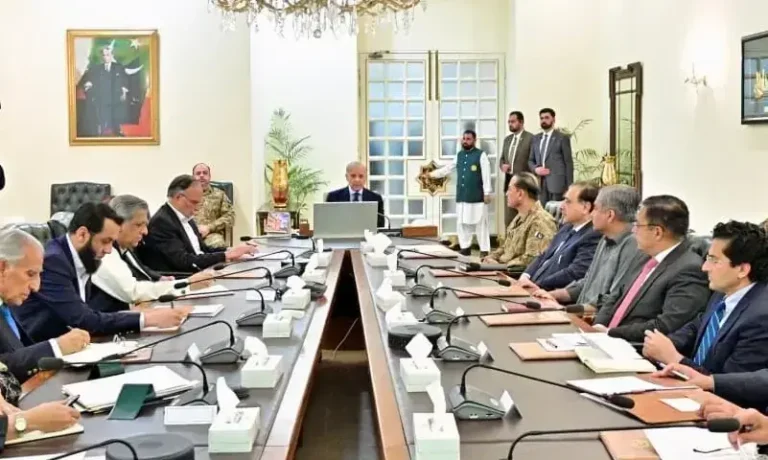
    Prime Minister Shehbaz Sharif has directed authorities to expand digital consular services for overseas Pakistanis, improve facilities at Pakistani missions abroad, simplify the complaints system and speed up the digitization of document attestation and official transactions. According to a statement from the Prime Minister’s Office, the directives came during a meeting chaired by the prime minister in which officials from the Ministry of Foreign Affairs, Pakistani ambassadors serving in various countries, and senior representatives from the Ministry of Interior, the Federal Investigation Agency, the Ministry of Information Technology and other relevant departments briefed him on ongoing reform efforts. Shehbaz said overseas Pakistanis represent a valuable asset for the country and that providing them with every possible facility remains a top government priority. Officials told the meeting that a QR code system has already been rolled out to simplify procedures for power of attorney, property transactions and document attestation for Pakistanis living abroad. The prime minister welcomed the initiative and directed authorities to prominently display the QR codes at Pakistani embassies and missions worldwide to improve access to the digital complaints registration system. Shehbaz also instructed the Ministry of Foreign Affairs to launch a dedicated awareness campaign encouraging overseas Pakistanis to use the QR code based system when filing complaints. The meeting was told that the ministry has recently introduced an evening shift at its Islamabad office to make services more accessible to citizens, and that document attestation services have also been launched at the Asaan Khidmat Centre in Islamabad. Officials further reported that the ministry has introduced courier based attestation services and linked its verification system with databases maintained by the Higher Education Commission, the Inter Boards Coordination Commission, the National Database and Registration Authority and the National Police Bureau, a step that has significantly cut processing times. The meeting also heard that the apostille system has reduced document attestation to a single step process. Officials said work is now underway to fully digitize the system, with the National Information Technology Board developing a mobile application that would allow digital verification of documents including birth and death certificates, marriage registration certificates and family registration certificates, among other official records. Deputy Prime Minister and Foreign Minister Ishaq Dar attended the meeting alongside federal ministers Ahsan Iqbal Cheema, Attaullah Tarar, Chaudhry Salik Hussain and Shaza Fatima Khawaja, Minister of State Awn Chaudhry, Special Assistant to the Prime Minister Tariq Bajwa and other senior officials. The push to digitize consular services reflects a broader effort by the government to modernize public sector delivery and reduce bureaucratic delays, an initiative that has gained momentum in recent years as authorities look to integrate various state databases and cut down on the paperwork burden faced by citizens both at home and abroad.

Leave a Reply

Your email address will not be published. Required fields are marked *