over 33000 candidates
| | |

Over 33,000 candidates to appear for MDCAT in Sind…

More than 33,000 candidates will appear for the Medical and Dental College Admission Test (MDCAT) in Sindh as students compete for 5,100 medical and dental seats across the province. The entrance examination for admission to medical colleges will be held on Sunday, August 16, across various centres in Sindh.

The MDCAT examination in the province will be conducted under the supervision of Sukkur IBA Testing Service. According to Vice Chancellor Sukkur IBA Professor Dr Asif Sheikh, more than 33,000 candidates are expected to participate in the test, including 20,934 female candidates and over 12,600 male candidates.

Vice Chancellor Jinnah Sindh Medical University (JSMU) Dr Siraj Memon stated that a total of 5,100 seats have been allocated for medical education in Sindh. These include 2,300 MBBS seats and 2,800 BDS seats, including seats reserved under different quota categories.

This year, the responsibility for managing medical college admissions has been assigned to Jinnah Sindh Medical University. The university will oversee the admission process following the MDCAT results.

Karachi will have the highest number of candidates appearing for the examination, with 10,661 students registered. Among them, 8,186 are female candidates and 2,475 are male candidates. Other major examination centres include Hyderabad, where 9,470 candidates will participate, including 5,287 female and 4,183 male students.

In addition, 3,066 candidates will appear in Larkana, 2,067 in Mirpurkhas, 2,511 in Shaheed Benazirabad, and 5,462 in Sukkur. An additional examination centre has also been established in Islamabad, where 300 candidates will take part.

The MDCAT centre in Karachi will be established at NED University. Special seating arrangements have been made for parents at the adjacent banquet facility. Candidates have been instructed to reach their examination centres by 6:30 a.m., while the test will begin at 10:00 a.m.

The MDCAT will consist of multiple-choice questions carrying a total of 180 marks, with a duration of three hours. Candidates seeking admission to medical colleges will require a minimum of 55 percent marks, while dental college applicants must secure at least 50 percent marks. There will be no negative marking in the examination.

Sukkur IBA officials stated that the answer key will be uploaded after the test. To ensure transparency, students will be allowed to solve the paper using a carbon copy, which they can keep for verification purposes. The MDCAT results are expected to be announced by August 22.

Similar Posts

  • | |

    Pakistan standing tall: realising Jinnah’s visio…

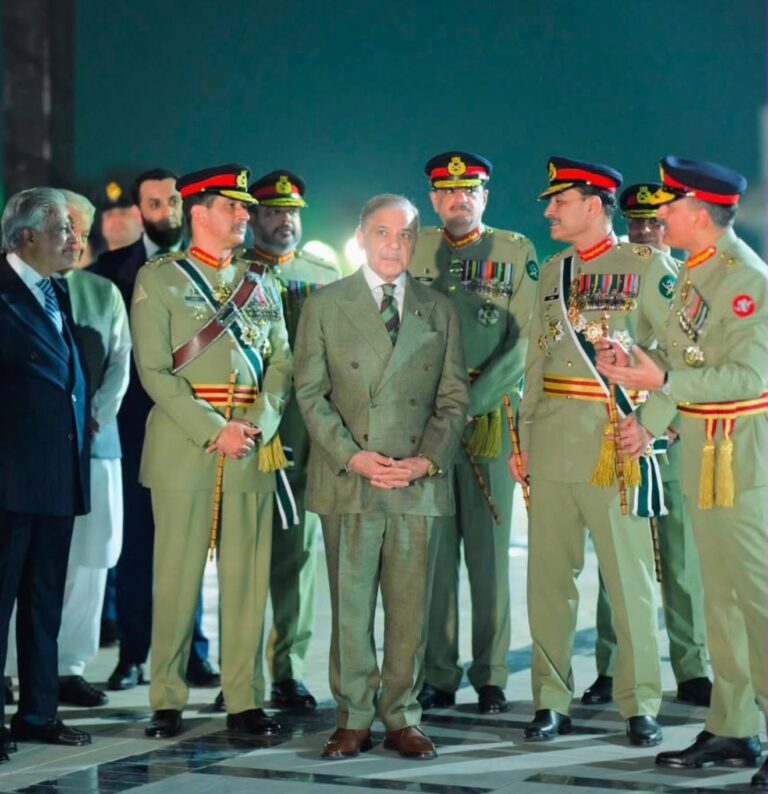
    Shehbaz Sharif and Asim Munir: Advancing the Vision of Quaid-e-Azam As Pakistan celebrates its 79th Independence Day, there is a growing sense that the country is witnessing a moment that would have deeply pleased its founding father, Quaid-e-Azam Muhammad Ali Jinnah. For decades, Pakistanis have carried Jinnah’s vision of a strong, sovereign and respected Pakistan in their hearts. Today, as Pakistan’s diplomatic and strategic importance continues to grow, that vision appears increasingly visible on the international stage. Prime Minister Muhammad Shehbaz Sharif and Field Marshal Syed Asim Munir are working together to translate that vision into reality. Their close coordination has provided Pakistan with a sense of direction, unity and confidence at a time when the world itself is undergoing profound geopolitical change. The Pakistan of today is increasingly being recognised as a country whose voice matters. Jinnah envisaged a Pakistan that would not merely exist on the world map, but would stand with dignity, sovereignty and confidence among the nations of the world. His vision was of a country capable of determining its own destiny and making a meaningful contribution to international affairs. There is a powerful resonance between that vision and the Pakistan we are witnessing today. Jinnah once spoke of a future in which the world’s decisions would be influenced by Pakistan. For many years, that aspiration seemed distant. But recent developments suggest that Pakistan is moving closer to that position. From facilitating dialogue between major powers to strengthening strategic partnerships with Türkiye, Saudi Arabia and China, Pakistan is demonstrating that it can engage with countries across different geopolitical blocs while protecting its own national interests. The country’s ability to host US-Iran talks is particularly significant. In an increasingly polarised world, being trusted to provide a platform for dialogue is itself an indication of diplomatic relevance. Pakistan’s relationship with China remains a cornerstone of its foreign policy, while ties with Türkiye and Saudi Arabia continue to deepen. At the same time, engagement with the United States has entered a phase in which Washington is once again recognising Pakistan’s strategic importance. The positive remarks by US President Donald Trump about Prime Minister Shehbaz Sharif and Field Marshal Asim Munir have also attracted international attention. Perhaps most importantly, Pakistan is projecting itself with greater confidence. The scenes in Islamabad surrounding the inauguration of Yadgar-e-Fateh, commemorating the sacrifices and achievements associated with Operation Bunyan-un-Marsoos, captured this changing mood. Political and military leaders standing together alongside the families of martyrs and veterans conveyed a powerful message that Pakistan’s strength lies in unity. As an overseas Pakistani who has lived in the West for more than two decades, this transformation is particularly striking. I have witnessed different phases of Pakistan’s image abroad. There were years when Pakistan was frequently discussed through the prism of instability, terrorism and political uncertainty. Today, the conversation is different. Pakistan is increasingly being discussed in terms of its strategic importance, diplomatic role, defence capabilities, regional influence and economic potential. This should make every Pakistani proud—but it should also make us more responsible. International recognition alone cannot build a prosperous Pakistan. The next challenge is to convert diplomatic and strategic gains into economic prosperity, stronger institutions, better education, employment opportunities and an improved quality of life for ordinary Pakistanis. That is where Jinnah’s vision must ultimately lead. At 79, Pakistan has every reason to celebrate. The country is standing taller on the world stage, and the partnership between Prime Minister Shehbaz Sharif and Field Marshal Asim Munir has helped project a message of unity and national purpose. But this is not the end of the journey. It is the beginning of a new chapter. Jinnah gave Pakistan a dream. The responsibility of this generation is to turn that dream into a lasting reality. Pakistan Zindabad.

  • |

    Germany weighs tougher rules on sick leave

    BERLIN: Germany is considering tougher rules for workers taking sick leave, but researchers warn that stricter requirements may not address the deeper reasons behind the country’s high absenteeism. German employees took an average of around 22 sick days in 2024. The figure is among the highest reported internationally. The government’s proposed changes are part of a wider effort to improve productivity. Germany is dealing with an ageing population and years of weak economic growth. Under the proposed changes, employers could require workers to provide a medical certificate from the first day of absence. Telephone-based sick notes could also be scrapped. However, researchers say the debate should focus on why workers are becoming ill rather than simply making it harder to take sick leave. Healthcare, education and social services are among the sectors reporting the highest levels of absenteeism. Workers in these fields often face heavy workloads. They also deal with staff shortages, emotional pressure and difficult working conditions. BKK data shows that women working in healthcare and social work took an average of 27 sick days in 2024. Teachers recorded around 24 days. The figures were lower in several other sectors. Workers in finance averaged about 18 days, while employees in communications recorded around 16 days. Researchers say mental health is an important part of the problem. Mental health-related cases represent a relatively small share of total sickness cases. However, they often result in much longer absences. Data from AOK shows that sick-leave days linked to mental health problems have increased by 47% since 2014. Mental health conditions are now one of the biggest causes of prolonged absence after respiratory illnesses. Experts say burnout and exhaustion can develop without reaching the level of a diagnosed mental disorder. Healthcare workers and teachers are particularly exposed to these pressures. They carry significant responsibilities while dealing with emotional and sometimes physical challenges. Teachers have reported violence and aggressive behaviour in schools. A 2024 survey found that almost half had experienced psychological or physical violence among pupils at their schools. More than one-third also reported feeling emotionally exhausted several times a week. Nursing faces similar difficulties. Germany has a shortage of healthcare workers, but studies indicate that wage growth has remained limited in some hospitals and public institutions. Researchers describe the situation as an imbalance between effort and reward. Workers face high demands but may receive relatively low pay, limited career opportunities and insufficient recognition. Studies have linked such conditions to mental health problems and long-term sickness absence. However, experts caution against blaming Germany’s absenteeism solely on workplace stress. Sick leave is affected by many factors. These include the age of the workforce, working conditions, social attitudes and differences in healthcare systems. Germany also has generous sick-pay provisions. Workers can generally receive full wages during the initial period of illness. Several other European countries, however, report even higher levels of sick leave among full-time employees. Researchers have also found little evidence of widespread abuse of sick-note rules. A study by DAK and the IGES Institute found that the sharp rise in recorded absences in 2022 was largely linked to improved electronic reporting and unusually high levels of respiratory infections and Covid-19. Sick-leave levels have since stabilised. Researchers also found no clear evidence that telephone sick notes introduced during the pandemic caused the increase. The government’s proposal has faced opposition from labour representatives. The Verdi services union has described the plan as creating a culture of distrust towards employees. Doctors have also warned that tougher certification requirements could put additional pressure on already busy medical practices. The government has defended its approach. It says employers would have the option of requiring certificates from the first day of illness while allowing companies to retain existing arrangements. The debate is therefore moving beyond the question of whether German workers take too many sick days. Researchers argue that reducing absenteeism in the long term may require better staffing, improved working conditions, stronger career prospects and greater support for workers facing emotional pressure.

  • | |

    PTI holds nationwide protests to mark three years

      Supporters of Pakistan Tehreek-e-Insaf (PTI) staged demonstrations across Pakistan on Wednesday to mark three years since former prime minister Imran Khan was first taken into custody. One of the largest gatherings was held outside Lahore’s Aiwan-e-Adl, where members of the Insaf Lawyers Forum, along with party leaders, lawyers and supporters, demanded Khan’s release and called for an end to the legal cases against him. The Lahore protest took place on Upper Mall, outside the court complex, where participants waved party flags and chanted slogans in support of the jailed PTI founder. Demonstrators maintained that the cases filed against Imran Khan were politically motivated and urged authorities to withdraw all charges. They insisted that the legal proceedings were intended to prevent him from participating in politics, an allegation that both the government and state institutions have consistently denied, maintaining that the judicial process is independent and conducted in accordance with the law. Several senior PTI leaders, including Salman Akram Raja, Ali Aijaz Butta, Rehan Dar and Shaukat Basra, addressed the gathering. During their speeches, they called for Imran Khan’s immediate release and vowed that the party would continue its campaign until he was freed and all cases against him were resolved. Protesters repeatedly chanted slogans demanding his release and described the demonstrations as peaceful expressions of public support. The Lahore rally formed part of a nationwide protest campaign announced by PTI to coincide with the anniversary of Khan’s imprisonment. Similar demonstrations were organised in different cities across Pakistan, while overseas PTI supporters also held rallies in several countries to express solidarity with the former prime minister and draw attention to his continued detention. Imran Khan has remained in prison since August 2023, when he was convicted in a corruption case. Since then, he has faced several additional prosecutions and convictions, including cases involving corruption allegations, the disclosure of official secrets and marriage-related legal matters. Khan and his party have consistently rejected all accusations, describing them as politically driven. The government, however, maintains that the cases are being handled through an independent legal process and rejects claims of political interference. Wednesday’s demonstrations were the latest in a series of protests organised by PTI following Khan’s arrest. The party has repeatedly demanded his release and called for fresh general elections. Previous protests have at times faced restrictions imposed by authorities, while some demonstrations have also witnessed incidents of violence and clashes. Separately, PTI leader Shaukat Basra alleged that journalist Natiq Rehan was assaulted by Punjab Police while reporting on the Lahore protest. According to Basra, the journalist was attacked despite performing his professional duties. Punjab Police did not immediately issue a response to the allegation. A day before the nationwide protests, Amnesty International issued a statement urging Pakistani authorities to safeguard Imran Khan’s fundamental rights as his detention entered its third year. Isabelle Lassee, the organisation’s Acting Regional Director for South Asia, expressed concern over what Amnesty described as the denial of a fair trial, prolonged solitary confinement, and restrictions on family visits, legal representation and medical care. The human rights organisation also called on the authorities to respect the right to peaceful assembly and avoid arbitrary action against demonstrators. It further urged that Imran Khan and his wife, Bushra Bibi, be granted regular access to their families, legal counsel and appropriate medical treatment in accordance with international human rights standards.

  • | | |

    Tank terrorist attack: 15 martyred including 14 se…

    Khyber Pakhtunkhwa: A terrorist attack on a joint police checkpost in Khyber Pakhtunkhwa’s Tank district has resulted in the martyrdom of 15 people, including 14 security personnel, according to the Inter-Services Public Relations (ISPR). The military’s media wing said the attack took place early Friday and was carried out by militants identified as Fitna-al-Khawarij, a term used by authorities for members of the banned Tehreek-i-Taliban Pakistan (TTP). ISPR said the attackers attempted to breach the checkpost’s perimeter, but their efforts were swiftly stopped by security forces. The personnel deployed at the post responded with courage and professionalism, engaging the attackers and killing 15 militants. According to the statement, after the failed attempt to enter the checkpost, the attackers rammed an explosive-laden vehicle into the perimeter wall. The powerful blast caused severe damage to the infrastructure and resulted in the martyrdom of 15 individuals, including 12 soldiers, two police officers, and a government official from the former forest department. A sanitisation operation is currently underway in the area to locate and eliminate any remaining terrorists. ISPR said security forces and law enforcement agencies will continue counterterrorism operations under the Azm-e-Istehkam strategy to eliminate terrorism from the country. The military’s media wing paid tribute to the sacrifices of security personnel, stating that their sacrifices strengthen Pakistan’s resolve to protect the nation. The attack comes amid increased militant activity in parts of Khyber Pakhtunkhwa. Security forces have recently conducted operations in Bannu and surrounding areas, where several militants were killed during intelligence-based operations. Authorities say efforts are continuing to dismantle terrorist networks and prevent further attacks against security personnel and civilians.

  • |

    Senate questions $387 million ADB water project allocation

    Islamabad: The Senate Standing Committee on Economic Affairs raised serious concerns over inequities in the allocation of foreign funded development projects across Khyber Pakhtunkhwa, revealing that flood affected districts have been largely bypassed while relatively unaffected areas received more infrastructure funding. The meeting, chaired by Senator Saifullah Abro, highlighted discrepancies in road and irrigation project implementation, questioned external pressures from international lenders, and warned that mismanagement could exacerbate Pakistan’s mounting national debt, which has soared from Rs40 trillion in 2022 to approximately Rs90 trillion today. During the session, committee members expressed alarm that districts most devastated by floods, including Upper Dir, Lower Dir, and Chitral, received fewer road reconstruction projects compared to Mardan, which saw 16 roads built despite experiencing minimal flood damage. In Dir, only 12 kilometres of road were reconstructed despite extensive damage. Similarly, nine roads were completed in Peshawar, a city that did not face flood related destruction. Senator Rubina Khalid termed this “inequitable allocation” and warned that such disparities hinder balanced regional development, while Senator Waqar Mehdi questioned whether donor agencies were being misled about project priorities. The committee also scrutinized the financial management of foreign funded schemes. Officials reported that 770 kilometres of roads were constructed at a total cost of Rs69 billion, with an additional Rs43 billion spent on bridges and related infrastructure. Each kilometre of road cost approximately Rs70 million. The Asian Development Bank supported KP Road Rehabilitation and Upgradation Project, covering 249.5 kilometres, was completed ahead of schedule at a cost of $146.2 million. Similarly, $387 million in ADB funded water projects and $295 million from the World Bank are being implemented in irrigation and flood protection schemes across Khyber Pakhtunkhwa. While project completion rates were impressive, reaching 100 percent for most schemes, the committee raised concerns about undue interference by external entities. Chairman Saifullah Abro questioned the role of the World Bank’s local representative in the Sindh Water and Agriculture Transmission Project, noting that the lender should only finance and recover loans, not dictate project execution. He estimated that resisting unnecessary external pressures could save Sindh around Rs14 billion and cited previous instances where committee intervention prevented $890 million in unwarranted costs on the Peshawar Torkham project. The committee underscored the need for transparency, calling for a clear distinction between grants and loans and insisting that provincial authorities ensure funds are spent only for their approved purposes. Senator Hidayatullah stressed that provinces receiving loans must allocate them to the intended projects to benefit local populations, while Senator Kamil Ali Agha urged planning for infrastructure that accounts for emerging climatic challenges, including improved stormwater drainage systems. Senator Abro also criticized the concentration of contracts among a few large construction firms in Khyber Pakhtunkhwa, directing officials to provide detailed information on the Notice Inviting Tender process to ensure competitive bidding. While district road projects were reportedly nearing completion across Swat, Peshawar, Mardan, and Nowshera, the committee emphasized that project selection criteria and equitable distribution remained critical issues. The meeting concluded with a clear warning that Pakistan’s growing reliance on foreign loans, coupled with misallocated resources, could have serious economic repercussions. Senator Abro noted that while international assistance is vital, the country must maintain ownership and control over project execution to ensure accountability, prevent cost escalation, and deliver tangible benefits to the communities most in need.

  • |

    Pakistan set to field seven batters in first West Indies Test

    TRINIDAD: Pakistan is set to adopt a batting-heavy approach for the opening Test against the West Indies, with team management reportedly planning to field seven specialist batters as they finalize the playing XI ahead of the series opener. According to team sources, initial discussions have begun on the lineup, with the management aiming to strengthen the batting order while maintaining a balanced bowling attack for the first Test, which begins on Saturday at the Brian Lara Cricket Academy in Trinidad. The proposed lineup is expected to include Azan Awais, Imam-ul-Haq, Shan Masood, Babar Azam, and wicketkeeper-batter Mohammad Rizwan. All-rounder Salman Ali Agha is also likely to feature, with the team expected to use him as the fifth bowling option while adding depth to the batting unit. Sources further indicated that Aamer Jamal and experienced pacer Mohammad Abbas are expected to retain their places in the side, providing balance with both bat and ball. There is also a strong possibility that left-arm spinner Ali Usman will make his Test debut. One of Khurram Shahzad or Mohammad Ali is expected to complete the pace attack, depending on the final assessment of conditions. Team management has reportedly advised the bowlers to focus on improving their batting contributions, reflecting Pakistan’s intention to maximize runs from the lower order. The final playing XI, however, will depend on players’ fitness and last-minute evaluations before the match. Meanwhile, preparations at the Brian Lara Cricket Academy suggest conditions could favor seam bowlers. According to sources, curators have prepared a pitch with brown grass rather than lush green coverage, a surface expected to provide pace and bounce while remaining suitable for batting as the match progresses. The first Test marks the beginning of Pakistan’s highly anticipated series against the West Indies, with both teams eager to make a strong start. Pakistan will be hoping that its strengthened batting lineup provides the platform for a winning performance in Caribbean conditions.

Leave a Reply

Your email address will not be published. Required fields are marked *