nepaltibet death toll
|

Nepal-Tibet death toll 750 from Himalayan flood, 3,000 missing

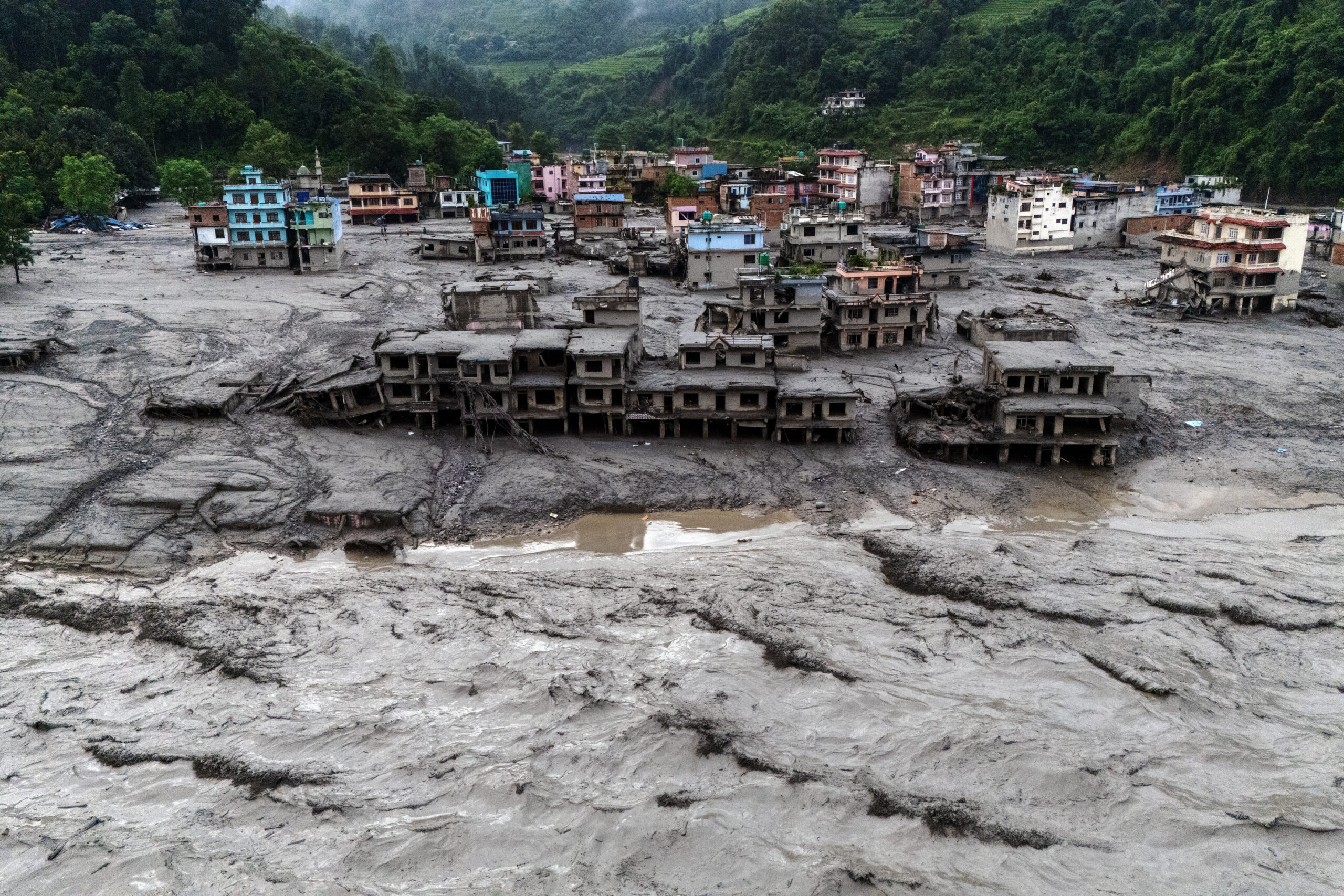
The death toll in Nepal and Tibet from last week’s catastrophic floods hit 750 on Sunday, August 30, with 3,044 missing, authorities said, while rescuers moved to higher ground as rain swelled river levels.

Rescue operations have been suspended several times since Friday, August 28, because of bad weather and concerns that a lake formed across the Nepal-China border by a mudslide from Wednesday’s glacier collapse could trigger fresh flooding after it began overflowing into rivers in Nepal.

The Red Cross estimates that more than 90,000 people are likely to have been affected by the disaster, which China has linked to the effects of climate change.

China’s Foreign Minister Wang Yi told his Nepalese counterpart in a Saturday telephone call that the mudslide was their “most severe cross-border disaster” in recent years and that rescue operations were of unprecedented difficulty and complexity, Chinese state broadcaster CCTV reported.

Tunnels become a focus of rescue efforts

Nepal’s rescue effort is now focused on hundreds of people believed to be trapped in tunnels at hydropower plants after a torrent of ice, rock, mud and debris crashed down Himalayan rivers.

Deaths in Nepal have risen to 734, with 2,498 missing and 7,514 rescued, the nation’s disaster authority said. In China, 16 people had died in Gyirong County as of Saturday evening and 546 were missing, officials in Tibet told a press conference.

Among the 261 foreign nationals from 23 countries missing on the Tibetan side were 104 from Nepal, 49 from neighboring India, as well as 33 Latvians, 18 Americans and 15 Britons, they said in China’s first breakdown by nationality.

Beijing and Kathmandu are working together to identify missing citizens and foreign nationals, as well as strengthening cooperation in disaster prevention and mitigation, and climate-change response, CCTV said.

Water levels in the Trishuli River rose on Sunday after fresh rain, prompting residents and rescue workers to seek higher ground, Nepalese police told Reuters.

Nepal says it does not need foreign help for general rescue, but Foreign Ministry spokesperson Lok Bahadur Chhetri said the country needed assistance in such areas as tunnel rescue, DNA testing, refrigerated storage for bodies and forensic identification of decomposed remains.

Indian and Chinese experts are on the ground helping efforts to open tunnels, Chhetri said.

The lake that had formed upstream and threatened rescue operations had largely drained by Saturday evening, CCTV said. But drones detected a landslide late on Saturday 2.8 km (1.7 miles) downstream of the lake, forming a new dam and a fresh pool of water, CCTV said.

The authorities relocated rescue personnel near the Gyirong border crossing to safety, the broadcaster said.

The flood was “caused by glacier instability under the long-term effects of global warming”, CCTV reported, saying it was a “new and prominent feature of cryosphere disasters” on the Tibetan plateau.

The mudslide from the Nepalese side took six to seven minutes to reach the Gyirong border crossing, CCTV said, citing the findings of Chinese scientists. Dramatic surveillance footage shared worldwide showed torrents of water and debris engulfing buildings while people tried to flee.

China has mobilized over 2,100 rescue workers and allocated at least 220 million yuan ($32.7 million) to support relief efforts. It is also providing emergency cash aid, disaster relief supplies, satellite and hydrological data and tunnel rescue experts to Nepal, CCTV said.

China used heavy-lift drones as helicopters began airdropping equipment and supplies to frontline rescuers near the border crossing. Soldiers have used life-detection equipment, drones and a navigation system to continue searching for those still missing. – Rappler.com

Similar Posts

  • | |

    Japan PM Takaichi’s approval falls as inflation hits households

    Japanese Prime Minister Sanae Takaichi is facing growing public dissatisfaction as rising prices and higher living costs begin to weaken support for her government. A nationwide poll published by the Yomiuri newspaper showed that approval for Takaichi’s administration fell sharply in July. The cabinet’s approval rating dropped to 57 per cent, compared with 69 per cent in June. It is the first time since Takaichi took office that support for her government has fallen below 60 per cent. The survey was conducted from July 24 to 26. It showed that public disapproval also increased significantly. The share of respondents who opposed the cabinet rose to 34 per cent, up from 21 per cent in the previous month. Inflation has emerged as the biggest concern for voters. About 71 per cent of respondents expressed dissatisfaction with the government’s handling of rising prices and living costs. That figure stood at 56 per cent in June. The findings indicate that economic pressure is increasingly affecting Takaichi’s political standing. Her government had previously enjoyed strong public support, but persistent price increases are creating fresh challenges. Takaichi is also facing criticism over her government’s expansionary fiscal and monetary policy approach. The policies have contributed to higher bond yields and pressure on the yen, which has fallen to levels not seen in several decades. The latest polling results could increase pressure on the government to provide immediate relief to households. While issues such as national security remain important, voters are increasingly focused on everyday expenses and their purchasing power. Takaichi now faces the challenge of demonstrating that her economic policies can control inflation while maintaining broader economic stability.

  • | | | |

    Iran rules out US talks until demands are met

    Iran has ruled out direct negotiations with the United States for now, saying Washington must first comply with the terms of an interim agreement reached in June. Iranian Foreign Minister Abbas Araghchi said on Sunday that Tehran and Washington were not holding direct talks. He said messages were still being exchanged through intermediaries. Araghchi also reiterated Iran’s position on the Strait of Hormuz. He said the strategic waterway would not reopen simply because Iran and Oman reached an agreement on shipping arrangements. According to Iranian reports, Tehran and Muscat are close to finalising an understanding on a temporary shipping route. However, Iran says the route can only be used after other conditions are met. The Strait of Hormuz has remained at the centre of the wider conflict. Iran has repeatedly linked its reopening to demands directed at Washington. Iranian officials have called for an end to US threats and military action. They have also demanded the lifting of sanctions and blockades and the release of Iranian assets. Iran’s Revolutionary Guard has separately warned that the strait will remain closed until Tehran’s conditions are accepted. The force accused its opponents of shifting their focus toward reopening the vital waterway. The strait is one of the world’s most important energy routes. A significant share of global oil and gas shipments normally passes through it. Oman, meanwhile, said discussions with Iran over arrangements for shipping through the waterway had been positive and constructive. Muscat also urged all sides to avoid actions that could undermine the negotiations. Iranian President Masoud Pezeshkian has suggested that the current situation could provide an opportunity for an agreement. He said Iran remained united and strong despite the ongoing conflict. The diplomatic uncertainty comes as tensions continue to affect commercial shipping in the region. The United Arab Emirates said Iran had attacked a vessel linked to its state-owned oil company while it was travelling through the Strait of Hormuz. No injuries were reported. The United Kingdom Maritime Trade Operations agency also reported that a vessel caught fire after being struck by an unidentified projectile. The fire was later brought under control, with no environmental damage reported. Iranian authorities have not immediately commented on the individual incident. Saudi Arabia reports fires at energy facilities Tensions have also spread across the Gulf. Saudi Arabia said firefighters had extinguished a blaze at an Aramco facility in Jizan. The Saudi Energy Ministry said there were no fatalities. Yemen’s Houthi movement claimed responsibility for an attack on the site, saying it had used a drone in response to alleged Saudi strikes in Yemen. A separate explosion was also reported in the industrial area of Jubail. Regional sources said gas facilities were targeted and that a fire broke out. The exact cause remained unclear. It was not immediately established whether the incidents in Jizan and Jubail were connected. US defence industry ordered to increase weapons production Meanwhile, the United States has asked its defence industry to accelerate weapons production amid shortages linked to the war with Iran. US Deputy Defence Secretary Steve Feinberg reportedly instructed defence companies to submit plans aimed at speeding up deliveries and increasing production of critical military equipment. The demand comes amid reports of pressure on US ammunition supplies, including stocks of Patriot missile interceptors. The Trump administration has maintained that the United States has substantial weapons reserves and that additional supplies are being manufactured and delivered. The conflict has also triggered threats from armed groups in the region. The leader of Iraq’s Harakat Hezbollah al-Nujaba, Akram al-Kaabi, has threatened retaliation for US-Saudi strikes on sites belonging to Iraq’s Popular Mobilisation Forces. The group has warned that further military action could lead to a response. Iranian military officials, meanwhile, have claimed that the United States and Israel failed to achieve their objectives against Iran. They have praised the country’s military preparedness and vowed to continue resisting pressure. With the Strait of Hormuz still closed and negotiations remaining indirect, the prospect of restoring normal shipping remains uncertain. Iran insists that reopening the waterway depends on Washington accepting its conditions. The United States, meanwhile, has linked the lifting of its blockade to Iran fulfilling commitments under any future agreement.

  • |

    Spanish minister bids for top UN labour agency post amid US funding crisis

    Spain has officially nominated its Labour Minister and Second Deputy Prime Minister, Yolanda Díaz, to run for Director-General of the International Labour Organization (ILO). If elected, Díaz would become the first woman to lead the Geneva-based UN agency in its 107-year history. Díaz is set to challenge incumbent Director-General Gilbert Houngbo of Togo, who took office in 2022 as the first African leader of the ILO and is seeking re-election. Her candidacy comes as the agency faces a severe liquidity crisis, exacerbated by unpaid contributions from member states, most notably the United States, which owes 257 million Swiss francs ($315 million) in arrears and has outlined plans to halt funding for the upcoming fiscal year. The nomination highlights her domestic record of labor reforms and social dialogue in Spain, though analysts note her candidacy faces a diplomatic balancing act between securing European support and risking friction with the African diplomatic bloc. The election will take place in November 2026, with the winner’s five-year term beginning in October 2027.

  • | |

    Israeli strikes draw Lebanese President’s warning

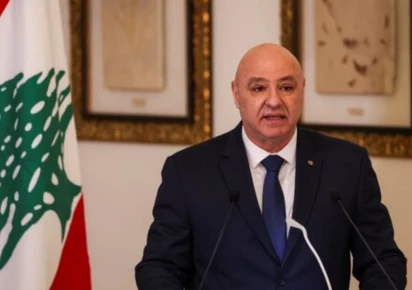
    Lebanese President Joseph Aoun on Saturday condemned Israeli strikes in southern Lebanon, calling them a “clear message” about the ongoing negotiations between Beirut and Tel Aviv ahead of the next round of US-sponsored talks in Rome early next month, AFP reported. Aoun criticised what he described as continued Israeli attacks and repeated violations of the framework agreement and international law protecting civilians. He said an Israeli strike on a house in the southern town of Ansar killed an entire family. At least seven people were killed and three others injured when Israeli warplanes struck a house on the outskirts of Ansar in Nabatieh district early Saturday, Lebanon’s National News Agency (NNA) reported. The strike destroyed the building, while rescue teams searched the rubble for victims and survivors. NNA said the attack marked the first Israeli airstrike to reach this far inside Lebanese territory since a ceasefire took effect two months ago. Israeli aircraft also carried out several strikes on Ali al-Taher hill near Nabatieh al-Fawqa. The strikes came despite a framework agreement signed between Lebanon and Israel on June 26 under US sponsorship. The agreement calls for Israel to gradually withdraw from occupied Lebanese territory while the Lebanese army deploys in those areas and armed groups, including Hezbollah, disarm. According to the report, Israel continues to hold parts of southern Lebanon, including areas it occupied during earlier conflicts. During the latest escalation, Israeli forces advanced more than 10 kilometres into Lebanese territory. Lebanese authorities say the Israeli assault, which began on March 2, has killed 4,335 people and wounded 12,277 others. Aoun warned that the continued violations could undermine the negotiation process and further threaten the fragile ceasefire.

  • | | |

    Netanyahu reacts to Trump’s Saudi deal condi…

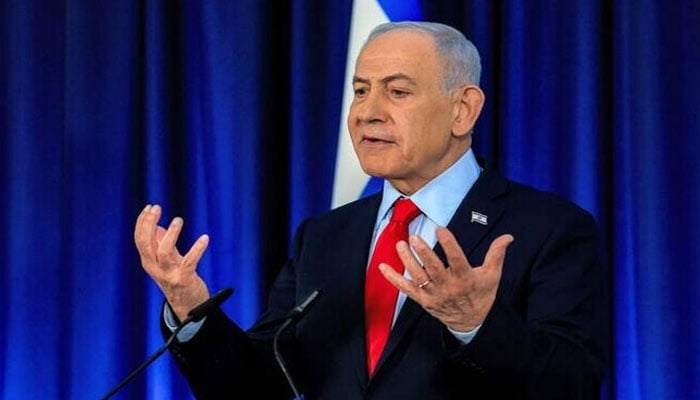
    Israeli Prime Minister Benjamin Netanyahu has described the potential inclusion of Saudi Arabia in the Abraham Accords as a “historic” step for the Middle East, following US President Donald Trump’s announcement that a proposed US-Saudi civilian nuclear agreement would depend on the Kingdom formally joining the normalization pact. According to Reuters, Netanyahu shared his reaction in a post on X, calling Saudi participation in the Abraham Accords a major breakthrough that could reshape the region’s future and strengthen peace and security across the Middle East. “Saudi Arabia joining the Abraham Accords would be a historic and tremendous development for peace and stability in the region,” Netanyahu said, without directly referring to the proposed civilian nuclear agreement between Washington and Riyadh. His remarks came shortly after President Trump revealed that the United States is prepared to move forward with a civilian nuclear cooperation agreement with Saudi Arabia—but only if the Kingdom officially becomes part of the Abraham Accords, the US-backed normalization framework that established diplomatic ties between Israel and several Arab nations. Trump’s condition has immediately placed renewed global attention on the long-discussed possibility of Saudi-Israeli normalization, an issue widely regarded as one of the most significant diplomatic challenges in the Middle East. While Netanyahu welcomed the idea of Saudi Arabia joining the agreement, he carefully avoided commenting on Trump’s specific proposal linking the nuclear deal to normalization. His statement instead focused on the broader regional benefits that such a move could bring. The Abraham Accords, first signed in 2020, normalized relations between Israel and countries including the United Arab Emirates, Bahrain, Morocco and Sudan. Saudi Arabia has repeatedly maintained that any formal normalization with Israel would depend on progress toward resolving the Palestinian issue, making the latest US proposal particularly significant. Analysts say Trump’s latest announcement could revive diplomatic negotiations that had slowed amid regional tensions and the ongoing conflict in Gaza. However, they also caution that Riyadh’s position remains closely tied to broader political and security considerations. Whether the proposed civilian nuclear agreement can pave the way for Saudi Arabia’s entry into the Abraham Accords remains uncertain. Still, Netanyahu’s swift endorsement highlights Israel’s strong interest in expanding the landmark agreement and bringing the region’s largest Arab economy into the normalization framework, a move that could significantly alter the Middle East’s diplomatic landscape.

  • | | |

    Pakistan highlights mediatory role in US-Iran conf…

    Pakistan’s Permanent Representative to the United Nations, Ambassador Asim Iftikhar Ahmad, has highlighted Pakistan’s mediatory efforts in the US-Iran conflict, saying the country remains committed to promoting peace and stability amid growing global tensions. Speaking at an Independence Day ceremony at Pakistan House in New York, Ahmad said Pakistan continued to seek peaceful solutions to conflicts and reaffirmed its commitment to sovereignty, security and socio-economic development. He paid tribute to Quaid-e-Azam Muhammad Ali Jinnah, describing him as a visionary leader who played a historic role in creating Pakistan. Reflecting on the country’s journey since 1947, he praised the resilience and achievements of Pakistanis despite major challenges. Ahmad also praised the armed forces for defending the country and protecting its people, particularly during the May 2025 conflict with India. He highlighted the contributions of Pakistanis around the world, including innovators, athletes and artists, and recognised the work of Saima Saleem and Aleena Majeed at Pakistan’s UN mission. The ambassador said Pakistan had overcome major economic and structural challenges over the decades and continued to show resilience in the face of adversity.

Leave a Reply

Your email address will not be published. Required fields are marked *