israeli strikes draw
| |

Israeli strikes draw Lebanese President’s warning

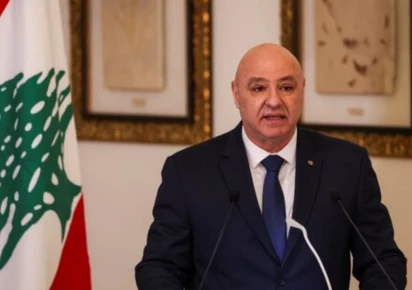
Lebanese President Joseph Aoun on Saturday condemned Israeli strikes in southern Lebanon, calling them a “clear message” about the ongoing negotiations between Beirut and Tel Aviv ahead of the next round of US-sponsored talks in Rome early next month, AFP reported.

Aoun criticised what he described as continued Israeli attacks and repeated violations of the framework agreement and international law protecting civilians. He said an Israeli strike on a house in the southern town of Ansar killed an entire family.

At least seven people were killed and three others injured when Israeli warplanes struck a house on the outskirts of Ansar in Nabatieh district early Saturday, Lebanon’s National News Agency (NNA) reported. The strike destroyed the building, while rescue teams searched the rubble for victims and survivors.

NNA said the attack marked the first Israeli airstrike to reach this far inside Lebanese territory since a ceasefire took effect two months ago. Israeli aircraft also carried out several strikes on Ali al-Taher hill near Nabatieh al-Fawqa.

The strikes came despite a framework agreement signed between Lebanon and Israel on June 26 under US sponsorship. The agreement calls for Israel to gradually withdraw from occupied Lebanese territory while the Lebanese army deploys in those areas and armed groups, including Hezbollah, disarm.

According to the report, Israel continues to hold parts of southern Lebanon, including areas it occupied during earlier conflicts. During the latest escalation, Israeli forces advanced more than 10 kilometres into Lebanese territory.

Lebanese authorities say the Israeli assault, which began on March 2, has killed 4,335 people and wounded 12,277 others.

Aoun warned that the continued violations could undermine the negotiation process and further threaten the fragile ceasefire.

Similar Posts

  • | | |

    11 killed, 40 injured in Houthi attack in Yemen

    A deadly Houthi attack in Yemen has killed 11 people, including eight military personnel and three civilians, according to Yemeni officials and reports from international news agencies. The attack reportedly took place in the coastal city of Mokha, an area controlled by Yemen’s internationally recognized government. A health ministry official in the city confirmed the deaths and said dozens of people were also injured in the incident. According to officials, the casualties included eight military personnel and three civilians. Initial reports about the number of wounded varied, with one account reporting 32 people injured, including six in critical condition, while military sources said more than 40 personnel had been wounded. The reported casualties occurred following an attack in the port area of Mokha. The incident adds to the continuing violence in Yemen, where the conflict between the internationally recognized government and the Houthi movement has persisted for years. Earlier, reports indicated that the Houthis had also carried out a drone attack targeting a Saudi oil refinery along the Arabian Sea coast. The reported incident comes amid continued tensions involving Houthi forces and regional actors. Yemeni government forces also claimed to have carried out drone strikes against Houthi positions in the southwestern province of Al Dhale’e. According to military statements, the strikes caused significant casualties and material losses among Houthi forces. The government forces claimed that several Houthi military positions were hit during the operation. Barracks, trenches, tunnels and other military sites were reportedly targeted, along with military vehicles and equipment. The latest Houthi attack in Yemen highlights the continuing instability in the country, where military confrontations and drone attacks remain a major security concern. The conflicting figures regarding casualties reflect the rapidly developing nature of the incident, and further updates may emerge as authorities assess the damage and verify the number of casualties. Yemen has experienced years of conflict, creating a severe humanitarian and security crisis. Any renewed escalation between Houthi forces and government-aligned forces risks further worsening the situation for civilians and military personnel alike. Authorities are expected to continue assessing the impact of the latest attack while military forces on both sides remain on heightened alert.

  • |

    Wildfires spread towards Bordeaux as Spain records first fire-related death

    Massive wildfires continued to spread across parts of France and Spain on Saturday, forcing large-scale evacuations and stretching emergency services as firefighters battled fast-moving flames driven by strong winds and prolonged heat. In France, the fires advanced inland toward Bordeaux, prompting thousands of residents in surrounding suburbs to leave their homes. Across the border in Spain, authorities confirmed the first death linked to the ongoing wildfire crisis after an elderly man died during a brush fire near Valencia. The fires have already displaced hundreds of thousands of people in both countries and are among the latest extreme weather disasters affecting southern Europe. Experts have linked the growing intensity of such events to prolonged dry conditions and repeated heatwaves that have become more common in recent years. French Prime Minister Sebastien Lecornu said the scale of the fires was unlike anything the country had experienced before and warned that the situation remained extremely serious. Meteorological data shows that temperatures in the affected region of southwestern France have averaged more than 32 degrees Celsius throughout July, far above the historical average for the month. The combination of unusually high temperatures, dry vegetation and powerful winds has created ideal conditions for wildfires to spread rapidly, making it difficult for emergency crews to contain them. French Interior Minister Laurent Nunez said firefighters were preparing for a long and demanding operation as the flames continued to move closer to Bordeaux. To strengthen the response, the French government has deployed military support alongside local firefighting teams. One of the country’s largest military transport aircraft joined the operation by dropping fire retardant over forests engulfed by flames. Aerial firefighting efforts have become a crucial part of the emergency response as crews struggle to slow the fires from the ground. The fires have destroyed homes and forests across the region while thick smoke has covered large areas. Around 197,000 people have been evacuated from the Gironde and Landes departments since the wildfires began earlier this week. Officials said the flames had reached within about 30 kilometers of Bordeaux. Although Bordeaux Airport remained open, transport services to and from the airport were disrupted, and the government advised people to avoid unnecessary travel in the affected region. Many evacuees described leaving their homes with little time to prepare. Seventy-one-year-old Bernadette said she fled during the night with her two grandsons, leaving behind most of her belongings, including essential medication. She is now staying at a conference center in Bordeaux that has been converted into temporary emergency accommodation for displaced residents. Spain is facing a similarly severe crisis. Three major wildfires, including two that merged west of Madrid, have forced authorities to declare the country’s first national wildfire emergency. Nearly 88,000 people have either been evacuated or ordered to remain indoors because of the fires. Emergency services continue to battle multiple fire fronts while high winds make containment efforts even more difficult. The country’s first confirmed wildfire-related death occurred near Valencia, where an elderly man died in his vehicle during a smaller brush fire that was later brought under control. Spain has also received international assistance through the European Union’s emergency response system. Additional firefighting aircraft from Italy and Greece are joining planes already sent by Portugal and the Netherlands to help contain the blazes. The situation around Madrid remains especially challenging as another wildfire in the neighboring province of Avila threatens to merge with existing fires. Firefighters are also dealing with the added difficulty of an ongoing union strike, although officials say it has had only a limited impact on staffing levels. Spanish Health Minister Monica Garcia urged residents to avoid spending time outdoors because of the dangerous smoke. She advised people to limit physical activity outside and wear face masks if they need to leave their homes. Residents forced to evacuate described hurried departures after receiving emergency alerts. One woman from the town of Fresnedillas de la Oliva said she grabbed only a few valuables and her pet cat before leaving as thick smoke filled the sky. Authorities in both countries continue to warn that the wildfire threat remains high as hot, dry and windy conditions persist.

  • |

    US appeals court blocks Trump’s $400 million White House ballroom project

    A US federal appeals court on Friday ordered President Donald Trump’s administration to halt construction of its $400 million ballroom at the White House, ruling that the executive branch lacks the authority to make such extensive alterations to the landmark without explicit approval from Congress. ​The 2–1 decision by a panel of the US Court of Appeals for the District of Columbia Circuit upholds an injunction obtained by the National Trust for Historic Preservation. The preservation group filed a lawsuit last year after the administration demolished the historic East Wing to build a 90,000-square-foot ballroom complex. ​Writing for the majority, Judges Patricia Millett and Bradley Garcia rejected the administration’s stance that executive authority permitted the unilateral overhaul. ​”Each President is a temporary tenant, not the owner, of the White House and its Executive Residence”, the judges wrote. “Whether or not a massive ballroom should be constructed is for Congress to decide and is not a matter for Executive self-help.” ​The court clarified that its ruling does not permanently block the project, but requires the administration to secure legislative authorization before proceeding with aboveground construction. The order maintains an earlier district court ruling by Judge Richard Leon, which blocked aboveground work on the ballroom while permitting underground construction to proceed for bunker and national security facilities. ​The panel granted a 14-day stay on its ruling, allowing the Justice Department time to file an emergency petition with the US Supreme Court. ​President Trump strongly criticized the decision on social media, describing it as “horrendous, politically motivated, and unlawful”. He argued that the project functions as a broader security complex incorporating bomb shelters, medical units, and drone shielding, warning that the halt poses a threat to national security. ​The National Trust praised the ruling, with CEO Brent Leggs stating that the decision affirms the principle that only Congress holds the authority to approve major structural additions to the White House. ​Judge Neomi Rao dissented, siding with the administration’s position that the executive branch retains sufficient discretion over the maintenance and security of the presidential residence.

  • |

    Irish politicians urge action over citizen’s high-security pro-Palestinian trial in Germany

    A cross-party delegation of Irish politicians has called on Dublin to send official observers to the trial of the “Ulm 5” activists in Stuttgart and raise concerns over the severe detention conditions of Irish citizen Daniel Tatlow-Devally. Tatlow-Devally, 32, was arrested alongside four other Berlin-based European activists in September after trespassing at an Ulm facility owned by Israeli defense contractor Elbit Systems, where they destroyed equipment and smashed windows to protest German arms exports to Israel. German prosecutors have charged the group with trespassing, property damage exceeding €1 million, and membership in a criminal organisation under Section 129 of the German criminal code. The visiting delegation, including Sinn Féin TD Mairéad Farrell and representatives from Fine Gael, Labour, People Before Profit–Solidarity, and the Social Democrats, voiced alarm over Tatlow-Devally being confined to a 5×2-metre cell for 23 hours a day with only one hour of monthly visitation. They also highlighted courtroom barriers, such as holding the defendants behind glass panels that restrict direct legal communication. Farrell urged Irish Prime Minister Micheál Martin to press German Chancellor Friedrich Merz on human rights and legal access concerns during his upcoming visit to Dublin.

  • |

    Turkish parliament passes landmark law to advance PKK peace process

    Turkey’s parliament passed a law on Monday establishing a legal framework for the disbandment of the outlawed Kurdistan Workers’ Party (PKK), marking a major step toward ending a decades-old conflict that has killed tens of thousands. The legislation provides legal protections for many former militants who have not committed specific crimes and facilitates the suspension of prison sentences for some people convicted of PKK membership, paving the way for their reintegration into society. The law was approved by a 468-vote majority in the 600-seat parliament after securing support from President Tayyip Erdogan’s ruling AK Party, its nationalist MHP allies, and the pro-Kurdish DEM Party. This measure represents the most concrete step taken by Ankara in the peace process since jailed PKK leader Abdullah Ocalan called on the group in February 2025 to disarm and disband. Following Ocalan’s call, the PKK announced in May 2025 that it would end its armed struggle, leading to a symbolic ceremony in northern Iraq two months later where a group of militants burned their weapons. The PKK launched its insurgency in 1984, leading to a conflict that has killed over 40,000 people, placed a heavy economic burden on southeast Turkey, and fuelled decades of political and social division. This new legislation specifically addresses the long-standing question of how to manage thousands of PKK members as the organisation dismantles its military and organizational structures. The current public peace initiative began in October 2024 when MHP leader Devlet Bahceli unexpectedly suggested that Ocalan could address parliament to announce the PKK’s dissolution. A parliamentary commission established in August 2025 subsequently heard testimony from politicians, officials, and civil society groups before recommending legislation to oversee disarmament and reintegration. While the law addresses reintegration, it does not by itself resolve broader Kurdish demands regarding expanded political and cultural rights, anti-terrorism amendments, or the detention status of Ocalan. The Turkish government frames the initiative as a pathway toward creating a “terror-free Turkey,” whereas Kurdish politicians emphasize that achieving lasting peace requires broader democratic and legal reforms.

  • |

    Moroccan migrants return home after failed bid to reach Europe

    Thousands of Moroccan migrants who entered Spain’s North African enclave of Ceuta this week have begun returning home after their hopes of reaching mainland Europe faded. Many said they were driven back by hunger, exhaustion and difficult living conditions, while others claimed they faced hostility after arriving in the Spanish territory. Several returnees said they had decided to cross into Ceuta after watching viral social media videos and receiving messages from friends claiming the heavily guarded border could be breached. Believing they had a chance to build a better future in Europe, many left their jobs and travelled to the border. However, after reaching Ceuta, migrants discovered there was no clear route to mainland Spain. Many said they became stranded in the enclave with limited access to food, water and shelter. One migrant said he survived for three days by drinking only water because he could not afford food. He described the cost of basic meals as extremely high and said life in Ceuta was far more difficult than he had expected. Returning migrants also claimed that many supermarkets and shops remained closed, making it difficult to buy essential supplies. Some spent days in wet clothes after swimming across the border and struggled to find safe places to rest. Several migrants alleged they were forced to leave certain neighbourhoods by local residents, although those claims could not be independently verified. Spanish authorities confirmed that two people suffered minor injuries in separate knife attacks and said one suspect had been arrested. Officials added that no deaths linked to the incidents had been reported. The large influx also affected businesses on both sides of the border. In the Moroccan border city of Fnideq, hotels and restaurants faced staff shortages after several workers crossed into Ceuta. Some employers have already begun looking for replacement workers as many employees remain missing. Meanwhile, daily life in Ceuta has gradually started returning to normal. Cafes have reopened in parts of the city, while police continue to maintain a strong security presence. Many businesses, however, remain closed as authorities monitor the situation. Aid workers said migrant reception facilities are operating at full capacity, with thousands of people still believed to be inside the enclave awaiting assistance or decisions on their future. Local residents expressed mixed emotions over the crisis. While many admitted the sudden arrival of thousands of migrants created fear and uncertainty, others said they sympathised with the young people, arguing they had been misled by false hopes of an easier route into Europe.

Leave a Reply

Your email address will not be published. Required fields are marked *