trump says taking
| |

Trump says US is taking partial control of Venezuela’s vast oil reserves

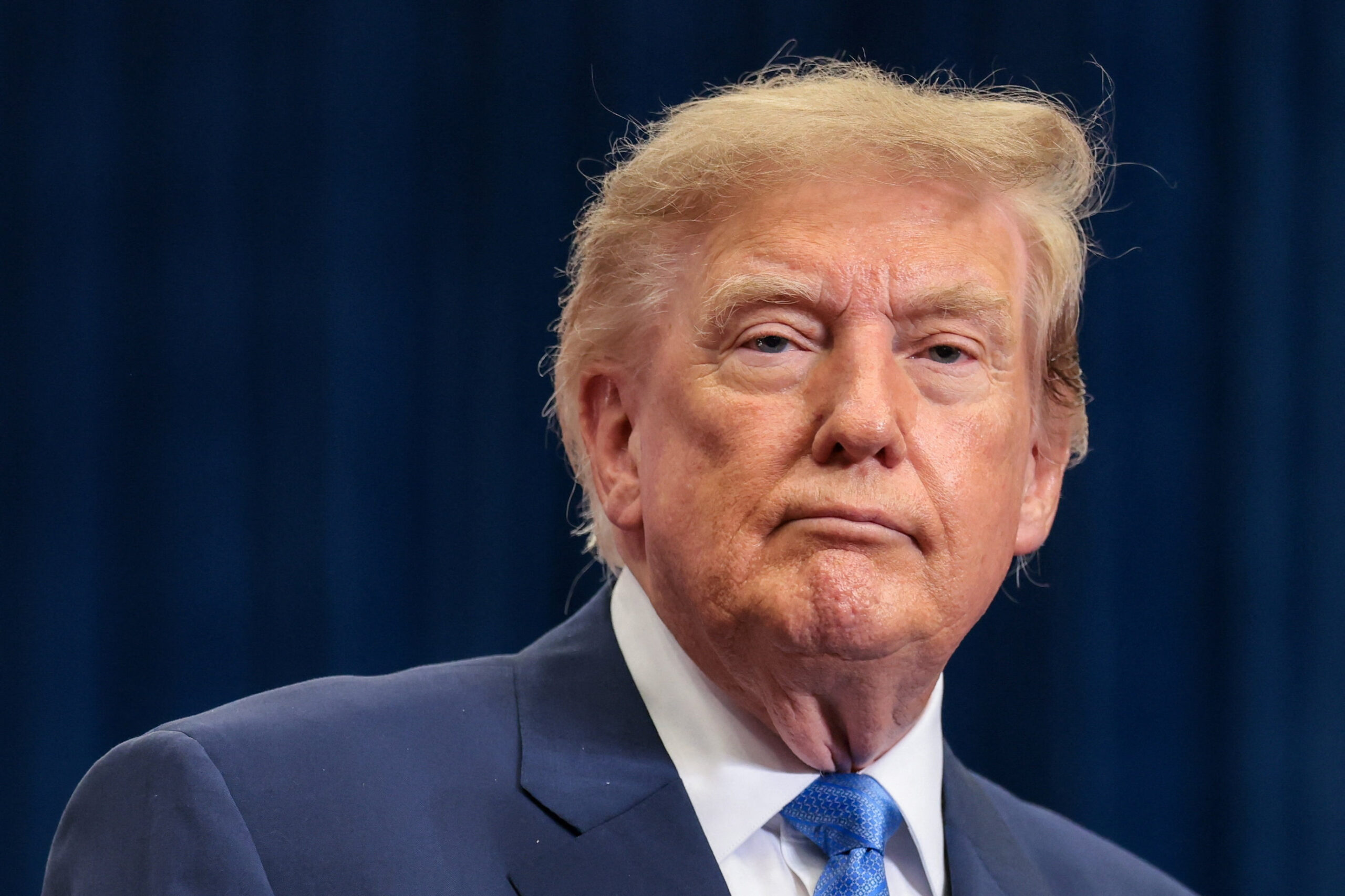
President Donald Trump on Friday announced an unprecedented US push to take control of a fifth of Venezuela’s vast oil reserves, betting that American companies can revive the OPEC nation’s battered energy industry while delivering a new source of crude to help bring down US fuel prices.

Trump provided few details about the agreement, saying only that the US had secured majority control of more than 65 billion barrels of Venezuela’s proven oil reserves through a partnership with private business.

The South American nation’s leader welcomed the agreement, saying it would boost the economy and government revenue.

The new deal would represent a dramatic expansion of the US role in Venezuela’s oil industry as the Trump administration seeks to revive the country’s production and secure more crude for US refineries. Venezuela holds the world’s largest proven oil reserves but produces only about 1.25 million barrels per day, far below its potential after years of underinvestment, mismanagement and sanctions.

Rubio calls deal a win-win

“At my direction, Secretary of State Marco Rubio, and Secretary of War Pete Hegseth, working closely with Highly Respected Interim President of Venezuela, Delcy Rodriguez, and, through a partnership with private business, have secured majority US control of more than 65 BILLION BARRELS of proven Oil Reserves in Venezuela, at no cost to the American Taxpayer,” Trump wrote on Truth Social.

The announcement followed weeks of US-Venezuelan negotiations over a deal that would give American companies long-term access to a group of Venezuelan oilfields and guarantee the resulting crude supply to the United States.

Venezuelan officials are preparing to sign agreements next week granting new oil exploration and production rights to a number of companies, particularly US firms.

Sources have told Reuters that a lease model was under consideration, with fields potentially auctioned to US producers, but the arrangement could face legal and constitutional challenges in Venezuela, where the state retains control over core oil industry activities.

Trump did not disclose the structure of the agreement, the fields or companies involved or how the United States would exercise majority control over the reserves. A list seen by Reuters shows the fields are in the Orinoco Belt and Lake Maracaibo regions.

Rubio described the agreement as a win for both countries, saying on X that it would secure stable, low-cost oil for the United States and help lower gasoline prices.

For Venezuela, Rubio said the deal would bring nearly $100 billion in private investment, support thousands of high-paying jobs and help rebuild the country’s economy.

Rodriguez, who became interim leader after the US seized President Nicolas Maduro in January, said late on Friday that the agreement would allow for a significant increase in production through the development of 17 strategic fields and result in tax revenue for the country totaling $209 billion.

“These investments will contribute not only to the recovery and modernization of our industry, but also to our country’s economic growth, the energy security of our hemisphere, and greater balance in international markets,” she said in a statement.

Analysts said they needed to see more details on the agreement’s legal and financial structure before assessing whether it could attract significant investment.

Also unclear is whether the deal will lower gasoline prices in the short term, as developing the infrastructure needed to produce, transport and refine Venezuela’s heavy crude could take years.

David Goldwyn, president of Goldwyn Global Strategies, said it was unclear whether a US government lease would have a legal basis under Venezuela’s constitution and its new hydrocarbons law, adding that there is “no precedent for having the US government enter into a lease to operate oil fields.”

Goldwyn also questioned whether the plan would address the obstacles that have deterred investment in Venezuela for years. “It is hard to see how this kind of arrangement would accelerate investment at any material scale,” he said, citing political uncertainty, an inadequate power grid, limited export capacity and government discretion over the industry.

Since removing Maduro, Washington has been trying to secure a stable flow of Venezuelan crude ​for US refineries while promoting American investment in the country’s oil industry.

The Trump administration is under pressure ahead of midterm elections in November to mollify consumer concerns over rising gasoline prices. Cheaper oil supplies and expanded output could help.

The US also has been looking for solutions to replenish its Strategic Petroleum Reserve, the nation’s oil stockpile, including the possibility of crude ⁠swaps with US ​producers.

Venezuela nationalized its oil industry in the 1970s, putting state-run PDVSA at its center. Under then-President Hugo Chavez, the government tightened control, forcing foreign producers into state-led joint ventures and later expropriating assets, including projects operated by ExxonMobil and ConocoPhillips.

Under Maduro’s rule Venezuela’s production fell sharply. – Rappler.com

Similar Posts

  • | |

    Philippines says ship hit by Chinese water cannon …

    The Philippines accused China’s coast guard of blasting a government vessel with a water cannon near Scarborough Shoal on Friday, marking the third confrontation between the two sides this week in the South China Sea. The Philippine Coast Guard said the Chinese vessel came within seven metres of the BRP Datu Paduhinog, striking it with a water cannon that caused a temporary loss of satellite connectivity. Two other ships — the BRP Datu Cabaylo and BRP Cape San Agustin — were also targeted but not hit. China’s coast guard confirmed it fired water cannon, saying it had taken “necessary measures” to drive the Philippine ships away. “We sternly warn the Philippine side to immediately stop its infringing and provocative actions,” spokesperson Jiang Lue said. Beijing’s foreign ministry added that Philippine vessels had “deliberately intruded first” and insisted its actions were “professional and standard.” The clash came as Southeast Asian diplomats concluded a regional forum in Manila and as Rome hosted talks between Lebanon and Israel. Earlier this week, tensions flared at Second Thomas Shoal, where Manila accused Chinese sailors of clubbing a Filipino crew member, prompting condemnation from allies. On Thursday, the Philippines reported another water cannon incident at Scarborough. Both countries have said they are working toward completing a Code of Conduct for the South China Sea by year’s end, but the repeated confrontations underscore the volatility of the disputed waters. Beijing claims most of the sea, including Scarborough Shoal, despite a 2016 international tribunal ruling that rejected its claims.

  • |

    Arizona police release ransom notes in ongoing search for abducted mother of US TV presenter Savannah Guthrie

    Police in Arizona have released the text of two ransom notes six months after the abduction of 84-year-old Nancy Guthrie, mother of prominent US television presenter Savannah Guthrie. The Pima County Sheriff’s Office made the decision to publish the communications in the hope that members of the public might recognise distinct linguistic patterns or writing habits attributable to the perpetrator. Nancy Guthrie was taken from her home near Tucson, Arizona, on 31 January. The first note, received by a local news station on 2 February, demanded $4 million in Bitcoin within five days, threatening that she would be killed if a total of $6 million was not paid by 9 February. The note included specific details regarding the crime scene, referencing a damaged backyard floodlight and a white smartwatch left on her bedroom floor. A second note arrived four days later, claiming that Nancy Guthrie had died from a heart-related condition shortly after her abduction and had been “buried in nature”. However, law enforcement officials stated they cannot confirm her death and continue to treat the investigation as an active missing persons and kidnapping case. Savannah Guthrie, who hosts NBC’s Today show, has released multiple public appeals urging the abductors to reveal the location of her mother’s remains so the family can bring her home.

  • |

    Israel accused of AI influence campaign

    Israel allegedly spent tens of millions of dollars on a digital campaign aimed at shaping how artificial intelligence systems respond to questions about the war in Gaza. The report claims that Brad Parscale, a former campaign manager for US President Donald Trump, and his company, Clock Tower X, secured a $46.5 million contract from the Israeli government to create an online network promoting Israeli viewpoints. The campaign reportedly sought to influence AI platforms such as ChatGPT, Claude, Gemini and Perplexity. According to documents cited in the report, Clock Tower X created hundreds of articles on websites covering the Gaza war, Israel’s military operations and US-Israel relations. The strategy focused on producing large amounts of online content that search engines could index and AI systems could later use when generating answers. The report described the approach as a form of “LLM poisoning,” in which coordinated online content attempts to shape the information that large language models encounter during web searches, data collection or training. Websites reportedly linked to the campaign, including Allyvia.org, FactSignal.org and Paxpoint.org, published material supporting stronger US-Israel military cooperation, defending Israel’s actions in Gaza and disputing allegations against the Israeli military. Drop Site News also reported that some AI-powered services have already referenced content from the network. In one test, Perplexity reportedly cited Allyvia.org in response to a question about US military cooperation with Israel, while Microsoft’s Copilot also referenced websites associated with Clock Tower X. The report further claimed that content from the network entered Common Crawl, a widely used archive of web pages that developers and researchers rely on to build and train AI systems. The 10 websites allegedly connected to Clock Tower X appeared in Common Crawl records hundreds of times between January and June, potentially increasing their visibility to AI systems and influencing future AI-generated responses.

  • | | | |

    Iran, Oman make progress on Strait of Hormuz shipping talks

    Iran and Oman have reported progress in discussions aimed at ensuring safer shipping through the Strait of Hormuz amid the ongoing regional conflict. Iranian Foreign Ministry spokesman Esmaeil Baghaei said senior officials from both countries held talks in Tehran over two days to discuss arrangements for managing maritime traffic through the strategic waterway. According to Baghaei, the discussions focused on common principles and practical measures to maintain safe shipping while respecting the sovereignty of Iran and Oman, the two countries bordering the strait. He described the talks as useful and said progress had been made. Further political and technical consultations are expected to continue between the two sides. Baghaei also said there had been no change in the current traffic situation in the Strait of Hormuz. The development comes as tensions remain high between Iran, the United States and Israel. The waterway has become a major focus of the conflict because it is a critical route for global energy shipments. Iranian army spokesman General Abolfazl Shekarchi separately claimed that Washington had failed to achieve its objectives in the Strait of Hormuz and in weakening Iran. He described the situation for the United States as “chaotic and undesirable” and said Washington was apparently considering a new strategy. Shekarchi also suggested that any possible US withdrawal from the conflict could depend on Israel’s approval. Meanwhile, tensions have spread beyond the immediate battlefield. Iran summoned Ukrainian diplomats after Kyiv reportedly struck an Iranian vessel in the Caspian Sea, killing at least one sailor and injuring another. Ukraine said the operation targeted Russian vessels allegedly carrying military cargo linked to Iran. Ukrainian President Volodymyr Zelenskyy has also accused Russia of supporting Iran during the ongoing conflict.

  • |

    Britain faces potential food shortages as prolonged drought impacts agricultural harvest

    The National Farmers’ Union (NFU) has warned that the United Kingdom could face shortages of certain food products as prolonged drought conditions and heatwaves continue across England. Following severe winter flooding that disrupted planting, many agricultural businesses are now facing water abstraction restrictions during the third drought in five years. NFU President Tom Bradshaw called on the UK government to prioritise domestic food production and offer tax relief to enable farmers to invest in water storage systems. Record-breaking heat and dry soil have pushed cereal crops, including wheat, to half their normal height, driving the earliest harvest recorded since data collection began in 2006. According to the Agriculture and Horticulture Development Board (AHDB), cereal yields across southern and eastern England are below the 10-year average, exacerbating financial strains on farming businesses following years of rising costs and diminished EU-derived subsidies. In response to sustained temperatures above 30°C, the UK Health Security Agency (UKHSA) issued amber and yellow heat health alerts across several regions, advising social care providers and the public to take precautions for vulnerable populations. Meanwhile, industry representatives from the Country, Land and Business Association urged the government to fund long-term infrastructure and wildfire prevention to protect the future of British agriculture.

  • |

    US says it will deepen security role in Asia

    The United States has rejected suggestions that it is reducing its involvement in Asia. A senior Pentagon official said Washington plans to strengthen its position in the Indo-Pacific and maintain what it considers a favourable balance of power in the region. US Undersecretary of Defense for Policy Elbridge Colby made the remarks during a speech in Manila on Monday. He said the United States was not leaving Asia. Instead, Washington was increasing its focus on the region. Colby also called on US allies and partners to take greater responsibility for their own defence. He said Washington wanted stronger partnerships rather than relationships based on dependence. According to Colby, the United States expects its regional allies to increase defence spending and strengthen their own military capabilities. He said greater responsibility from partner countries should not be interpreted as a sign that Washington is abandoning the region. Colby argued that stronger allies would contribute to stronger deterrence and help maintain regional stability. The Pentagon official said the US strategy includes maintaining a credible military presence along the First Island Chain. The strategic area stretches from Japan through Taiwan and the Philippines toward Borneo. It is considered important to US efforts to deter potential military threats in the Indo-Pacific. Colby said the United States was committed to maintaining a balance of power in the region. He also emphasised the need for allies to contribute more to regional security. His comments come amid continuing questions about the long-term US security commitment to Asia. Some regional governments and analysts have expressed concerns about whether Washington will remain as deeply involved in the Indo-Pacific as it has been in previous years. Colby sought to address those concerns by stressing that the United States intends to remain engaged. The Philippines is the first stop on Colby’s Southeast Asian tour. He is also scheduled to visit Indonesia, Thailand and Cambodia. The Philippines is a longstanding US treaty ally and has strengthened defence cooperation with Washington in recent years. The Pentagon official’s remarks are likely to be closely watched by US partners across the region. Washington is seeking to strengthen cooperation with allies while encouraging them to invest more heavily in their own defence. The approach reflects a broader US strategy of sharing the security burden with regional partners while maintaining a strong American military presence. Colby said the goal was to build capable partners rather than create countries that depend entirely on US protection. He maintained that stronger regional partners would make the overall US deterrence strategy more effective.

Leave a Reply

Your email address will not be published. Required fields are marked *