threatens countries doing
| |

US threatens countries doing business with Iran

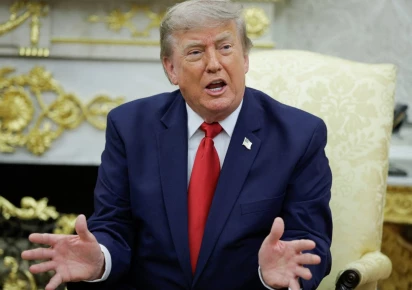
WASHINGTON, USA – President Donald Trump’s administration on Monday, August 24, warned countries to cut their business ties with Iran or face secondary sanctions as part of what it billed as an “economic D-Day,” but the US treasury department stopped short of actually imposing penalties.

As the war with Iran nears its six-month mark, US Treasury Secretary Scott Bessent said the US was launching an “economic onslaught” against Iran’s financial connections around the globe.

But he declined to say what specific countries would be targeted, or when those penalties would take effect. The treasury department announced new sanctions on 60 individuals, entities and vessels, but that list did not include any of the Chinese financial institutions suspected of facilitating Iran’s oil trade.

“Why would I want to blow up the global financial system? We believe that it is important to level set and give people a cure period, but they should know that that will move very quickly and that we are serious,” Bessent told a press conference.

Must Read

US, Iran keep up hostile rhetoric ahead of new sanctions


US, Iran keep up hostile rhetoric ahead of new sanctions

China has for several years been the biggest buyer of Iranian oil, and Washington has intensified its efforts to clamp down on Chinese purchases, but has so far stopped short of targeting Chinese banks with sanctions.

Asked whether the treasury was now prepared to move against a Chinese bank, he said that no country was out of the reach of US sanctions, adding: “If they facilitate transactions and are part of the ecosystem that turns Iranian oil into money, into repression, they will be targeted.”

With Trump and Chinese President Xi Jinping scheduled to meet in Washington in late September, new sanctions on Chinese banks could sour prospects for extending a deal struck last November to keep Chinese rare earths flowing and cap US tariffs.
Monday’s action targeted other businesses in China, the UAE, Singapore and several other countries, including a cooking-oil refinery in France.

Bessent said the US was expanding the scope of commercial activities that could be subject to secondary sanctions in five sectors of the Iranian economy: digital assets, gold, technology, aviation and shipping.

He said he previewed a “major announcement” of sanctions on a financial institution by the end of the week, but a Treasury spokesperson did not respond to a request for more information.

Long campaign

Daniel Fried, a former US State Department sanctions coordinator who is now with the Atlantic Council, said that the announcement “did not live up to the hype,” but economic pressure is better than restarting military conflict.

The pressure campaign on Iran will take time to work and patience and possibly require some concessions on the part of the Trump administration to secure cooperation, he said.

“You’re going to have to get the Gulf countries to agree, and you’re going to have to listen to what they want, and be steady,” Fried said.

Trump’s war with Iran, which has pushed energy prices higher worldwide, is about to hit its six-month mark. While heavy fighting has subsided, diplomatic efforts to end the war have stalled and oil and raw material shipping through the Strait of Hormuz remains blocked, keeping energy prices elevated.

Trump’s approval rating has fallen to a low point, with just 33% of Americans in the latest Reuters/Ipsos poll approving of his performance. He says the economic costs are necessary to ensure Iran does not have a nuclear weapon.
Decades of sanctions

The US has maintained sanctions against Iran for decades, most of which have been aimed at curtailing the country’s oil revenues, acquisition of weapons components and cutting off funding for business enterprises controlled by the Islamic Revolutionary Guard Corps, a dominant force in the Iranian economy.

The sanctions bar designated entities from the dollar-based financial system, but Iran has been successful in quickly standing up new front companies, other entities and vessel registrations to evade the sanctions.

The treasury department has also recently sanctioned independent Chinese “teapot” refineries for buying Iranian oil, and expanded sanctions on the “shadow fleet” of tankers transporting Iranian oil.

Tehran has managed to weather decades of US sanctions, but the naval blockade that the US imposed has inflicted severe economic damage on the country.

That already curbed Chinese offers to purchase Iranian crude, Reuters reported on Friday, which may lessen the impact of secondary sanctions on China.

Earlier this month, US Defense Secretary Pete Hegseth said the United States could maintain the naval blockade indefinitely, which could keep oil prices elevated, potentially stirring US voter anger ahead of congressional elections in November.

Treasury department data shows the US has imposed Iran-related sanctions on more than 1,000 people, vessels and aircraft since Trump began his second term in 2025.

Recent measures have targeted Iran’s shadow oil fleet, shipping insurers, weapons-procurement network and digital exchanges, freezing an estimated $500 billion in Iran-linked cryptocurrency.

Bessent singled out Iran’s Bank Melli, which continues to operate branches in Europe, the Middle East and Asia.

“Every branch of Bank Melli must be shuttered and dark,” he said. – Rappler.com

Similar Posts

  • | |

    Chilling details of Nancy Guthrie’s first ra…

    The investigation into the alleged kidnapping of Nancy Guthrie has taken a chilling turn as details of the first ransom note sent to her family have been revealed. The note, which authorities have described as both genuine and threatening, was addressed to Nancy’s daughter, Savannah, and contained warnings that have left investigators and the public on edge. Crime journalist Briana Whitney, speaking on the Crime Junkie podcast, revealed the terrifying message allegedly sent to Savannah. The most chilling line in the note read: “It is in the best interest of everyone to have this completed as soon as possible.” Whitney, reading from the ransom message, further detailed the captors’ demands: “You will not be able to contact me from here on out. There will be no negotiation. Do not play games. Law enforcement will not be able to help you.” The note, which was sent shortly after Nancy was last seen at home on January 31, has dominated the investigation. While some ransom notes were reportedly deemed to be hoaxes, authorities confirmed that others were genuine, adding to the complexity of the case. Investigators have yet to produce a suspect in the alleged kidnapping, leaving the family and the public seeking answers. The ransom notes have been central to the case, with authorities reportedly keeping many details under wraps to avoid compromising the investigation. However, the release of these chilling details has shed new light on the threats faced by the Guthrie family. The note’s warning that law enforcement would not be able to help and that there would be no negotiation suggests a calculated effort by the captors to isolate Savannah and exert maximum pressure on the family. Nancy Guthrie’s disappearance has sparked widespread concern, with her family making several public pleas for her safe return. The investigation remains ongoing, with authorities urging anyone with information to come forward. The release of the ransom note details has reignited public interest in the case, with many hoping that the new information will lead to a breakthrough. As the investigation continues, the Guthrie family remains in the spotlight, their ordeal serving as a stark reminder of the terror faced by families of kidnapping victims. The chilling words of the ransom note have left an indelible mark on the case, underscoring the urgency of finding Nancy and bringing her captors to justice. The public awaits further developments, hoping for a resolution that will bring closure to the family and accountability for those responsible.

  • | | |

    Trump claims US controls Iran’s finances 

    WASHINGTON: US President Donald Trump has claimed that Washington has control over Iran’s financial resources as the conflict between the United States and Iran continues. In an interview, Trump said the US was effectively acting as a banker for Iran. He claimed Washington had control over a large amount of Iranian money. Trump also described Iran’s economic situation as extremely difficult. He alleged that the country was facing very high inflation and that its currency had lost much of its value. The US president further claimed that Iran was struggling to pay its soldiers and suggested that the economic pressure could become increasingly difficult for Tehran to sustain. Trump outlined several possible approaches toward Iran. He said Washington could maintain the current economic pressure, launch further military action or rely more heavily on financial measures. He said his main objective in the conflict was to prevent Iran from acquiring a nuclear weapon. Trump also claimed that US military action had stopped Tehran from obtaining such a capability. Qatar urges reopening of Strait of Hormuz Meanwhile, Qatar said talks between Iran and Oman on arrangements for reopening the Strait of Hormuz had reached an advanced stage. Qatari Foreign Ministry spokesman Majed Al-Ansari said the negotiations had reached a critical point. He expressed hope that the strategically important waterway would reopen as soon as possible. Qatar said it supports diplomatic efforts aimed at reducing tensions and resolving the dispute. Iran and Oman have been discussing legal and technical arrangements for the resumption of maritime traffic through the strait. Shipping activity in the area has been disrupted following the military confrontation between Iran and the United States. Tehran has linked the reopening of the waterway to the resolution of disputes surrounding what it describes as US violations of a June memorandum of understanding. Araghchi says US sought negotiations Iranian Foreign Minister Abbas Araghchi has claimed that Washington eventually sought negotiations with Tehran after initially demanding Iran’s unconditional surrender. Speaking during a televised press conference, Araghchi said the US had initially taken a hard-line position but later sought talks. He claimed that the change demonstrated Iran’s ability to withstand military and political pressure. Araghchi also said Iran had surprised countries around the world by resisting the United States. The Iranian foreign minister said Washington had support from Israel and several Western countries during the conflict. He also discussed the situation with German Foreign Minister Johann Wadephul during a telephone conversation. According to Iranian state media, Araghchi told his German counterpart that the insecurity in the Strait of Hormuz was the result of US and Israeli military actions against Iran. He briefed Wadephul on Iran’s discussions with Oman regarding the creation of a safe route for maritime traffic through the strategic waterway. The two officials also discussed bilateral relations and wider regional and international developments. Araghchi called on the international community to hold Washington accountable for what he described as the security and economic consequences of the disruption in the Strait of Hormuz. He maintained that lasting security in the waterway would require an end to what Tehran considers US military aggression, maritime restrictions and violations of previous commitments.

  • | | |

    Iran’s Revolutionary Guards claim Trump suffered…

    TEHRAN: Iran’s Islamic Revolutionary Guard Corps (IRGC) has claimed that international media outlets are increasingly portraying US President Donald Trump as having suffered a defeat in the conflict with Iran. In a statement, the IRGC said reports from various parts of the world were highlighting what it described as the failure of the United States to achieve its objectives against Iran. The Guards further claimed that the war had placed the Trump administration in a situation of its own making, with international coverage allegedly pointing to Washington’s difficulties in achieving its declared goals. According to the IRGC, recent agreements between the parties should not be viewed simply as diplomatic arrangements but as evidence of what it described as an American retreat in the face of Iran’s military capabilities and negotiating position. The Iranian force also maintained that the United States and Israel had failed to accomplish their stated objectives despite extensive military operations and accompanying media campaigns. The IRGC characterized the latest agreements as reflecting Iran’s ability to withstand military pressure and secure a stronger position at the negotiating table.

  • |

    Acting US Attorney General rescinds $1.8 billion initiative to clear path for Senate confirmation

    Acting US Attorney General Todd Blanche has issued an official order rescinding the controversial $1.8 billion “Anti-Weaponisation Fund”, resolving a key point of friction ahead of his confirmation vote before the Senate Judiciary Committee. The action follows extended negotiations with Republican Senators John Cornyn and Thom Tillis, who had withheld support for the nomination pending written assurances that the initiative would be permanently discarded. Although Blanche previously indicated in Congressional testimony that the department would not move forward with the program, lawmakers sought a formal rescission to prevent its potential revival. The directive also clarifies terms surrounding a related legal settlement, stipulating that provisions concerning tax audit protections apply exclusively on a retroactive basis to open claims active at the time of the agreement and do not extend to future tax filings.

  • |

    Saudi airstrikes on Hodeidah trigger Houthi warning, raising regional tensions

    Saudi Arabia’s airstrikes on the Houthi-controlled Yemeni city of Hodeidah have triggered a strong response from the group, with the Houthis warning that the attacks could have serious consequences and further escalate tensions in the region. According to Arab media reports, Houthi officials said Saudi-led forces targeted telecommunications facilities in Hodeidah as well as Kamaran Island. A woman was reportedly injured in the strike on Kamaran Island. Witnesses also reported hearing explosions near Hodeidah port. However, the Saudi-led military coalition denied targeting the port itself. The coalition said its operations were aimed at Houthi military positions in Hodeidah. Hodeidah port is a major commercial and humanitarian gateway for northern Yemen. The port plays an important role in bringing essential goods and humanitarian supplies into areas controlled by the Houthis. The latest strikes followed growing tensions in the Red Sea. Saudi-led coalition spokesman Turki al-Malki had described recent Houthi activities in the area as irresponsible and provocative. He warned that the coalition would take further military action if Houthi attacks continued. The Houthis recently claimed responsibility for attacks on Saudi oil tankers in the Red Sea. The group said the vessels had violated a naval blockade it had announced against Saudi Arabia. The Houthis declared the blockade on July 20. They described it as a response to an attack on Sanaa International Airport a week earlier. The internationally recognised Yemeni government, which is backed by Saudi Arabia, claimed responsibility for the airport attack. It said the strike was carried out after an Iranian aircraft allegedly arrived at the airport without authorisation. Following the latest escalation, concerns are growing over the impact on commercial shipping and global trade. Two Chinese oil tankers carrying Saudi crude reportedly crossed the Bab el-Mandeb Strait safely despite the heightened tensions. The Red Sea is a crucial international shipping route. It handles a significant share of global container trade and connects major markets between Asia, Europe and the Middle East. Any prolonged disruption to shipping in the Red Sea could increase transportation costs and put further pressure on global supply chains. The situation is particularly sensitive because the Strait of Hormuz is also facing serious disruption amid the wider regional conflict. Houthi spokesman Mohammed Abdulsalam said the group’s naval blockade does not amount to a complete closure of the Bab el-Mandeb Strait. He said the measure is specifically focused on maritime activity linked to Saudi Arabia. According to the Houthi position, the blockade is intended as a response to what the group describes as the continued blockade of Yemen. The latest exchange of airstrikes, threats and attacks on shipping has increased fears that the conflict could spread further across the region.

  • |

    Iran’s revolutionary guard claims destruction of US military aircraft and casualties during “Operation Nasr II

    Iran’s Islamic Revolutionary Guard Corps (IRGC) has claimed that it destroyed 11 fighter aircraft at US military bases and killed 200 American personnel within 15 days during what it described as “Operation Nasr II.” The claims were made by IRGC spokesperson Brigadier General Hossein Mohebi during an interview, in which he discussed Iran’s reported military operations against American targets. According to the IRGC spokesperson, the US defense system had become significantly weakened, allowing Iranian drones and missiles to reach their intended targets without facing major obstacles. He claimed that Iran’s military capabilities had successfully challenged American defense mechanisms and demonstrated the effectiveness of its missile and drone technology. Brigadier General Mohebi stated that Iran targeted eight military deployment centers during attacks on US positions. He further claimed that, at one location, 20 shelters were destroyed as part of the operations. However, the details and figures presented by the IRGC have not been independently verified. The IRGC spokesperson also issued warnings to Israel, stating that if it became involved in the conflict again, it should be prepared to face serious consequences. He said that any renewed Israeli participation in military operations would result in a strong response from Iran. In his remarks, Mohebi also addressed the United Kingdom, warning that a bomber aircraft had recently taken off from a British air base. He stated that if Britain cooperated with the United States in military actions against Iran, British interests could become legitimate targets from Iran’s perspective. The IRGC official called on the US government to allow journalists to visit the damaged military facilities in order to assess the actual scale of destruction and casualties. He argued that allowing independent media access would reveal the real impact of Iran’s reported attacks. The statements come amid heightened tensions between Iran, the United States, and their regional allies. Military confrontations and threats between these countries have repeatedly increased concerns about the possibility of wider conflict in the Middle East. Iran has frequently emphasized its missile and drone capabilities as a key part of its defense strategy. Iranian officials have often stated that their military strength enables them to respond to threats and protect national interests. Meanwhile, the United States and its allies have continued to monitor Iran’s military activities and have expressed concerns about regional security. The claims made by the IRGC spokesperson represent Iran’s official account of the reported military operation. At the same time, independent confirmation of the number of aircraft destroyed, casualties reported, and damage caused has not been provided. International observers have warned that continued military exchanges and aggressive statements from involved parties could increase instability in the region. Diplomatic efforts have repeatedly been encouraged as a way to reduce tensions and prevent further escalation. The situation remains closely watched by governments and security analysts around the world, as any direct confrontation involving major military powers could have significant regional and international consequences. Further developments are expected to determine the accuracy of the claims and the future direction of relations between Iran, the United States, and their allies.

Leave a Reply

Your email address will not be published. Required fields are marked *