trump claims controls
| | |

Trump claims US controls Iran’s finances 

WASHINGTON: US President Donald Trump has claimed that Washington has control over Iran’s financial resources as the conflict between the United States and Iran continues.

In an interview, Trump said the US was effectively acting as a banker for Iran. He claimed Washington had control over a large amount of Iranian money.

Trump also described Iran’s economic situation as extremely difficult. He alleged that the country was facing very high inflation and that its currency had lost much of its value.

The US president further claimed that Iran was struggling to pay its soldiers and suggested that the economic pressure could become increasingly difficult for Tehran to sustain.

Trump outlined several possible approaches toward Iran. He said Washington could maintain the current economic pressure, launch further military action or rely more heavily on financial measures.

He said his main objective in the conflict was to prevent Iran from acquiring a nuclear weapon. Trump also claimed that US military action had stopped Tehran from obtaining such a capability.

Qatar urges reopening of Strait of Hormuz

Meanwhile, Qatar said talks between Iran and Oman on arrangements for reopening the Strait of Hormuz had reached an advanced stage.

Qatari Foreign Ministry spokesman Majed Al-Ansari said the negotiations had reached a critical point. He expressed hope that the strategically important waterway would reopen as soon as possible.

Qatar said it supports diplomatic efforts aimed at reducing tensions and resolving the dispute.

Iran and Oman have been discussing legal and technical arrangements for the resumption of maritime traffic through the strait.

Shipping activity in the area has been disrupted following the military confrontation between Iran and the United States.

Tehran has linked the reopening of the waterway to the resolution of disputes surrounding what it describes as US violations of a June memorandum of understanding.

Araghchi says US sought negotiations

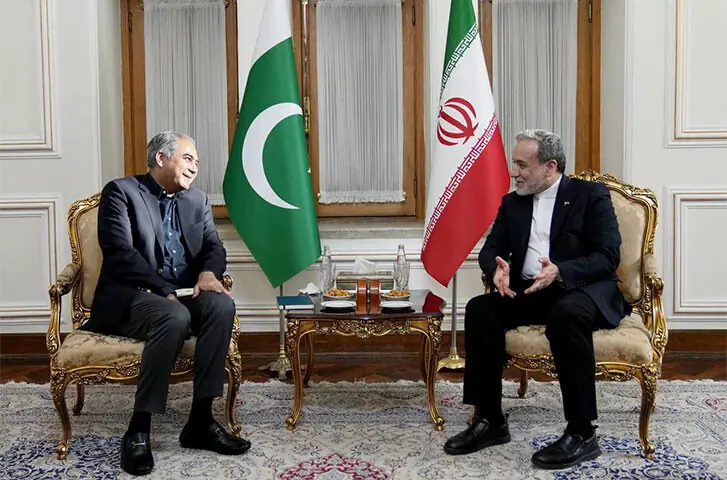
Iranian Foreign Minister Abbas Araghchi has claimed that Washington eventually sought negotiations with Tehran after initially demanding Iran’s unconditional surrender.

Speaking during a televised press conference, Araghchi said the US had initially taken a hard-line position but later sought talks.

He claimed that the change demonstrated Iran’s ability to withstand military and political pressure.

Araghchi also said Iran had surprised countries around the world by resisting the United States.

The Iranian foreign minister said Washington had support from Israel and several Western countries during the conflict.

He also discussed the situation with German Foreign Minister Johann Wadephul during a telephone conversation.

According to Iranian state media, Araghchi told his German counterpart that the insecurity in the Strait of Hormuz was the result of US and Israeli military actions against Iran.

He briefed Wadephul on Iran’s discussions with Oman regarding the creation of a safe route for maritime traffic through the strategic waterway.

The two officials also discussed bilateral relations and wider regional and international developments.

Araghchi called on the international community to hold Washington accountable for what he described as the security and economic consequences of the disruption in the Strait of Hormuz.

He maintained that lasting security in the waterway would require an end to what Tehran considers US military aggression, maritime restrictions and violations of previous commitments.

Similar Posts

  • |

    Unesco reports 2.4 million Afghan girls barred from secondary education under Taliban rule

    Roughly 2.4 million Afghan girls have been systematically denied access to secondary education since the Taliban regained power in 2021, the United Nations Educational, Scientific and Cultural Organisation (Unesco) announced, urging an immediate end to the policy. The UN agency noted that the number of girls excluded from high school has grown by 200,000 over the past year and warned that the figure could reach nearly four million by 2030 if the restrictions remain in place. Afghanistan remains the only country in the world where female students are formally prohibited from attending school beyond the primary level. The current restrictions mark a stark reversal of educational progress achieved over the preceding two decades. In 2001, female enrolment was severely limited, but by 2021, nearly one million girls were actively attending secondary schools across the country. Beyond human rights concerns, Unesco highlighted the severe long-term economic fallout, estimating that the prohibition on female education and employment could cost the Afghan economy $9.6 billion (£7.5 billion) by 2066. The wider educational landscape in Afghanistan faces critical systemic strain. More than half of primary-school-aged children are out of school entirely, and over 90 per cent of 10-year-olds are unable to read basic text. Infrastructure deficits, including widespread shortages of clean drinking water, sanitation, and heating, alongside recurrent natural disasters continue to exacerbate the ongoing crisis.

  • | |

    Sindh to introduce AI in public service recruitmen…

    KARACHI: The Sindh government has decided to introduce artificial intelligence (AI) and modern technology into the recruitment and examination system of the Sindh Public Service Commission (SPSC). The decision was taken during a high-level meeting chaired by Sindh Chief Secretary Asif Haider Shah on Tuesday. The chairman of the SPSC, the secretary of information technology and other senior officials attended the meeting. During the meeting, the chief secretary said AI and modern technology would be used to make the SPSC examination process more efficient and transparent. Officials discussed the use of technology in several stages of the examination process. This includes the preparation of question papers, assessment of candidates and management of examination-related data. The new system is also expected to reduce unnecessary human involvement in certain stages of the examination process. Officials believe greater use of technology could help improve efficiency and minimise administrative delays. The Sindh government also plans to establish technology-equipped workstations across the province. These facilities will provide candidates in different areas with access to modern examination services. The initiative is aimed at improving accessibility for applicants from various parts of Sindh. The government said the use of AI and digital tools would help modernise the recruitment process and improve the overall management of SPSC examinations.

  • |

    Women allege rape, abuse at UK Army teen college

    Four former female recruits have accused the UK’s Army Foundation College (AFC) in Harrogate of fostering a culture of sexual abuse, harassment and misogyny, with one woman alleging she was raped by several fellow recruits when she was 17 years old. The women, who attended the military training college over the past five years, shared their experiences publicly for the first time. They said they faced sexual violence, harassment and degrading treatment while undergoing training at the college, which prepares teenagers for military service. One former recruit said she accepted an invitation to another recruit’s room, believing it was harmless. She alleged that several male recruits sexually assaulted and raped her over the course of several hours. The traumatic incident forced her to leave the Army within weeks, saying she could no longer continue her training after the attack. Another former recruit alleged that a fellow trainee trapped her inside a room before sexually assaulting her. She said she managed to escape after struggling with the attacker. A third former recruit’s mother said her daughter endured repeated sexual harassment throughout her training and even blocked her dormitory door at night because the room’s lock was broken and she feared male recruits entering. A fourth woman claimed some instructors openly made sexist remarks, rated female recruits based on their appearance and entered female dormitories without warning. She alleged that such behaviour encouraged disrespectful attitudes toward women among male trainees. Official data obtained through freedom of information requests revealed that police received 16 reports of sexual offences linked to the college during the year ending in June. The reported incidents included allegations of sexual assault, exposure and voyeurism. Separate Ministry of Defence figures showed that 176 complaints involving inappropriate sexual behaviour were recorded at the college between January 2018 and June 2025. Most complaints involved junior soldiers, while dozens concerned permanent staff members. The British Army described the allegations as extremely serious and distressing, stating that criminal or unacceptable behaviour has no place in the armed forces. It said several reforms have been introduced to improve victim support and strengthen the handling of serious offences, including specialist investigations conducted outside the normal chain of command. The Army also said it encourages anyone who has experienced or witnessed misconduct to report it and maintained that the college remains committed to providing a professional, safe and supportive environment for all recruits. However, concerns have grown over the safety of young recruits following previous convictions involving Army personnel for sexual offences and wider reports highlighting sexual misconduct within the armed forces.

  • | |

    Four summoned over posts targeting Sharjeel Memon

    KARACHI: The National Cyber Crime Investigation Agency (NCCIA) has summoned four Karachi residents for questioning over alleged defamatory content posted on social media against Sindh Senior Minister Sharjeel Inam Memon and his son. The inquiry was launched following a complaint submitted on behalf of Memon. The complaint relates to social media posts concerning the death of Karachi resident Mir Raza Ali. According to the notices issued by the agency, the respondents have been asked to appear at the NCCIA office in Karachi on August 13 at 11:30am. They have also been directed to bring their original identity cards and any documents or material they intend to use in their defence. The four individuals have also been asked to provide relevant digital devices and record their statements before the investigators. The agency warned that failure to appear could lead to further legal action. The development follows a complaint filed by Memon through his legal representatives. He had approached the cybercrime agency over what he described as false and malicious material being circulated online about him and his son. Memon has denied claims linking him to a guest house in Gulistan-i-Jauhar where Mir Raza Ali was allegedly subjected to violence. He also rejected allegations that his son travelled to London shortly after the incident and was later seen with security personnel. The senior minister said the allegations were not supported by facts or evidence. He alleged that the campaign was aimed at damaging his and his son’s reputation for political reasons. His legal counsel has requested that the agency identify those responsible and take action under applicable cybercrime laws. The complaint also seeks registration of a criminal case if sufficient evidence is found. The Mir Raza case has attracted significant public attention. Ali, who had studied at the Institute of Business Administration and owned a food business, was reported missing on July 28. His body was discovered the following day in bushes near Shahi Qila Ground in Gulistan-i-Jauhar. The investigation initially considered the possibility of suicide. However, Ali’s family consistently rejected that theory. They maintained that he had been kidnapped, assaulted and murdered. A second post-mortem examination later raised further questions about the circumstances of his death. The examination indicated that Ali had suffered a gunshot wound to the back, which challenged the earlier theory of suicide. The family’s lawyer, Jibran Nasir, called for changes to the investigation team. He also accused authorities of failing to properly pursue key aspects of the case. A new investigation team was assigned to the case on Sunday. Police also added a murder charge to the first information report.

  • | |

    Pakistan’s major dams reach 72% storage capa…

    Pakistan’s water reserves have improved significantly, with the country’s major reservoirs now filled to 72% of their total storage capacity, according to official data released on Sunday. The latest figures show that the combined water storage in the country’s key reservoirs has reached 9.466 million acre-feet (MAF), compared with a total storage capacity of 13.149 million acre-feet. Officials said the improvement follows a substantial increase in water inflows across the Indus River system, with inflows significantly exceeding outflows. The higher inflow has helped replenish major dams and strengthen the country’s water reserves. The increase in reservoir levels is expected to support irrigation needs, improve water availability for agriculture and enhance overall water management during the current season. Authorities continue to monitor inflows and reservoir levels as the monsoon season contributes to rising water storage across the country’s major dams.

  • | |

    Dr Summaiya flags 14 flaws in Mir Raza Ali post-mo…

    KARACHI: Police Surgeon Dr Summaiya Syed has identified 14 serious deficiencies in the post-mortem examination of Mir Raza Ali and formally raised concerns with the police, calling for a thorough review of the forensic findings. In a letter addressed to the Senior Superintendent of Police (SSP) District East, Dr Summaiya questioned the quality and completeness of the autopsy report prepared by Dr Osama Sheikh. She highlighted several procedural and forensic shortcomings that, according to her, could affect the accuracy and credibility of the investigation. According to the letter, no X-rays were conducted on the body before or during the post-mortem examination. Dr Summaiya stated that such imaging is a standard forensic requirement and can help identify bullet trajectories, fractures and other internal injuries that may not be visible during a routine examination. She further pointed out that no chemical analysis was carried out to determine the presence of gunpowder residue around the entry wound. The absence of such testing, she noted, limits the ability to determine the firing distance and other important forensic details. The police surgeon also stated that the internal examination of the skull and neck was not performed. She said these examinations are essential in cases involving firearm injuries, particularly when determining the exact cause of death and the path of the bullet. Dr Samia’s letter also criticised the documentation process followed during the autopsy. She said no measurement scale was used while recording the injuries, making it difficult to accurately assess the size of the wounds. She added that photographs of the injuries were not taken in accordance with accepted forensic standards. She further observed that the report did not adequately explain the bone characteristics associated with the entry and exit wounds, making the injury assessment incomplete. The letter also highlighted that the nature and stage of decomposition of the body had not been clearly described in the report. According to Dr Summaiya, documenting decomposition is important in estimating the time of death and assessing the condition of the body. Another major concern raised was the reported size of the wounds. The post-mortem report recorded the entry wound as significantly larger than the exit wound, a finding Dr Summaiya described as unusual and requiring immediate re-examination and verification. She also questioned the identification process, stating that although the face of the deceased was reportedly unrecognisable, no DNA sample was collected to scientifically confirm the identity of the body. Dr Summaiya urged the investigating authorities to carefully review the post-mortem findings and address the identified shortcomings to ensure that the forensic investigation meets professional standards and supports a fair and transparent legal process.

Leave a Reply

Your email address will not be published. Required fields are marked *