myanmars min aung
|

Myanmar’s Min Aung Hlaing in Thailand on legitimacy quest as Bangkok backs engagement

BANGKOK, Thailand – Myanmar’s junta chief turned President Min Aung Hlaing received a red-carpet treatment on an official visit to Thailand on Thursday, August 6, part of efforts by Bangkok to push for re-engagement between its war-torn neighbor and the regional bloc ASEAN.

The retired general, who first came to power in a 2021 coup, is the subject of a raft of Western sanctions and has sought international legitimacy since becoming Myanmar’s president in April, which followed an election dominated by an army-backed party in the absence of any viable opposition.

At an arrival ceremony in Bangkok, a military band played national anthems of both countries before Min Aung Hlaing, dressed in a dark business suit, walked a red carpet with Thai Prime Minister Anutin Charnvirakul to inspect an honor guard.

With a civil war raging in Myanmar following the 2021 coup, Thailand is pursuing “calibrated re-engagement” in the hope that its neighbor will implement a stalled peace plan led by the Association of Southeast Asian Nations, which has barred Myanmar’s leaders from its summits.

At a meeting between officials of Myanmar and Thailand on Thursday, Min Aung Hlaing pledged to pursue peace and improve ties with ASEAN.

“Myanmar is on the path of democracy and heading towards a better future,” he said.

“In international relations, as we have worked to strengthen friendly relations for the benefit and interests of the public, we will also work toward fostering better relations with ASEAN.”

Fine line between engagement and endorsement

Thailand is the fourth country Min Aung Hlaing has visited as president after China, India, and Laos in a quest for recognition as the 11-member ASEAN, which did not endorse Myanmar’s election, stands firm behind a faltering peace initiative that Naypyitaw has largely ignored.

ASEAN’s special envoy on Myanmar Maria Theresa Lazaro last month said normalization of ties with the bloc was “still far off,” as Naypyitaw’s compliance with the peace initiative, which includes ending hostilities and starting dialogue between warring groups, was still being assessed.

Min Aung Hlaing has stressed his top priority as president is ending a civil war between the military he once led and various rebel groups, which has killed an estimated 100,000 people.

However, Myanmar’s military has since sharply escalated attacks on civilians, including an intensified aerial bombing campaign, a conflict monitor said last week.

While Thailand’s engagement effort could strengthen its influence within ASEAN as a bridge to Myanmar, some analysts say it needs to avoid appearing to legitimize Min Aung Hlaing when there is no progress on ASEAN’s peace plan.

“There is a fine line between re-engaging and endorsing Min Aung Hlaing’s legitimacy,” said Dulyapak Preecharush, a Southeast Asia expert at Bangkok’s Thammasat University.

“When relations become close and friendly, they can naturally drift in that direction. The perception that Thailand is validating or conferring legitimacy on Min Aung Hlaing could rise very quickly.”

Myanmar’s government on Monday allowed Nobel laureate Aung San Suu Kyi, who has been detained since her government was ousted in 2021, to meet a representative of the International Committee of the Red Cross after years of uncertainty over her health, wellbeing and whereabouts.

ASEAN’s special envoy has sought unsuccessfully to get access to Suu Kyi and this week’s unexpected ICRC visit could support Thailand’s argument for engagement, according to Dulyapak.

Min Aung Hlaing will join Anutin later on Thursday at a business summit, as Thailand seeks to revive its economic ties with resource-rich Myanmar, which include ventures in hotels, banking, manufacturing and energy that make it one of the top foreign investors in the country. – Rappler.com


Similar Posts

  • |

    Flash flood warning issued for New York, New Jersey

    Authorities have issued a flash flood warning for New York City, parts of New Jersey and western Long Island as heavy rainfall, thunderstorms and strong winds swept across the region, raising the threat of widespread flooding and travel disruptions. Weather officials warned that intense downpours could quickly overwhelm drainage systems, flood roads and affect low-lying areas. The flash flood warning remained in effect through Monday morning, while a broader flood watch was issued for New York City and northern and central New Jersey until the evening. Forecasters also declared a First Alert Weather Day, citing an elevated risk of flash flooding and severe thunderstorms. Moist and humid air moving into the region is expected to produce rainfall rates of one to three inches per hour, with total rainfall forecast between one and three inches. Some isolated locations could receive even higher amounts, significantly increasing the risk of flooding. In response to the severe weather threat, New York City Emergency Management activated its Flash Flood Emergency Plan. City crews were deployed to clear storm drains and catch basins in flood-prone neighbourhoods, while emergency teams were placed on standby to respond to flooded streets, fallen trees and stranded motorists. Officials warned that severe thunderstorms could also generate damaging wind gusts, increasing the possibility of power outages and hazardous driving conditions throughout the day. Meanwhile, a High Surf Advisory was issued for beaches south of New York City and across Long Island, where waves were expected to reach between six and ten feet. Authorities also warned of a high risk of dangerous rip currents and urged residents and visitors to stay out of the water until conditions improve. Temperatures were expected to remain in the low 80s under mostly cloudy skies. Weather experts forecast that storm activity would gradually weaken by Monday night, bringing an improvement in conditions.

  • |

    Harry and Meghan’s brand faces a crossroads with UK return

    In late July, Meghan’s lifestyle range, As Ever, launched a new blackberry spread alongside a softly lit video of her picking the fruit. A month later, she and Prince Harry announced plans to return and live in the UK, just as blackberry season winds down. Whether another such video follows remains unclear, especially since experts say the couple’s wider brand is now at a turning point. Since their departure from royal duties in 2020, most of the Sussexes’ California-based ventures, from streaming deals to fragrance lines, have struggled to draw large audiences. Experts say it’s genuinely unclear what direction they’ll take next. Their UK return has surprised many, and although they will not resume royal duties, questions remain about what comes instead. Oxford marketing professor Andrew Stephen says the couple excelled early at capturing attention and monetising it, but have struggled to turn that into a lasting brand identity. He describes their current portfolio as fragmented, spanning social impact, entertainment and lifestyle, making it hard to define exactly what their brand represents. Their $100 million Netflix deal and $25 million Spotify agreement, both signed in 2020, have delivered underwhelming results by most measures. The Netflix arrangement produced just five shows over five years before being replaced with a lower-commitment, first-look agreement last year. Spotify, meanwhile, parted ways with the couple back in 2023. Branding expert Susan Fournier warns that the couple’s repeated pivots, from royal insiders to critics to media producers to lifestyle influencers, carry real risk. She argues that once a brand shifts direction dramatically, reversing course becomes difficult, and a UK return could look like yet another turn rather than a resolution. Stephen suggests the solution lies in building a focused, coherent set of ventures and credible causes, rather than continuing to diversify. One possibility involves Meghan returning to acting, with reports suggesting talks over a role in Netflix’s “The Gentlemen.” Her lifestyle brand, As Ever, is also expected to continue regardless of the move. A potential relocation to the Cotswolds has also sparked interest, with stylist Laura Stoloff suggesting genuine synergy between Meghan’s brand and English country life. Still, Stephen cautions that a new postcode alone won’t reposition a brand, only consistent action will.

  • | |

    Lavrov’s ‘nice hairstyle’ reply …

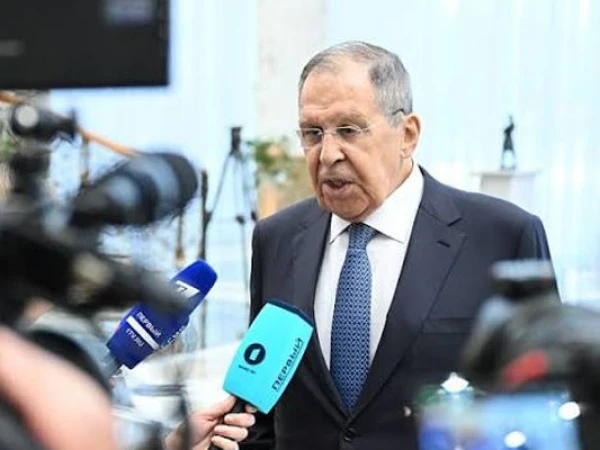
    Russian Foreign Minister Sergey Lavrov has gone viral on social media after responding to a journalist’s tough foreign policy questions with an unexpected compliment instead of an answer. The unusual moment took place during the ASEAN Regional Forum in Manila, Philippines, where Lavrov was approached by reporters following official meetings. A female journalist pressed the veteran diplomat with a series of sensitive questions covering Russia’s alleged support for Iran and Moscow’s position on ending the war in Ukraine. The reporter first asked whether Russia was helping Iran target American troops amid escalating tensions in the Middle East. She then followed up by asking if Moscow was prepared to agree to a ceasefire and peace negotiations with Ukraine. Rather than addressing either question, Lavrov continued walking calmly toward an elevator without breaking stride. As he reached the elevator doors, he briefly turned toward the journalist, smiled, and delivered a single unexpected remark. “Your hairstyle looks great,” he said before stepping into the elevator, leaving the reporter’s questions unanswered. The brief exchange was captured on camera and quickly spread across social media platforms, where it attracted millions of views and sparked widespread debate. Many users described Lavrov’s response as a classic example of diplomatic deflection, arguing that the seasoned foreign minister deliberately avoided commenting on politically sensitive issues without appearing confrontational. Others found the moment humorous, praising his composure and quick wit under pressure. Some social media users, however, criticized the response, saying it sidestepped important questions about international security and ongoing conflicts. The clip generated mixed reactions, with supporters calling it a clever diplomatic maneuver while critics argued that public officials should provide direct answers on major global issues. Lavrov, one of Russia’s longest-serving diplomats, is well known for his measured public appearances and his ability to navigate challenging media interactions. Throughout his career, he has frequently faced difficult questions from international journalists on issues ranging from the Ukraine conflict to Russia’s broader foreign policy. The latest viral moment once again highlighted how even a few unexpected words from a senior world leader can dominate online conversations. Whether viewed as a calculated diplomatic tactic, a light-hearted joke, or simply an attempt to avoid controversy, Lavrov’s short reply transformed an ordinary media encounter into one of the most talked-about moments of the ASEAN Regional Forum, proving that sometimes a single sentence can make bigger headlines than a lengthy press conference.

  • |

    South African court pauses impeachment proceedings against Cyril Ramaphosa

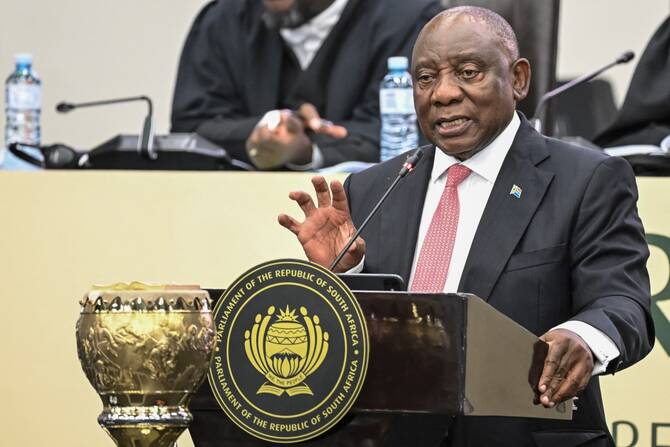
    South Africa’s Western Cape High Court has granted President Cyril Ramaphosa a temporary order halting parliamentary impeachment proceedings against him. The interdict pauses the work of a parliamentary impeachment committee until the court reviews a November 2022 panel report in September, which concluded that Ramaphosa “may have committed” serious violations regarding the Phala Phala farm scandal. The controversy stems from a 2020 break-in at Ramaphosa’s luxury farmhouse in Limpopo, where $580,000 in undeclared foreign currency hidden inside a sofa was stolen. While a former spy chief alleged the stolen sum reached $4 million and accused the president of concealing the robbery from tax and police authorities, Ramaphosa has maintained his innocence, stating the cash came from a legitimate sale of 20 buffaloes. Although the ruling African National Congress (ANC) initially quashed impeachment efforts in Parliament in 2022 and prosecutors dropped criminal charges in 2024, a Constitutional Court ruling in May 2026 reinstated the impeachment process. Ramaphosa welcomed Friday’s court decision, affirming his respect for judicial independence while awaiting the full review hearing in September.

  • | |

    India approves first dengue vaccine

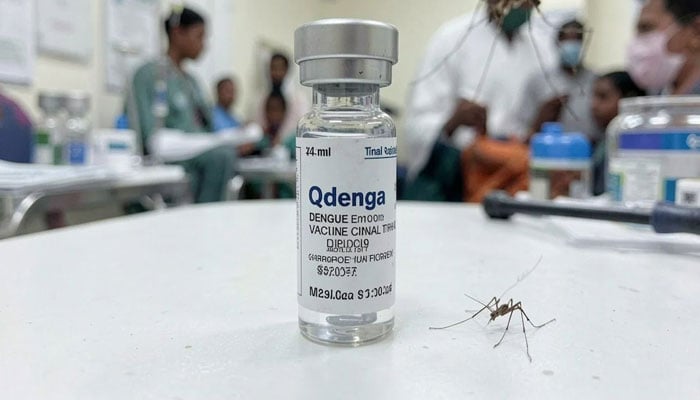
    India has approved the use of its first dengue vaccine, marking a significant step in the country’s efforts to tackle a disease that affects millions of people each year. According to India’s Ministry of Health, authorities approved the Japanese pharmaceutical company Takeda’s dengue vaccine, Qdenga, on July 21. The Central Drugs Standard Control Organisation (CDSCO) has cleared the vaccine for people between the ages of 4 and 60. Health officials say the vaccine could help protect children, teenagers, and adults from dengue, a mosquito-borne viral infection that can sometimes develop into a severe and potentially life-threatening illness. The vaccination schedule consists of two doses administered three months apart. Takeda developed the vaccine in partnership with Indian pharmaceutical company Biological E, which is working with the Japanese firm to support its production in India. According to media reports, Qdenga offers protection against all four major dengue virus serotypes. Regulators in 42 countries have already approved the vaccine, while more than 24 million doses have reportedly been administered worldwide. So far, health authorities have not identified any major safety concerns linked to its use. The approval comes as India continues to face a substantial dengue burden. More than one million dengue cases have reportedly been recorded across the country since 2021, with around 1,500 deaths linked to the disease during the same period. Dengue spreads primarily through the bite of infected Aedes mosquitoes and remains a major public health concern in tropical and subtropical regions. India’s approval of Qdenga could provide health authorities with another tool to reduce the impact of dengue, particularly during periods when mosquito populations rise and infections increase.

  • |

    ‘Super’ El Niño threatens $20bn Africa hit

    Africa could suffer economic losses of between $10 billion and $20 billion if a powerful El Niño weather pattern develops, the African Development Bank’s climate chief has warned. The expected weather event could bring severe droughts, floods and storms to different parts of Africa. It could put additional pressure on food supplies, water resources and government finances. Anthony Nyong, the African Development Bank’s director for climate change and green growth, said countries facing the worst effects could see their gross domestic product decline by around 1% to 2%. He said the potential losses could amount to between $10 billion and $20 billion across the continent. The warning comes as forecasters monitor rising temperatures in the Pacific Ocean. Current conditions have raised concerns that the next El Niño could become unusually strong. El Niño is a climate pattern that can significantly change weather conditions in different parts of the world. In Africa, it can contribute to drought, heavy rainfall, flooding and storms. A severe event could deepen existing climate problems across the continent. The Sahel region has already faced serious drought conditions in recent years. Other parts of Africa are still recovering from major storms and floods. Nyong warned that the economic consequences may continue long after the weather event ends. He pointed to Mozambique’s experience after Cyclone Idai in 2019. The country needed years to recover from the damage caused by the storm. Agriculture could be among the sectors hit hardest by the expected climate shock. The previous El Niño, which occurred during 2023 and 2024, brought severe drought to Southern Africa. East Africa experienced heavy rainfall and flooding. The extreme weather contributed to crop failures and higher food prices. Coastal areas also recorded unusually high sea levels. African farmers are already facing substantial losses. The African Development Bank estimates that agricultural losses could reach around $327 million this year. Fishing communities could also suffer. Rising sea temperatures and storms are expected to affect fisheries productivity. The bank estimates that fisheries productivity could decline by between 1% and 4%. Nyong warned that food shortages could become a major concern if the expected weather pattern intensifies. Maize is particularly important because it is a major staple food in many African countries. A significant decline in production could push prices higher and increase pressure on vulnerable households. The expected disaster could also put further pressure on national budgets. Many African governments already have limited resources to respond to climate emergencies. Severe weather could force them to spend more on relief, reconstruction and infrastructure repairs. This could mean less money for health, education and development projects. Nyong described the situation as a “climate finance trap”. Countries may have to divert funds from essential services to deal with climate-related emergencies. The African Development Bank is preparing to assess the possible effects of El Niño on its investments. The bank plans to hold a major seminar in September. Senior officials will examine the potential risks to existing and planned projects. The institution is also prepared to restructure some projects if necessary. It will work with affected countries to seek additional international climate financing. Possible sources include the Green Climate Fund, Adaptation Fund and Climate Investment Funds. New loss-and-damage financing mechanisms could also provide support to countries suffering serious climate impacts. The expected strength of El Niño could increase Africa’s climate financing needs significantly. Nyong estimated that the continent could require up to $100 billion this year to strengthen climate resilience and adaptation. He said the need for climate adaptation funding was already extremely high. The possible El Niño event could add billions of dollars to that requirement. The financing gap remains a major challenge for developing countries. Without sufficient funding, vulnerable countries may struggle to prepare for droughts, floods and storms before they occur. The humanitarian consequences could be severe if drought and food shortages intensify. Nyong warned that large numbers of people could be forced to leave their homes in search of food, water and livelihoods. Sudan, South Sudan, the Democratic Republic of Congo, Somalia, Mali, Burundi and Nigeria were among the countries identified as potentially vulnerable to severe impacts. Agricultural losses could leave many communities without reliable sources of income. Shortages of water and grazing land could also increase competition between communities. Such pressures could worsen instability in regions already affected by conflict, poverty and displacement. The African Development Bank has therefore called for greater investment in preparedness and climate resilience. Nyong stressed that governments should act before disasters strike rather than wait until the damage has already occurred.

Leave a Reply

Your email address will not be published. Required fields are marked *